As COVID ravages this corner of Missouri, health workers agonize over the unvaccinated
READ MORE
Missouri COVID-19 delta variant surge
Missouri is experiencing a rise in COVID-19 cases and hospitalizations due in part to the spread of the delta variant. Read our latest coverage.
Expand All
It’s only 8 a.m., just two hours into his emergency room shift in Springfield, Missouri, and Dr. Howard Jarvis, ever-steady on the surface, can feel his frustration rising.
People in masks, exhausted, some breathing heavily and slumped in wheelchairs, pack the ER’s waiting room at Cox Medical Center South. Jarvis, 52, the department’s medical director, lean like a crane, slight gray at his temples, knows that as many as a third of the 200 patients who will make their way to the ER this day will have the highly contagious delta variant of COVID-19.
Not older and vulnerable people as in the first wave, but younger people, which is now the trend. The day before, Jarvis saw patients in their 40s, a guy in his 30s. He’s treated teens. A man in his 50s laboring to breathe.
“He couldn’t stand up for more than 30 seconds from his illness,” Jarvis said.
All had one disheartening trait in common:
“No one I saw had been vaccinated,” Jarvis said. “Zero.”
Thus the eyes of the nation have turned to Springfield, the state’s third largest city, a sprawling metropolitan area of some 475,000 people, and the rural Ozark counties that feed its hospitals, once again overwhelmed with COVID-19 patients.
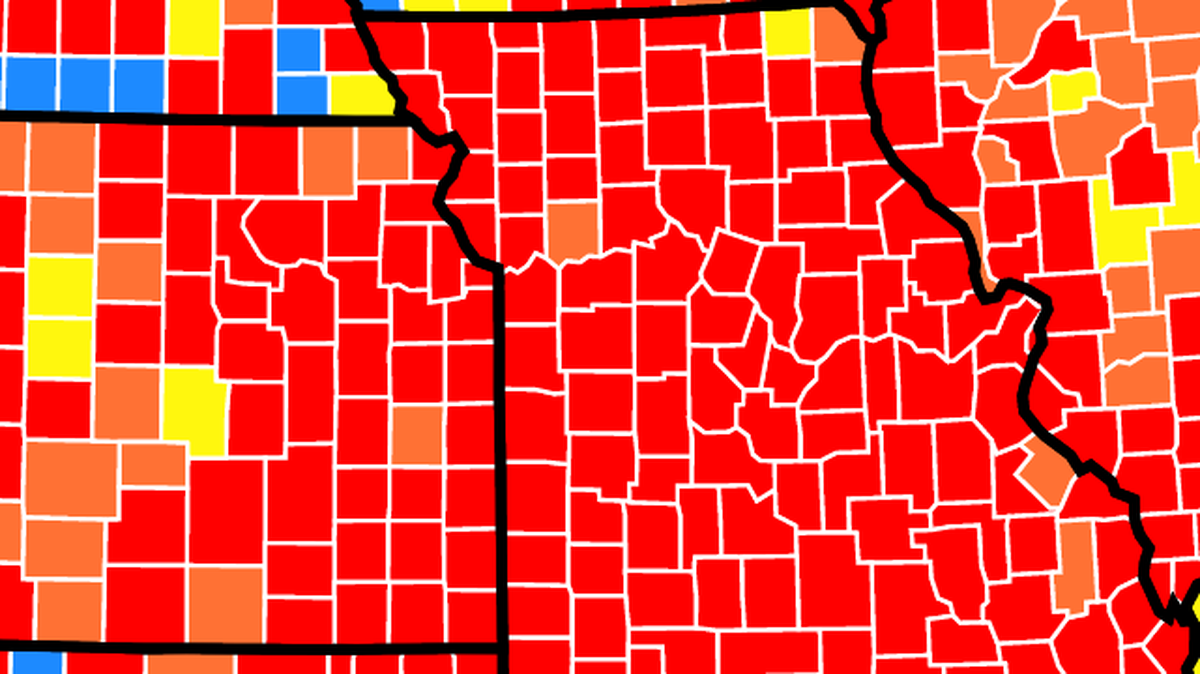
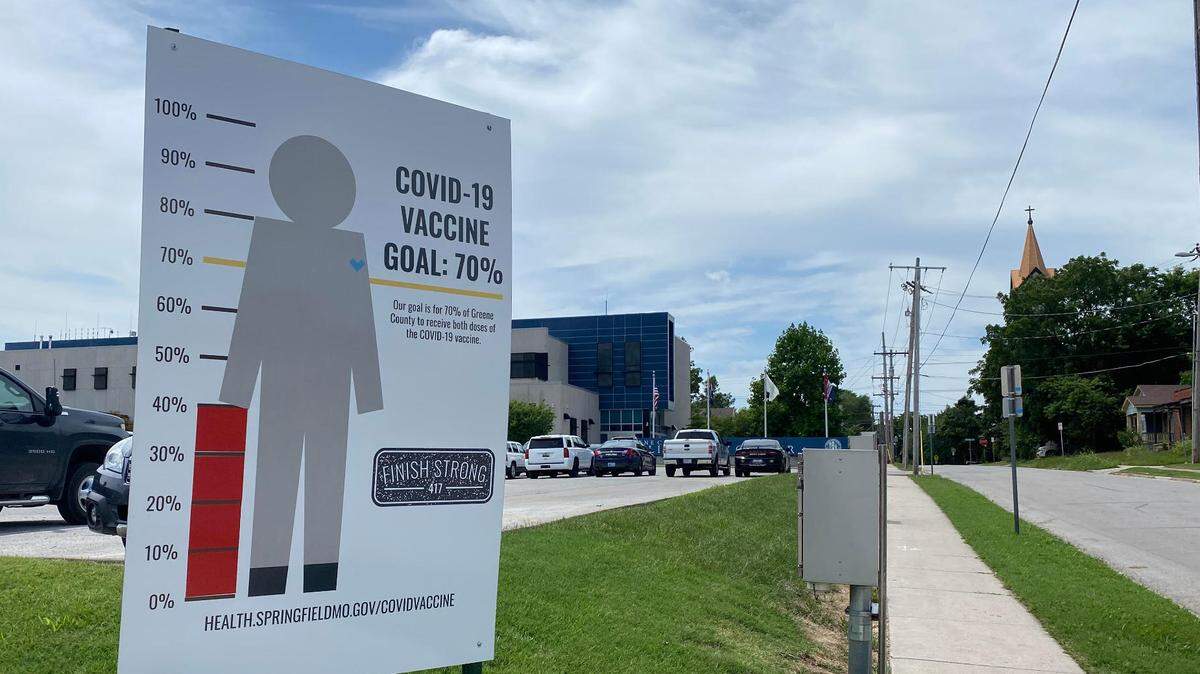
Missouri, at 39%, has one of the lowest rates of full vaccinations in the nation. Greene County, the home of Springfield, is worse at 34%, state figures show. Most of the surrounding 19 counties are in the 20s. In McDonald County, tucked in the southwest corner of the state, the rate is a paltry 14%
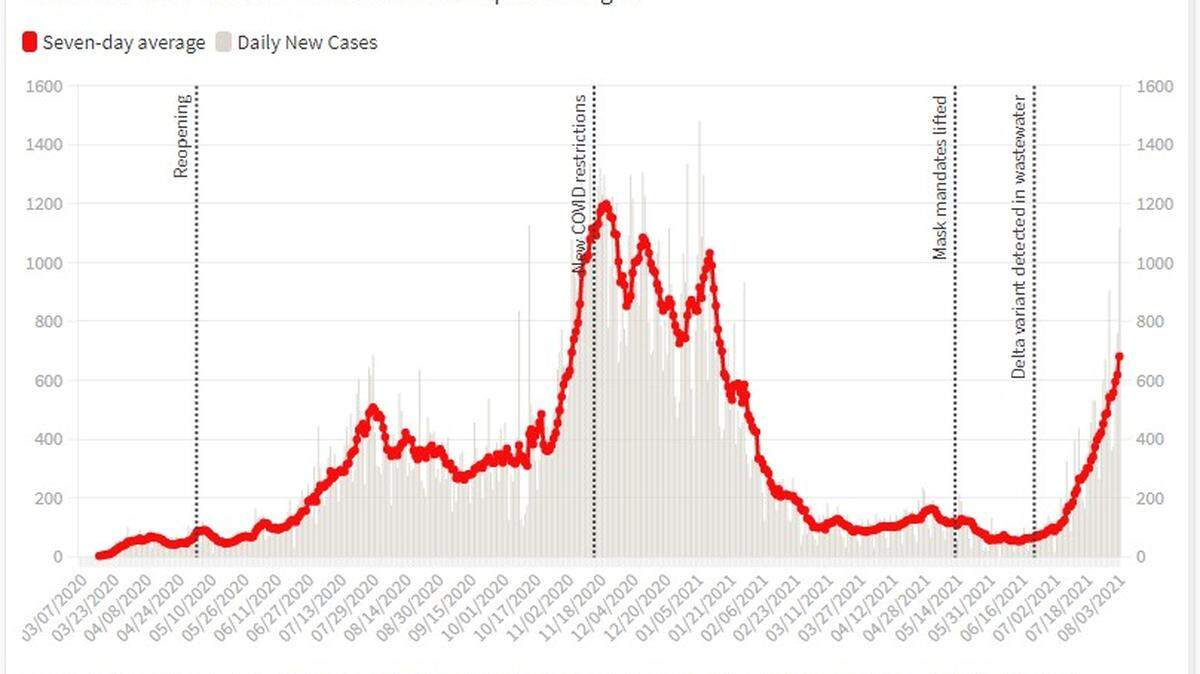
All of which has raised the question, along with a frightening specter, of how much of the rest of the country — where 60% of adults are fully vaccinated, but 40% have still chosen not to be — could become like Springfield, where COVID hospitalizations are skyrocketing once again. At Cox this past week, they climbed to over 100. At Mercy Hospital Springfield, where they briefly ran out of ventilators over the Fourth of July weekend, they’re at 129, more than they had in December at the height of the pandemic.
Also at a peak: frustration, anger, discouragement among health workers, befuddlement as to what to do about it, sadness that the scourge has unnecessarily re-erupted and exists at all. People are getting sick again, dying from a disease that appeared to be passing, only to find new quarry in the bodies of the unvaccinated.
“I am frustrated,” Jarvis said in a break from his duties. “It was one thing, you know, back in the fall, and back in the winter before we had a vaccine. You didn’t really have a choice.”
But now there are highly effective vaccines. Free. Easy to get.
“Our nurses, our techs, our physicians, our respiratory therapists — I mean, basically everybody you can imagine that’s working in the hospital is getting very tired and somewhat frustrated.
“Early on, there was only so much you could do to prevent yourself from getting it. Now, it’s a really conscious choice that ‘I don’t need to get a vaccination.’ There’s a different level of frustration because we’re seeing something that we really don’t have to be seeing.”
Crying in the car
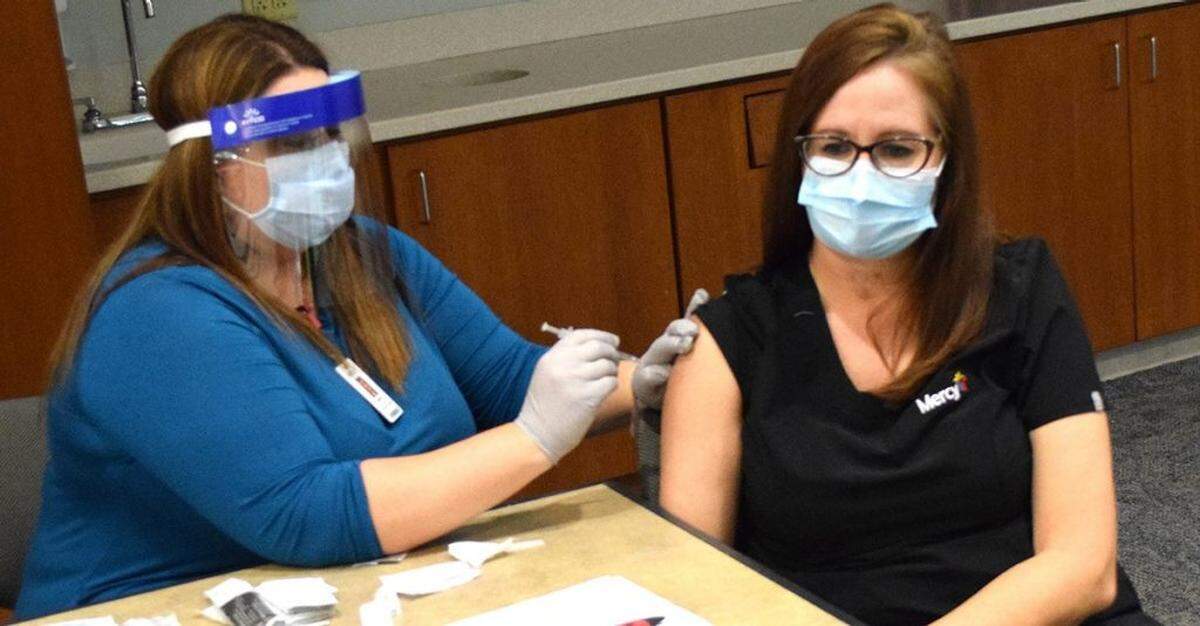
Tracy Hill, a nurse in the “step down unit” at Mercy Hospital — it’s a unit where people are treated before entering an ICU or after leaving it — received the COVID vaccine in December. She was chosen to be one the first two people in all of Springfield. News stations covered the moment.
“I remember getting my vaccine and coming out here afterwards, and sitting in my car and crying,” she said, on a break, outside the hospital. “I felt so hopeful. New beginning. That’s exactly what I said to someone, ‘This is the beginning of the end.’”
For a few months it seemed that way.
People clambered in Springfield to get the vaccine, as they did nationwide. Clinics were set up throughout the city, injecting 1,000 doses per day. If a few shots of vaccine were left in a vial, health care workers put out calls. Elated people rushed to receive it. Cases dropped. Mask mandates were loosened. Reeling and shuttered businesses reopened.
At its peak, Mercy had 113 COVID patients at the end of December. By April 5, they had seven. Life was returning to normal.
“Now it seems like we’re entering a new phase,” Hill said. “On some level, it makes me really angry.”
One day prior, she watched a woman in her 70s die. She was unvaccinated.
All but a few of the COVID patients here have the delta variant, now the most dominant and contagious form of the virus in the country — 50% more infectious than the alpha mutation which, itself, was 50% more contagious than the original COVID-19 that began its deathly sweep across the country just 16 months ago.
Viruses mutate. It’s what they do. Sometimes they mutate into milder forms. But this one has already twice mutated into something more powerful. Health experts’ long-term fear is that the more it goes unchecked, infecting people at its accelerated rate, the greater the chance it will become worse still.
“It’s a race against time,” Jarvis said. “We may get a strain where the vaccine doesn’t work against it. We can modify the vaccine, probably, but that’s going to take time.”
Seven months after Hill cried in relief, she weeps for other reasons.
“I’ve cried at work in the bathroom. I’ve cried in my car. I cry to my family,” she said. “What saddens me most is just always thinking about this is someone’s life cut short, and it’s so unnecessary.”
She worries about her colleagues, and the emotional stress on young nurses watching patient after patient die. She knows of mounting depression and anxiety. Accustomed to working three 12-hours shifts a week, many nurses are now working four.
“We’re even stretched thinner than we were before,” Hill said.
Plus, she has an 18-month-old granddaughter who is immunocompromised, recently declared free of cancer. Unvaccinated people are more likely to become hosts for the virus, which they pass on.
“I look at this innocent child and just think that we need to do everything we can to protect people like that, who can’t protect themselves,” Hill said. “I could not live with myself had I not been vaccinated and I took something like this home to my family.”
‘You can’t stop stupid’
It is hardly difficult to find people around town who are still adamantly against the vaccine. Quick talks with pedestrians strolling in downtown Springfield found that most were not vaccinated. Some were, like Nancy Winston, 59, who castigated those who have chosen not to protect themselves.
“You can’t stop stupid,” she said.
She talked of one person who decided to get the vaccine, but only after an unvaccinated friend died.
She doesn’t want anyone to get sick but added, “I don’t have hardly any sympathy.
“The people who are in the hospital dying, they don’t have to be there. This is on you. This is totally on you. I’m sorry, I don’t have that much sympathy. I do have sympathy for their families. They have had every opportunity to get vaccinated.”
Chris Ridolfi, 27, and his wife, Jaci, are choosing not to get vaccinated out of skepticism and personal protest
“The news is like all propaganda. All of it,” said Chris. He doesn’t trust the government.
He doesn’t doubt the virus exists. He, in fact, said that both he and his wife have already had COVID, getting it this spring.
“It’s not that I don’t believe it,” he said. “I just don’t believe it’s in my best interest or the people’s best interest to take an experimental vaccine for something that has been so politicized.”
Most of the people against the vaccine opined that they just thought it was developed too fast, not tested enough. They doubted its safety.
More than 330 million doses of the three main vaccines have been given in the U.S. since December. The Centers for Disease Control and Prevention notes very few side effects, and most have been mild and flu-like, such as fatigue, fever, headaches, chills and nausea that do not last.
Blood clots are a rare but serious side effect observed with the Johnson & Johnson vaccine at a rate of about 7 out of 1 million women ages 18 to 49. Some patients have also had allergic reactions that are treated on site.
“The risks of this vaccine are low,” said Will Sistrunk, an infectious disease physician at Mercy. “This is probably one of the most effective vaccines we have ever seen. The benefits far outweigh the risks.”
Many remain unconvinced, or unwilling to be convinced.
“I don’t want to go get this thing because I’m scared to die, then I die … because of the side effects,” Chris said. “I’d rather get coronavirus and survive it than get an experimental vaccine that’s been politicized.”
Jaci agreed.
“If you’re trying to incentivize people, trying to convince people that they need to do something, I think there’s something kind of sketchy about that,” she said.
Jarvis, the ER doc, said he has heard one false story after another. He’s had patients who did not want to be tested for COVID because they don’t think it exists.
“They wanted to know if, when we put the swab in their nose, if we were implanting a chip in them,” he said. “I mean, this is the stuff you can’t believe.”
It’s not as if Springfield health workers aren’t trying to change hearts and minds. Hill, the nurse at Mercy, said she and her co-workers sometimes talk about how the larger world doesn’t see what they see. They don’t see people dying alone, or gasping for breath.
But they sometimes think that maybe they should. More than 600,000 people have died in the U.S. from COVID-19. But for many, still, it’s just a statistic.
“On and off throughout the pandemic,” Hill said, “we’ve said, if someone could just come and spend a day or two with us, they would leave here and go straight to Walgreens to get a vaccine.”
Didn’t believe
Toni Cowger, a mother of four, didn’t need that reality check earlier last week. Part of her was grieving.
Age 47, a community health nurse with the Springfield-Greene County Health Department, Cowger has spent most every day since December working to get people vaccinated.
She personally vaccinated her own children and husband. Her dad was among the group who didn’t want it because of the possible long-term effects.
“He’s 74. I’m like, really, he’s afraid of long-term effects,” Cowger said, mocking. She supports people’s right to choose whether to get vaccinated or not. She also wishes people would save themselves and others and choose to take it
Last week, she and colleagues were set up at a fire station, giving away free passes to a Springfield Cardinals minor league baseball game for those who got vaccinated. Fewer than 20 showed in a two-hour period.
“Discouraging,” Cowger said. But after the initial rush on the vaccine, that’s the way it is.
With vaccines so readily available, health officials acknowledge the obvious. Anyone who really wants the vaccine, has already gotten it. Those who don’t, have not.
So now it’s their job to keep chipping away. Used to be that they would only set up vaccine sites at places that could guarantee at least 10 people. Each vial holds about 10 doses; they didn’t want to waste any.
“Now, we don’t do that,” Cowger said. “If there’s one person, we’ll open a vial just for one.”
Needles in tow, they’ve gone to comedy clubs, the farmers market, baseball games, churches, the ice rink, the zoo, homeless shelters, any business that will have them. The same afternoon Cowger was at the fire station, the Jordan Valley Community Health Center, along with a local photographer, set up a Pints and Pics for Pokes event at a local brewery. Anyone vaccinated was given a free beer and professional portrait.
Missouri State University in Springfield announced a lottery for vaccinated students. Top prize: free tuition. The CEOs of both Mercy and Cox hospitals, meantime, judge the problem to be so urgent, they have been tweeting madly, and at times testily.
“If you are making wildly disparaging comments about the vaccine, and have no public health expertise,” Cox’s CEO Steve Edwards recently tweeted, “you may be responsible for someone’s death. Shut up.”
Cowger understands.
“I’m going to try not to cry,” she said outside the fire station. Then she began crying. “I was at a funeral yesterday.”
It happened quickly, as Cowger tells the story. It was her husband’s cousin. Age 32, a wife and mother of two little boys. The cousin, living near Joplin, had a sore throat, a clear COVID symptom, and went to an urgent care center. She didn’t get a COVID test. They sent her home as diagnosed with strep throat. No better, she came back. They said she had pneumonia and, again, was sent home. Then, one night, she woke.
“She couldn’t breathe,” Cowger said. She was hospitalized, which eventually led to the ICU and a ventilator. The very night she was transferred to Mercy in Springfield, she died.
The cousin had not been vaccinated.
“She really didn’t believe in the vaccine, “ Cowger said, “nor does most of the family.”

.JPG)