Defenseless: Missouri justice system violates the Constitution every day
READ MORE
Defenseless
Missouri’s public defender system is one of the worst in the country.
Expand All
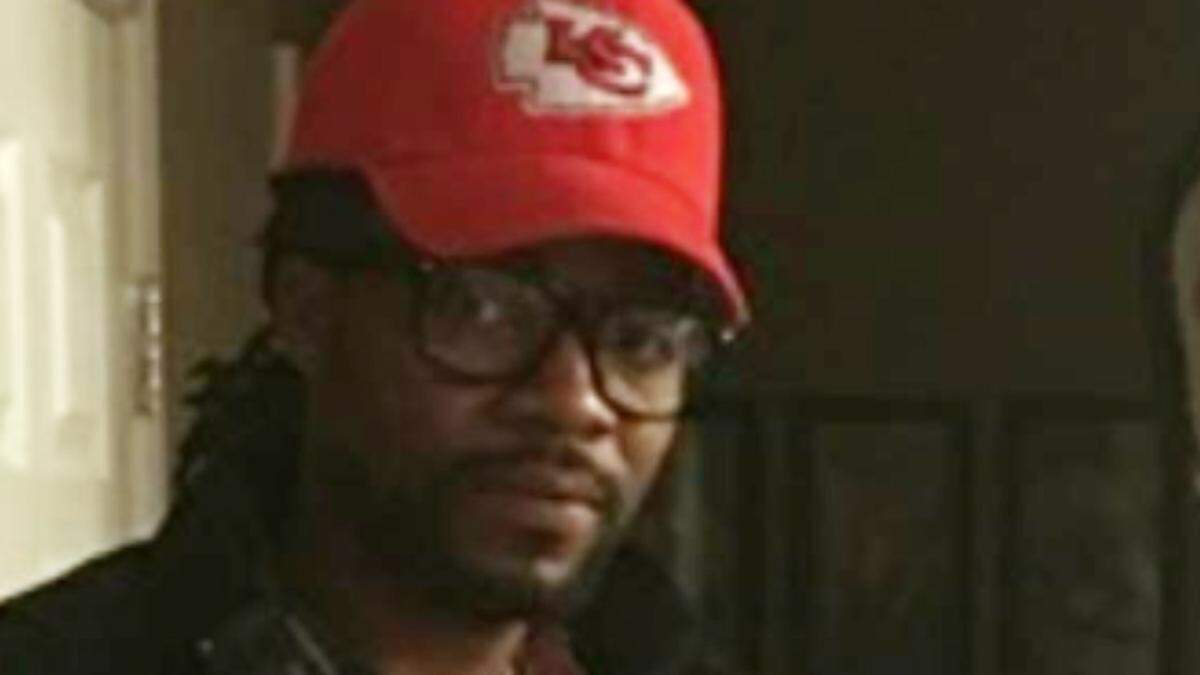
Terrance Blanks sits in a Missouri prison, serving 30 years after being convicted of murder.
He admits firing the gun that killed Rockey Bradley in 2016 outside a Kansas City convenience store. Bradley had a gun, too. The two men shot each other. Blanks says he acted in self-defense.
Blanks’ trial lawyer was David Wiegert. He’s a public defender, a state-paid attorney who represents clients like Blanks who are too poor to hire a lawyer of their own.
Wiegert was “totally unprepared. Totally unprepared,” Blanks says on the phone, from prison.
“The public defender system is a joke.”
For six months, Star reporters and editorial writers have combed the state in an unprecedented effort to examine Missouri’s troubled public defender system.
Star journalists have talked with judges, prosecutors, lawyers and defendants, studying dozens of hearing transcripts, court filings, jail records and arrest reports. We’ve traveled more than 1,000 miles to sit in rural and urban courtrooms, documenting how Missouri justice plays out.
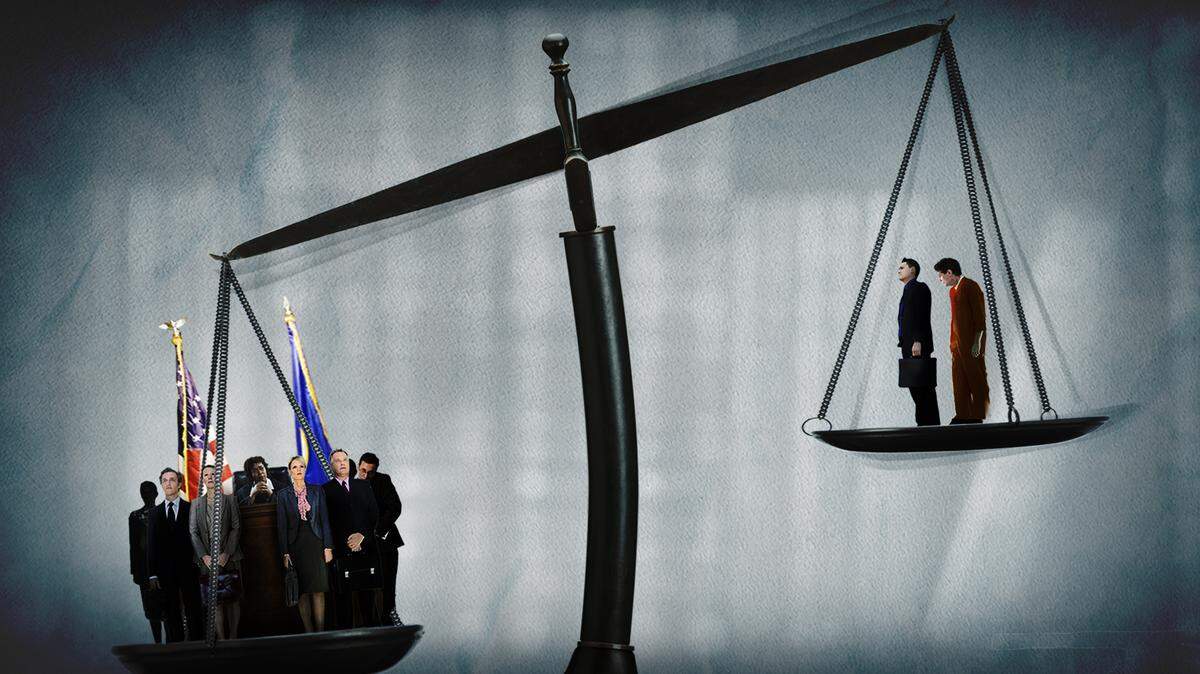
The conclusion is inescapable: The U.S. Constitution guarantees every criminal defendant the right to an effective lawyer, and Missouri violates that right every day.
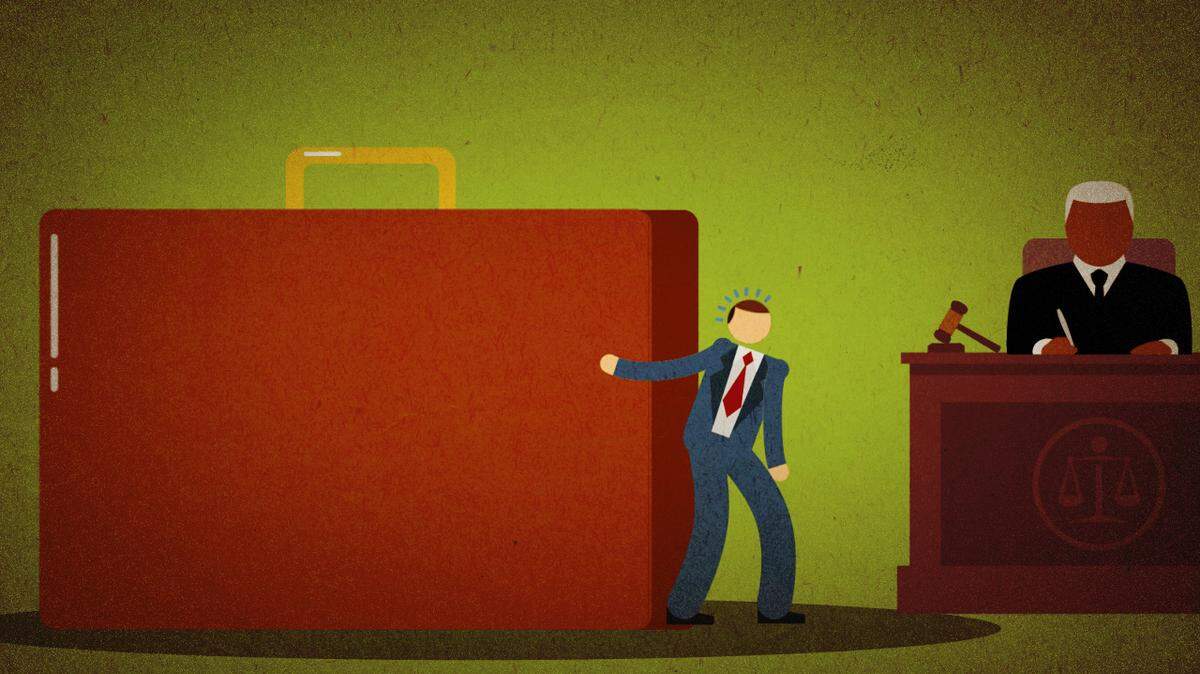
Missouri’s public defender system is an underfunded disaster. Its 384 attorneys are too often overworked, under-trained, lacking needed investigative resources and unavailable for clients in and out of jail.
Missouri ranks 49th of 50 states in per capita spending on the public defender’s office, ahead of only Mississippi. Public defenders spend an average of $346 per case, one court found. They handle 75,000 new cases a year, the vast majority of felony cases in the state.
More than 4,000 Missouri defendants are on wait lists, or informal postponement lists, their cases delayed until a public defender can be found to represent them. Clients wait weeks or months, sometimes in jail, for a public defender to become available.
Once they accept a case, public defenders routinely struggle to meet with defendants, cutting their clients out of their own defense. Public defender turnover is high, and the pay is low. Legal mistakes are far too common.
“You … have people going to prison that shouldn’t be,” said Jeffrey Martin, who runs the public defender’s office for Cass, Johnson, Bates, Henry and St. Clair counties. “And you’ll have attorneys who just walk into my office and say, ‘I would rather work at QuikTrip than do this.’”
Defendants feel enormous pressure to plead guilty to their charges, not always because they’re guilty, but because it’s the only way to extract themselves from the delays and uncertainty of the legal morass that often upends their lives. One public defender called it “pleading to daylight.”
Leon Munday, who retired as a public defender in 2017, recently testified about the “bottleneck” of indigent cases in Jackson County.
“The only way to do it successfully is to throw the defendant under the bus, or violate the rules of professional conduct, or both,” he said. “And that’s what’s happened.”
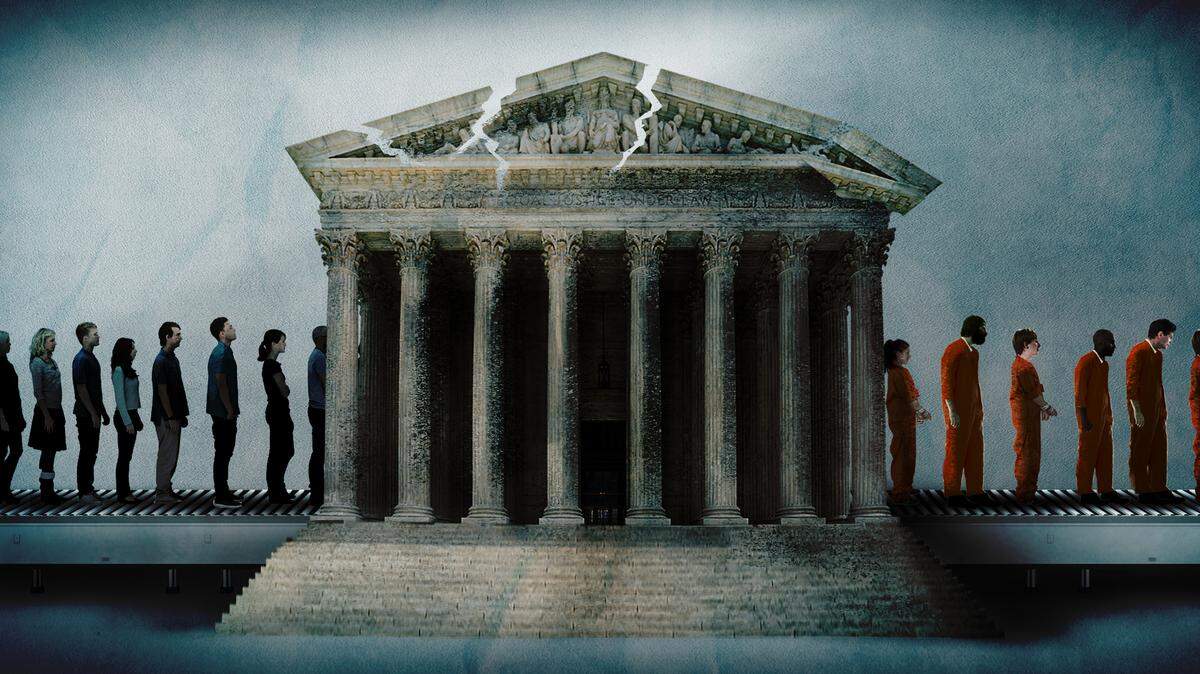
One Kansas City lawyer called the system “cafeteria tray justice” — cases moved along without regard for the guilt or innocence of defendants.
Jobs are lost, families are broken, defendants’ lives are ruined in the process.
BEHIND THE STORY
MOREHow we did this story
The Star newsroom and editorial board collaborated on a long-term investigation of Missouri’s public defender system, resulting in this series of news stories and opinion columns. Star journalists traveled across Missouri, interviewing public defenders working in more than two dozen counties, including one who represented a man wrongly convicted of murder. Read more by clicking the arrow in the upper right.
They followed one public defender for an entire day and interviewed another who, after being jailed for standing on principle, left to become a private defense lawyer. They spoke with seven judges, a half-dozen prosecutors, Gov. Mike Parson, several lawmakers, and more than 20 people who had been charged with crimes, including one exonerated from death row.
Visiting courthouses around the state to watch proceedings, they pored over thousands of pages of documents, including transcripts, police records, judges’ emails, budget reports, lawsuits, rulings, opinions and research studies. They heard from experts in Missouri and at the national level.
Why did the news and editorial sections do this project together?
This was a unique news and opinion partnership at The Star. At the outset of many projects, you don’t know where the reporting will take you. But this time, we knew we were investigating a broken system. To make a difference, the project needed deep reporting combined with a strong call for action.
The project grew out of the separate efforts of a reporter and an opinion columnist who had both written about the issue. Katie Moore, who has been covering crime and courts for years, began working on a story around the same time Dave Helling, a veteran journalist who has spent much of his career covering politics and the Missouri public defender system, wrote an editorial revealing that the state was nowhere near solving the problem.
Both dug in for months of independent reporting, with the results presented here together.
Do you have a story tip?
If you want to share your experience with the Missouri public defender system, contact reporter Katie Moore by phone at 816-234-4312 or send email to kamoore@kcstar.com. Columnist Dave Helling can be reached at 816-234-4656 or dhelling@kcstar.com.
‘I could use some help’
In an aging courtroom in Butler, Missouri, nearly 100 felony defendants sit and wait.
Their charges vary. Bad checks, theft, drugs, probation violations. But they have this in common: They are too poor to hire a lawyer, and they don’t have one.
Virtually every defendant here has been approved for an attorney paid for by the state. Jason Speer, the only public defender in rural Bates County, might be that lawyer.
But the defendants in this courtroom can’t talk with Speer. He’s too overloaded to take their cases — he’s got more than 160 on his desk — so he can’t meet with them or provide legal advice.
Instead, the defendants stand before Bates County Associate Circuit Judge Julie Highley alone, without any legal representation, just to check in. They each spend about 30 seconds at the bench.
“Stresses me out,” says Timothy Davis, who was accused of domestic assault and then approved for a public defender in May — of 2018. None had been assigned by the end of September.
“We have to keep putting off work,” his wife, Melanie, says. “We shouldn’t have to keep coming here for two years. That’s way too long.”
Upstairs, Speer scrambles in and out of the courtroom, meeting with clients he does represent. Their case files are stacked high in a clear plastic box. Bail is negotiated. Trial dates are set. For most, justice is delayed for another day.
“I could use some help,” Speer says.
Failed defense
“I thought it was going to be an open-and-closed case,” Blanks says in a phone call from the South Central Correctional Center in Licking, Missouri.
It was not. A jury found him guilty. Blanks blames Wiegert.
“He never jumped on it. Never attacked,” Blanks says of his public defender. “He didn’t do his job to the best of his ability.”
Wiegert didn’t try to replace a sleeping juror, Blanks says. Evidence of the victim’s violent past wasn’t used. A key witness went unchallenged.
Self-defense “is not a black man’s claim,” Blanks says Wiegert told him.
Wiegert would not discuss the specifics of Blanks’ case. For months, though, he has sharply criticized the public defender system, which he called a ticking time bomb.
“You have a system where defendants are being ignored,” he said. “By everyone ... It’s rampant, and it’s staring everyone in the face.”
This year, Wiegert asked a Jackson County judge to reduce his workload, which has now reached more than 100 active cases. He admitted he has sometimes fallen short of his own standards as a lawyer.
“I realized the gaps and holes in my practice,” he told Jackson County Circuit Court Presiding Judge David Byrn. “You’re trying to put a good face on it, and convince everybody that you were prepared, which is what I was doing.”
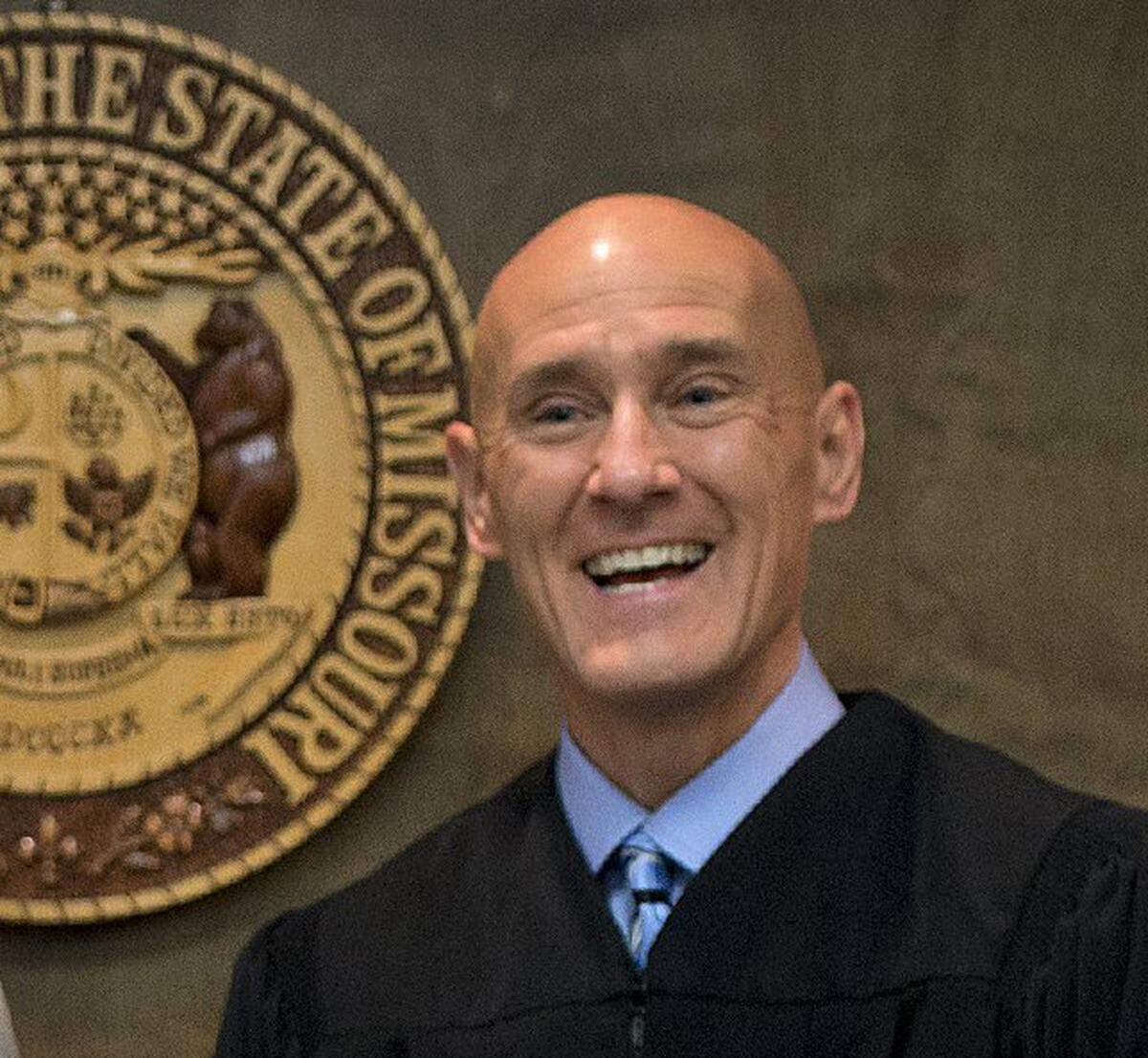
Byrn denied the request. “Busy attorneys (and busy people in other professions) do and should seek ways to work more efficiently,” he wrote. “The same should be true of Mr. Wiegert.”
In his order denying relief to the Jackson County public defender office, Byrn sharply criticized the office’s wait lists for defendants, which he says are illegal.
“The rule of law has long been a bedrock of society and results in order and stability,” he wrote. “The failure to follow and honor the rule of law, especially by those within the system, can only lead to disarray, chaos and disorder.”
In his ruling, Byrn never uses the word “justice.” Apparently, it’s less important than order and stability.
‘Constitutional rights are being violated’
David Standiford was charged in late 2017 with burglary and resisting arrest. He qualified for a public defender in February 2018, but didn’t get a lawyer until June.
While waiting in jail, “I lost everything,” he said recently, including a girlfriend and a job. His trial is now set for January 2020.
“A lot of constitutional rights are being violated right now, honestly,” he said.
In August, Beth Goodfield appeared without a lawyer in Henry County court on a probation case. She’s still on the wait list and had no legal help while standing before a judge.
“It’s nerve-wracking,” she said outside the courtroom in Clinton, Missouri.
Long delays and coerced guilty pleas are unacceptable injustices. But the consequences of this fatally flawed system are compounded, as overworked public defenders struggle to adequately represent clients if their cases do go to trial.
Public defenders often switch cases between arrest and trial. Terrance Blanks’ original public defender left the case after the death of her mother. David Wiegert was her replacement.
In 2016, Dorian Samuels was arrested for assault in Joplin. He was initially assigned a public defender who “did not engage in any investigation and failed to file any pretrial motions,” a lawsuit later alleged.
Samuels’ second public defender failed to meet with the defendant in jail or talk with him on the phone because of an “overwhelming workload and competing responsibilities to other clients,” the lawsuit claims.
The second public defender quit. A third defender was appointed but told Samuels he couldn’t work the case because he had 200 other clients.
Overworked and ineffective lawyers
The myriad problems in Missouri’s public defender office — and the unequal justice that results — have been evident for years.
In 1997, then-public defender Teresa Anderson represented Ricky Kidd, who was accused of killing two men in Jackson County. Kidd bitterly complained about Anderson’s alleged lack of focus on his case and sought her removal.
Anderson stayed on the case, and Kidd was found guilty of murder. He had an alibi, and no physical evidence connected him to the crime. In a series of appeals, lawyers accused Kidd’s public defenders of “inept” representation.
Federal judge Scott Wright agreed. “Kidd ... really had poor representation,” he said at the time. “God almighty.”
Kidd walked out of prison in August after 23 years in custody. He was innocent.
“Of course you have regrets after something like that,” Anderson recently told The Star. But “I think I did a pretty damn good job. We have to work within the rules of evidence.”
Kidd blames his overworked lawyers. “The public defender system itself is what’s ineffective,” he said.
The public defender system failed Ricky Kidd, and all Missourians.
Stacking the deck
Public defenders say they’re doing the best they can with limited time and resources. A 2014 study said a defense attorney should spend roughly 47 hours on major felony “case tasks” such as talking to clients and interviewing witnesses.
The average for Missouri’s public defenders? Eight hours, 42 minutes. The egregious disparity stacks the deck against defendants who don’t have the means to hire attorneys and sets their overextended public defenders up to fail.
And woe be to the public defender who claims overwork. In 2017, the Missouri Supreme Court disciplined Karl Hinkebein, a public defender, for failing to communicate with clients, missing deadlines and not preparing motions for the court to consider.
Hinkebein, who said he suffered from chronic health problems, was responsible for more than 100 cases at the time. Now, dozens of public defenders fear they will face sanctions if they don’t represent clients effectively, but will also face punishment if they refuse cases altogether.
The state will spend roughly $51 million on the public defender’s office this year, $30 million less than the office says it needs. That must change.
Even prosecutors concede the backlog of cases can threaten justice. “In our district, we’ve got a four- to six-month wait list,” said Tim Lohmar, the prosecutor in St. Charles County and president of the Missouri Association of Prosecuting Attorneys.
“Whatever needs to be done to get us to a point where indigent defendants can receive representation as soon as possible, that’s going to help all of us,” he said.
The public defender system is established by state law. A commission oversees its work.
Under that law, a public defender must take cases he or she is assigned. If there are workload issues, defenders can ask a judge to reduce the caseload by, among other things, finding private lawyers to take the cases.
But few judges do so. Many judges have no quibble with underfunded public defenders because the dysfunctional system encourages defendants to plead guilty. That keeps the line moving through the courtroom.
In 2018, Jackson County Circuit Court disposed of more than 3,300 felony cases. Of those, roughly 2% went to trial. The vast majority of cases were guilty pleas.
‘They’re still human beings’
Fixing this unacceptable, unconstitutional situation will be difficult, in large part because defending criminal suspects isn’t politically popular. Poor defendants have no clout and few champions. And while elected officials in both parties have acknowledged that the system isn’t working, reforming it — and finding the funds needed to make meaningful changes — has never risen to the top of the priority list in Jefferson City.
“The fact that we’re underfunding this is ridiculous,” said Missouri state Rep. Greg Razer, a Democrat from Kansas City. “When you look at the basic functions of government, and what our republic is based on, the right to a fair and speedy trial is just as core as representation in the legislature.”
The Missouri State Public Defender Commission recently reached a tentative agreement in a federal lawsuit aimed at limiting defenders’ hours. One proposal calls for limiting public defenders’ caseloads to a standard based on 40 hours a week, 52 weeks a year.
That has outraged Missouri Attorney General Eric Schmitt, who wants to block the settlement. Apparently, working full time for an entire year isn’t enough, if you’re a public defender.
To be sure, criminal defendants aren’t popular. Some are guilty of crimes. But everyone deserves effective representation in court. The Constitution requires it.
“Whether these people committed a crime or not ... they’re still human beings,” said Harold Trull, a Missouri public defender. “They still have constitutional rights.”
He’s correct. And those rights are routinely violated in Missouri. Addressing a long list of problems in the public defender system should be a top priority in the state.
This story was originally published November 20, 2019 at 5:00 AM.