Public defenders ordered to violate ethics to keep defendants moving through court
READ MORE
Defenseless
Missouri’s public defender system is one of the worst in the country.
Expand All
Judges across Missouri in the past two years have flouted the law and disregarded ethics rules as they rejected pleas for help from overburdened public defenders.
Faced with a failing system, some judges have refused to hear about the defenders’ problems, even though state law makes them the only avenue for help.
Some grow so impatient with the broken machinery of the courts that they take out their frustrations on defendants or force lawyers to break the rules.
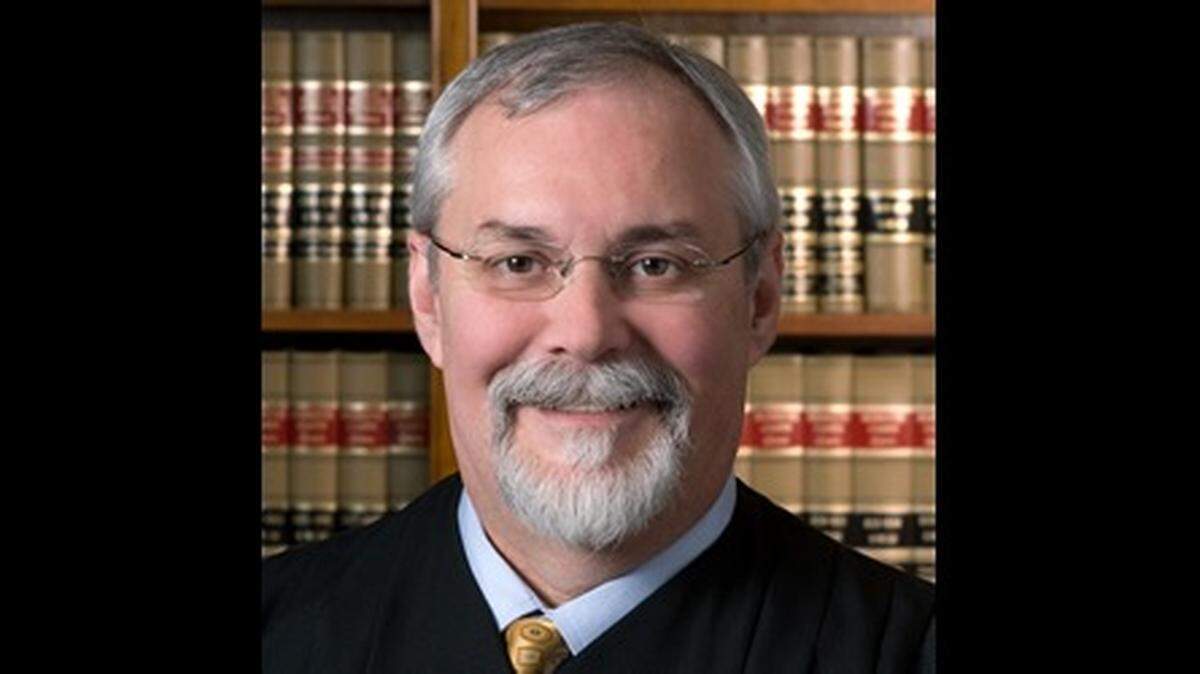
Judge Richard Standridge for example, on at least three separate occasions last year ordered public defenders to violate the state’s code of ethics, which says attorneys must handle cases competently.
“They’ve simply turned a blind eye,” said Michael Barrett, who headed Missouri’s public defender system for the past four years.
Barrett said the judges are willing to cripple the public defender’s office because they don’t want them to actually defend the public.
“It forces the court to work because we are able to hold hearings and file motions,” Barrett said. “They don’t want us to do these things because it forces them to work. They just want us to facilitate pleas.”
Critics have said it is symptomatic of courts that have turned to assembly-line justice.
In Kansas City, the defenders rebelled strongly enough against the judges to provoke open conflict.
Two years ago, they packed a courtroom to say they could take no more. They refused to cooperate with past court practices that they said served their clients poorly.
Judges threatened the head of the office with jail.
The vitriol has only gotten worse. The public defenders hired an outside law firm. One judge threatened to report defenders for misconduct.
As the revolt intensified, Jackson County Judge John Torrence summed the situation up in an email:
“Feckin shitshow,” he wrote.
No response
By Missouri law, judges are the only ones who can help public defenders who are headed toward legal and ethical train wrecks.
But some judges have been loathe to intervene in a way that would slow the movement of cases, instead taking almost any other action — including no action at all, in violation of the law.
For two years, Kansas City public defenders sought relief by filing requests with the presiding judge.
In June, Judge David Byrn denied them. Private attorneys representing the defenders filed an appeal in July.
In Livingston and Clay counties, judges have not given defenders a chance to present their arguments in person.
The head Clay County defender said in July all of his attorneys were maxed out, but Judge Shane Alexander denied him a conference. Alexander pointed to a state rule saying individual defenders can seek help, but an entire office cannot.
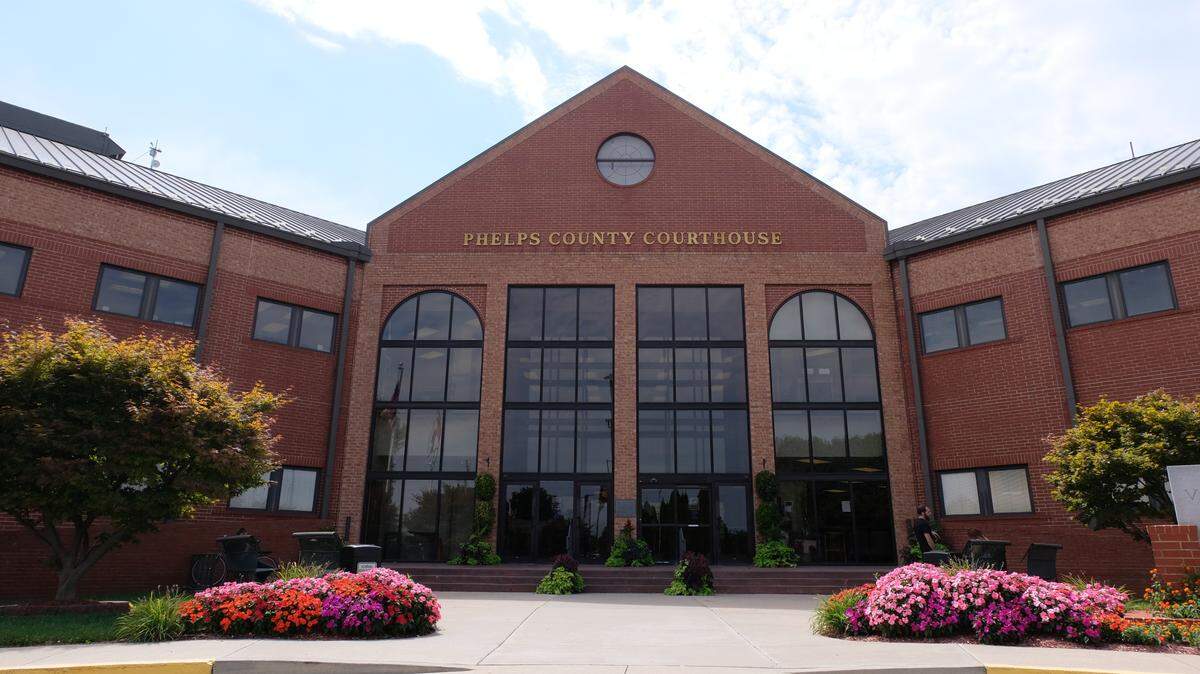
Public defenders in Phelps County were denied relief twice, most recently on Nov. 11.
A Henry County defender who filed for relief was granted an audience but the judge never issued a response, even though he was supposed to by law.
Judge James Journey agreed to a Dec. 15, 2017 conference for a public defender who had 763 cases in one year and was facing an ethics complaint. The defender wanted permission to carry fewer cases.
After the meeting, the judge was obligated to write an order in 30 days, either granting or denying the request.
He just never issued the order.
Journey said he didn’t do it because the defender was transferred to a different county.
“It became moot,” Journey said.
The transfer occurred in February 2018, weeks after the deadline passed.
“I never did get a ruling of any kind,” said district defender Jeffrey Martin.
Ordering ethics violations
On Jan. 18 last year, Standridge ordered a public defender who already had nearly 70 clients to take another and break the state ethics rule saying lawyers must do an adequate job representing people.
“This Court, having heard Public Defender Walter Stokely’s assertion that he is unable to provide competent representation to both (a defendant) and Mr. Stokley’s many other clients whose total open cases currently number 68, is ordered to violate Missouri Supreme Court Rule 4, and enter a full and not-limited entry of appearance as attorney of record in the above-numbered case,” Standridge wrote.
The judge gave Stokely three of those orders that day.
At the end of the month, he issued two orders to a public defender to take more cases “irrespective” of ethical obligations. The next month, he wrote four more.
Standridge said later he wrote the orders to protect the public defender from being penalized by the ethics commission.
“My order provided him a defense to any such complaint,” he said.
Legal experts said they were shocked a judge would put something like that in writing.
It “puts the lawyer in a tremendously difficult position,” said Ben Trachtenberg, a professor at the University of Missouri School of Law. “Almost by definition, it’s inappropriate to order someone to behave unethically.”
But, Trachtenberg said, the judge in a way acknowledged the bind the public defenders are in.
“You often see from judges ... ‘Suck it up and do the work.’ And they basically dodge the implication that we’ve got a bunch of Sixth Amendment violations happening every day in the state,” Trachtenberg said.
A judge’s view
Torrence was the presiding judge in Jackson County in 2017, when the head public defender was hauled into court and told she would be held in contempt and possibly locked up if her lawyers didn’t keep taking cases.
As a former public defender himself in the 1980s, when caseloads were smaller, Torrence said he supports properly funding the system. He acknowledges that there are public defender offices in Missouri that are stretched thin.
But the Kansas City office isn’t one of them, he said.
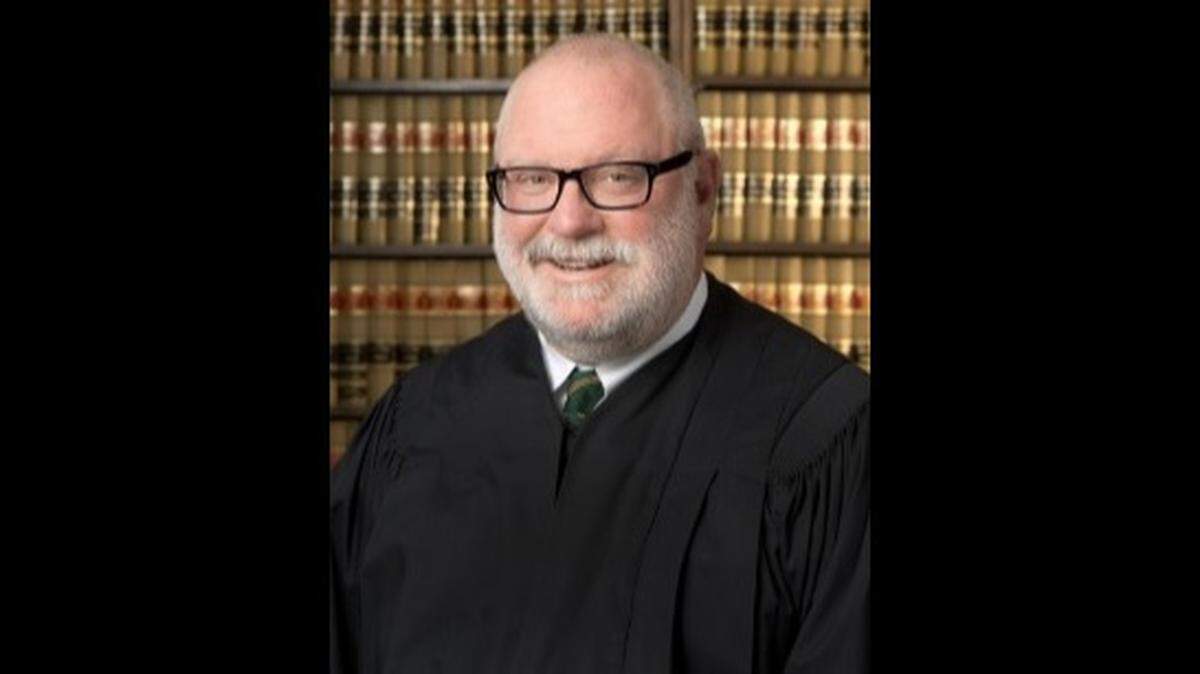
He pointed to the declining number of cases over the past decade at the court, where since 2011 they fell from around 6,400 to about 3,000.
“The fact that they continue to report their caseloads being excessively high when in fact they’re not, ought to raise an eyebrow,” he said.
He blamed public defenders for recent changes that, he said, wasted hundreds of hours of lawyers’ time.
For years, the court operated what it called an “early-disposition docket,” where defense attorneys brought clients for expedited guilty pleas.
It handled about 400 felony cases every year “with little effort,” Torrence said.
But in November 2017, the public defender’s office said it would no longer participate in the program, saying it wasn’t good defense work.
Deputy district defender Joseph Megerman worked the early disposition docket for three years.
Typically he would get evidence for several cases in the afternoon, and the next day hand it off to his clients, find out the plea offer and present it to defendants brought to a secured room at the courthouse.
Megerman was unable to meet with each client individually or in a confidential setting.
The evidence disclosed didn’t include electronic material such as dashcam video or audio recordings.
“If you take the time to investigate, they get better results,” he said. “So I would say it didn’t work very well.”
Three of his cases on the docket ended up in appeals court.
Another defender likened it to having a potted plant for an attorney.
The defender’s office also started insisting that clients be represented by one attorney from the beginning of a case to the end, as recommended by the American Bar Association.
Torrence has said lawyers struggle because they are lazy and have substance abuse issues. They suffer self-inflicted problems of leadership, inefficiencies and “bad policies,” Torrence said.
For example, he said, public defenders don’t always need to have even a minimal amount of evidence before engaging in plea negotiations with prosecutors.
“I think it’s a general principle that should be sought to honor, but I think it ignores the case-by-case distinction,” Torrence said.
“You can’t take all cases and say that they all should have A, B, C and D done before you can make a recommendation to your client. That just defies logic. There’s some cases where it’s quite obvious that the evidence is overwhelming.”
Kansas City public defender Erich Fonke said he couldn’t ethically advise a client without knowing the evidence.
“These are the people that it’s most easy for a judge to say, ‘Oh screw it, you don’t need all the discovery,’” he said. “It’s easy for people to want to just ball these people up and throw them away.”
Sometimes, Fonke said, judges prioritize state court time standards, which establish how long cases should take to finish.
Torrence said it was “nonsense” to suggest that judges are trying to push defendants through the courts because of that.
“I honestly couldn’t even tell you what the time standards are,” he said.
Started in 1997, the standards say half of all felony cases should be disposed of within four months and 90% within 10 months. The judges had imposed the guidelines on themselves when, year after year, cases got backed up in the courts.
St. Louis Judge Steven Ohmer chairs the committee that oversees the time standards.
“They are there to just encourage the courts to realize that we need to move things along,” he said. “We have to control our own docket within reason, you can’t let the lawyers run the dockets either. It’s a balancing, you have to balance in the interests of justice.”
In fiscal year 2018, 12 circuit courts across the state met the standards and were recognized with the O’Toole Award, named after a St. Louis judge.
Jackson County was not among them.
BEHIND THE STORY
MOREHow we did this story
The Star newsroom and editorial board collaborated on a long-term investigation of Missouri’s public defender system, resulting in this series of news stories and opinion columns. Star journalists traveled across Missouri, interviewing public defenders working in more than two dozen counties, including one who represented a man wrongly convicted of murder. Read more by clicking the arrow in the upper right.
They followed one public defender for an entire day and interviewed another who, after being jailed for standing on principle, left to become a private defense lawyer. They spoke with seven judges, a half-dozen prosecutors, Gov. Mike Parson, several lawmakers, and more than 20 people who had been charged with crimes, including one exonerated from death row.
Visiting courthouses around the state to watch proceedings, they pored over thousands of pages of documents, including transcripts, police records, judges’ emails, budget reports, lawsuits, rulings, opinions and research studies. They heard from experts in Missouri and at the national level.
Why did the news and editorial sections do this project together?
This was a unique news and opinion partnership at The Star. At the outset of many projects, you don’t know where the reporting will take you. But this time, we knew we were investigating a broken system. To make a difference, the project needed deep reporting combined with a strong call for action.
The project grew out of the separate efforts of a reporter and an opinion columnist who had both written about the issue. Katie Moore, who has been covering crime and courts for years, began working on a story around the same time Dave Helling, a veteran journalist who has spent much of his career covering politics and the Missouri public defender system, wrote an editorial revealing that the state was nowhere near solving the problem.
Both dug in for months of independent reporting, with the results presented here together.
Do you have a story tip?
If you want to share your experience with the Missouri public defender system, contact reporter Katie Moore by phone at 816-234-4312 or send email to kamoore@kcstar.com. Columnist Dave Helling can be reached at 816-234-4656 or dhelling@kcstar.com.
Taking a swing
When Torrence threatened to file complaints against public defenders, Barrett, the head of the state system, called it “bullying.”
“Where’s the leadership from the judiciary?” he asked.
Before taking a job with the public defender system in 2014, Barrett had been working in the Missouri governor’s office.
He had cut his teeth as a young public defender in Albany, New York, before moving to Missouri with his wife, who was executive director of the Missouri Bar.
After watching the Missouri defenders suffer budget cuts under former Gov. Jay Nixon, he decided to make a change.
“I decided to come over to the public defender’s office in large part because the governor was trying to blow it up,” he said.
As head of the system, Barrett soon made a name for himself as an aggressive advocate for public defense.
In 2016, he made national news when he appointed Nixon, who is an attorney, to represent an indigent defendant.
Though a judge ruled Barrett didn’t have the authority to make such appointments, Barrett had made his point.
“I took a swing at the sitting governor,” he said.
After four years, Barrett resigned, leaving his office last Friday.
Former deputy director Greg Mermelstein was named interim director. The state’s public defender commission will select the permanent director.
As Barrett returns to New York to be closer to family, he said he stood by his defense of the right to counsel.
“I am not movable on the idea that someone should have better access to liberty because they have money,” he said.
Before leaving, he pointed to one recent court hearing as an example of how judges concerned with getting cases off of their dockets punish defendants who take time to think before pleading guilty.
The risk we run
Judge Janette Rodecap grew frustrated with a 40-year-old homeless man, charged with trespassing, who had hesitated to take a guilty plea.
She showed it when the man stood before her on Oct. 15, now ready to accept a conviction.
The man’s public defender, Sarah Westfall, asked that court costs be waived because the man had no money. A prosecutor wanted confirmation the man was homeless and couldn’t pay.
But Rodecap, who a few weeks earlier had remarked in court “we’ve got to get these cases moving,” said she didn’t want to delay the case again. She waived the costs.
That still left a fine. Westfall said prosecutors had agreed to a reduced fine of $10.
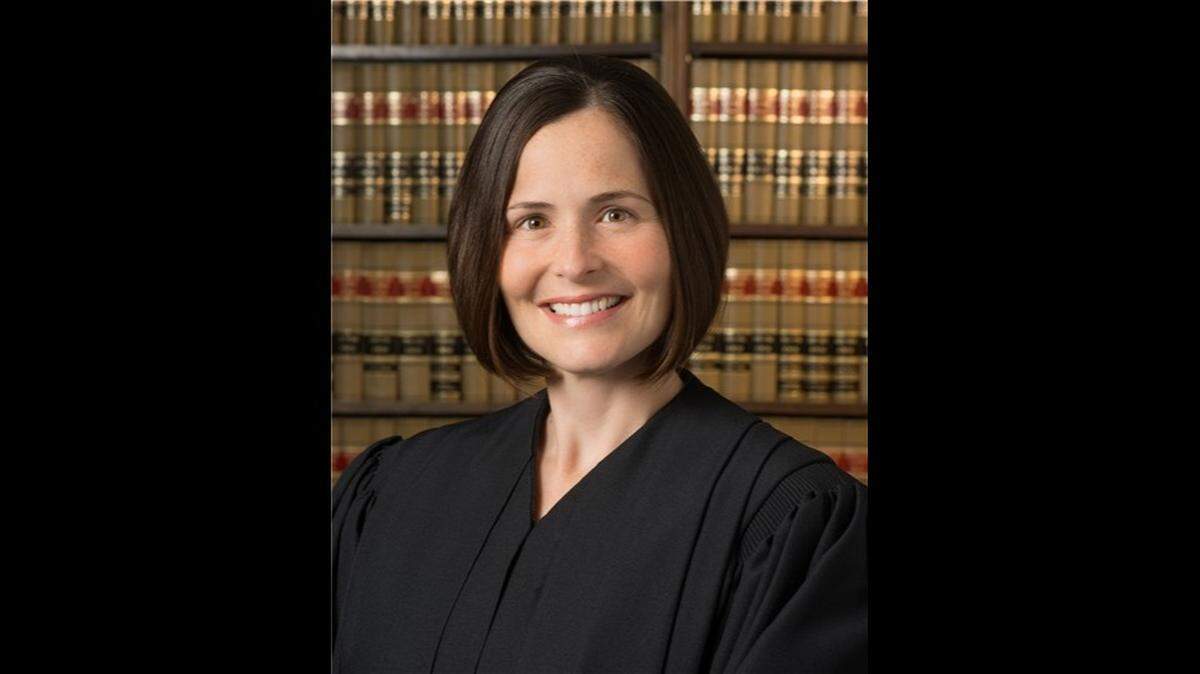
“Here’s the problem,” Rodecap said. “You guys didn’t take that when you had the opportunity to take it. Correct?”
Westfall agreed.
“So today the offer’s $20,” Rodecap said. “This is the risk we run when we don’t take the offer when it is extended.”
Later, Westfall said she didn’t think the exchange was appropriate.
Rodecap, in an email, said plea offers are made by the prosecutor, not the judge.
“The process and procedure was fair and (the defendant) received a substantial benefit of the waiver of court costs and additional time to pay the fine.”
This story was originally published November 20, 2019 at 5:00 AM.