Without help from City Hall, they’re rebuilding KC’s East Side one block at a time
READ MORE
Kansas City’s East Side land grab
A 2021 Star investigation looks into how a neglected section of the city has become a hunting ground for real estate speculators and why many Black residents feel they are once again being exploited and left behind.
Expand All
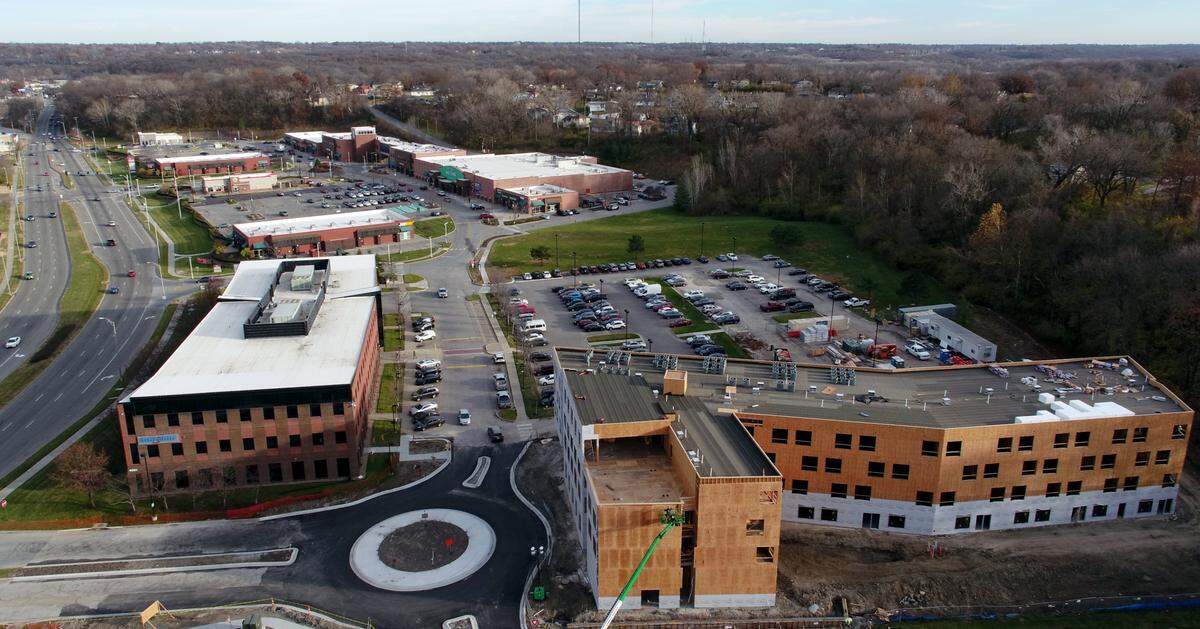
From his office on Blue Parkway, Emmet Pierson Jr. can point out all the ways Community Builders of Kansas City has revitalized the area just south of Brush Creek.
Next door is the main campus of Swope Health Services and the Sun Fresh grocery store, which the organization not only built but operates. Across the street is a fully occupied, 85,000-square-foot office building. And down the way are dozens of duplexes and townhomes, not to mention the new metallic apartment complex that will soon open nearby.
To Pierson, president and CEO of Community Builders, it underscores his belief that targeted, concentrated development can prove transformational for struggling neighborhoods. But it’s also a reminder of how rare such efforts are in Kansas City.
Having built more than $250 million in urban developments since 1991, Community Builders has arguably done more than any other private or public entity to bring life to Kansas City’s East Side. But it’s done that largely on its own, reinvesting the profits from one project into the next. The work wasn’t done as part of a wider strategy for the East Side; rather, it was achieved despite an absence of political and civic leadership.
That’s indicative of many of the most promising efforts on the East Side: individuals, nonprofits and neighborhoods have undertaken big and small projects to move the needle after years of inaction and unmet promises from City Hall.
Pierson said his organization, a nonprofit community development corporation, would like to see a more concerted effort from local leaders to improve the neighborhoods east of Troost.
It’s not like the city doesn’t know how to do this. In recent years, city leaders have promoted development efforts around the streetcar line, offering lucrative incentives to for-profit developers to build up around the burgeoning rail line.
“There’s a concentrated effort to make that happen,” Pierson said. “And I’m not seeing that same concentrated effort, sustainably and consistently on the East Side.”
It’s not just a matter for policymakers, though. Pierson recalled the fundraising effort that helped the Nelson-Atkins Museum of Art build the $200 million Bloch Galleries addition. What could that sort of philanthropic support mean for the East Side, he wonders?
A targeted, prolonged commitment would improve the entire city, he said. Property values will increase, bringing new taxes for schools and neighborhood beautification projects.
“If we have a strong East Side, we have a strong city,” Pierson said. “And we’re able to tell businesses when they locate to Kansas City, ‘all of Kansas City is there for you — not just Brookside, not just the West Side, not just along the streetcar.’”
Formerly known as Swope Community Builders, the nonprofit developer has built some 600 housing units since 1991.
It manages an $80 million portfolio of commercial and residential real estate with no signs of slowing down: The Rochester, a $12.6 million effort, will soon bring 64 market rate apartments to Blue Parkway.
And Community Builders has done most of this work with little outside help.
Relying on grants and returns on its own investments to fund construction, the organization has never sought or received individual donations.
Instead, the minority-led organization faces systemic challenges in banking and real estate that make it even harder to bring new developments online. Those include bank appraisals that come in far below the actual cost of construction on the East Side — making it even more difficult to fund new developments there.
Pierson said the organization could do much more with wider community support.
“Given the amount of work that we’ve done on the East Side, particularly given the time of social justice, racial equity, and all the conversation around the George Floyd murder, you would think that, hey, they’re on the East Side, they’re working with Black and brown populations, how can we uplift that mission?”
Smaller efforts making a big difference
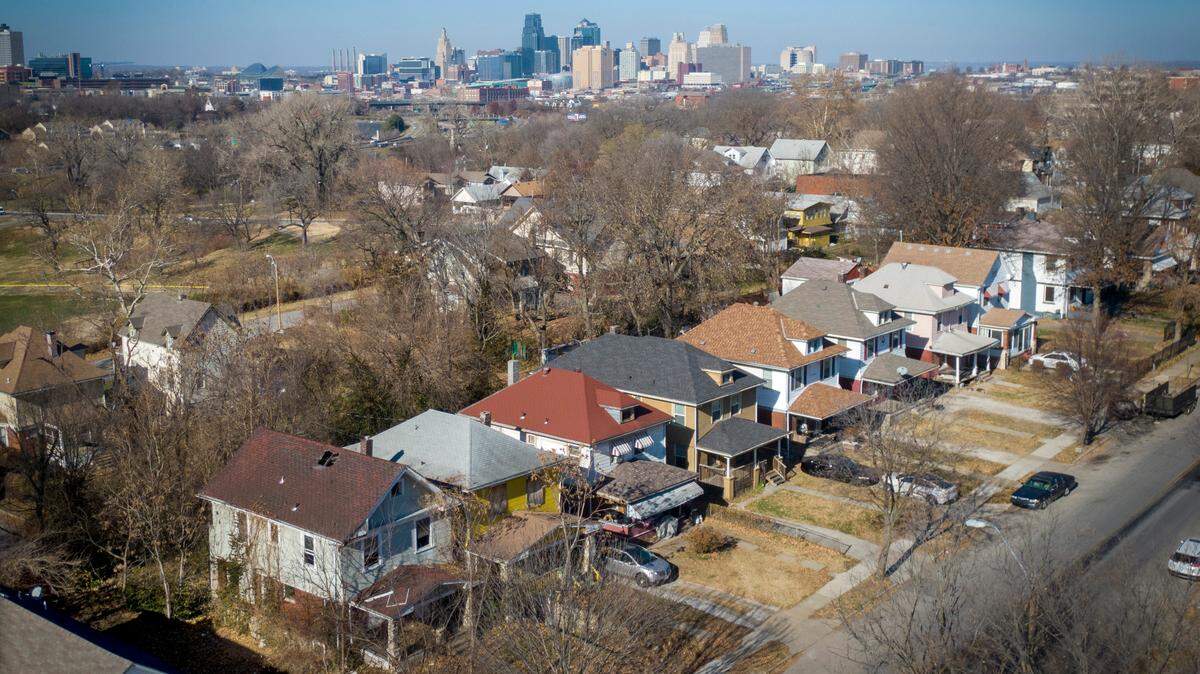
With thousands of empty lots and homes dotting the urban core, neighborhoods aren’t just waiting around for someone to take action. In many cases, they’re taking charge of distressed properties themselves.
Missouri’s Abandoned Housing Act allows neighborhood associations to sue the owners of abandoned homes. It starts a process in which a judge vests temporary possession to the neighborhood, allowing the organization to renovate the home, usually by partnering with a rehabber or contractor.
Once the home is renovated, the previous owner can elect to pay for the improvements. But generally, the title is given to the rehabber, who can decide to hold it or sell it. While the contractor can ultimately profit off the endeavor, this process gives the neighborhood agency over its own properties.
“It’s not the same as a flipper coming in,” said Brandon Mason, an attorney with the economic development unit at Legal Aid of Western Missouri, whose office receives city funding. “The motivation for doing it and the outcome are different. The motivation is to expand housing where it otherwise didn’t exist.”
Legal Aid represents several neighborhoods working to fix up some of the city’s most distressed housing stock. But it only does about 30 cases a year, Mason said.
Like many neighborhood improvement efforts, it’s a matter of money. The home rehabbers must have deep pockets to pay for the renovations. Because without a title on the home, they usually have no collateral for a loan.
“I’m sure there’s more capacity than what we do now,” he said. “The need is larger than what we’re able to pursue at any given time.”
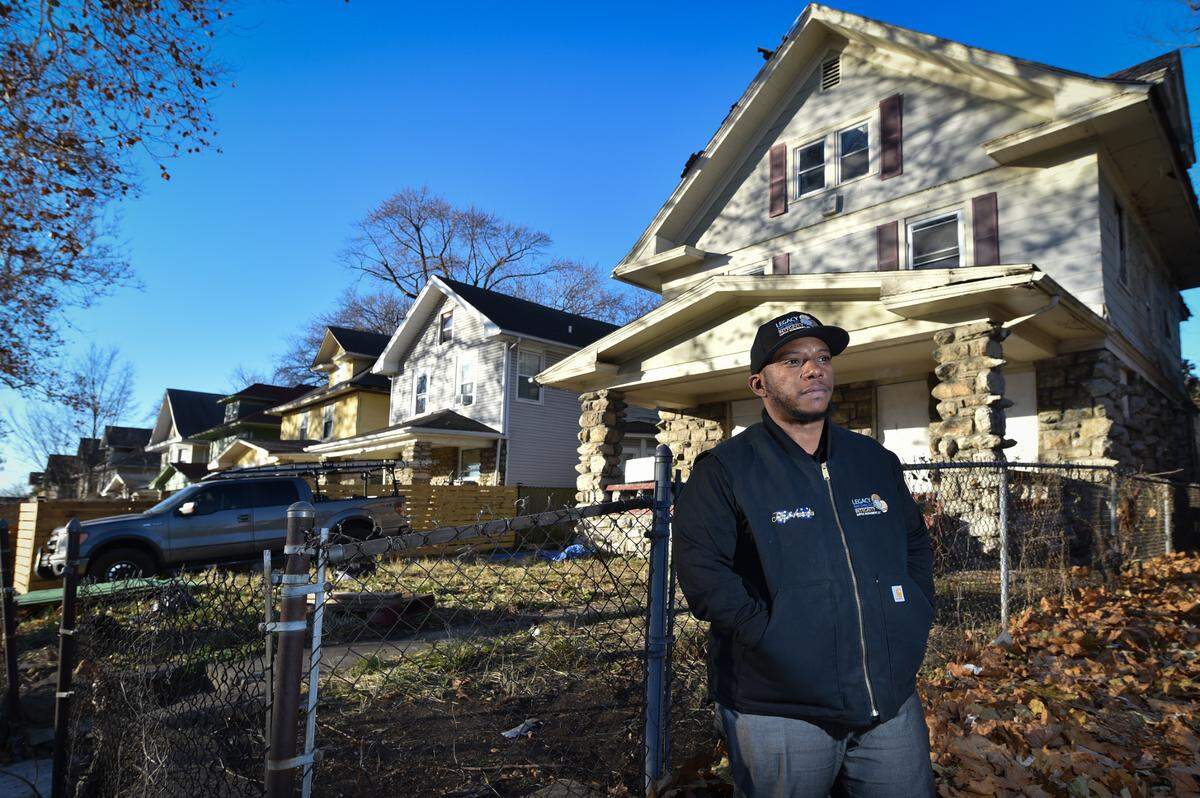
Terrell Jolly is among the rehabbers who use the Missouri law to acquire destitute properties.
Jolly loves to find the worst house on the block and turn it into the nicest.
He’s careful to add dishwashers, screens on windows and fans in every room. And he strips his houses to the studs to rebuild electrical, plumbing and HVAC systems.
“If I was a slumlord, I’d just throw some paint on the wall,” he said.
Jolly learned the craft after managing the rental properties for other investors. He’s rehabbed more than 30 homes that he now rents from $650 to $1,700 per month.
The job is rewarding, he said, but rife with challenges.
He constantly battles low appraisals. Before each rehab project, Jolly must risk his own family’s home as collateral to get funding from the banks. He’s applied to agencies like the Central City Economic Development sales tax to no avail. He’s sought to bring life back to some abandoned properties, but has been denied by the Kansas City Land Bank.
To him, it’s evidence that Kansas City is far more focused on big, institutional development. But he views smaller investments like rehabbing dilapidated homes as far more transformative for the East Side.
“What’s holding the community back is the lack of incremental development,” he said. “I’m more important than One Light, Two Light, Three Light.”
‘They don’t make it easy for you’
Since shedding the apron he wore as co-owner of a Mexican restaurant in 1985, Larry Myer has been bringing abandoned homes back to life on Kansas City’s East Side.
After apprenticing with a long-time rehabber, Myer has refurbished hundreds of homes. And if he hadn’t, he’s not sure who would have because he takes on projects others might not have the skills or resources to tackle.
“I would say 90 percent of them would have been vacant lots by now,” he said.
At first Myer fixed up houses he could rent to tenants who had federal housing subsidies under the Section 8 program.
Many years later he got out of the rental business and started rehabbing houses strictly for resale. Today he provides financing for others to do the same.
He acquires houses from the city’s Land Bank, at public tax auctions or in cooperation with neighborhoods working through the abandoned housing law. To make the biggest improvement in neighborhoods, he will buy several at a time that are close together in hopes of uplifting entire blocks.
“We try to find a block that’s just a mess,” Myer said. “This one was a mess, a real mess.”
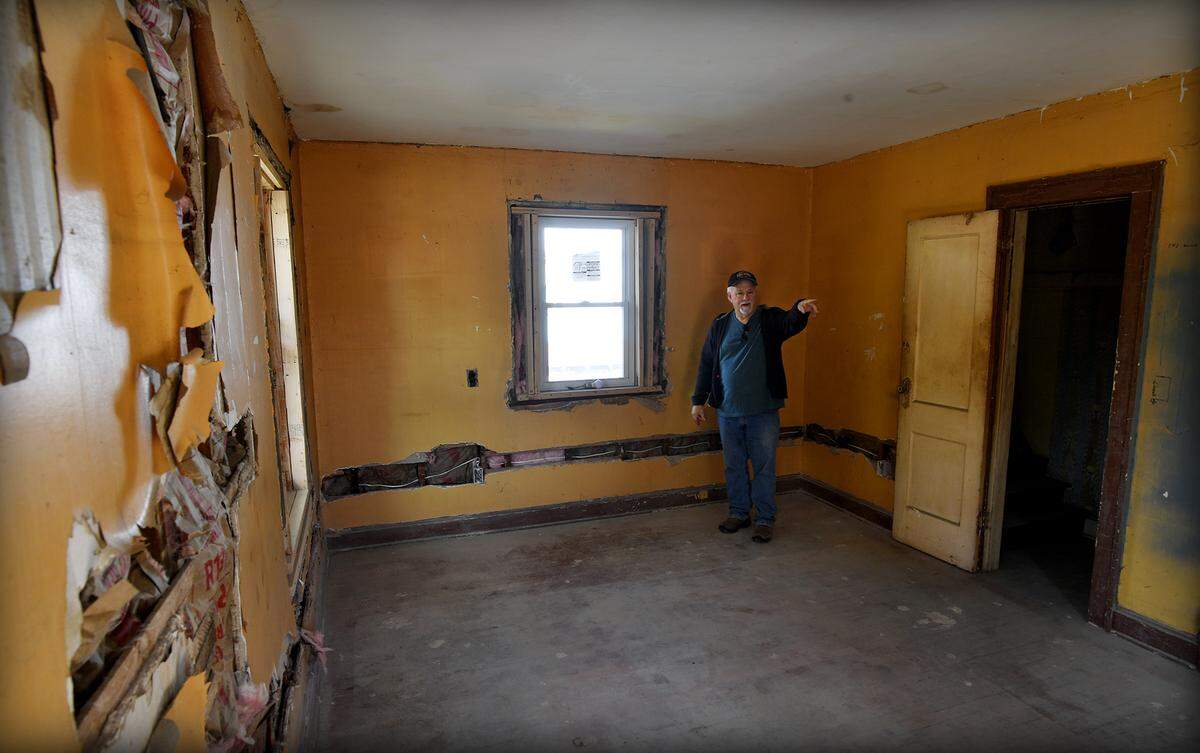
Myer was speaking of his current project that the non-profit part of his enterprise, Tikkun-KC (Hebrew for repairing-KC), has taken on in the 3500 and 3600 blocks of Indiana Avenue. It’s typical of many areas on the East Side. There are vacant lots where houses either burned down or were demolished because someone like Myer hadn’t gotten there sooner.
He’s either rehabbed or is in the process of rehabbing a half dozen houses along that stretch of Indiana and has his eye on others.
He wishes Kansas City government had a greater commitment to saving the existing housing stock on the East Side. The city’s program a few years ago to demolish hundreds of structures on the dangerous buildings list was not carried out well, he said. Many of those houses could have been saved.
He cited one home on 27th Terrace that the city wanted demolished. He questioned why it was on the dangerous building list and found out the city hadn’t been inside. So he demanded a list of all the structural problems and got to work himself.
“I raised a big enough stink and they walked away,” he said, “and now it’s a gorgeous house. Nice little house.”
If the city won’t get in the business of fixing up houses, Myer wishes they would at least get out of the way. That’s what he told previous City Manager Troy Schulte a few years ago after he kept running into problems with city inspectors. As soon as he’d buy a house to fix up, inspectors would cite him for pre-existing exterior property code violations. The tickets piled up.
“You know, they don’t make it easy for you down here,” he said.
But Myer has forged on, eyeing dozens more homes he’d like to get his hands on. Even with a boom of investment in the East Side, there’s plenty of homes to fix up and flip, he said.
“I won’t live long enough to do everything I want to do down here,” said 66-year-old Myer.
This story was originally published December 14, 2021 at 5:00 AM.