Land grab remakes Kansas City’s East Side, upending neighborhoods, Star investigation finds
READ MORE
Kansas City’s East Side land grab
A 2021 Star investigation looks into how a neglected section of the city has become a hunting ground for real estate speculators and why many Black residents feel they are once again being exploited and left behind.
Expand All
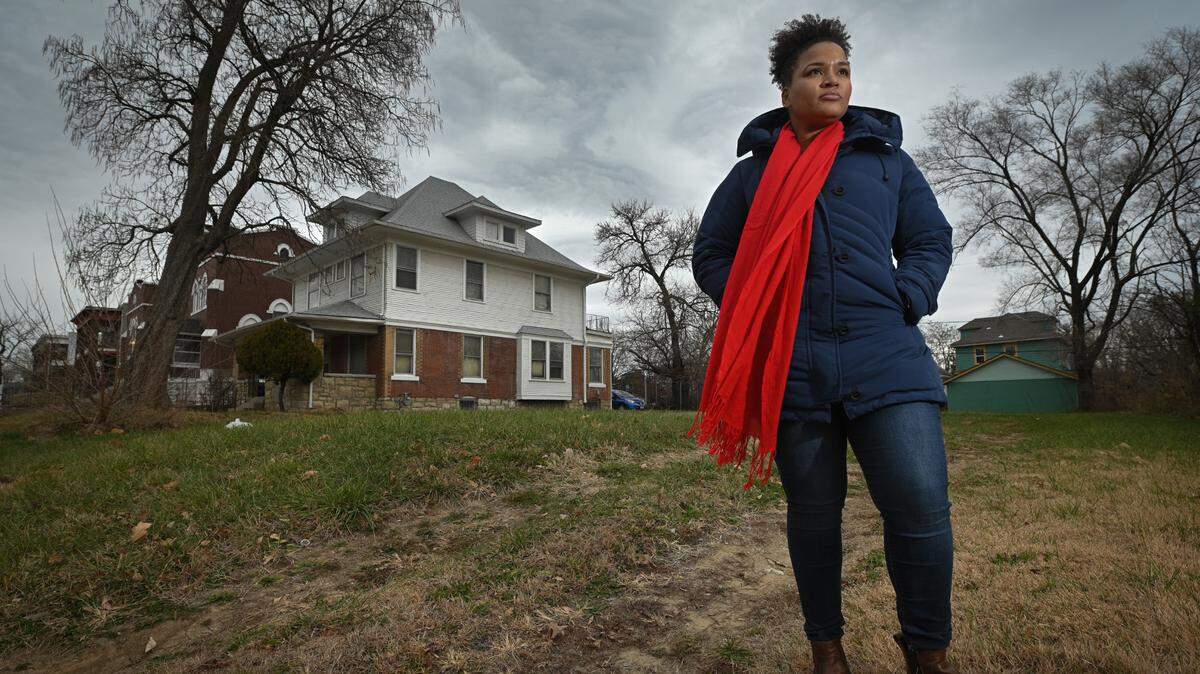
It was a cool afternoon. Eartha Ersery — called Miss Ersery by friendly neighbors — eased herself into a chair on the stone porch of the East Side home she’s lived in for 63 years.
Up here, with her house set on a rise, she could look out across Garfield Street, where, in 1958, hers became the first Black family on the block and where she, her late husband, J.V., and their children watched as every white family in the neighborhood moved away.
It bothered them little.
Prevented from moving to the suburbs by racist lending practices and housing covenants, other Black families soon bought into the neighborhood.
“A lot of love on this block,” said Ersery, 87. “Capital L, capital O, capital V, capital E. Strong homes. Strong people. Strong love. Everything.”
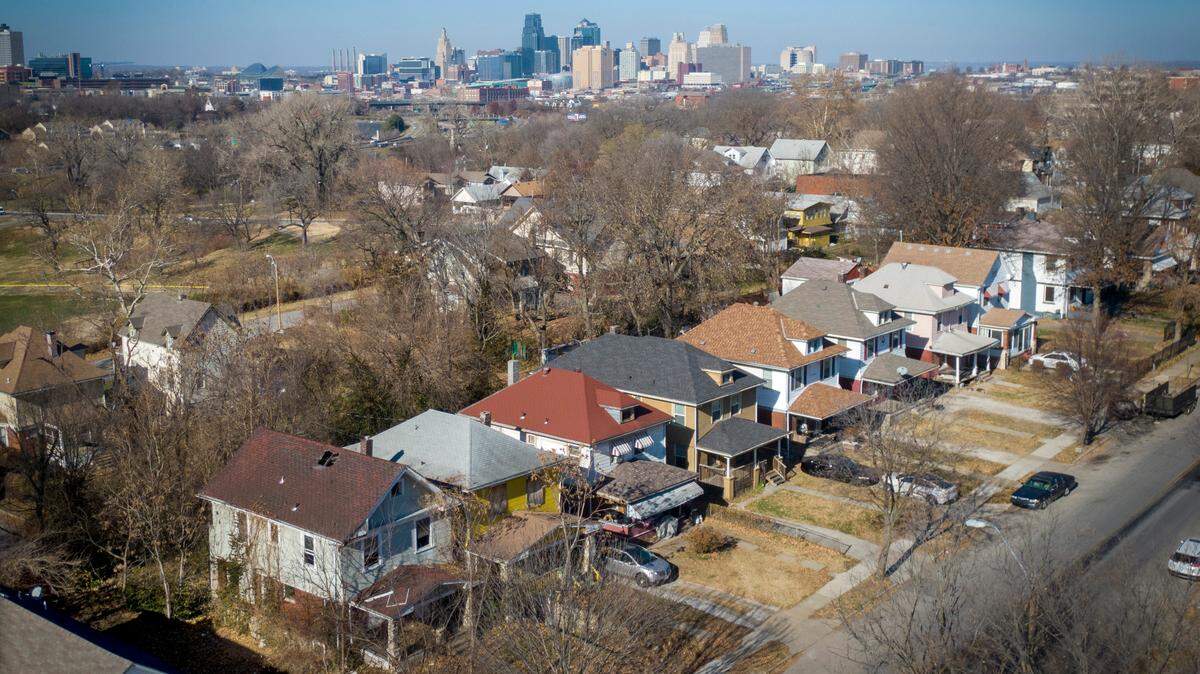
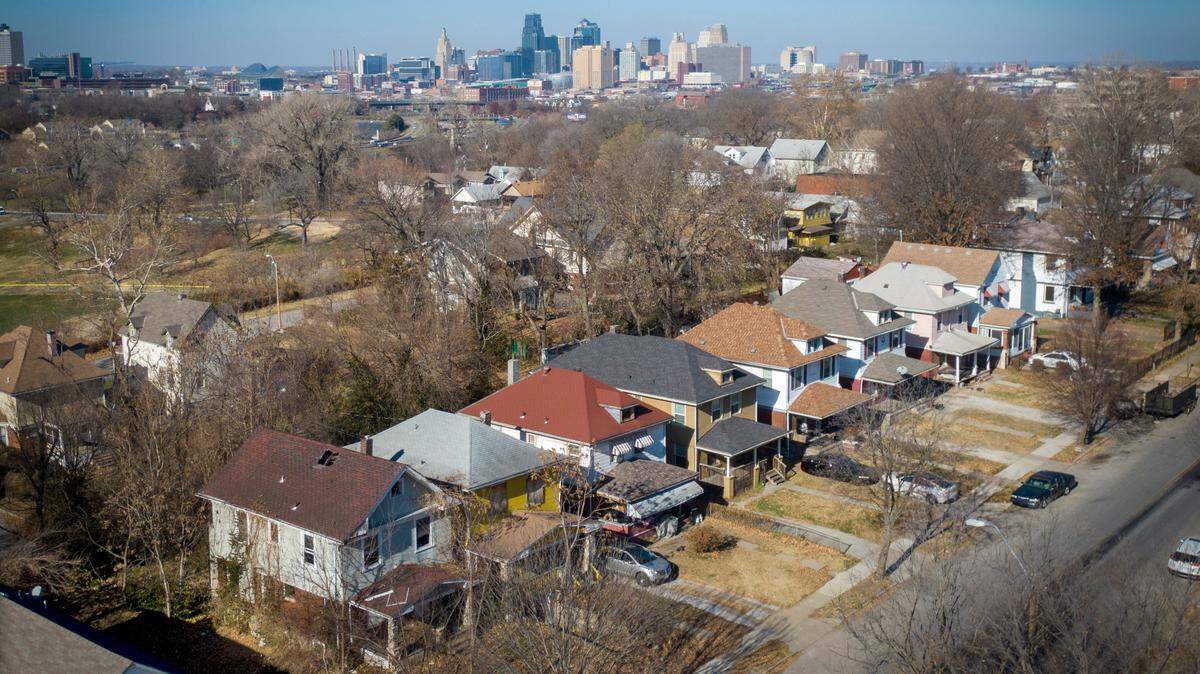
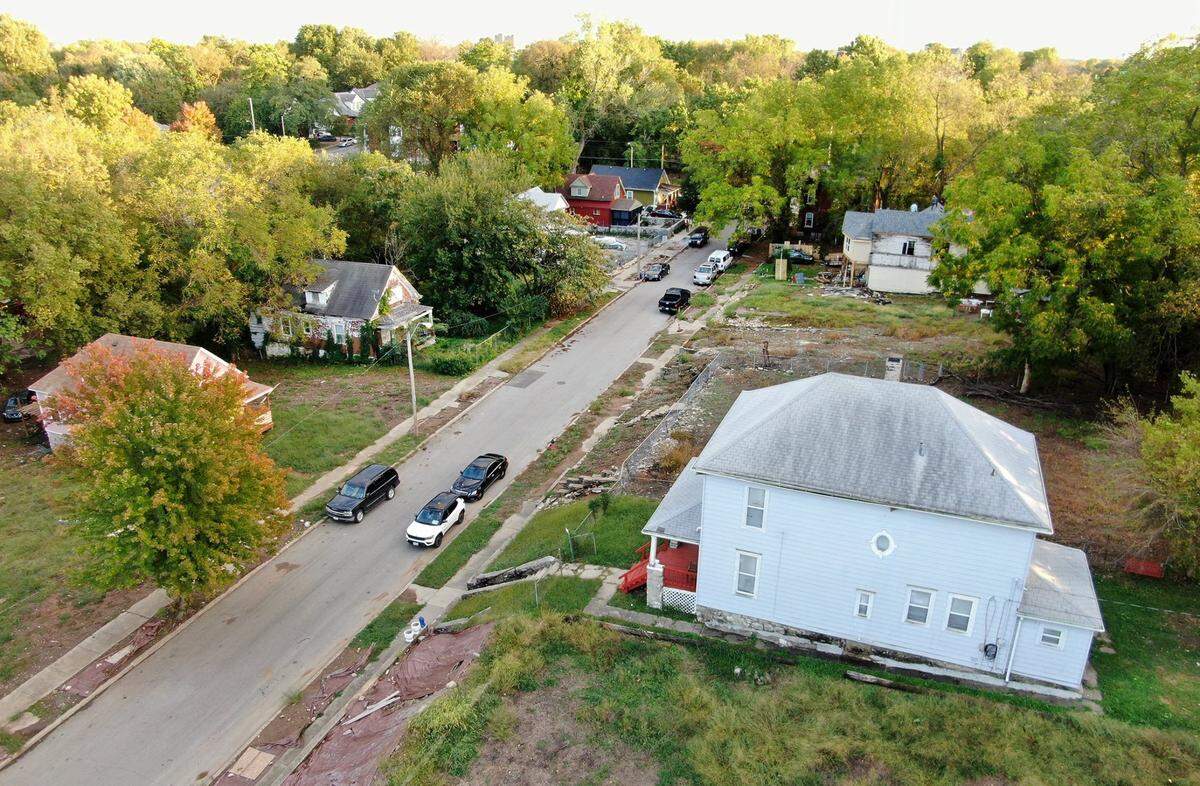
Except “everything” these days includes a gnawing disquiet, a growing sense in the city’s largely Black neighborhoods east of Troost Avenue that the area is undergoing a massive land grab — a property turnover perhaps unseen since the development of the suburbs, the neighborhood upheaval brought on by the construction of U.S. 71 and midcentury white flight.
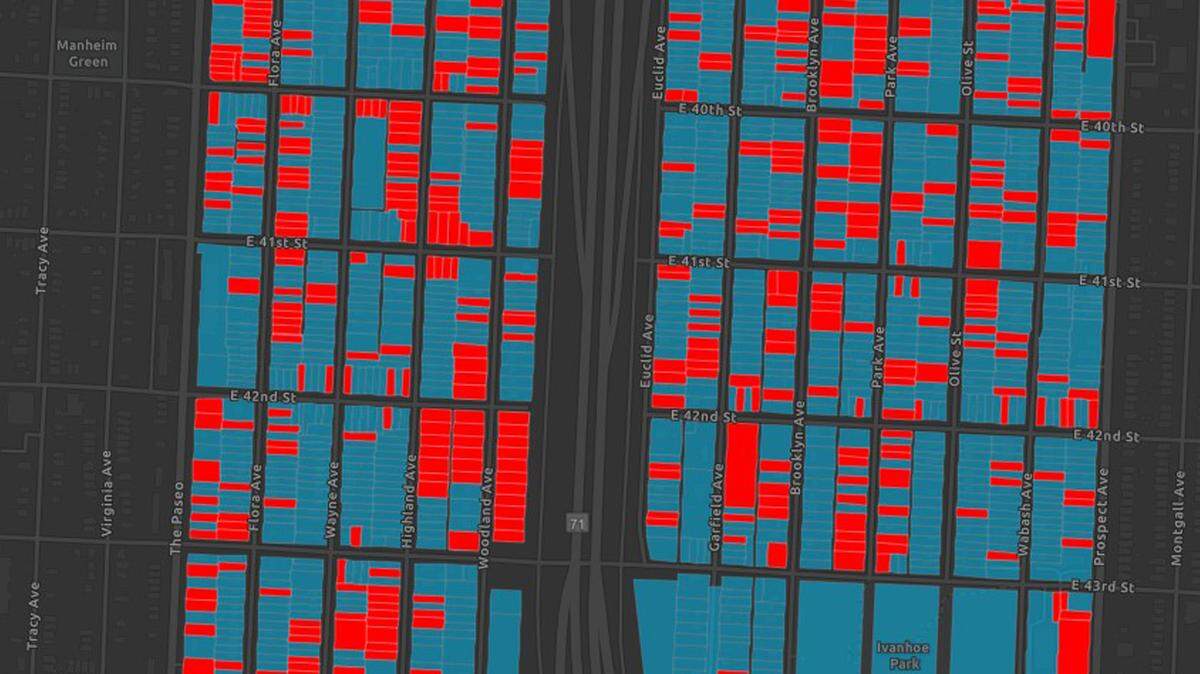
The Star, as part of a monthslong investigation, analyzed thousands of real estate and tax records, charting and mapping out city parcels and ownership data east of Troost — Kansas City’s de facto racial dividing line for three generations.
Data reveals that the area — created by racist housing policies, depopulating, suffering crime and physical decline — has since the economic downturn of 2008 become an active hunting ground for investors and speculators from across the Kansas City region, all 50 states and at least a dozen countries as far off as Australia and Ukraine.
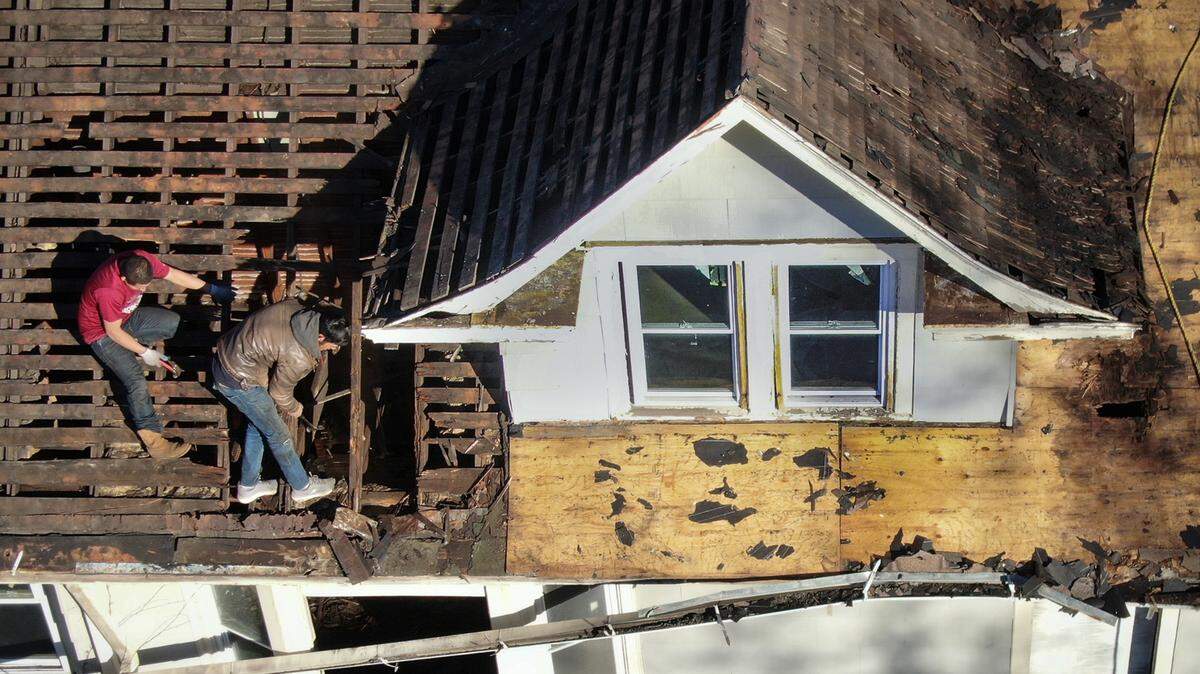
Real estate buyers call it “investment,” an influx of paint, plywood and money that will only improve blighted parts of the East Side, fix abandoned or dilapidated houses, raise property values and slowly bring diversity.
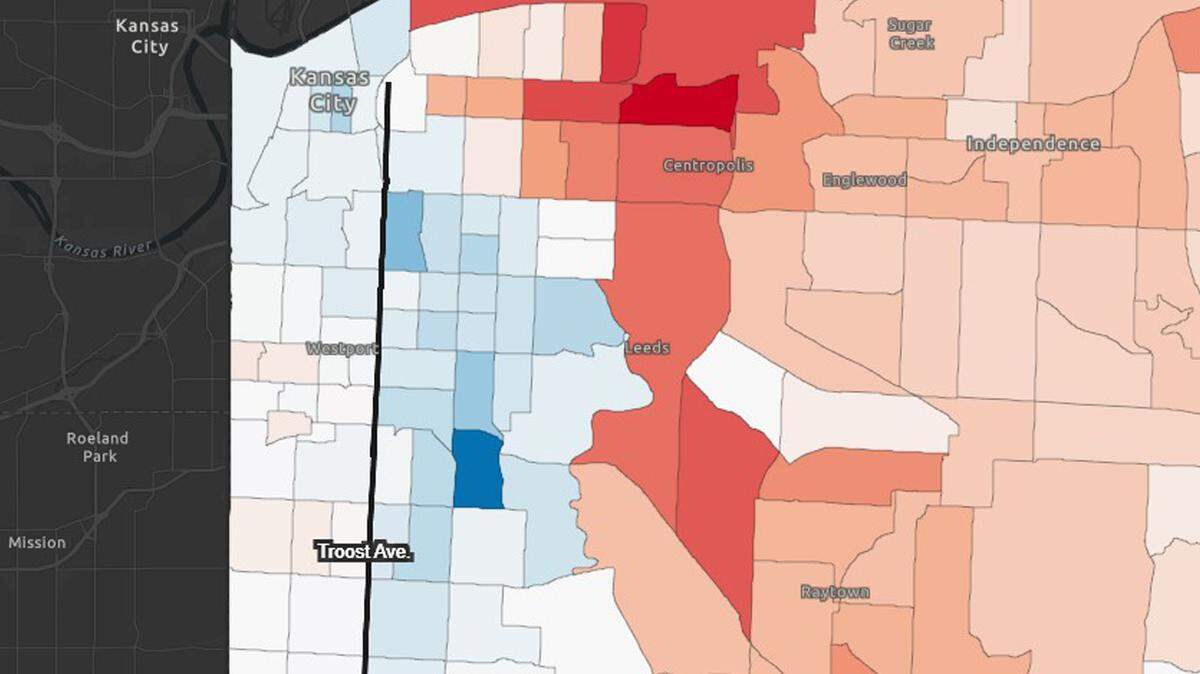
But Black residents, leaders and other East Side advocates have a different view of the change: exploitation. What they see is a massive profit-from-poverty buy-up that’s enriching mostly white investors at the expense of Black residents. And they are deeply troubled by the already apparent fallout: rising home prices and rents plus evictions. In two gentrifying census tracts just east of Troost, the median rent prices in the past decade have leaped 114% and 118%.
In that same period, U.S. Census figures show that the percentage of white residents living in 10 census tracts just east of Troost, from 12th to 81st streets, has increased and, in some cases, doubled or tripled. In one tract near Rockhurst University, white residents have flipped to the majority, going from 44% to 53% of residents.
Data also clearly shows that the East Side does not belong to those who live there. In a large majority of neighborhoods, fewer than half the homes are owner-occupied.
Compare this to west of Troost, where in wealthier and mostly white residential neighborhoods such as Armour Hills and Morningside, Brookside, Roanoke, Crestwood and others, 85% or more of the single-family homes are owned by the people who live there.
The East Side, the Star’s examination shows, is instead an intricate patchwork of local and outside ownership where thousands of homes and parcels in recent years have been picked up at bargain-basement prices by individuals, small investors and billion-dollar private equity firms. Many are registered as LLCs, limited liability companies, whose ownership is often obscured.
Colleen Hernandez, a consultant who was once chief executive officer of the Kansas City Neighborhood Alliance, decried what she called the “vulture capitalists” from rich firms preying on the East Side, snapping up massive numbers of distressed properties to rent or flip to pocket the profits.
Problems arise, said Jordan Ayala, a doctoral degree candidate at the University of Missouri-Kansas City in housing and public policy, “when we have LLCs and others from outside our neighborhoods treat housing as something to be flipped for profit.”
“We lose control of our neighborhoods and livelihood,” said Ayala, who is also a researcher with the Economic Democracy Initiative at New York’s Bard College. “Now we have people and organizations in our suburbs and in 2,000 cities across the globe that hold the wealth of the city.”
.JPG "KCM_MISSEARTHA0254f102921TL (1).JPG")
Ersery, for example, lives in Ivanhoe, a neighborhood of 2,000 properties between 31st and 47th streets, The Paseo and Prospect Avenue.
When she and her husband moved in, they became owners. So did their neighbors the Kings, the Hawkinses, the Joneses — friends for life, some of whom still live there.
Now, city data shows, 25% of the properties around her are owned by entities outside Kansas City, with scores of limited liability companies among them.
Fully 15% of the owners are from New York, New Jersey, California, Texas, Nevada, Alaska, Hawaii and 21 other states. Local landlords are companies or individuals from 36 surrounding communities — Grandview to Blue Springs to Liberty, with at least 50 properties owned by LLCs or others in Johnson County, including Mission Hills.
Owners’ names now read like jumbles of computer code, retirement homes or rock bands: Silver Sage, Dream Homes, Blue Apple, P Fin VII, Wref II, 3xs2, Vivid, Straight Red Lines, TKJK, Jags Proper.
A few blocks away from Ersery are rental homes owned by LLCs out of England, Canada and Australia. Six homes nearby belong to an LLC in Kiev, Ukraine.
Ersery’s phone keeps ringing.
Her three-story house — limestone down low, clapboard up top — is worth around $45,000, according to Jackson County. But similar homes nearby are selling for triple that.
Her daughter Marion Halim is a social worker who, as a teen, was a cheerleader, including for the Kansas City Chiefs, and is now the coordinator in Kansas City for Lincoln University’s Urban Impact Center.
Halim, 64, takes the calls.
“When I answer, I say, ‘Are you Black or white?’” Halim said. “Yes, I do. They’re scamming. I say, ‘You are trying to come over here and take Black folks’ homes.’ I tell them to stop calling ... because Black folks are always getting exploited one way or the other.”
The new landlords
The red-hot real estate market has been well documented in other parts of Kansas City and across the country.
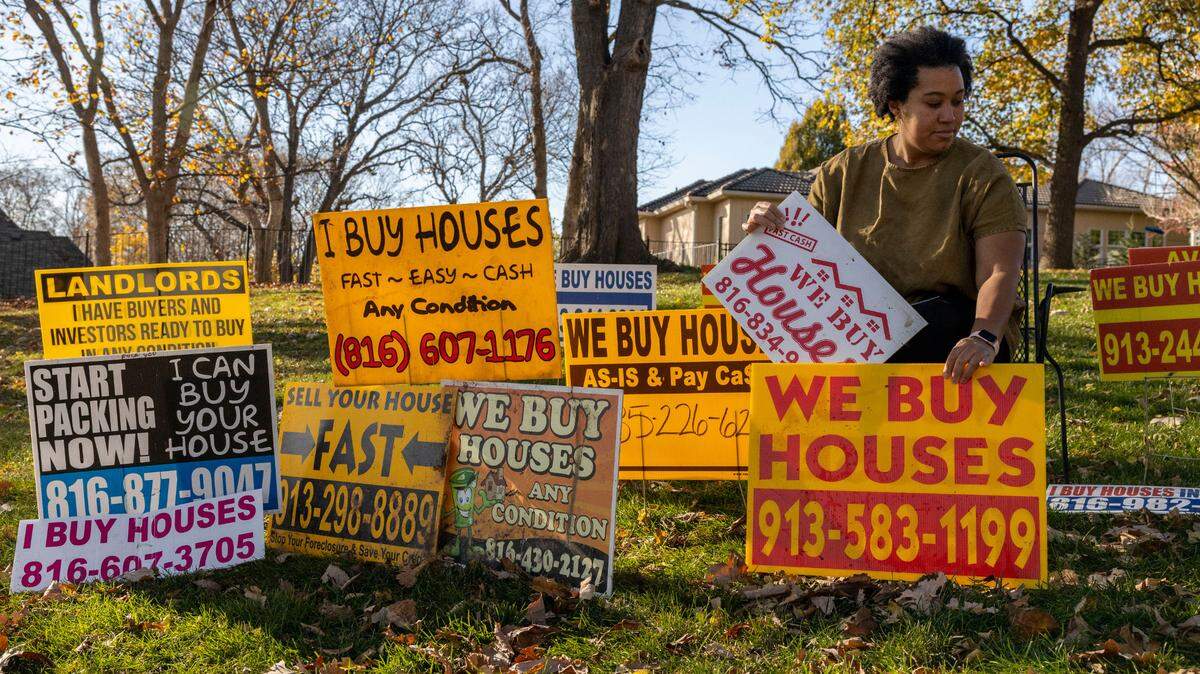
In the past five years alone, the average sale price for a Johnson County home has risen 45%, from $296,000 in 2016 to $429,000 today. In Jackson County, it’s up 49%, from $173,000 to $258,000. Homeowners across the metro area have been inundated in recent years with calls, texts or postcards with offers to buy.
The difference on the city’s East Side — from Troost in the west to Interstate 435 in the east, from the Missouri River in the north to I-435 in the south — is the intensity of the buying and who’s profiting.
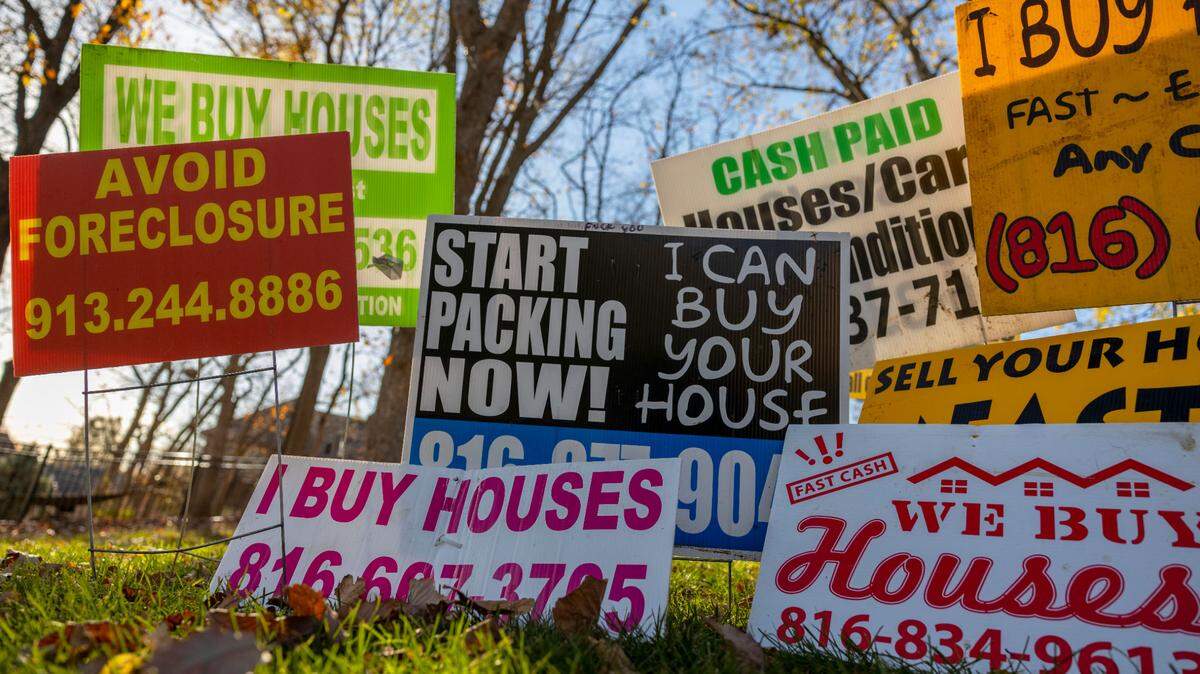
Investors coming in often have deep pockets, willing to pay cash and making it hard for average people to compete.
In the Citadel area — a tiny neighborhood bounded by The Paseo and Park Avenue, 59th and 63rd streets — homes have been listing at more than $300,000.
“And they’re selling. They’re selling like hotcakes,” said Lolita Pulce, a mortgage banker at Bank Midwest. “But they’re not selling to minorities.”
Pulce, who is Black, grew up in the East Side’s Vineyard neighborhood, where her grandmother still lives. Time and again, she has watched home buyers approved for mortgages get outgunned by cash investors who are able to quickly close on a home without the hassles of bank underwriting or appraisals.
Like other local banks, Bank Midwest has a program to help first-time and minority home buyers reduce closing costs and monthly mortgage payments. Pulce has qualified many through the Blueprint for Homeownership program.
But investors often edge them out.
Pulce this summer had 30 buyers — all pre-qualified — ready to buy in neighborhoods like Blue Hills, Oak Park and Ivanhoe. They waited months to buy, regularly losing to cash buyers.
One buyer made 32 offers on different homes.
“All denied,” Pulce said. “If somebody comes in and can offer cash, people are going with cash. And nobody really cares, even the people that live there. Because money speaks, right?”
She surmises that the challenge of buying is one reason families have gradually been leaving the East Side over the last decade.
“It’s just displacing so many families,” she said. “So many families aren’t able to buy, even with the programs that are out there.”
Pulce feels conflicted. She drives down Troost and sees how it has burgeoned with shops, restaurants and apartments.
“But I always wonder: Who are they trying to gear that to?” she said. “How is it really helping the inner city?”
Residents have wondered the same.
One of Jackson County’s biggest landlords is now CSMA Blt LLC, a subsidiary of Cerberus Capital Management, a $55 billion New York-based private equity firm. According to Greek myth, Cerberus is the three-headed hound that guards the entrance to the underworld.
Since 2011, records show, CSMA and Cerberus Sfr Holdings have spent more than $50 million on the purchase of about 540 rental properties dotting Kansas City’s landscape. They stretch from Troost across I-435 near Bannister Road and include several hundred houses in towns such as Independence, Blue Springs, Raytown, Belton, Raymore, Grandview and Lee’s Summit.
Jackson County court records also show that through their management company, FirstKey Homes, the owners have filed suit against residents for back rent or eviction more than 1,000 times.
A FirstKey official defended the company’s practices.
“We work diligently to avoid these types of filings,” Michael Torres, FirstKey’s chief communications officer, responded to The Star in an email, “resolving a majority of the Kansas City cases that keep residents in our homes.”
Torres noted that residents themselves are responsible for more than 90% of code violations and that legal suits seeking payment currently affect less than one-half of 1% of FirstKey’s residents. The company, he said, has spent $600,000 in residence assistance in Jackson County alone to help residents remain housed.
But Ayala, who with data processor Jaz Hays has been analyzing Kansas City’s housing data, including at the request of The Star, said part of his analysis shows how out-of-town LLCs through the COVID-19 pandemic “were more likely to evict tenants and more likely to receive reports of unhealthy housing conditions” than local owners.
Holding LLC landlords to account can be devilishly difficult, said Susan Pace Hamill, a professor of law at the University of Alabama and a leading expert on LLCs.
Laws in most states, she noted, do not require the actual owners or “members” of LLCs to identify themselves in public business filings. They instead do business through “registered agents” in “registered offices.”
Kansas City Mayor Quinton Lucas, in a recent interview with The Star, said that just identifying LLC landlords or their representatives to hold them accountable for the condition of their properties is challenging.
“It’s a huge problem,” he said.
BEHIND THE STORY
MOREHow we did this story
In order to provide a full account of the changes occurring in the neighborhoods on Kansas City’s East Side, The Star launched a months-long investigation that included an examination of a majority of the 208,000 parcels that make up Kansas City’s real estate landscape.
The project started with a central question: Who owns the East Side?
That question sent a team of reporters into the depths of city, county and state documents, multiple data sets, mapping, research reports and, of course, into people’s neighborhoods and lives.
On the East Side and elsewhere, The Star conducted more than 150 interviews with individuals whose time and openness we are grateful to have received and without whose help and candor this series would not be possible.
They include homeowners, renters, real estate agents, landlords, investors, house flippers, wholesalers, contractors, developers, housing advocates, East Side neighborhood groups, politicians, public officials, social scientists. Also of assistance were experts on race and development at institutions that include the University of Alabama, Rutgers University, Tulane University, Bard College, Princeton University, the University of Missouri-Kansas City, the Mid-America Regional Council and Legal Aid of Western Missouri. Read more by clicking the arrow in the upper right.
How did the reporters analyze the property data?
The data mining began using information compiled by the city and made public on the site OpenDataKC. The data allowed The Star to identify by name and/or company the city’s largest real estate owners and to break that list down by the city’s six council districts.
Reporters then created physical maps charting the name and city, state and country of every owner of thousands of parcels in multiple neighborhoods on both the east and west sides of Troost.
Ownership, sales and purchase prices were checked through the Jackson County’s online property and tax records. Agents representing LLCs (limited liability companies) were identified through the office of the Missouri Secretary of State. Eviction cases were checked through Jackson County Circuit Court.
U.S. Census data was used to chart changes in rental rates and area racial makeup over time.
OpenDataKC was used to identify parcels held by The Land Bank of Kansas City. Other documents related to the internal workings of the organization were obtained through Missouri Sunshine Law requests.
While a great many LLCs are honest players, Hamill said, problems arise when they become bad landlords.
“The tenant goes to the Housing Authority and makes a complaint,” Hamill said, “The Housing Authority, with their stretched resources, tries to look into it. They can’t figure out who the hell really is responsible for this property because they come up against the wall of an LLC.”
Ashley Frazier slammed into that wall.
The house at 55th and Euclid was nearly perfect when she first saw it in 2013. It had recently been renovated with an expansion into the attic. The walls were freshly painted in an agreeable beige and the kitchen sported new appliances, countertops and cabinets.
“Cosmetically, the house was perfect,” she said. “I instantly fell in love with it.”
But in a matter of weeks, she began to sense there were big problems under the surface. Her first electric bill, which didn’t even cover a full month, reached nearly $300, she said. In December, as the furnace struggled to heat the poorly insulated house, her bill topped $500 — nearly as much as her $600 monthly rent.
Frazier said the house revealed one problem after another: a furnace and air conditioning system that couldn’t keep up, gaping holes in the windows that exacerbated those problems. And a leaky roof that caused water to drip into her living room.
The house was managed by FirstKey, which is based in Atlanta but has a local office.
Frazier had no idea her house was a speck in a massive investment portfolio. What she found, for her, is that renting from FirstKey was a hassle.
While her lease and the local office here told her the rent was $600 a month, employees in Atlanta insisted it was $850, she said. When she reported her leaky roof, she said a woman on the phone in Georgia suggested the problem was bullet holes.
While she stayed at the house until 2018, Frazier said mounting electric bill debt forced her out. Companies like the one she rented from, she said, have only made things harder for East Side residents.
“It’s made things worse,” she said. “They don’t fix anything. Basically what they do is they buy these remodeled houses, they don’t get them inspected and they just move people right in.”
The longtime residents
Rachel Riley’s point of view is unambiguous.
President of the East 23rd Street PAC Neighborhood Association, she sees the East Side land grab as the latest example of hundreds of years of exploitation.
“It’s genocide. It’s as simple as that,” she said. “It’s all by design whether people want to see it or not.”
Riley, 56, has lived in her neighborhood between Interstate 70, Van Brunt Boulevard and Truman Road her entire life. Her mother was president of the neighborhood association before her.
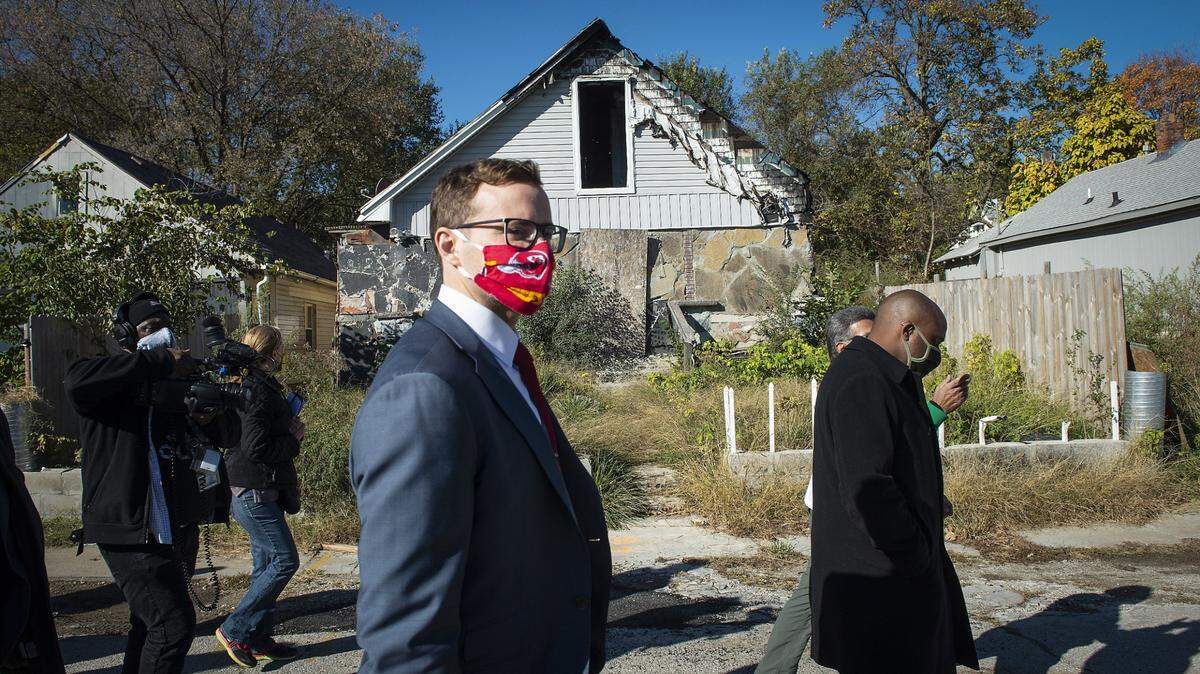
The East Side, Riley maintains, has endured decades of disinvestment. At least 70% of illegal dumping complaints come from the East Side. Of the 3,000 vacant lots owned by the city, more than 90% are on the East Side, many of them overgrown with weeds and brambles.
.JPG "KCM_KCMOBUDGET0620TLL289f (1).JPG")
Now that investors see there is money to be made, they are feasting on the area, or, as she said, “buying things up for pennies on the dollar,” purchasing homes for, say, $50,000, fixing them minimally and then flipping or renting them at inflated prices.
A looming problem is that the more investors pay for a home, the more they will feel forced to charge in rent to recoup their investment, burdening already cash-poor tenants or pricing them out of the market.
“If you have land or property, hold on to it,” Riley said, “because there are people here trying to take it over. It’s a multibillion-dollar conspiracy.
“The people in this neighborhood probably make $15,000 a year. How would they be able to possibly pay for a $215,000 home on a 30-year mortgage? I refuse to believe our senior citizens, our children and our parents, that those who are homeowners and love this area have to move somewhere else just because other people now want to come in.”
No one knows better than Minnie Mitchem what’s happened in her neighborhood. At age 71, she has lived with her husband, Hal, in their house near 72nd Street and Agnes Avenue for 49 years.
Their 1924 bungalow home is the neatest on the block: brick red, white trim, green lawn with a flower garden in summer that bursts with purple, red, orange and yellow hues.
Minnie Mitchem retired after 44 years with the U.S. Department of Agriculture; her husband worked 40 years for Honeywell. It used to be that the Mitchems knew the owner of nearly every home on the block and beyond. No longer.
Of the 22 homes on her part of the street, only eight are owner-occupied. Newer owners, having purchased within the last seven years, include people or LLCs out of California, Ohio, Oregon, Kentucky and Texas. Behind her and up the block, one house was acquired in 2015 for $26,000 by an LLC out of New South Wales, Australia. Another owned by an Overland Park LLC was bought in 2014 for $10,000.
Neighbors, overall, are glad when vacant or dilapidated homes are bought and fixed.
“It’s a good thing. This is an eyesore,” Brian Dennis said of the boarded bungalow next to his home. The house had just recently been sold to an LLC out of Michigan. “They’ll make it better.”
Their concern is about the constant turnover of renters and out-of-town landlords who don’t respond or maintain their properties.
“Every time somebody moves out, I call 881-3232,” Mitchem said of the Jackson County tax collection number where she tracks new owners. “Every time I talk to them, they tell me LLC, LLC-something-out-of-town.
“These renters, they just come and go. They put out trash. They don’t care. They don’t care about their yards. You have to call 311 on them constantly.”
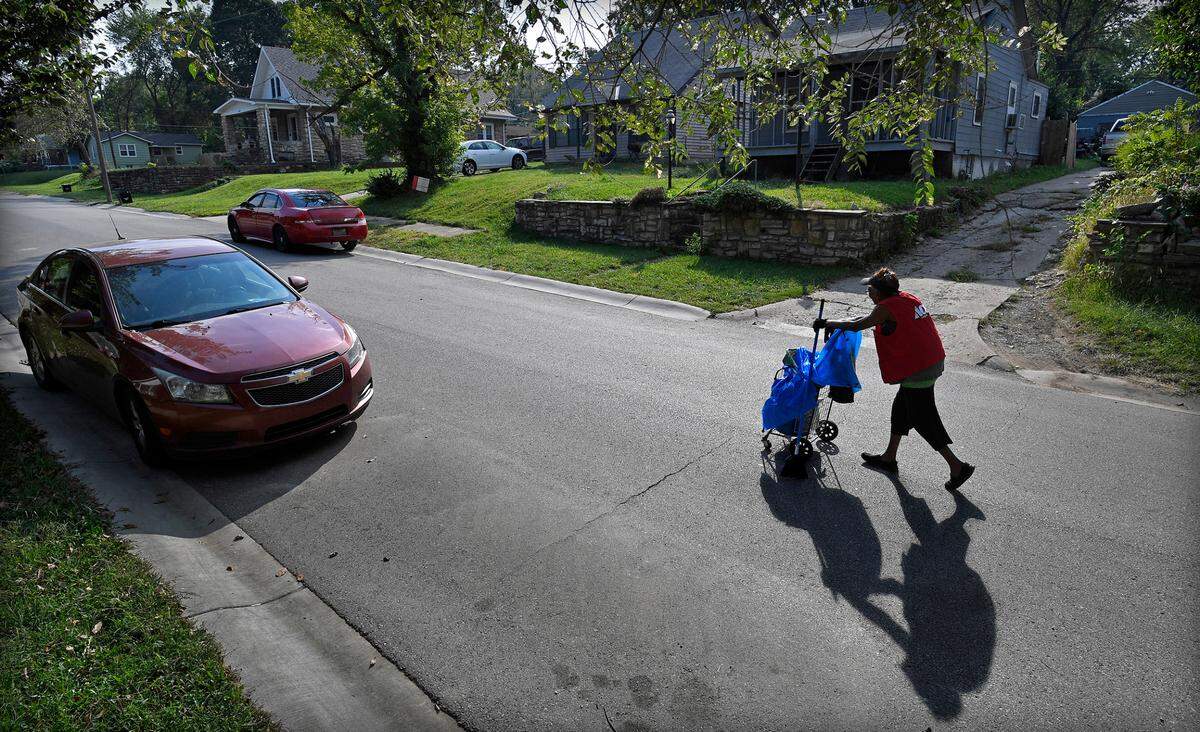
Every afternoon around 4 p.m., no matter the weather — rain, snow, blazing heat — Mitchem follows a routine. She grabs the broom and metal cart she keeps in her backyard. She slips on an old Ace Hardware red vest for safety. She rolls her cart up the street, block by block, sweeping and picking up trash, tossing it in her own cart or in any number of garbage cans she has stationed along her route.
After that, she mows the overgrown grass and weeds in front of the empty lots and houses of the often out-of-town landlords who neglect to keep them up.
“I want to let them know that there is somebody who cares,” Mitchem said.
The buyers, developers
Although prices continue to rise, the market for East Side houses has hardly slowed.
Investors say the reason is straightforward: Prices are so cheap that three or four East Side homes can be purchased for the price of a single house in Johnson County or the Northland.
Add to that low interest rates, proximity to downtown and speculation driven by an HGTV craze that’s brought in do-it-yourselfers. All has been fueled by a massive housing shortage that’s driven up prices across the metro.
In the historic and once-wealthy Sante Fe neighborhood — from 27th Street to Linwood Boulevard, Prospect Boulevard to Indiana Avenue — one dilapidated grand home bought recently for $50,000 was put on the market for $300,000.
“We’re flipping about 10 a month,” investor Ian Reeves said of the homes his company has bought and rehabbed east of Troost.
From Idaho, Reeves began KC1 Property Group LLC in 2016 with partners and, through other LLCs, now controls 100 rental units and 30 single-family homes.
He’s hardly the only multi-home buyer: In one day alone last year, P Fin VII KC, an LLC out of Atlanta, bought 234 houses east of Troost. The SFR3 fund, registered in Delaware, owns 170. Raineth IV Kansas City, Raineth II Kansas City and Raineth IIB Kansas City out of California have at least 80.
“This market is crazy right now,” said Andrew Syrios, 37, who is from Oregon. In the last decade, he and his younger brother, Phillip, expanded their father’s business, Stewardship Investments LLC, to amass 380 single-family houses and 150 apartment units, many on the East Side, that they rent out for around $700 to $1,000 a month.
None of the LLC partners interviewed was insensitive to the perception of what is happening on the East Side. Syrios acknowledged how thorny the issue of the East Side buying frenzy is.
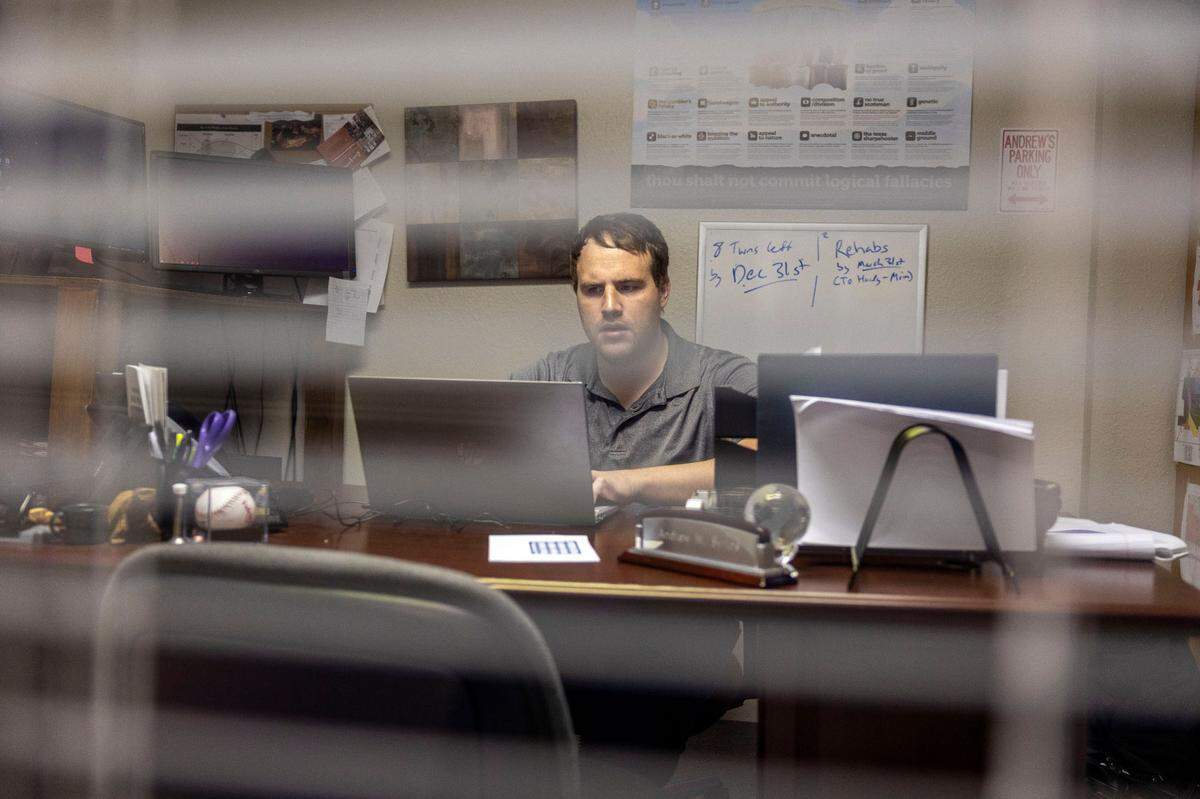
In one way, a hot real estate market helps the neighborhoods, he said. Homes that for years were worth next to nothing now have value, giving homeowners equity they previously didn’t have. For investors, it provides an incentive to buy and fix blighted homes. It improves the housing stock.
“Bringing back a lot of the dilapidated houses is one silver lining,” he said.
But he and others recognize the burden of escalating prices: the inevitability of rising property taxes, poorer people being priced out of their own neighborhoods.
“I do think that, in some ways, it’s definitely not a good thing that prices are skyrocketing so much, because it makes it harder for people to buy,” he said. “I feel like the area (the East Side) is improving. You would hope that a rising tide lifts all boats. But, unfortunately, it doesn’t feel that way.”
To be sure, neither the financial issues nor the issues of race are simple.
Sal Prewitt, 41, and Joy Stamps, 30, both grew up on Kansas City’s East Side. Both are Black. As partners in business and life, they have been buying, renovating, flipping and renting out dozens of houses east of Troost together since about 2018.
Prewitt had actually begun earlier, around 2007, on his own, before the housing market crashed. Then he dove back in.
Recently, he and Stamps sat outside a two-story, four-bedroom house built in 1909 on Cleveland Avenue that they were rehabbing for Section 8 tenants. They figured it would bring about $1,400 per month in Section 8 rent.
“This is the farthest east I’ve come,” Prewitt said of the purchase, suspecting that speculators will continue to move farther and farther east over the next decade, bringing both benefits and costs.
“It’s good for the neighborhood for people to come in,” Prewitt said, “whether they’re from inside the ’hood or from outside, to buy properties and fix them up.
“I grew up here. Before, people weren’t taking care of the houses. They weren’t taking care of the neighborhood. For one, you get rid of blight. You’re getting rid of safety issues. Like all these vacant houses, you have homeless people in them, squatters living in them. It’s dangerous for kids.
“I know a lot of people in the neighborhoods don’t like it. They feel like they’re being driven out.”
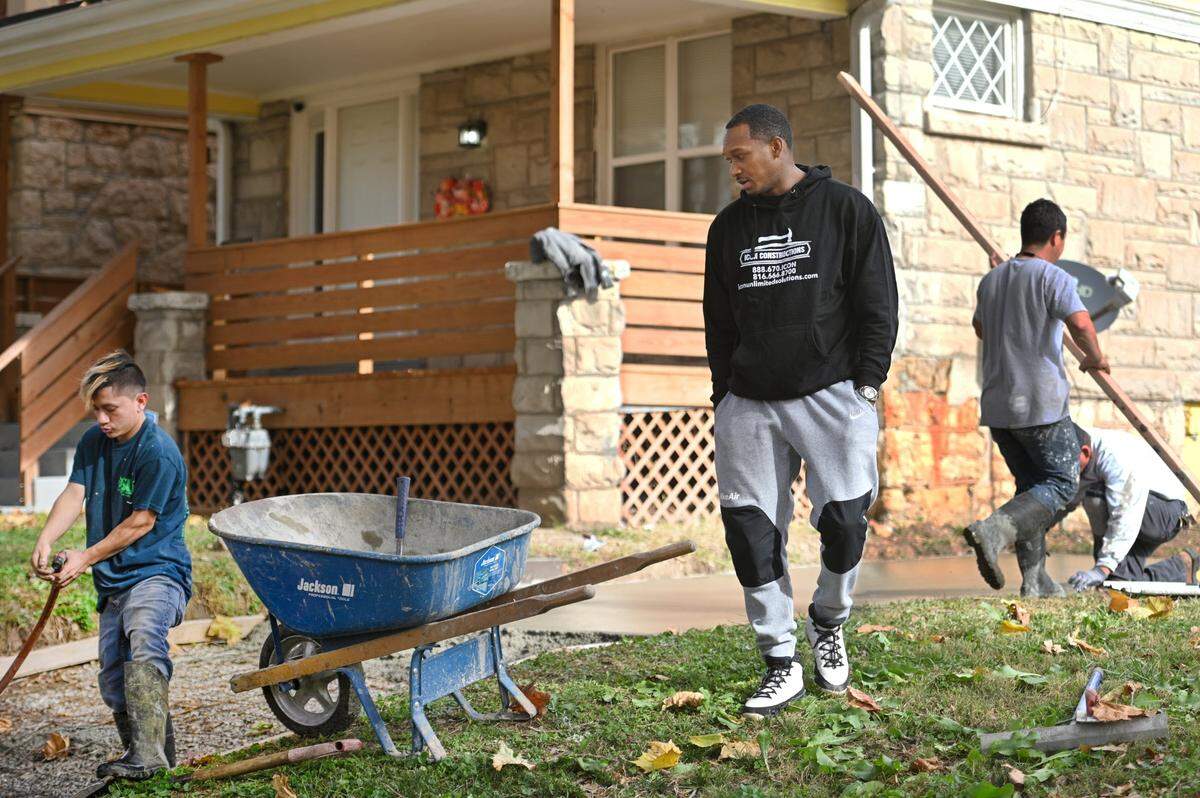
That’s because they are slowly being driven out, Stamps contends. She agrees overall that the buying and rehabbing are positive for the East Side, but she also thinks residents’ concerns are legitimate. She had few doubts about the eventual outcome: poor people being priced out of their own neighborhoods, higher property taxes that burden existing residents.
“Look at neighborhoods like Manheim (Park) or Beacon Hill,” Stamps said of two gentrifying neighborhoods just east of Troost, “where these houses have increased to $150,000, $250,000, $300,000. Then you got the city hike in taxes. People who are only making $20,000, $30,000 a year can’t afford $4,000 in property tax. What are they going to have to do? They’re going to have to sell and look for something in a different area. So it does push people out.
“If you can’t pay your taxes for three years, your house goes on the chopping block at the tax sale and suddenly your house is gone. Somebody from somewhere has bought the house you’ve called home for your entire life.
“I’m not saying that coming in and rehabbing is necessarily bad; it’s good for the neighborhood: Catch-22.”
Accepting but resentful of the change
Barread Peters knew her neighborhood was changing when, earlier this summer, she watched a group of white boys on a high school cross-country team loping past her yard.
“It was a whole track team,” said Peters, who with her husband, Ron, lives in a pristine bungalow near 30th Street and Garfield Avenue. “It was funny. One of the boys stood right here on the corner, waiting for the team to come back. I just waved like they belonged in the neighborhood.
“What’s going on?” she remembered thinking.
In a way, they had already anticipated the change.
Originally from Houston, Peters, 49, is a real estate loan closing agent. Ron Peters, 59, an Air Force veteran who was raised in Kansas City’s Vineyard neighborhood, has worked lifelong for the federal government. He currently does logistics at Kansas City’s VA Medical Center.
When, after being away for decades, the couple in 2018 moved to Kansas City to be near Ron’s dad, they snapped up their house in Ivanhoe, built brand new from the foundation up after an existing house burned down. Their cost: $80,000.
Ron said he predicted years ago, when bulldozers plowed away the houses of thousands of Black residents to make room for U.S. 71 (Bruce R. Watkins Drive), that the area would one day gentrify.
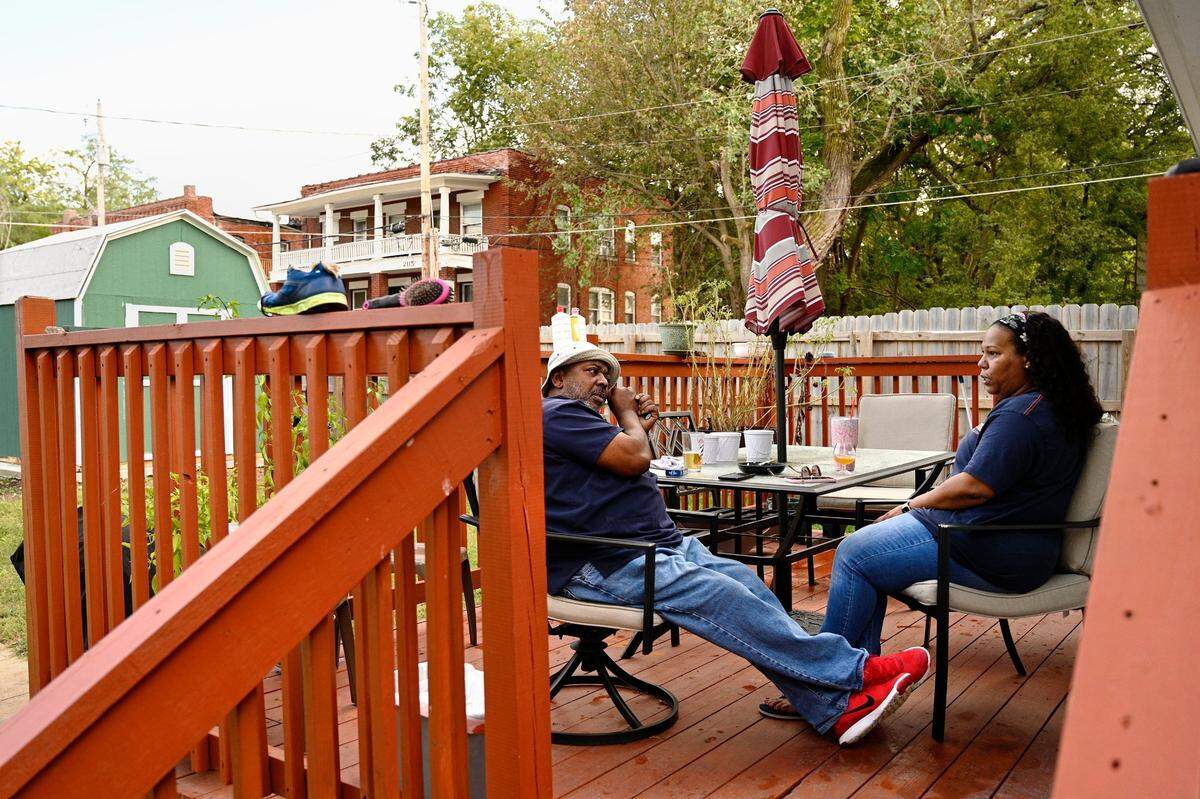
“I know how the shell game is played,” he said, seated with Barread on their back deck. “I’m from here, right? I was paying attention in 1996, ’97. They didn’t put this through here for nothing. They sure didn’t do it for me. I don’t think they did it for people that look like me.
“But I knew that some good was going to come out of the moves that they were making, especially with us (Black people) moving to Raymore, Grandview, Belton.”
The Peterses figure that if property in the area is going to increase in value, they may as well benefit.
“If they’re throwing money, for whatever reason, in this area, then I’m going to ride that boat with them,” Ron said. “Can’t make my property go down by enhancing the neighborhood.”
Barread is trying to convince her husband that perhaps they, too, should start to buy more property, fix it and flip it.
“I think it’s go-time,” she said.
But part of her also resents the change and outside investment. Barread echoes many experts in saying that, if the overarching goal is not just to improve the East Side but also the lives of its residents, then a land grab that benefits only those who can afford to buy, fix, flip or rent is not the way to go. But home ownership that builds wealth is.
“I watch people literally buy and sell homes, making $50,000, $60,000 to $100,000 over asking price in their pocket after they bought a new home,” Barread said. “That’s what they mean when they say that that’s where the wealth is.”
She suspects that, in time, she’ll see the city step up its efforts to spruce up streets, parks, sidewalks, tackle garbage and illegal dumping. In her gut, she feels it will have almost nothing to do with improving the lives of current Black residents.
“These things are only important when white people are involved,” she said. “It’s not important when Black people are involved.”
Coming Monday: An obscure city agency was supposed to help bring abandoned houses and property back to life on the East Side. Residents say it’s only making things worse.
This story was originally published December 12, 2021 at 5:00 AM.