
Advocates say City Hall has moved too slow with special tax meant to improve East Side
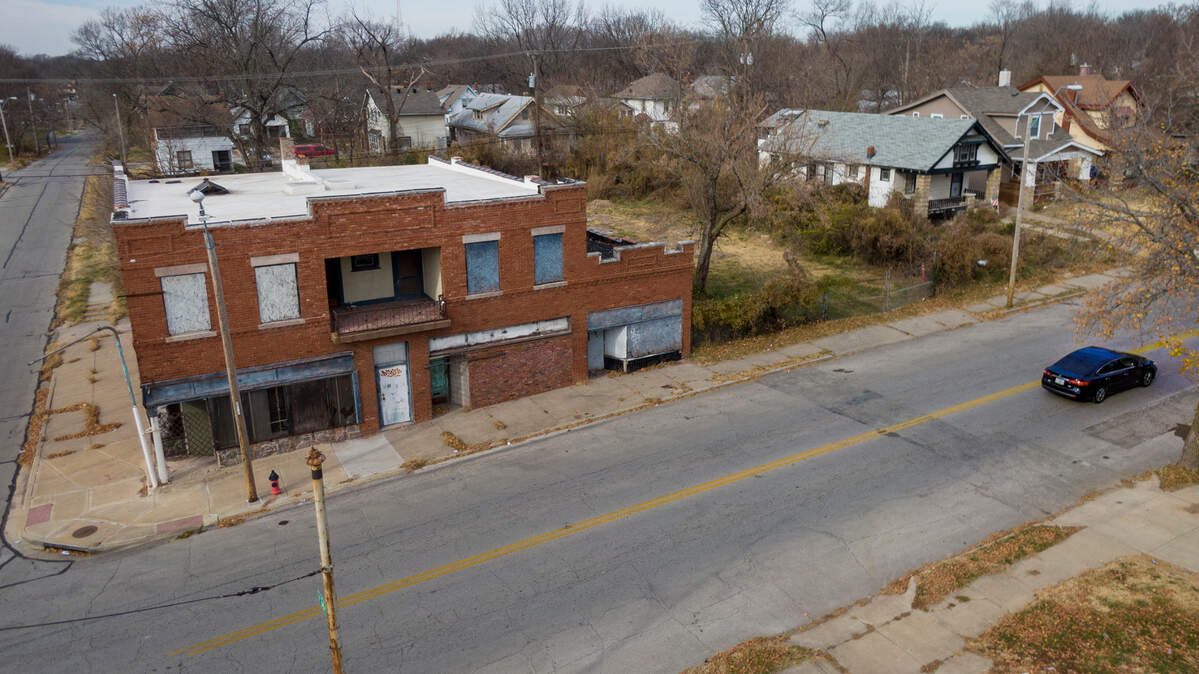
KC Town Hall would appear to be just the sort of project that could help breathe new life into Kansas City’s East Side.
Developers want to convert a dilapidated brick building at 36th Street and Indiana Avenue into a neighborhood resource and cultural center that would include four retail spaces and three apartments.
But more than two years after a city board recommended spending money from a new sales tax created specifically to help the East Side, the project still hasn’t received a final contract.
Like so many other plans, it has hit roadblock after roadblock at City Hall, said D.J. Pierre, chair of the Central City Economic Development sales tax board.
“It’s kind of like Lucy and Charlie Brown with the football at times,” he said.
Two years after the board approved spending nearly $500,000 for KC Town Hall, the city started asking questions about the developer’s insurance policy — mystifying board members who wondered why that hadn’t been addressed at the outset. Similarly, in another holdup, a city staffer recently identified the need for a tax document that could have been obtained within City Hall.
The CCED was launched in 2017 after city voters approved the first-ever sales tax dedicated to economic development projects in the long-depressed neighborhoods east of Troost Avenue.
The sales tax has made tangible progress. It helped to redevelop the Linwood Shopping Center on Prospect Avenue, helped build two new childcare centers and helped fund new office space and apartments on the East Side.
At about $10 million per year, the sales tax was never meant to meet every need of the East Side. But leaders of the all-Black board that oversees it say projects that could benefit from the tax often face disproportionate scrutiny from city bureaucrats compared to other economic development agencies.
Tensions have also risen as city officials have tried to divert the special tax funds for things other than their intended purpose. The CCED batted away requests from City Hall to use the sales tax dollars to build sidewalks and pay for new street lights, basic city services that were never meant to be funded by the central city tax.
“Just because we have the CCED doesn’t mean the city needs to stop doing its job on the East Side,” said Melissa Patterson Hazley, vice chair of the CCED board.
Current city leaders say they understand that the Black community’s patience has run thin and have pledged a renewed commitment to investing in the East Side. As proof, Mayor Quinton Lucas and City Manager Brian Platt point to millions spent in the 18th and Vine district, a new program to improve access to broadband internet and amped up road resurfacing projects as just the beginning.
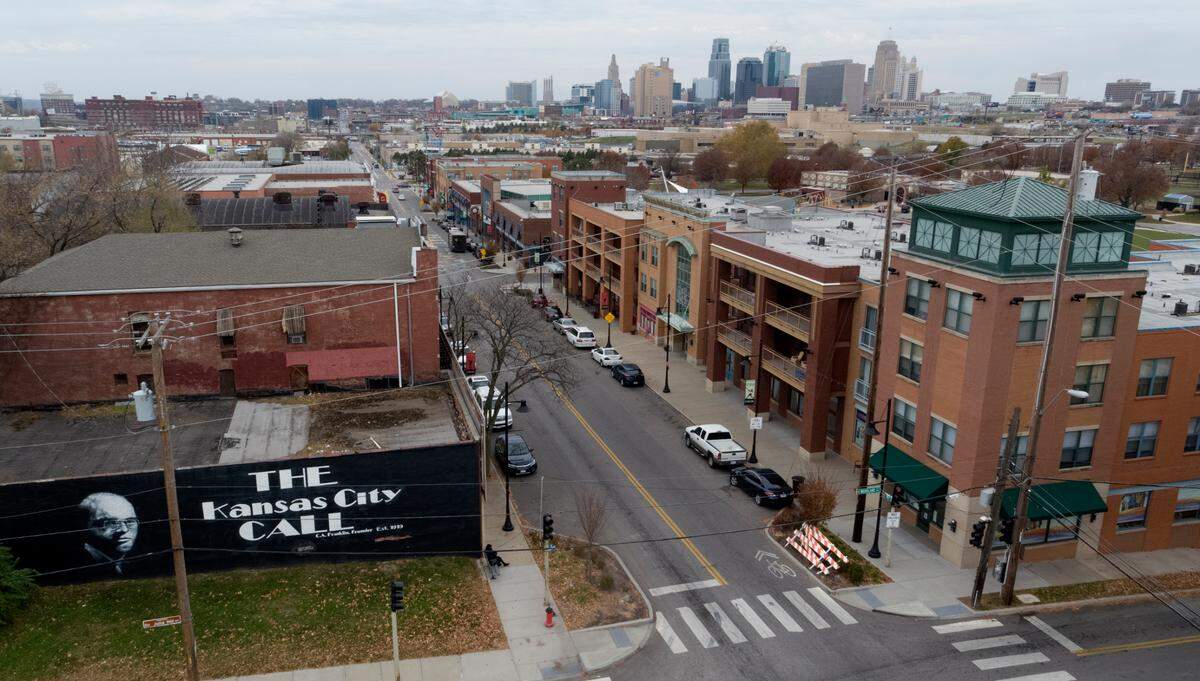
Lucas, who was a councilman representing the East Side when the tax came up for a vote in 2017, was among a handful of city officials who favored it. He even recorded robocalls asking voters to support it while then Mayor Sly James argued against it.
That sales tax of one-eighth of a penny passed with 52 percent of the vote. It targets projects within a narrow rectangle: 10 blocks to the west and east of Prospect Avenue, from Ninth Street on the north to Gregory Boulevard (71st street) on the south.
“I’m happy to see it going,” Lucas said. “I hope we continue.”
‘You can’t just treat the East Side differently’
Though current city leaders say they support the sales tax, volunteers want to see more action as they look to add a professional staff and eye extending the tax beyond its initial 10-year run. The most important thing: getting cash into brick-and-mortar projects once they’re recommended.
Pierre said his experience has revealed something disturbing about city priorities: While a sales tax dedicated to Kansas City’s East Side struggles to get projects through City Hall, other development efforts in more affluent parts of town seem to glide through city approvals. Kansas City rarely says no to big developers, frequently approving lucrative tax breaks to build new hotels and apartments in wealthier parts of the city.
“You can’t just treat the East Side differently than everybody else for whatever reason,” he said.
Pierre points to the $140 million tower that’s currently under construction at 14th Street and Baltimore Avenue. Originally planned as the new headquarters for Overland Park’s Waddell & Reed, that 18-story office building has no planned tenant now that Waddell & Reed was sold off to a foreign company.
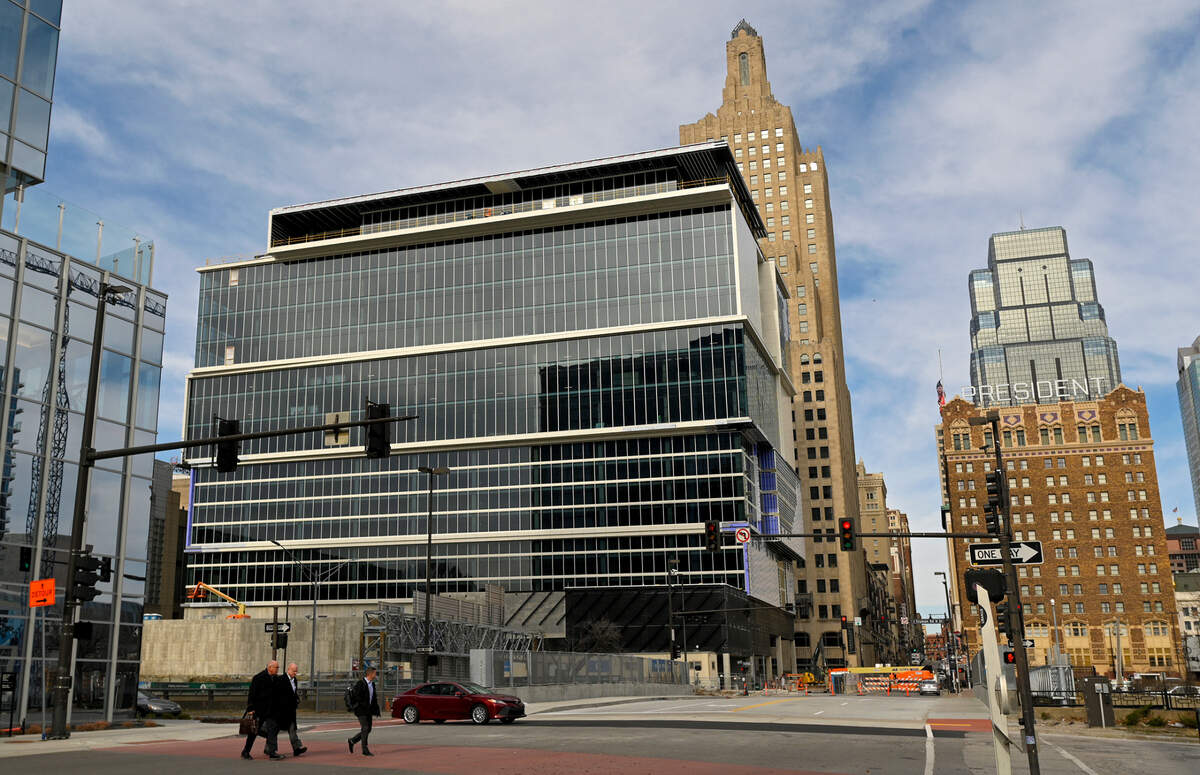
The City Council approved $35 million in tax incentives for the tower, despite public warnings that the company was struggling financially. Construction commenced soon thereafter.
“It got up faster than any of our projects,” said Patterson Hazley.
The CCED board recommends projects, which must then be approved by the 13-member City Council. At that point, projects are turned over to city staffers who vet the project, iron out details and get final contracts inked.
And that’s where things often get complicated, with delays and confusion.
With the KC Town Hall project, for example, a city staffer said just this month that she was waiting for the developer to sign a final contract. That was news to the developer, who said she was waiting on the city to sign off on a particular detail regarding insurance. Whatever the case, board members say two years is far too long for such a project to drag out.
In October 2020, the board recommended spending $610,000 on a home rehab program for owner-occupied houses in the historic Santa Fe neighborhood. The project aims to keep longtime residents in their homes by subsidizing new roofs, furnaces and paint.
Homeowners had already completed detailed applications with the neighborhood association and received bids on the work, but City Hall slowed things down after it decided it wanted more influence over contractors, board members said. Then city staff told the board it wanted every proposed repair to come through City Hall before work was done.
The project finally got approval this fall, but only after intervention from the city manager’s office and Councilwoman Melissa Robinson, whose district includes much of the CCED zone.
To Patterson Hazley, it’s just another example of individual city staffers imposing arbitrary rules that make it even harder to bring development to the East Side.
“It’s not required anywhere. It’s kind of a made up rule,” she said. “I mean, it’s almost like do you not trust us? Why are we doing all this?”
Board members say things have improved since Platt’s arrival a year ago. Robinson said she was encouraged to see projects moving faster through City Hall.
But she stressed that the East Side demands more than just real estate investments. The area also needs quality schools, walkable neighborhoods and good jobs, she said.
“But racism is, unfortunately, a cancer that has metastasized to every part of our city,” Robinson said. “And the third (city council) district unfortunately bears the brunt of the reflection of that.”
Positioning CCED for the future
While board members say things have improved, the delays have real costs.
With the price of labor and materials skyrocketing, the viability of a project can look different one or two years later. And the financial analysis first presented to the board may no longer make financial sense today.
Supporters also worry that prolonged delays could threaten the tax itself, which must again seek voter approval in 2027. To win reapproval from the citywide electorate, board members know they’ll have to show brick-and-mortar progress on the East Side.

And almost as important, they need to make sure people know about it, said the Rev. Vernon Howard Jr., who led the first campaign for the tax.
“The commissioners gotta be out in the community saying to the people, we’ve done good things,” he said. “We funded this family and child development center, we funded this community development piece along MLK, they’ve got to get out and present the numbers and present the facts of what has been done.”
Howard has long preached that in addition to doing a better job of telling its story, the central city board should display more autonomy. It needs to hire its own executive director. And it needs an office within the district boundaries to showcase that independence.
Currently, CCED has no offices and no employees, save for one employee the city has assigned to work on CCED projects. Formerly an aide to a previous councilman, that employee is not accountable to the board that oversees the sales tax.
More than two years ago, the city committed to providing office space and furniture for the CCED, but has never delivered, board members say.
At the most recent board meeting, the city staffer assigned to the CCED was unable to answer many questions about the status of individual projects, citing a need to check with other staffers. City communications staffers, who committed to creating a communications plan to help market the CCED over two years ago, were absent for yet another meeting.
By contrast, the Economic Development Corporation of Kansas City, which grants tax incentives through agencies like the Tax Increment Financing Commission, has modern offices in River Market and a staff of 20.
Altogether, Patterson Hazley said the sales tax faces incredible pressures with too few resources. Too often, it feels like the special sales tax is tasked with fixing all that ails the East Side.
One former city staffer, for instance, pressed hard to have the sales tax fund infill housing development on vacant lots that were empty due to the city’s own policy of bulldozing abandoned homes with no plans for replacing them.
“We’re all Black on the board. And it’s just like wow you’ve got five negroes and you’re making us responsible for what y’all did wrong to the negroes,” Patterson Hazley said. “It messes with you.”