‘Appalling’: KC suffers deadliest year ever with 182 killings, 631 nonfatal shootings
At age 53, Mary Freeman has lost three of her six children in Kansas City.
Her first son, Derrick Freeman, died in 2016 of unknown causes, police said. He had been shot in the face in 2009, leaving him quadriplegic. An autopsy couldn’t determine whether the injuries that altered his body were what caused his heart to stop.
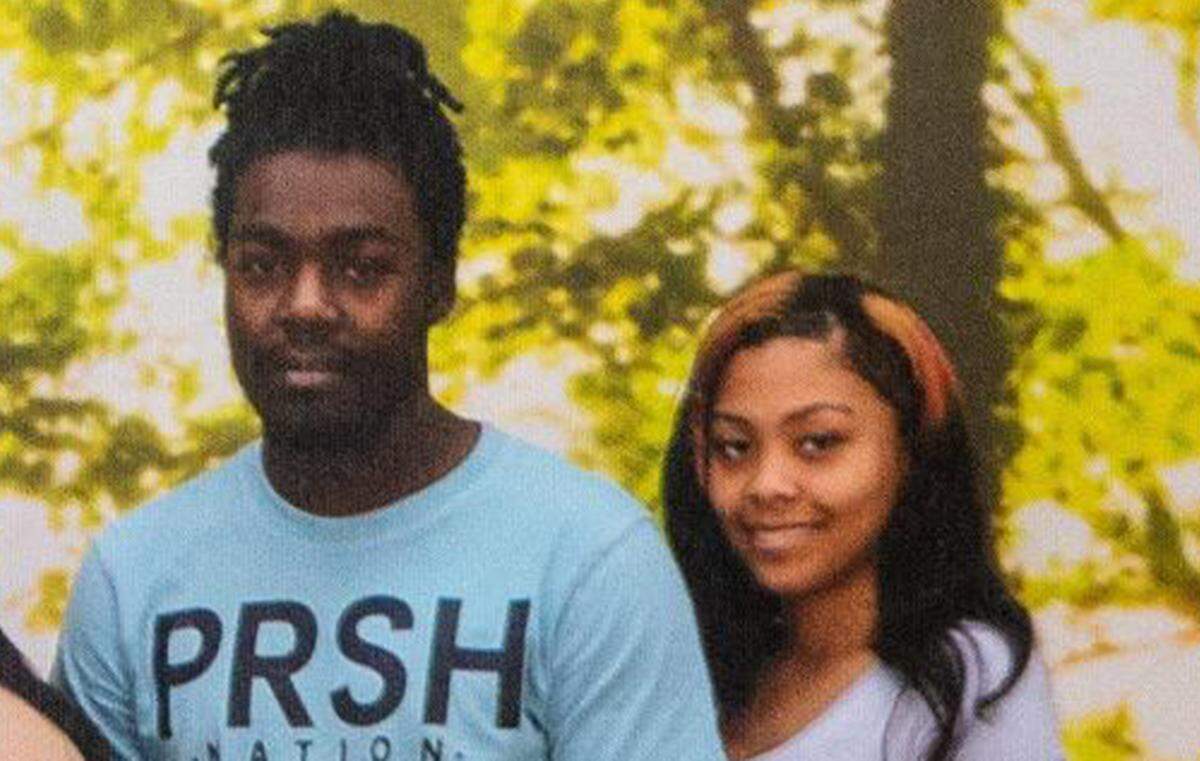
Just as the pain of Derrick’s death — Freeman considers it a homicide to this day — was beginning to subside, her son Roy Bausby, 21, and her daughter Gabrial Freeman, 20, were gunned down in broad daylight in front of their apartment in south Kansas City. It was the week before Christmas.
Gabrial and Roy were like twins, family said. When they were little, Roy would fall asleep on top of his baby sister. Years later, when his Mustang could be heard rumbling up the road, relatives knew Gabrial was likely in the passenger seat. They had big personalities, family recalled, and could fill a room with laughter.
“They was beautiful kids, just had so much to offer the world,” said Freeman, surrounded by family members at her home.
She still calls their phones, even though she knows they won’t be there to answer.
“I never wanted to think of myself as a mother of kids of a violent crime, but here I sit,” she said. “I am.”
Roy and Gabrial were among 182 homicide victims in 2020 in Kansas City. Their deaths added to the chorus of agony from families after the highest number of killings in a single year in the city’s history.
The last time Kansas City saw anywhere close to as many homicides was 2017, when the city recorded 155 killings, including four fatal police shootings. Before that, the homicide record came in 1993 when 153 people were killed and then in 1992 when the city suffered 152 killings, data that included police shootings.
In addition to the homicide record, 2020 also marked a dramatic surge in nonfatal shootings. More than 630 people were shot and survived — a statistic that Mayor Quinton Lucas described as “crazy” and “embarrassing.”
One in every thousand Kansas City resident was shot this year, Lucas noted.
“That’s insanity,” he said.
‘We got to do better’
Roy and Gabrial were found dead just before 11 a.m. Dec. 16 in front of Canyon Creek Apartments. People in the area at 93rd Street and Bales Avenue told police they heard between 15 and 20 gunshots.
It started with an argument, as most homicides this year did. The suspected shooter and Roy got into an altercation after they both arrived near the scene where a car with a flat tire needed towing, according to a search warrant. Gabrial tried to “diffuse” the situation.
As the siblings walked back into the apartment, the man shot them, a witness said.
Police have identified a person of interest in the double homicide, though no charges have been filed, said Sgt. Jake Becchina, a spokesman for the Kansas City Police Department.
Two hours after the shooting, Lucas told The Star he continued to be “heartbroken” by the uptick in homicides — several of which have occurred on his block.
In 2020, he noted, people were shot every day of the week, during each season of the year — one that began with 17 people killed in January. That marked the most slayings in that month in at least the last decade.
“We got to do better,” Lucas said, calling the issue of reducing killings not just one for police and politicians to solve. “It takes all of us.”
The city’s current response to killings is “not smart,” said Jackson County Prosecutor Jean Peters Baker. If the approach doesn’t change, she said, Kansas City will continue to have a “disgusting homicide rate” year after year.
Baker was the chief architect of a previous anti-violence strategy, KC NoVA, which garnered national attention after killings dropped to 86 in 2014, the fewest in Kansas City in more than four decades. The police department, under Chief Rick Smith, abandoned the strategy after he took the helm in 2017.
“As long as we are planless, this is where we’ll be,” Baker recently told The Star. “We should not be shocked and astounded when we have these great big numbers.”
In September, Lucas announced a new effort aimed at reducing violence called Reform Project KC. The focus is meant to be on prevention, intervention, enforcement and administrative reforms, or “trust-building” activities. The plan, which was met with skepticism by some community members, would seek to unify existing resources and create new ones, he said.
The Star in October reported, as part of the Missouri Gun Violence Project, on how a lack of trust in police — especially in predominantly Black neighborhoods — drives gun violence. In that report, many residents said police create an environment of fear in Black neighborhoods that erodes public safety.
Of the homicides in Kansas City, the vast majority involve Black victims, according to police data. An overwhelming 72% of victims in 2020 were Black, despite the demographic making up a little more than 28% of the city’s population. Nineteen percent of victims were white and 7% were Hispanic, despite making up 60% and 10% of the population, respectively.
The Reform Project KC announcement came a week after more than 200 agents involved in Operation LeGend, a federal crime-fighting initiative, left Kansas City.
In a recent interview, Lucas said Operation LeGend, named after 4-year-old LeGend Taliferro, who was shot and killed in his sleep in June, “did not fix things here.” Heading into the new year, Lucas called on other local leaders trying to curb violence to ask themselves, as he’s doing: “What the hell did you do wrong? And what can you do better?”
Having said publicly that he hoped 2020 would see fewer than 100 homicides, Lucas also called the murder rate a “significant personal and professional failure for me.”
One of the toughest losses this year, Lucas said, was that of Tyron Payton, the city’s youngest homicide victim in 2020. He was two months shy of his second birthday when bullets riddled a car he was sitting inside in the 2900 block of East 33rd Street.
Three people were wounded, including his mother, who was shot five times.
As he spoke with reporters on New Year’s Eve, Smith called the number of killings “disheartening.” He said he hoped next year would be “no where near like” it was in 2020.
“I mean can you imagine the emotion, the tragedy and all that that goes through them,” Smith said of relatives of homicide victims. “And then to have it repeated constantly on the news? I feel for all of them.”
An eroding trust in police
Gun violence across the country has spiked in cities big and small, from Chicago to Grand Rapids, Michigan, The Associated Press reported. On the other side of the state in St. Louis, at least 262 people were killed — just shy of the city’s 1993 homicide record.
The COVID-19 pandemic has caused financial strains and additional stress, which can lead to violence. Then the fairness of the criminal justice system came more broadly into question following the police killing of George Floyd in Minneapolis, which experts say could have led people to take justice into their own hands instead of relying on police.
Police shot and killed seven men this year in Kansas City, according to data maintained by The Star. Six of the shootings involved Kansas City officers; another was an Independence police officer who chased an armed suspect into Kansas City prior to the shooting.
One of the shootings this year sent a Kansas City police officer into emergency surgery. He was shot in the head by a suspect who was then killed by another officer. The officer then required two months of additional treatment.
The year ended with 631 living gunshot victims, according to police data. That was up significantly compared to 491 in 2019, 450 in 2018 and 506 in 2017.
In 2014, when police started tracking nonfatal shootings — which experts say is a better indication of violence in a jurisdiction than simply counting homicides — the city ended with 290 living victims.
Baker called the number of shooting victims in 2020 “appalling,” and noted that figure is likely higher when considering victims with graze wounds who don’t have to go to a hospital.
Prosecutors estimate that fewer than 20% of nonfatal shootings are solved. Baker said that rate would be higher if there were more detectives investigating nonfatal shootings and police built better trust within the community.
“The community would be safer and we would have fewer non-fatal shootings if we had more victim-witness cooperation, and that’s on all of us to work to improve,” said Sgt. Jake Becchina, a police spokesman.
Witness cooperation has remained an issue in Kansas City, which experts say is the result of a lack of trust among communities.
In a 2012 analysis, The Star found 60 percent of the previous year’s shooting victims did not cooperate with police. Last year, the department estimated about 70 percent of surviving victims are unwilling to assist investigators.
Detectives have cleared 90 of this year’s homicides — just over half of them. Another 23 killings are considered solved but not cleared. When adding in 37 killings from past years that were solved during 2020, the clearance rate rose to 73%. In recent years, the national homicide clearance rate has been about 60%.
At the beginning of 2020, the department increased its homicide squads by 20% when it added two detectives to each squad, a move Becchina called “fortuitous.” It also doubled the number of detectives investigating nonfatal shootings, which some say is still not enough.
Like most years, arguments between people were the largest known contributing factors to homicides, at 56, according to police data. Others included drugs, robberies and domestic violence. In 47 of this year’s killings, the reasons behind them remain unknown.
Becchina said it’s frustrating how many homicides stem from arguments, often between people who encounter each other for the first time at a gas station or in a parking lot, for example.
“There have been so many homicides that I have been to this year where when the investigation plays out, we find that the suspect and the victim a mere matter of minutes before the homicide, they didn’t even know each other,” he said.
Damon Daniel, president of AdHoc Group Against Crime, said officials need to examine to how invest in “stabilization projects” in neighborhoods with high crime rates. Those could range from nuisance abatement to assuring there is an economic driver, he said.
There also needs to be resources to help people heal from trauma, whether it is caused by violence, economic deprivation, redlining or substance abuse, Daniel said.
The violence that’s ravaging parts of the city now is the result of failures to address social inequalities found in policing, healthcare opportunities, education and income, said Lora McDonald, executive director of More2, a local interfaith social justice organization.
“And we blame individual members of the community, or we blame geographic areas of our community, and we created all of that,” McDonald said. “We as a community are allowing for all of that.”
‘One minute at a time’
Sitting in her home, Mary Freeman bounced her son’s 4-month-old daughter, Amina, on her lap. She looks just like her father, Roy, a room full of aunties said.
His daughter was his world, they said, and when he wasn’t spending time with her he’d retreat to his other love: fixing cars. Family joked, however, that he was always calling them to say he’d run out of gas again.
Before the shooting that took her life, Gabrial Freeman had already been shot twice, both times the result of domestic violence, her nephew said. Then on May 3, her best friend, Mauricia Strother, was fatally shot in the 8000 block of Michigan Avenue.
“That was a hell of a blow for her,” Mary Freeman said.
Gabrial had the words “my sister’s keeper” inked into her skin beside Strother’s name after her friend’s death. The friends are among 32 women killed in Kansas City this year.
Freeman also has a tattoo inked for her loved ones. Above the right side of her chest is a heart, carved into puzzle pieces for each of her children. Derrick’s name is etched inside the one piece broken away from the puzzle.
When Derrick died, people told her, “You have other kids to live for.” Now Freeman plans to have the tattoo redone, this time with two more puzzle pieces removed from the heart.
Freeman is not alone in her suffering. She has a friend who’s also lost three children to violence. He called her Sunday morning in tears after he learned of her most recent loss, which so closely resembled his own.
“I don’t know how I’m going to get through this, but I’m going to try,” she said. “One minute at a time. I can’t even say an hour.”
Two days before Christmas, family members walked into a funeral home across the street from Elmwood Cemetery to view Roy and Gabrial’s bodies for the first time. Freeman moved between the caskets of her son and daughter, lined up side by side.
The gospel song, “We Fall Down,” played softly over the speakers as she caressed the top of her son’s head. She then folded her hands over the edge of his casket and collapsed, crying out to God.
She brushed her daughter’s hair and kissed her children’s foreheads.
“I love both you all,” Freeman said, as she gazed at them. “What am I going to do? I don’t know where to go from here.”
This story was originally published January 1, 2021 at 5:00 AM.