KCPD assigns too few detectives to hundreds of nonfatal shootings, prosecutors say
Four people were shot early on a Sunday morning in November outside an adult entertainment club on Kansas City’s northeast side, causing police to chase several people armed with rifles just across the street from a fire station.
A week later, a minivan carrying a woman who had been shot in the head wrecked as it took her to get help near Independence and Prospect avenues.
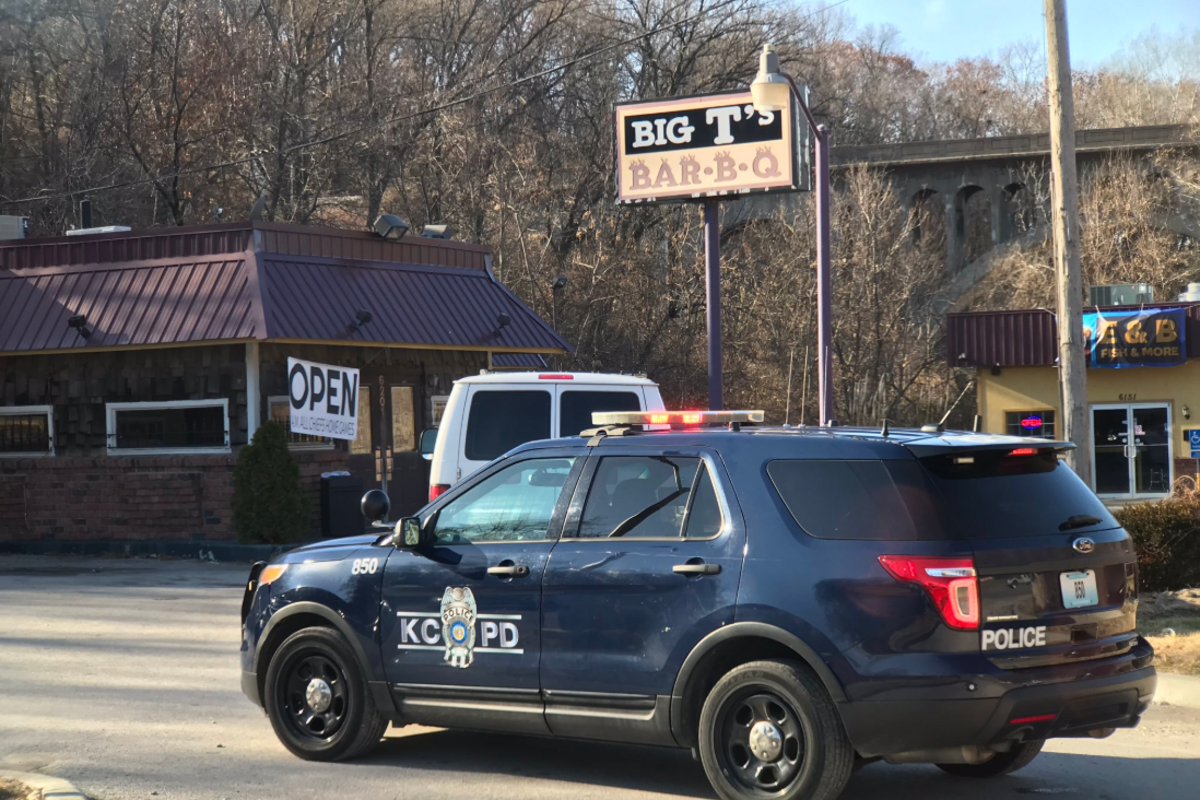
Six days after that, a man walked into a barbecue restaurant in the middle of the day and started shooting during an attempted robbery, injuring an employee.
During one of Kansas City’s deadliest years on record, which as of Dec. 28 saw the killing of 150 people, most of whom died by gunfire, more than 480 people have been shot and survived.
“That is an astonishing number,” Mayor Quinton Lucas said. “That is the sort of thing that needs to help increase our resolve to recognize this as an epidemic and the most important public policy issue that is holding us back.”
Kansas City Police Deputy Chief Roger Lewis, who commands criminal investigations, said it’s projected the city will end the year with 515 nonfatal gunshot victims — more than the 450 in 2018. That figure would also be higher than the 506 people wounded in 2017, when Kansas City recorded 155 killings, its deadliest year on record when counting fatal police shootings.
The number of living victims this year adds to a grim statistic for Kansas City: 2,618 people have been shot and survived since 2014, when police started tracking bullet-to-skin data.
Some researchers say the number of criminal nonfatal shootings is a better indication of violence in a city than simply counting bodies, which often receives more attention from politicians and reporters. Homicides account for a small fraction of violent crime in America, so nonfatal shootings must be considered when shaping policy, experts say.
But shootings that leave victims alive often get little attention from the public or police. Just 12 assault detectives, and officers on overnight squads, investigate them — a staffing decision prosecutors consider to be ineffective.

This year Kansas City police detectives have cleared about 20 percent of nonfatal shootings, less than half the national solve rate for aggravated assaults, which includes such shootings.
Police have said roughly 7 of 10 surviving shooting victims decline to press charges or don’t cooperate with investigators.
To get more shooters off the streets, the Kansas City Police Department is shifting its focus, as other cities already have, to start investigating nonfatal shootings “like they are homicides,” Lewis said.
The department hopes to add more detectives to squads investigating nonfatal shootings, and start a new process for police officials to review the investigations.
“They are failed homicides,” Lewis said. “They are people who intended to kill someone, but wasn’t successful.”
Staffing changes
Two sergeants and 12 detectives are currently assigned to the assault squad, which investigates the city’s hundreds of nonfatal shootings each year on top of other attacks, such as stabbings.
Asked if 12 detectives were enough to investigate that volume of shootings, Ken Novak, a professor of criminal justice at the University of Missouri-Kansas City, said the assault squad was probably “woefully understaffed.”
Some elected officials, including Jackson County Prosecutor Jean Peters Baker and Lucas, who ran a mayoral campaign largely on improving public safety, agreed 12 was not sufficient.
The department plans to double its efforts by adding 12 more detectives to investigate assaults, according to Nathan Garrett, president of the city’s Board of Police Commissioners. Police officials hope the unit will consist of three assault squads, each overseen by a sergeant and made up of eight detectives.
“Nonfatal shootings are a major concern of ours,” Garrett said. “An almost indistinguishable priority from homicides.”
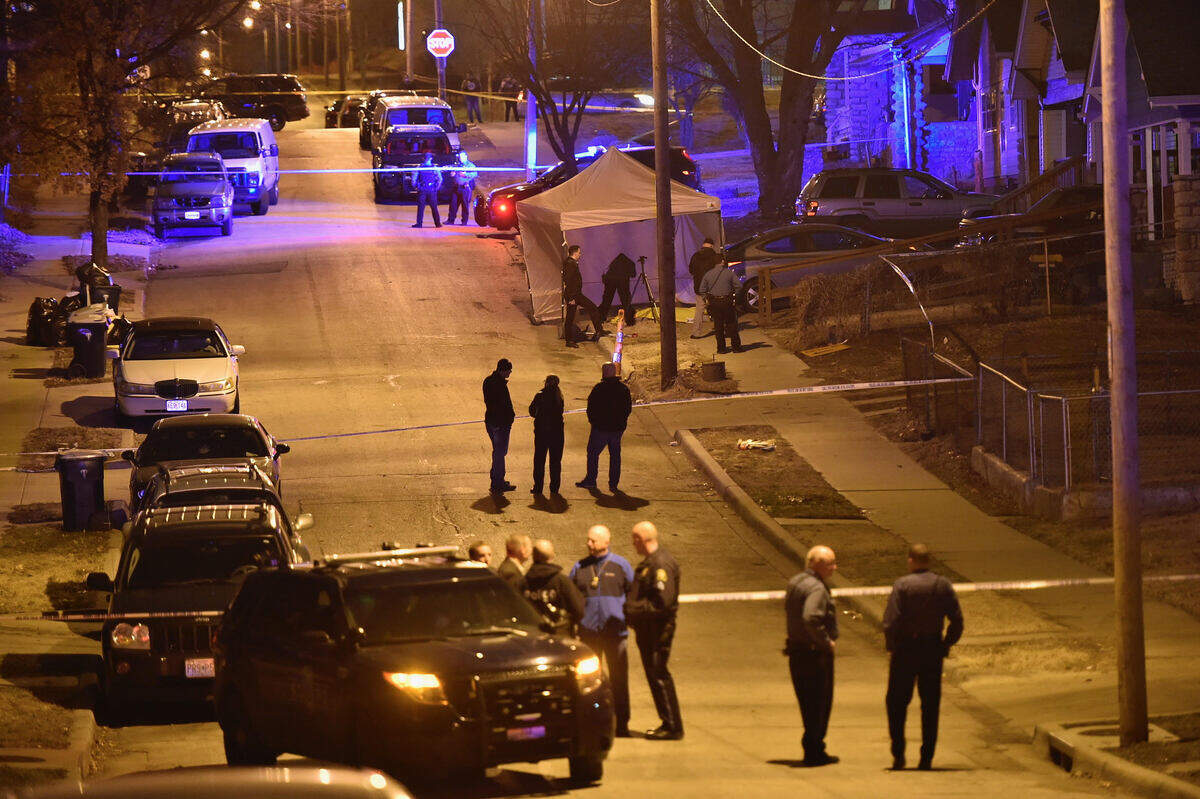
One squad will be tasked with investigating overnight shootings. Lewis said most of the city’s nonfatal shootings occur between 2 p.m. and 4 a.m.
“We see it as a critical need because the assault squad detectives have to be able to work those cases as diligently as homicides because they are simply that,” Lewis said. “If we can reduce our nonfatal shootings, then we can reduce our homicides.”
The department will also soon institute a weekly process to review all shootings, fatal and nonfatal, Garrett and Lewis told The Star. Modeled in part on a Milwaukee police practice, the review will include department leaders and members of other agencies, including the FBI, the Drug Enforcement Administration and the U.S. Attorney’s Office, Garrett said.
The department has made no official announcement about its hopes for additional assault detectives or a shooting review process. So far, Kansas City police do not conduct a review with such resources for nonfatal shootings. It’s unclear what exactly those reviews would look like.
Asked when the review will be implemented, Garrett said it was “currently in motion,” saying the department had secured the interest of partners.
A federal assessment conducted by Thomas Woodmansee, a former Madison, Wisconsin, detective considered an expert in investigations and community policing, recommended Kansas City consider a peer exchange with other departments to examine how they incorporate a collaborative shoot review with a focused deterrence approach.
In Wilmington, Delaware, police increased their clearance rate for nonfatal shootings from 15 percent to more than 70 percent by using a robust shooting review process, Woodmansee noted in the National Public Safety Partnership assessment of Kansas City police’s focused deterrence strategy.
The evaluation, the author pointed out, was completed before Kansas City decided to “stop using focused deterrence as a crime fighting strategy” — a model that has been credited with reducing murder in other cities.
Novak said a successful review process would include determining why a shooting occurred with the goal of stopping the next. He compared it to when the National Transportation Safety Board investigates plane crashes: Without placing blame, the evaluation must stem from the thinking that “something happened wrong.”
“There’s a lot of times that a shooting happens and it’s like, ‘Oh, I saw that coming,’” Novak said. “Well, wait a minute. If you saw it coming, what could we have done to prevent it?”
‘Drinking through a fire hose’
Members of the Jackson County Prosecutor’s Office have been critical of how few detectives are assigned to the police department’s assault squad.
In a September memo, Chief Deputy Prosecutor Dan Nelson said assault squad detectives each had more than 30 open cases. Their cases include those uncleared from previous years.
A majority of nonfatal shootings — about 80 percent, Nelson guessed — happen overnight. It was Nelson’s understanding, he wrote, that overnight generalist squads respond to those shootings and transfer the cases to assault detectives for further investigation.
But the generalist squads have become somewhat known, at least among prosecutors, for mailing in requests for cooperation and failing to canvass crime scenes, obtain phone numbers or follow-up, Nelson wrote in the memo, which was shared with law enforcement and obtained by The Star through an open records request.
Prosecutors observed the generalist squads suffering from an evident morale problem and appearing to not be effective investigative squads, Nelson wrote. Successful detectives, he heard, usually transfer out of the overnight squads quickly. But those remaining, he said, are “drinking through a fire hose every night in the most critical hours of our most critical cases.”
The police department did not have the number of nonfatal shootings that were cleared in 2018, but from 2013 to 2017 Kansas City detectives solved between 22 and 29 percent of aggravated assaults, which includes nonfatal shootings.
Nationally, the solve rate for such assaults is higher, hovering between 46 and 52 percent, according to U.S. Department of Justice data.
Baker commended the police department for looking into adding 12 detectives to assault, saying it would get better results. She called the number of gunshot victims in Kansas City “hard to fathom.”
“If that doesn’t demonstrate a crisis,” Baker said, “I don’t know what would.”
As others have, Nelson called for more services to be provided to shooting survivors, regardless of their cooperation with police, and funding for a program to assist victims and relocate witnesses.
The lack of witness cooperation has remained an issue in Kansas City.
In a 2012 analysis, The Star found 60 percent of the previous year’s shooting victims did not cooperate with police. Little has changed: The police department estimates about 70 percent of surviving victims are unwilling to assist detectives, according to Nelson’s recent memo. Some refuse to tell police basic information about their assaults, even if they know the shooter.
In June, for example, a victim who was found in the yard of a home in the 2500 block of Kensington Avenue would not tell officers who shot him in the lower back or where the gunfire occurred.
Then in September, a man who was shot in the leg in the middle of the day said he did not want to cooperate, though police initially reported detaining several people nearby. Sgt. Jacob Becchina, a police spokesman, said no arrests were made and the case has been listed as inactive because the victim did not want to prosecute.
Detectives pursue cases when a gunshot victim does not cooperate, Lewis noted, but he said it makes it very difficult to prosecute.
The mayor said investigations must continue even when a shooting victim does not want to speak with police.
“It is often pure retaliation for a prior shooting, or for a disrespect or a transgression,” Lucas said. “To the extent that we can solve those, that we actually break up that system of retaliation, then we are saving more lives in our community.”
BEHIND THE STORY
MOREHow we did this story
For this story, Star reporters gathered data on nonfatal shootings in Kansas City going back several years. They interviewed shooting victims, police leaders, and elected officials. They used public records law to obtain documents from the prosecutor’s office analyzing the police approach to investigating shootings. They heard from experts in Kansas City and across the country, and from police leaders in other cities that have had success reducing violence in their communities.
Success elsewhere
Comparing cities by crime statistics can be misleading for a host of reasons, including how municipal boundaries are drawn. But cities of similar sizes and demographics to Kansas City, with a population of 490,000, have succeeded in reducing bloodshed.
The Tampa Police Department, which serves a city of about 390,000 residents, saw its number of violent crimes with guns decrease from 1,430 in 2002 to 450 in 2018. A large number of nonfatal shootings has remained, however. The year 2017 saw 135 — 21 more than 2002.
One of the cities most successful in reducing shootings has been Oakland, a Bay Area city of 425,000 people that ranked as the third most violent in the country seven years ago. Police there recorded what academics consider a remarkable drop in violence from 2012 to last year: 126 homicides to 68 — the city’s lowest in nearly two decades — and 561 nonfatal shootings to 277.
Oakland launched its violence reduction strategy in 2012 after an outcry from activists. It includes a handful of components: Identify people at the highest risk of carrying out violence; reach out to those possible offenders, including through call-ins; provide social services, such as economic and educational training; and regularly communicate with city leaders to stay on top of evolving crime dynamics.
The strategy is based on Operation Ceasefire, which has been credited with helping drastically reduce youth homicide in Boston in the 1990s. Oakland’s Ceasefire is funded through Measure Z, a 10-year property tax that generates $25 million annually.
To monitor trends, part of the strategy includes a weekly shooting review, during which members of the police department, the FBI, the Drug Enforcement Administration and other agencies — the reviews have as many as 80 in attendance — analyze the motive behind every gunshot. That includes nonfatal shootings and gunfire that does not injure anyone, but strikes a house or car.
Oakland Deputy Chief LeRonne Armstrong said in many shootings, an assailant attempted to kill, but was unsuccessful because of his or her poor aim or a medical center’s ability to save the victim. The review, which examines all shootings from the week before, intends to reduce retaliation, based on the belief shooters will shoot again.
“(Shooters) know the person they shot is still out there and could potentially retaliate against them,” Armstrong told The Star. “It’s critical that we follow up, but it’s also, at the end of the day, it’s critical for the public to know that we take these things seriously.”
Law enforcement and experts in Kansas City often point to retaliation as a motive for cycles of violence. Just last month, the father of a 3-year-old boy shot and killed in 2017 was charged with shooting a man police named as a person of interest in the child’s death.
Armstrong noted bullets “don’t have names” and can strike innocent bystanders. Using a multi-tier approach, Oakland police simply want to reduce the number of “bullets flying in our community,” he said.
And so far, the strategy appears to be working.
In addition to the reduction in shootings, Oakland has seen a “dramatic increase” in its homicide solve rate — likely, in part, because detectives have fewer cases — and a decrease in complaints against officers.
From 2012 to 2017, use-of-force incidents involving officers dropped by 75 percent from about 1,240 to 317, according to an April study of the strategy, called “A case study in hope.” The number of legal claims against officers for misconduct has also fallen.
‘State of fear’
Studies have found for every homicide, there are as many as four nonfatal shootings.
“Just one centimeter movement to the left can make the difference” between a homicide and a nonfatal shooting, Natalie Kroovand Hipple, an associate professor of criminal justice at Indiana University, wrote last year in The Washington Post.
It’s a reality victims in Kansas City know well.
The mother of a 7-year-old boy who was struck in the head by a bullet fragment in September on the southeast side, for example, has said she was grateful she was not planning a funeral. Her son has shown symptoms of post traumatic stress disorder. Bullets struck her SUV when she came across two men shooting at another person. No one has been arrested in the case.
Gunshot victims are among the most vulnerable, especially when their shooters roam free.
They are often left with little sense of safety, giving them additional anxiety, said Yulonda Swanson-Moten, who has worked with those affected by violence in her more than 20 years as a clinical therapist in the region.
In children, that trauma can show in many forms, including what may appear to be behavioral issues at school. Similar to the 7-year-old boy, victims can end up not trusting the people around them.
“It is living in a constant state of fear, where there is violence going all around you, all of the time,” Swanson-Moten said. “That creates long-term trauma that can last until adulthood.”
Gun violence needs a systemic fix in Kansas City, Swanson-Moten said.
“It just can’t be police; it just can’t be parents; it just can’t be the schools,” she said. “But it has to be an effort to bring everybody together to make a difference.”
Among those shot this year include three people wounded in May at a Midtown gaming center, where scores of college students spilled out of the now-closed business in panic as gunshots rang out. A person of interest was identified, but there was not enough evidence to make an arrest. That case is no longer active, pending new leads, police said.
A person of interest was also identified in the shooting that wounded four last month outside Baccala’s strip club, but again, there was not enough evidence to make an arrest, Becchina said. That case remains under investigation.
And no one has been arrested in the shooting of the woman who was involved in a wreck, sending her to the hospital in critical condition, police said.
That shooter, like hundreds of others, may still be walking the streets of Kansas City.
This story was originally published December 29, 2019 at 5:00 AM.