‘Beyond devastating’: Why Kansas City can’t stop the bloodshed in deadliest year ever
A “Rest in Paradise” red, white and purple T-shirt memorializing the life of Christopher “Gino” Mansaw Jr. serves as the centerpiece to a shrine inside his grandmother’s Kansas City home.
Evelyn Mansaw hasn’t worn the shirt since Sept. 16, the day of her grandson’s funeral. Wearing it would conjure up the trauma, the feelings of dread, the wave of long suppressed emotions to bubble up and spill out.
“That’s all I’ve got,” Mansaw said. “I don’t have anything else or anybody else.”
Gino, 20, died Sept. 3, two days after he was gunned down near Blue Ridge Boulevard and Holiday Drive.
The fatal shooting, the city’s 141st, is part of an unprecedented surge of gun violence, adding to an already exceptionally bloody year.
“I just want it to stop,” said Mansaw, whose son Christopher Mansaw Sr., was fatally shot in front of his children, including Gino, six years ago. “They (shooters) are tearing families apart. You don’t heal. You just learn how to make it day by day, sometimes second by second, minute by minute. Just stop and think before you pull the trigger.”
With more than two months left in 2020, Kansas City broke its record for homicides Thursday night when two people were killed in separate shootings, leaving 156 victims this year. The total includes seven fatal police shootings.
Throughout the metro, 226 people have been killed as of Friday afternoon, including 42 homicide victims this year in Kansas City, Kansas.
In previous years, Jackson County Prosecutor Jean Peters Baker said she has known about every act of violence in the city. But in 2020, it has been “just almost impossible” to keep tabs on the relentless number of slayings.
“It’s beyond devastating,” Baker said.
Among those killed this year has been a pregnant woman pushing a baby in a stroller, a 1-year-old boy and a woman gunned down in a mass shooting that wounded 15 others at a nightclub. Most of the victims were Black men who were shot.
The single-year record in total homicides was previously set in 2017, when 155 people were killed, according to data kept by The Star, which includes four fatal police shootings.
Before that, the grim milestone came in 1993 with 153 homicides. The year prior, there had been 152. At that time, the official homicide total included police killings, but they are no longer counted in Kansas City Police Department data.
In addition to breaking the homicide record, nonfatal shootings have spiked at an alarming rate. As of Oct. 11, 516 people have been shot and survived this year in Kansas City, compared to 401 by that time last year, according to police data.
By comparison, 2019 ended with 491 living gunshot victims; 2018 with 450; and 2017 with 506.
Baker called the number of living victims this year “absolutely breathtaking.”
Of them, eight of were under the age of 10. Another 20 were between the ages of 11 and 15.
Last year, the youngest homicide victim to die by gunfire was 8-year-old Brian Bartlett. This year, separate shootings have taken the lives of 1-year-old Tyron Payton and 4-year-old LeGend Taliferro.
“No mother should be burying a young child,” Mayor Quinton Lucas said. “No family should know of this pain. And school kids in Kansas City shouldn’t already know homicide victims in their classes.”
A lack of trust
Ken Novak, a criminal justice professor at the University of Missouri-Kansas City, said the city is also on pace to break the record for the rate at which people are slain.
Everything is different in 2020, Novak said. For one, millions of Americans filed for unemployment as COVID-19 closed businesses, creating financial strains. Killings tend to occur in the spur of the moment, and when people are stressed, the chances of violence rise.
More people have also been questioning the fairness of the criminal justice system, particularly of the police, in the fallout of the officer killings of George Floyd in Minneapolis and Breonna Taylor in Louisville.
“When people don’t feel that the criminal justice system is fair,” Novak said, “they’re less likely to participate, as victims or witnesses, and more likely to take matters into their own hands.”
That lack of trust is evident in one of the police department’s statistics: about 70% of surviving gunshot victims are not willing to assist detectives.
“The breach is larger, not smaller,” Darron Edwards, pastor of the United Believers Community Church, said of the mistrust. “And there’s just need for reform and reconciliation.”
Edwards enjoyed getting doughnuts with police officers when he was a kid in elementary school. But the problems plaguing Kansas City, he said, are “at the graduate level.”
“It is going to take more than popcorn and slushies to solve the issue,” he said.
Baker agrees one of the largest factors is distrust in the justice system. She said COVID-19 has at times been blamed for the uptick in violence, but she noted that the first two months of the year were also bloody, before shutdowns began.
In January, for example, 17 were killed in Kansas City, marking the most slayings in a January in at least the last decade. Those who were shot and survived that month included a 5-month-old baby and a 10-year-old girl.
Like most years, arguments remain the largest known contributing factors to homicides, at 37, according to police data. Others included drugs, robberies and domestic violence. But in 65 of this year’s killings, the reasons behind them remain unknown.
Seventy, or about 47%, of this year’s killings have been cleared by police. The national clearance rate is in the mid-50s, Baker said. Seventeen other killings are considered solved but not cleared.
About 19% of nonfatal shootings were referred to Baker’s office for charges, though the percentage that results in charges is lower.
Baker called the solve rate for nonfatal shootings “really low.” She knows assault detectives are trying to catch shooters, she said, but they’re “just not meeting the mark.”
Responding to Baker’s comments, Sgt. Jacob Becchina, a police spokesman, said the department remains “focused on completing the best investigations we can in the most timely manner we can to bring justice to those impacted by violent crime.”
Of the victims this year, the largest number of them — more than 150 — were shot on Sundays, according to data compiled by the prosecutor’s office. The second highest were shot on Saturdays, with 99 victims.
In an effort to catch more shooters and prevent deadly retaliation, police in January began conducting weekly shooting reviews, during which a host of agencies analyze every shooting in the past week.
Police Chief Rick Smith recently said officials are adding components to the reviews to bring in social advocates for people who “want to find some solution other than violence.”
“But to those who are committing the violence, those who are actively shooting in our city ... we know who you are,” Smith said. “We do not want the shooters in our city being as active as they are. I mean, it’s night after night.”
Wanting ‘real solutions’
For about two months, local detectives were assisted by more than 200 additional federal agents as part of Operation LeGend, an initiative named for LeGend Taliferro, who was fatally shot while sleeping this summer in Kansas City.
Before the agents left Kansas City in late September, federal officials said the short-term operation helped slow the pace of murders and nonfatal shootings. The operation led to the arrest of 518 suspects, including 37 for homicides.
U.S. Attorney Tim Garrison in Missouri’s Western District, which launched the operation, said violence will only be reduced long-term by “a change of hearts and a change of culture.”
“It takes pastors and community leaders who endeavor to change the hearts and minds of individuals who reach for a gun to solve their problems,” he said.
Officials, Garrison said, can’t arrest their “way out of the problem.”
Before Operation LeGend, another federal initiative, Operation Relentless Pursuit, aimed to combat violent crime in Kansas City.
But that operation only completed its first phase before the pandemic forced it to a halt. In the first phase, the U.S. Marshals Service arrested about 200 wanted fugitives, primarily for state charges.
Smith, who called the jump in homicides “disheartening,” also said there needs to be a cultural shift.
“I will say, there’s not a police officer on every corner, and even if there was, I don’t know if it would change things,” Smith said. “We need a culture of not picking up a gun and solving problems.”
The effect of the pandemic has exacerbated all of the underlying stressors that already impact people and communities struggling to make ends meet, said Marvia Jones, violence prevention and policy manager with the Kansas City Health Department.
Jones noted that 30% of Kansas City residents either lost their jobs or had their household income shrink.
“All of that has happened in an era that already has increased stress,” she said. “It has made people have a shorter fuse than what they already had.”
City and community leaders need to find ways to treat violence as a public health issue, Jones said. That could be done by improved reentry services for ex-felons and early intervention for those ages 16 to 24 who are most at risk to resort to violence.
“Our city has to do a better job of removing barriers that are placed in the way of people seeking help,” Jones said.
Damon Daniel, president of the AdHoc Group Against Crime, said one way to address the city’s surge in violence is for elected officials, community, civic and business leaders to acknowledge issues that have created the divisiveness and destruction in Kansas City.
“Too often we ignore or forget how structural racism contributed to the concentration of poverty and crime we see today,” he said. “The concentration of predatory lending, white flight and black flight, left many neighborhoods to fend for themselves.”
The lack of a steady tax base and income revenue created less investment in many urban core neighborhoods, Daniel said. Those who could not afford to move where there are full service grocery stores, equitable employment and high performing schools were left behind, he said.
“Every police station in Kansas City is located East of Troost (Avenue), as if they were designed as a first line of defense to confine the poor,” Daniel said.
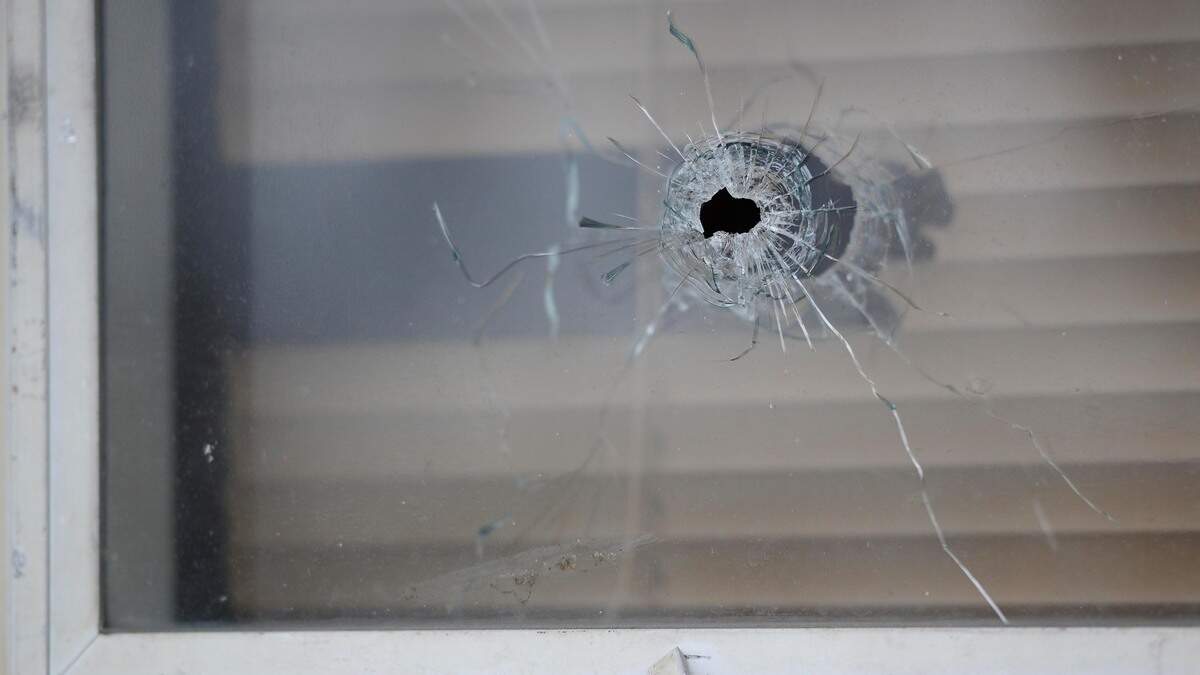
Councilwoman Melissa Robinson, who represents the 3rd District, said the vast majority of the homicides each year have occurred in the East and Central patrol divisions.
“It is a desperate place in the 3rd District; it doesn’t take a rocket scientist or someone with a whole lot of insight to be able to identify the desperation that’s happening on the street corner,” Robinson said. “People are tired of talking, people are tired of planning, people are wanting to see real solutions.”
Robinson said she intends to introduce legislation that would require 1% of the city’s operating budget be directed to crime prevention to address the many root causes of violence.
A ‘horrific’ aftermath
In another effort to prevent shootings and build stronger community ties, the mayor’s office recently announced an initiative called Reform Project KC, which will focus on prevention, intervention, clearance and administrative reforms.
Some community members and organizations were immediately skeptical, saying the only way to stop violence is to tackle issues of poverty, housing and mental health, among other things.
Justice Horn, an activist, was one of them. He said there are disparities in education, transportation and access to food because of policies, such as redlining, that disregarded the lives of Black people.
Residents have a different life expectancy, he added, depending on what side of Troost Avenue they live on.
“As time progresses, as these policies still stay in place, the worse we’re going to see things go,” Horn said. “When we look at the rising homicides, it is because of socioeconomic problems that were put in place well before any of our time here.”
For the victims’ relatives, they are left with their memories and trauma.
Christopher “Gino” Mansaw Jr.’s grandmother remembered him as a jokester who could make others smile and laugh.
He graduated in 2018 from Southeast High School, where he played varsity basketball. That fall, he enrolled at Wichita State University with the goal of entering a spot on the basketball team as a walk-on, but he only stayed there a semester.
Gino returned to Kansas City and later worked as a manager at a Sonic. The day he was shot, Gino was scheduled to start working a second job as a floor technician at the University of Kansas Health System, said his grandmother, Evelyn Mansaw.
“He was in his prime. To see his life cut short, that was a lot,” Mansaw said.
While Mansaw can celebrate Gino’s life, it is “no substitute” for being able to hold or talk to him. Mansaw keeps the memorial T-shirt, mask and obituary of her grandson next to a pictures and an urn that contains the ashes of her son, Christopher Sr.
Gino’s killer remains at large.
“The aftermath is horrific,” Mansaw said of the city’s record number of killings. “They’re not coming back. That stays on your mind. Even with counseling, it still stays. It doesn’t go away.”
The Star’s Katie Bernard contributed to this report.
This story was originally published October 17, 2020 at 5:00 AM.