How does the new KCI airport look, with construction halfway done? Take a tour with us
READ MORE
The new KCI
Expand All
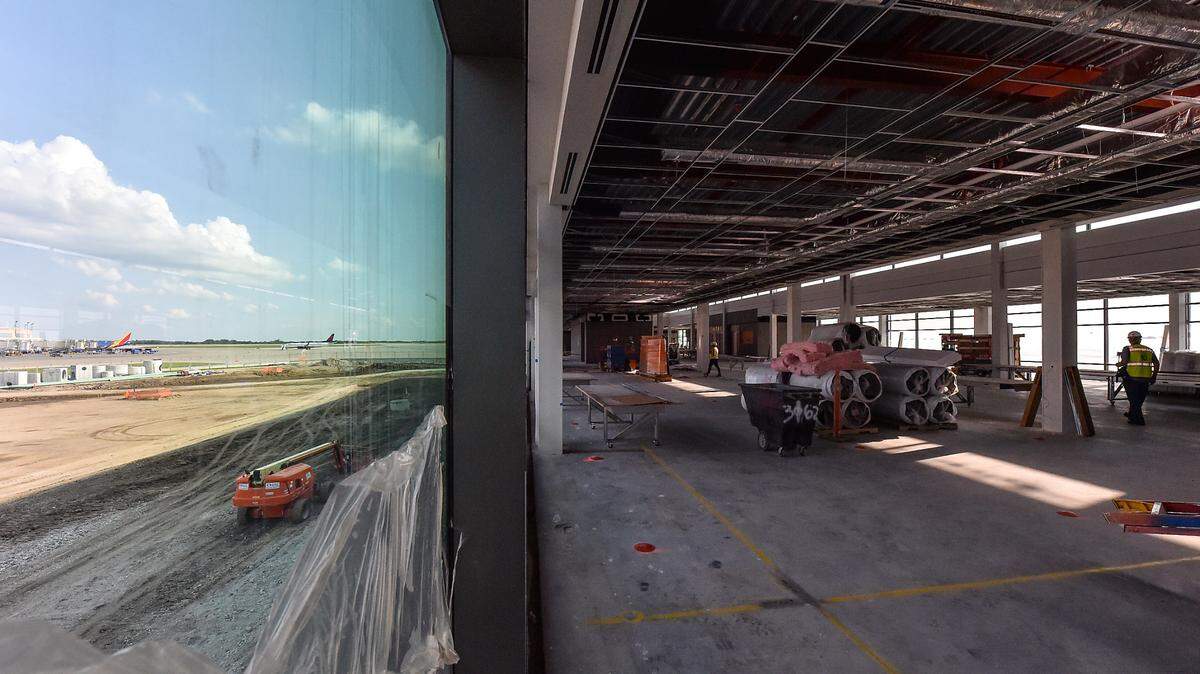
A wall of Missouri limestone moves into place behind the ticket counter. The parking garage stands about three-quarters finished. Crews have just started putting fresh pavement down on the airfield.
Piece by piece, the new Kansas City International Airport terminal is coming together.
At just over 1 million square feet and projected to cost $1.5 billion, Kansas City’s largest single infrastructure project ever is halfway done, airport officials say, and on track to open in March 2023.
Already, passengers traveling to the airport — some of whom may not have been there in a year —are catching glimpses of the structure as it takes shape. But inside the terminal, enough has been completed that airport officials agreed to take The Star on a tour to show how the terminal is shaping up — kind of like walking through a house under construction but on a much, much grander scale.
The pieces in place now help show what the new airport will look like when it’s completed.
The plan was ambitious: replacing a drab yet familiar airport with one new and forward-looking in many ways: modern traffic flow solutions. All-gender restrooms. New security checkpoints.
City leaders are betting the end result will change the way Kansas Citians see themselves far into the future.
“One of the things that’s been kind of special about this project is that we made so much progress through the middle of a global pandemic,” said Justin Meyer, deputy director of aviation for the city.
“So it’s been really special to hear the community’s engagement and excitement about the project because it made so much progress over such a difficult time in all of our lives.”
Kyle Jones, who lives near Lee’s Summit, has been keeping up with the construction, watching the videos that are being posted to the Build KCI Youtube channel.
“I like it,” said Jones, who says he travels for leisure at least once a quarter. “It’s going to be, you know, new and much more up to date. So that’s a big plus.”
One of the minuses, however, will be the loss of the “drive to your gate” convenience at the existing terminals, the 37-year-old information technology worker said.
“You can show up pretty late and still get on your flight — parked and checked and everything,” Jones said.
For him, the new amenities will more than make up for that. He anticipates traveling through the new terminal is “going to be a much better experience all around.”
The new terminal is an exciting project that will elevate Kansas City’s status as a world-class city, Mayor Quinton Lucas said in a statement.
“Not only will Kansas Citians and our region take pride in the look and ease of the new terminal, but all can also proud of the diverse workforce assembled to complete this project,” he said.
“Our workforce represents Kansas Citians from all backgrounds and all walks of life. I am extra proud to see us recognizing, building, and supporting more than 100 Kansas City women- and minority-owned businesses that have been essential in bringing us a new airport terminal and providing hundreds of high-paying jobs in labor to Kansas City.”
One recent afternoon at the construction site, Meyer led the way through the gates to show how the new terminal is shaping up.
Ahead lay the new roadways leading to departures and arrivals, the tall, broad windows of the ticketing lobby and the concourses soon to house new restaurants, coffee shops and stores.
“C’mon,” Meyer said. “Let’s take a look.”
Airport traffic
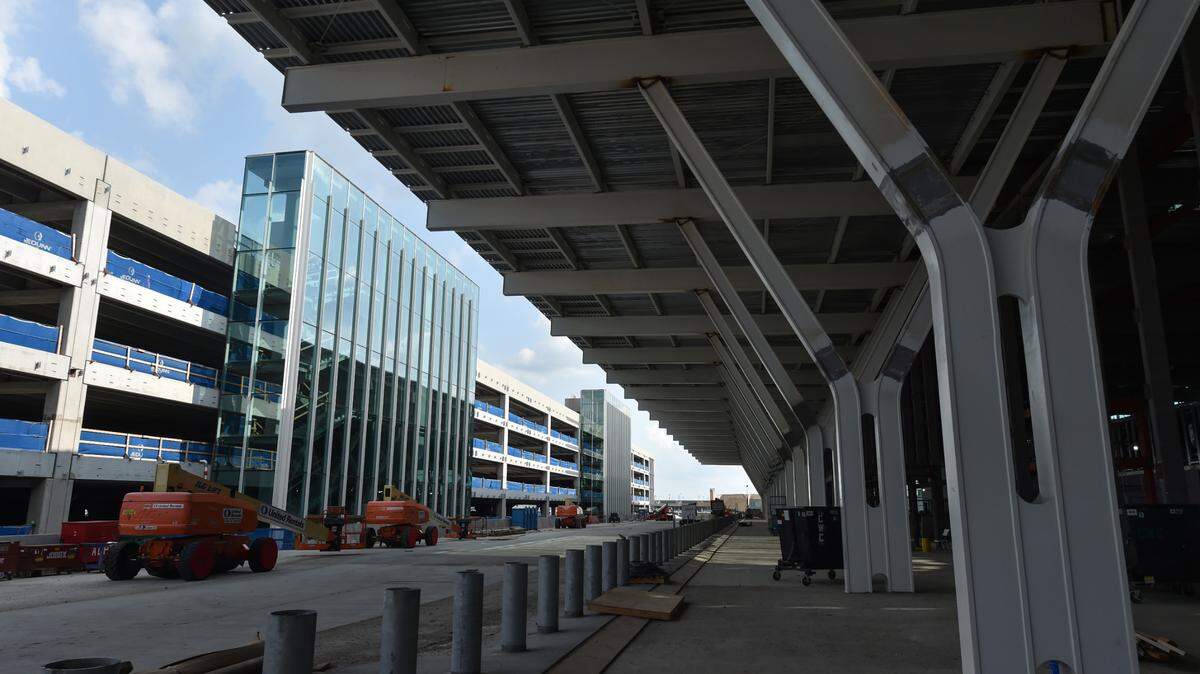
Driving up to the new terminal, one of the first things travelers will notice is the flow of traffic.
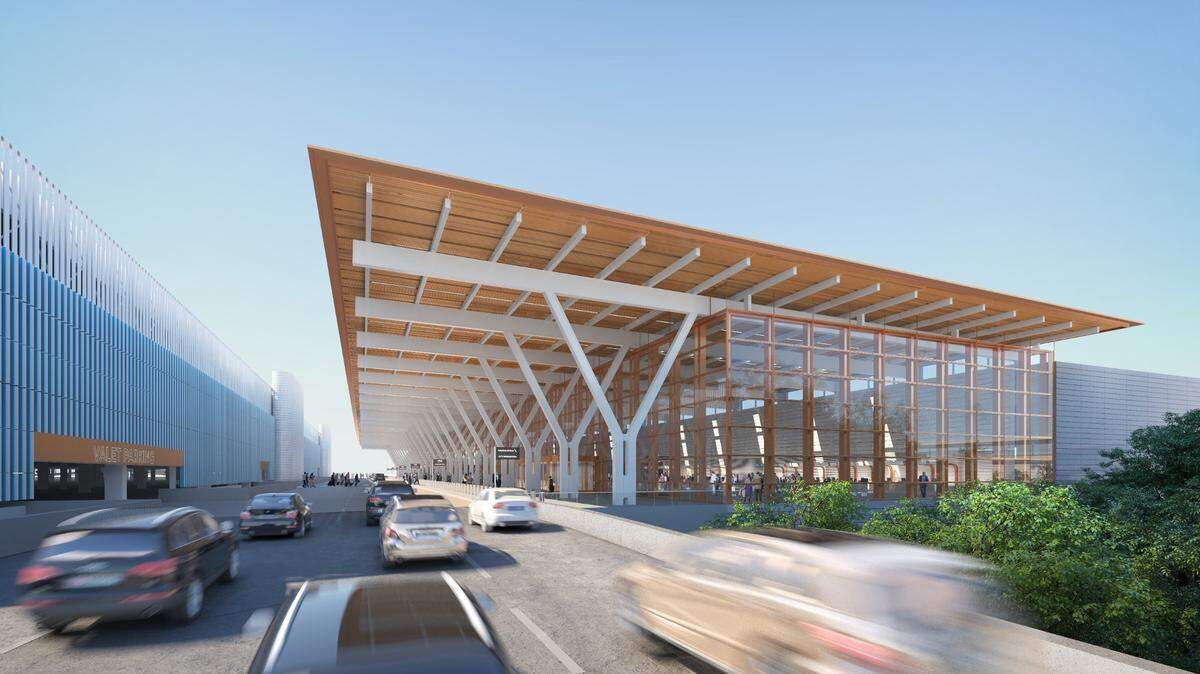
Departing traffic will take a four-lane elevated roadway to where passengers can be dropped off to catch their flights. Underneath will be separate lanes for those picking up passengers from arrivals.
Inside the parking garage, on a lower level, commercial vehicles and public transportation will operate, including buses, taxis, limos and ride-hailing services such as Uber and Lyft. It should be easy to walk out of the baggage claim area to catch a ride, Meyer said.
The change, he said, will be a step up for KCI, which until now has been the largest airport in the U.S that still doesn’t separate arriving, departing and commercial traffic. For now, all the vehicles still intermingle at terminals B and C.
“The way the roadway operates near the terminal is going to get a lot easier and I think a lot safer for the way that customers access the space,” Meyer said.
But it’s the size of the terminal building itself that might impress the travelers the most as they reach the top of the elevated roadway.
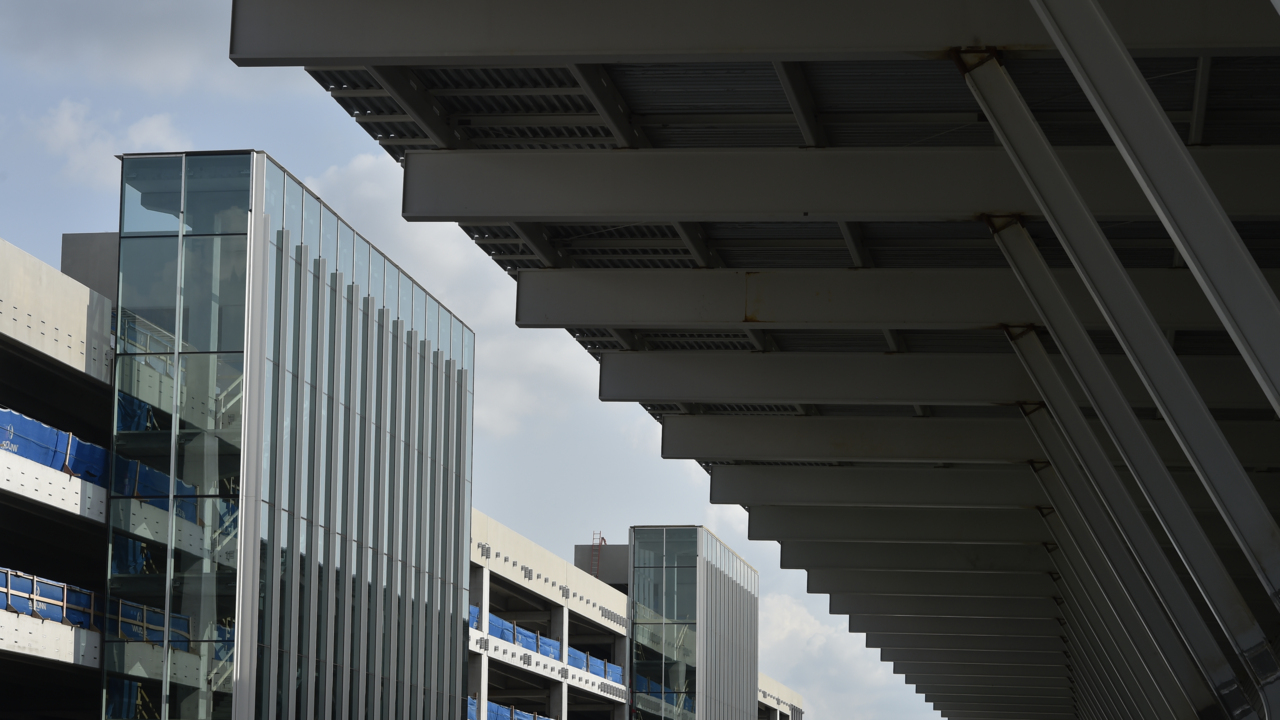
On the way in, they may notice the white columns that support the overhang. The Y shape of the columns, replicated elsewhere in the terminal, are in homage to the Brutalist architecture style of the older buildings. Brutalist buildings are characterized by their massive, monolithic and ‘blocky’ appearance with a rigid geometric style
“This is a 60-foot high ceiling here, this overhang,” Meyer said of the roof that covers the lanes where passengers will be dropped off.
“I feel like when passengers are arriving, they’ll really be impressed by the scale of what we did here,” Meyer said.
New parking
One of the biggest problems for travelers at the older airport terminals has been that the parking garage at Terminal B frequently filled up.
That’s where the new parking garage comes in, with 6,148 parking spaces, which is comparable to the number of spaces at the parking garages at the old terminals.
“This is a big parking garage,” Meyer said. “We wanted to make sure we had ample capacity to handle our passengers and potential growth as well.”
Economy parking will remain, although it will no longer need to be separated by terminal.
Now standing about 75% complete, the garage will feature wayfinding measures, including signals showing how many parking spaces are available on certain levels, and red and green beacons guiding drivers to the open parking spots.
But high-tech features notwithstanding, it’s still recommended that you write down which space you parked in.
Just as good, the garage is directly across the roadway from the terminal doors.
“I think the biggest hope that I have is that our guests are impressed by the convenience,” Meyer said.
“We certainly heard that as one of the biggest words that passengers wanted us to maintain from our existing facility and I think there’s a lot of ways we’re going to improve the convenience of the facility when we open this new terminal.”
‘Who we are’
Once inside, the traveler will enter a massive ticketing hall, running the length of two football fields, with 70 airline check-in desks.
Behind the ticket counters they’ll see a nod to the region’s geology: a wall of 170 limestone panels weighing between 150 and 300 pounds each. The stone is coming from the Phenix Quarry in Willard, Missouri.
“This is a Kansas City project that we want to reflect the region, and certainly this highly visible part of who we are as a region is important to include in the project,” Meyer said.
Enclosing the hall and flooding it with natural light will be more than 900 panels of glass, each weighing between 700 to 1,300 pounds.
On this day, crews had finished installing the south facing windows, with the rest soon to follow.
“I hadn’t seen this yet, so this is kind of cool,” Meyer said. “That work just started a couple weeks ago so it’s really amazing to see that milestone achieved already.”
On the north side of the hall a courtyard will feature a fountain — Kansas City is, after all, the City of Fountains — and service animal relief area. There will be two other other service animal relief areas in the terminal on the concourses.
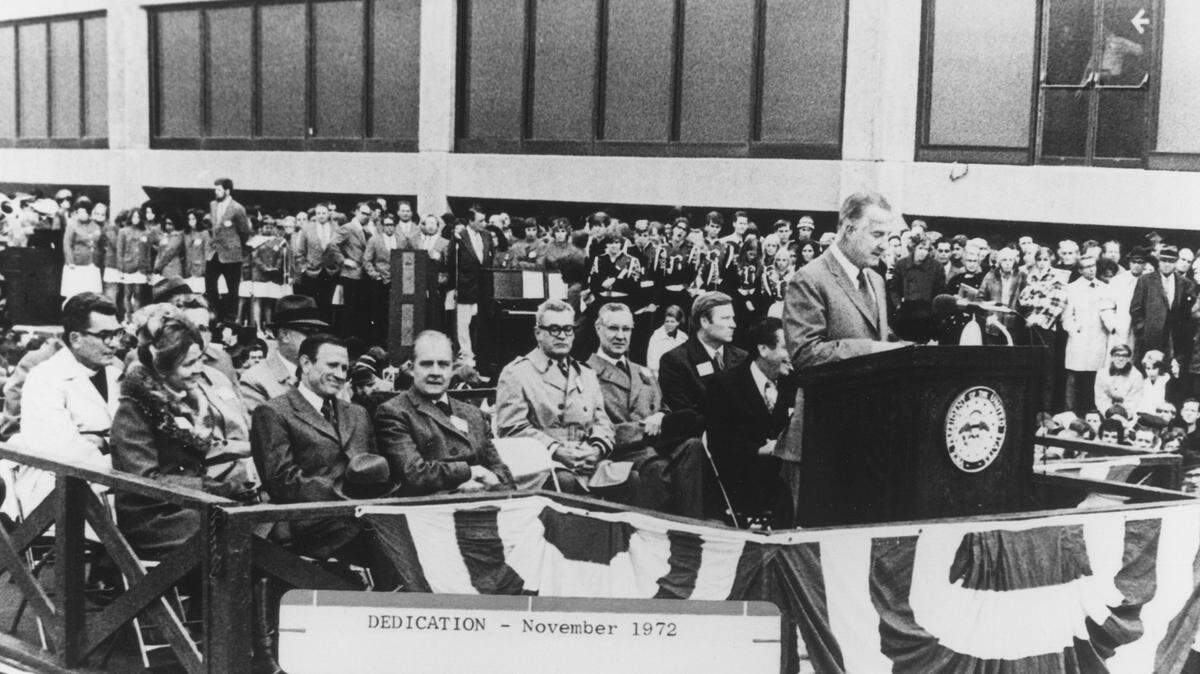
The courtyard also will feature the history of KCI, including the significance of its design when it opened in 1972. The fountain and landscaping will almost replicate the original three horseshoe design, Meyer said.
From here, the traveler will be able to move down to baggage claim and customs on the lower level if needed.
Once they are done here, they’ll be ready to go through screening to find the airport concessions and gates on the other side.
“Let’s head to security,” Meyer said.
Longer lines, but moving faster
The security checkpoint will be very different from what travelers are accustomed to at KCI.
Here, 18 lanes of security will be open to passengers, compared to the largest checkpoint in the older terminals, which held four lanes.
That might mean longer lines at times, Meyer said, but they should also move faster and passengers should not need to arrive much earlier than they do now.
The advantages? The checkpoints will be adjustable and adaptable to the ever-changing requirements of the Transportation Security Administration. It will provide space for TSA PreCheck users, frequent fliers and those who might need a little more time because of medical conditions.
Overall, the large-scale checkpoint works with more efficiency, Meyer said.
“As the technology evolves and rules and requirements change, we’ve had a really hard time in the existing terminals, which were designed in a time before there was such a thing as airport screening,” Meyer said.
Once through security, travelers will find a recombobulation area with benches and chairs where people can put their shoes back on, repack items that might have been removed from carry-on suitcases or place laptops back in their bags.
From there, they’ll enter the first of two new concourses where a lot of the amenities are found.
Concourse A & B
One of the features that Meyer is excited about is the pair of information desks to assist travelers.
Each concourse - which Meyer refers to as “A Node” and “B Node” will have one.
“The current terminals are two horseshoe-shaped terminals — there’s not a central point where you can put an information desk and have all your passengers walk past this,” he said. “This A Node information desk will be visible to every single passenger that comes out of the security checkpoint.”
The desk will be able to assist travelers who need help finding their gate or who left something behind and need to get in touch with someone on the other side of security. There will also be a welcome center on the lower level at the bottom of the escalators.
Travelers will also find a meditation room here as well as a conference room that can be reserved for small groups that might be flying people into Kansas City.
One of the biggest amenities in the A concourse will be an aircraft simulation room for families with travelers who might have concerns about flying or have autism, dementia or physical disabilities as a way to help them decide if they want to book that family vacation.
The airport has procured the front of an aircraft that was destined to be scrapped and will use the cabin entry door, front lavatory, the galley and the first three rows of seats to recreate the feeling of boarding an aircraft.
This feature lets future travelers “come to the airport, have the experience on the non-secure side, checking in for a flight, going through the security checkpoint,” Meyer said. “And then we can simulate the last part of that process which is boarding a flight, walking down the jet bridge and making that step onto the aircraft.”
That step onto an aircraft can be an issue for some travelers, he said. The room will be able to simulate how to stow bags in the overhead bins and how to fasten seat belts.
In the B concourse, there will be a sensory room for travelers who might have autism and don’t do well in the high sensory environment of a typical airport.
“We’ve also partnered with Variety KC to create an all inclusive children’s play area that will be located in this space as well,” Meyer said.
“Families with travelers of all abilities will be able to let their little flyers burn off some steam before they ask them to stay still and not kick the seat in front of them for a couple of hours as they fly.”
‘The flavor of barbecue’
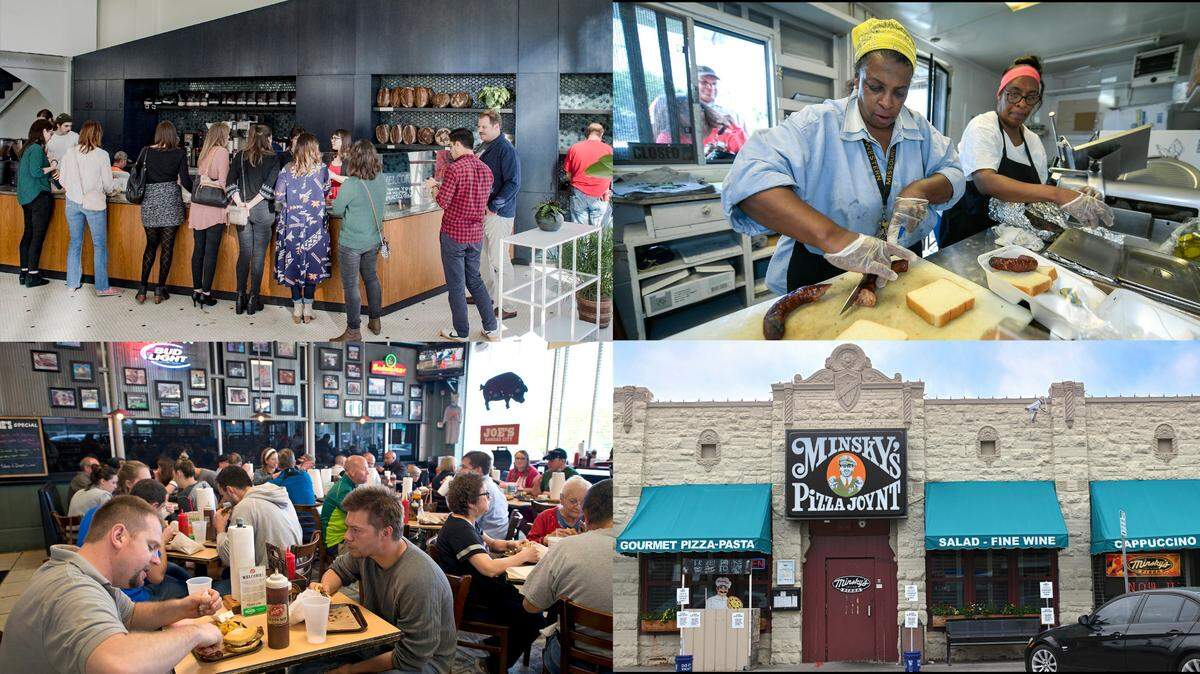
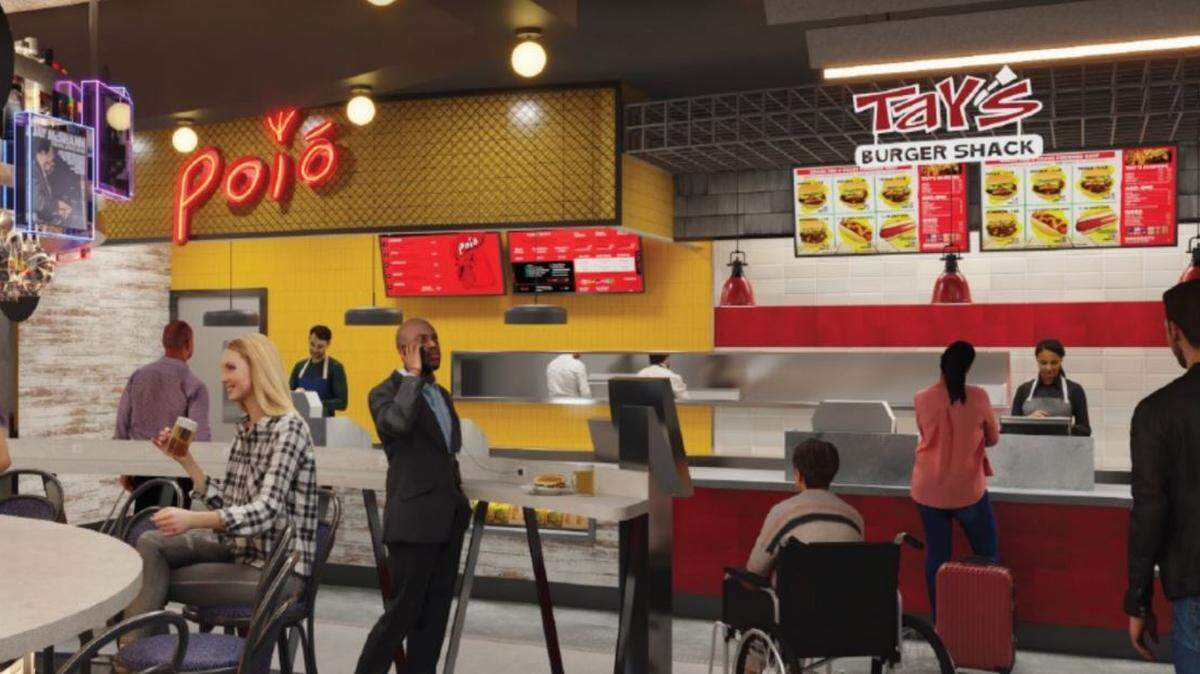
Both concourses will also have restaurants and shops, though Meyer could not say what they will be as the city is still working through concession proposals.
“So as city policy, we can’t really talk about what the flavor of the barbecue will be at this point,” he said.
What he can say is there are 49 potential concession and retail locations with a total of 63,600 square feet. The goal is to be regionally inspired with the theme of “Made of Kansas City.”
But importantly, he said, they will be located better here than in the older terminals.
“In terms of concession space, we’re really just replicating what we have in terms of square footage in Terminals B and C,” Meyer said. “But one of the issues we have in Terminals B and C is so much of our space is in the wrong places. Nobody really wants to buy a coffee before they go through the checkpoint.”
Travelers want to go through security and find their gate before they grab something to eat or drink. Or if their flight is delayed, a place to sit down and grab a meal or beer.
In the new terminal, they’ll be able to do that.
More restrooms
One place where KCI is beefing up capacity: restrooms.
The new terminal will have nearly triple the number of toilets in the secure area.
They will be located in six restroom areas, each constructed in a way that if there’s a problem with one side, only half would need to be shut down while the issue is addressed.
Two of the restrooms will be set up for all-gender use.
“We think it’ll be a really efficient way for toilets to work,” Meyer said. “Certainly some of our female travelers know that they’ve been frustrated where they might have had to wait in line in a gender-specific restroom where the male restroom might not have had a line.”
This also allows caretakers of travelers who might be of the opposite gender to be able to stay with the person they are caring for if they are not comfortable letting them go into a gender specific restroom by themselves.
All-gender restrooms will have individual stalls with floor-to-ceiling partitions, giving people full privacy. The only shared space is where the sinks are located.
“If passengers have a concern about using a multi-user, all-gender restroom, we have gender specific restrooms as well,” Meyer said.
Boarding your plane
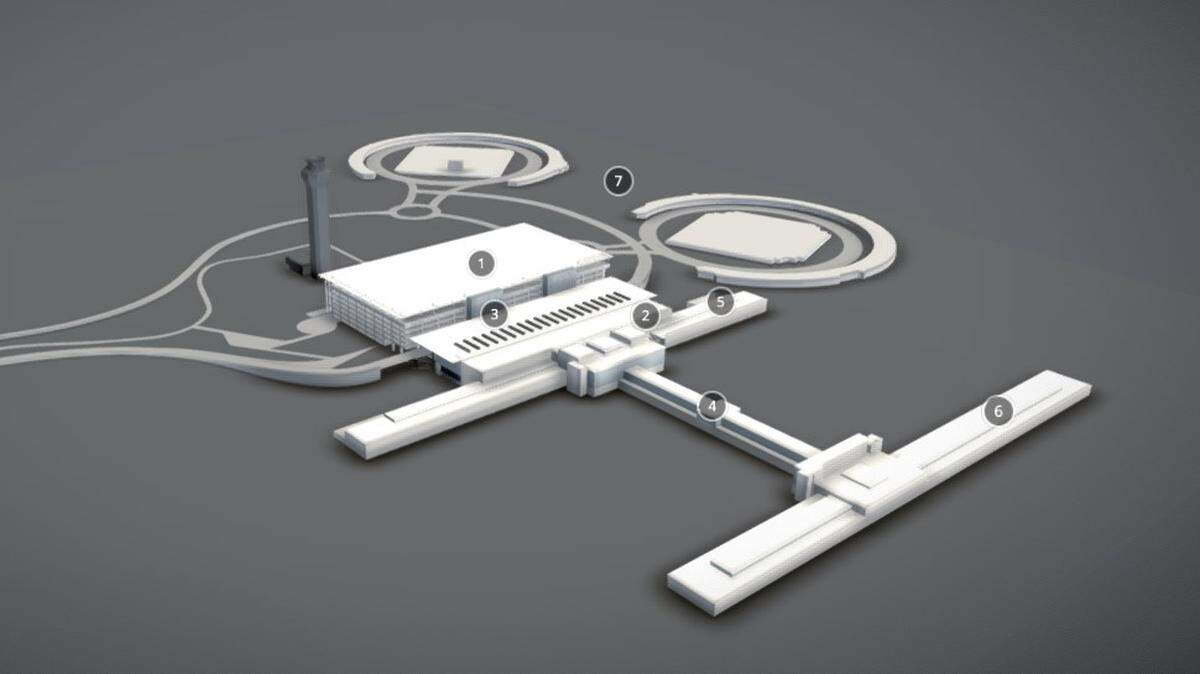
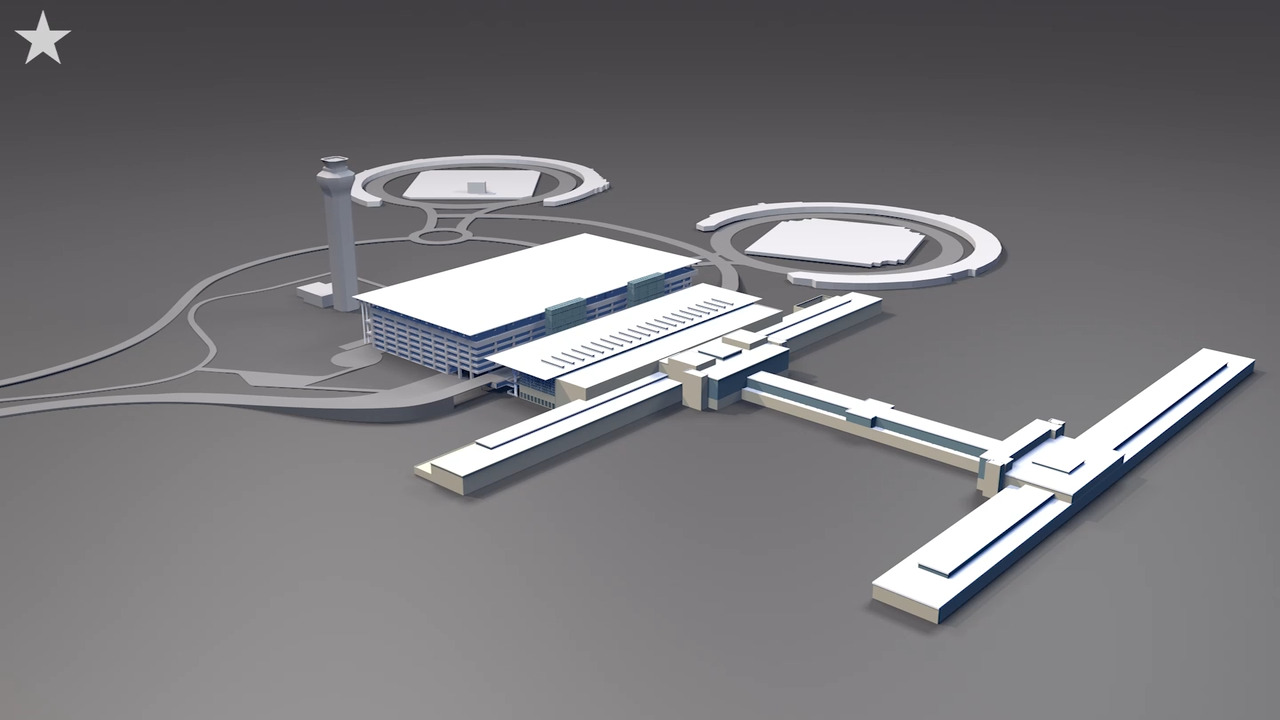
In total, the terminal will hold 39 gates — 12 on the A concourse, with international arrivals, and the majority on the B concourse.
A 630-foot connector will allow travelers to move between them, with four moving walkways to help travelers get there quickly.
The distance, Meyer says, was necessary to allow enough space for aircraft to be parked at both concourses with enough room for two aircraft to be taxiing behind them.
“We think, quite honestly, that the steps aren’t unbelievable,” Meyer said. “And again, the moving walkway here will make it easy for passengers to get back and forth.”
In the middle of the concourse connector will be a few museum-quality exhibits about the history of the Kansas City International Airport and aviation in Kansas City.
“I’m a dad and an avgeek [aviation geek] myself, but my kids love looking at airplanes, too,” Meyer said. “This will be a really neat place for passengers of all ages to observe the airfield and watch bag carts move around and aircraft getting loaded and fueled and arriving and taxiing around.”
The primary walkways through the terminal will have terrazzo flooring. Hemlock wood will be suspended from the ceiling. The gate areas, which will average about 2,500 square feet and have seating for 110 to 130 passengers, will be carpeted and will have an acoustical ceiling, which will provide a quieter, warmer feeling for travelers.
Porcelain tiles will be on the walls in the gate areas as well as throughout the concourses, said Mark Goodwin, vice president of Clark Weitz Clarkson, the joint venture responsible for the design and construction of the new terminal.
“It’s attractive and it’s also durable,” Goodwin said. “When you’re in a concourse, you won’t be able to touch any drywall that could get damaged pretty easily.”
The boarding bridges or jetways, instead of being made of steel like the ones at the existing terminals, will be made partly of glass. It will allow passengers to see the work happening on the ground as they get on the plane.
“When I think about traveling myself, I think that process between scanning my boarding pass and getting onto the aircraft is probably one of the most miserable parts of the journey,” Meyer said.
“Allowing light into that space and allowing passengers to have better visibility as to what’s happening around them will change the entire experience, at least in that period of time for the traveler.”
That is the one feature that Jones — who says he’s not an aviation geek, just a travel nerd — is looking forward to the most.
“The ones you have now you’re basically walking into a big metal tunnel and onto a plane,” Jones said.
The glass jetways will allow people to see their plane as they walk from the gate all the way down to the cabin door.
“You know, it’s a really, really tiny thing, but that’s cool to actually be able to see your flight you are getting on up close,” he said.
As for the final piece of ground the traveler will see before hitting the runway, it is still very much under construction.
Paving recently got underway on the airfield, and over the next year the equivalent of nearly 73 football fields of concrete will be poured there.
“It’s a big milestone to get the paving started,” Goodwin said.
“We’ve got a lot of paving to go. Overall, the entire site is 100 acres where the building sits on so there’s a lot of work that we’re going to have all the way up to opening day.”
This story was originally published September 8, 2021 at 5:00 AM.