
Year in review: These were 10 of the biggest news stories of 2022 in Kansas City

An investigation of racism in policing in Kansas City. A historic vote on abortion in Kansas. A deadly train crash in Missouri.
In the Kansas City region, 2022 was a year of momentous action, historic change and stunning events.
To take the measure of the year as it draws to a close, The Star gathered a selection of 10 of the biggest stories from that time: News that affected everyone, impacted our world, or simply had everyone talking. Some were not single news articles, but ongoing events that played out over months.
They include some moments, like the FBI’s arrest of former Kansas City, Kansas, detective Roger Golubski, that were years in the making. And others, such as the legalization of marijuana in Missouri, that would once have seemed impossible.
Some stories brought joy: Another championship for University of Kansas men’s basketball and 13 seconds of unforgettable drama for Patrick Mahomes and the Kansas City Chiefs.
Some were revealed over the passage of time, like the mystery of Baldwin Denim, and the full scope of the railroad safety problems uncovered by a Star investigation after the June 27 Amtrak crash in Mendon, Missouri.
In several cases, including the stories of racism in the Kansas City Police Department and the abuses at Agape Boarding School, The Star’s reporting resulted in investigations and positive outcomes for people being victimized by failed systems. We’re grateful that this work matters to you, our readers, and look forward to continuing to advocate for you.
Some of these stories are not over. The saga of Agape Boarding School continues in a legal battle. And local defendants in the Capitol riots cases continue to work through the courts.
These are the biggest news stories of the Kansas City area in 2022:
Racism in the KCPD
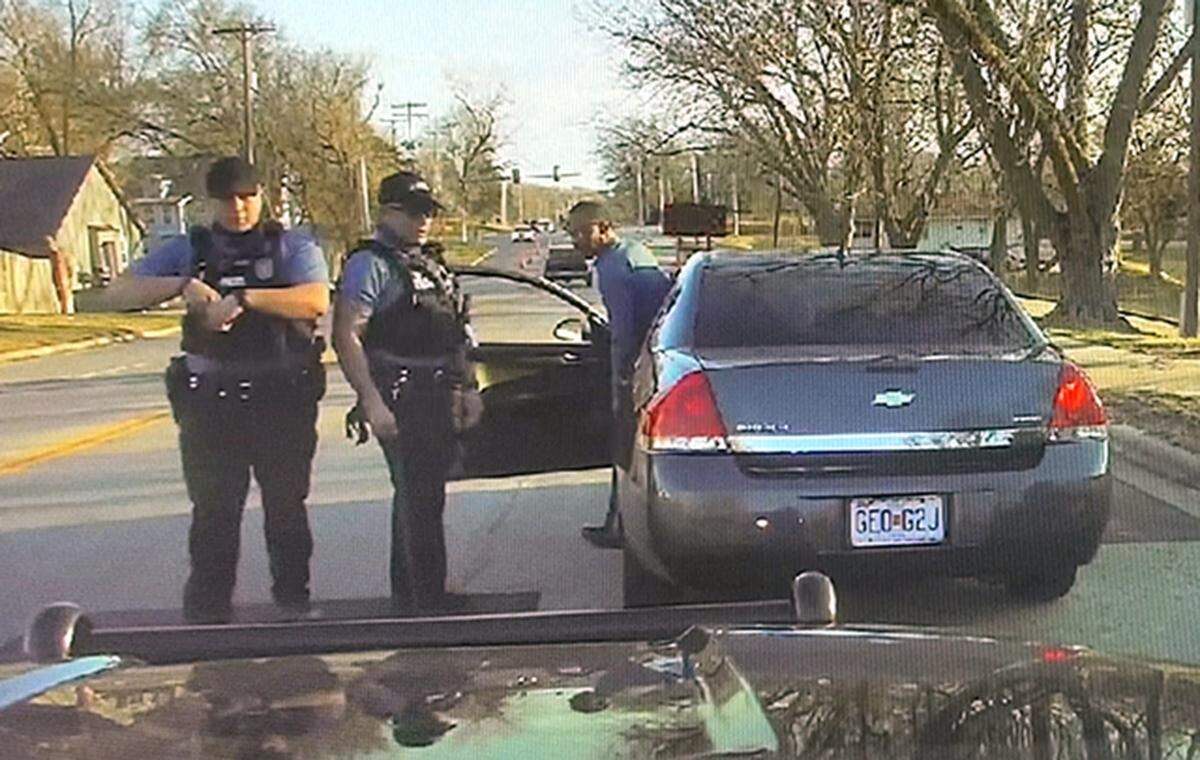
In March, a yearlong Kansas City Star investigation found that the racism festering in the Kansas City Police Department did not spare even its own members, driving many Black officers to leave the force.
In the six-part series, 25 current and former Black officers of various ranks told their own stories of discrimination, racist abuse and a system that forces Black officers out of the department on flimsy pretexts while keeping the upper leadership mostly white. Their accounts were backed up by scores of department emails, internal police memos, legal documents, lawsuits and video.
One video, captured on a police car’s dashcam, showed a Black detective in uniform pulled over in a questionable traffic stop that he said was clearly racial profiling. Now a sergeant, Herb Robinson wondered how his fellow officers treat everyday people, or what could have happened had he been in plain clothes. He told the Star he has not felt the same about law enforcement since.
“You published an excellent, timely article on racism in the KCPD,” one Star reader wrote in response. “Keep up the good work. You do make a difference.”
Months later, the impact of this story continues to be felt.
In September, the U.S. Department of Justice announced it had launched its own investigation of employment practices at the Kansas City Police Department to determine if the force engaged in racial discrimination.
And throughout the fall, the problems uncovered by the Star led to heightened scrutiny of the Kansas City Police Department’s selection of a new chief.
Roger Golubski arrested
The Sept. 15 arrest of former Kansas City, Kansas, police detective Roger Golubski came after years of allegations that he had victimized Black women during his years on the force.
And it came just months after Melinda Henneberger, a former Star columnist, won the Pulitzer Prize for chronicling Golubski’s alleged crimes. She and social justice organizers in the community had long called for Golubski to be prosecuted.
“If ever there was an example of the value of journalism, Melinda’s dogged efforts stand out,” a reader wrote in a Sept. 23 letter to the editor. “We need the media to shine a light on both the good and the bad. Thank you, Melinda, for the reminder.”
By the time FBI agents handcuffed Golubski outside his Edwardsville home, the allegations against him went back decades. He has been accused of corruption, raping vulnerable Black women, and framing innocent people for crimes, notably including Lamonte McIntyre, who served 23 years in prison for a double murder he did not commit.
Initially charged with six federal counts of deprivation of civil rights for allegedly sexually assaulting two women, he was indicted in November on additional federal charges that accuse him of protecting three men who allegedly engaged in sex trafficking in the 1990s at an apartment complex.
Wyandotte County officials voted in November to borrow money and use federal coronavirus relief funds to pay for the district attorney’s $1.7 million project to digitize decades of files, in part to review every case touched by the indicted former detective.
The Kansas City, Kansas, Police Department promised to review 155 Golubski cases, though outside groups criticized the proposed plan, saying it should instead be conducted by independent federal officials.
Golubski, meanwhile, has been allowed to remain on house arrest as the federal prosecution of his case goes forward.
Railroad safety problems

When an Amtrak train headed to Chicago with about 275 passengers and 12 crew members crashed at a crossing near Mendon, Missouri, this summer, the impact was felt across the country.
Four people were killed, and 150 injured. And locals were quick to point out that they had been telling state authorities and the railroads for years that the crossing was unsafe.
But that wasn’t the end of the story.
In a monthslong investigation that began after that deadly June 27 crash, The Star found that hundreds of crossings across the country have been put on lists for safety improvements that sometimes come too late to prevent fatal wrecks.
Even when trains are not in motion, they have caused deaths by blocking roads and preventing emergency help from reaching people in need.
The Star found that rail companies have slashed their work forces and in their pursuit of profits have cut back on safety training and, employees say, equipment maintenance.
And in towns up and down rail lines where a merged Kansas City Southern-Canadian Pacific would operate, residents fear the increased traffic and longer trains the deal would bring.
A top official at the railroad’s largest union said of the investigation, “Without a doubt, it is the most comprehensive publication I have seen on railroad safety in a media publication.”
And a rail employee said, “Thank you so much for being our voice — and what a voice!”
Kansas abortion amendment

A nation’s eyes turned to Kansas this August, when the state held the first ballot test of abortion rights in a post-Roe America.
Faced with a constitutional amendment that would have opened the door for state lawmakers to further restrict or ban abortions, voters in the Aug. 2 primary election turned out in historic numbers to overwhelmingly reject it.
For months leading up to the vote, The Star had reported on the Catholic Church’s role in the campaign for the amendment, how a trigger ban on abortion was sending Missouri down a different path, and told the stories of women who have chosen to end pregnancies.
The newspaper collected readers’ questions about what a “Yes” vote and a “No” vote would mean, about birth control and Plan B and other topics, and reported out the answers to help voters cut through the misinformation spreading at the time.
Readers on both sides of the issue responded to the coverage. Some perceived bias in the reporting and were angry. Others expressed gratitude, sharing their own opinions alongside articles.
Kansas native and author of Heartland, Sarah Smarsh, shared one story on her Twitter page.
“National news seeking men in MAGA hats at diners, bow down to local reporting in rural Kansas,” she wrote before quoting the story.
The outcome of the vote in Kansas stood as a major win for abortion rights advocates, preserving access in a red state as the procedure is banned or severely restricted in much of the region. And it wasn’t just urban centers. Rural counties like Osage, Franklin and Lyon also voted “no” by significant margins.
The Star’s reporting after the primary showed that while these places are undeniably Republican, a libertarian strain runs through them, with many residents naturally suspicious of government intrusion in personal life. These are also places where moderates and liberals live.
When the amendment became an issue, their votes gained visibility in a way that effective one-party control normally obscures.
Patrick Mahomes
Marriage, a baby and the Grim Reaper.
The Circle of LIfe is a good way to describe Patrick Mahomes’ year.
Off the field, Mahomes married his high-school sweetheart in a lavish Hawaiian wedding ceremony. Later in the year, the couple welcomed their second child, a boy named Patrick Lavon Mahomes III.
And Mahomes’ daughter, Sterling, is now attending home games and recognizing her papa on television.
In January, the Chiefs shocked the Bills, who thought they’d wrapped up a berth in the AFC Championship Game only to see Mahomes and teammates rally with 13 seconds remaining to force overtime. After Mahomes threw the game-winning touchdown pass, he was compared to the Grim Reaper by his coach.
“This article actually had me in tears remembering how that game played out and all the emotions while watching it on TV,” one reader of The Star wrote after that game.
Mahomes was supposed to struggle this season after the Chiefs traded Tyreek Hill. Instead, he’s considered a favorite to win another league MVP award and the Chiefs have clinched a seventh straight AFC West championship.
Baldwin Denim

In the first week of the year, readers learned for the first time how Baldwin Denim, a local clothing company with an international following, was unceremoniously shuttered by one of the wealthiest men in Kansas City.
The story, first reported by The Star, told of the rise and fall of one of the city’s most popular brands — and how its fate was intertwined with one of its most popular sports teams.
Matt Baldwin had founded the company in 2009, six years after he and wife Emily opened a boutique clothing store in Leawood. In the coming years, Baldwin’s luxury garments won the notice of GQ and The Gap, of Jay-Z and Jason Sudeikis. Its all-wool KC hats were ubiquitous, found on the heads of stylish locals and international celebrities alike, the two letters an advertisement in miniature for a low-key Midwestern city that suddenly seemed to have some unexpected momentum.
Unbeknownst to the general public, a family investment office controlled by Sporting KC’s owner, Cliff Illig, became majority owner of Baldwin LLC. The billionaire co-founder of Cerner Corp. sidelined the Baldwin family, removing Matt Baldwin’s father, Ron Baldwin, from the board and demoting Matt and Emily Baldwin from their executive positions.
In early 2020, the company was shut down.
Amid the fallout, competing narratives explaining the demise came out the following year in Jackson County court.
As the Baldwins and Illig’s attorneys clashed over outstanding debts, the business dispute curdled into a bitter and at times personal exchange, laying bare lingering hard feelings among those involved, and unraveling the mystery of how one of the city’s biggest success stories had gone bust.
Agape Boarding School
When a southwest Missouri judge signed an order to close the embattled Agape Boarding School this September, the action marked another milestone in a long-running struggle.
Just weeks earlier, another boarding school in the region run by a former Agape staffer, Legacy Academy Adventures, was closed. That news followed the closure in June of Wings of Faith, a Christian boarding school for girls, that was considered a sister school to Agape.
But at Agape, the story was not over. The order to close the school was put on hold and the case became a back-and-forth legal battle played out in court motions and numerous delays.
The Star has investigated Agape and other unlicensed Christian boarding schools in Cedar County since late summer 2020. Many men who attended the school in their youth said they were subjected to physical restraints, extreme workouts, long days of manual labor, and food and water withheld as punishment. And, they said, students endured constant berating and mind games, and some were physically and sexually abused by staff and other youth.
Prompted by stories of abuse, legislators in 2021 passed a law requiring schools to register with the state, conduct background checks on employees and undergo health, safety and fire inspections.
Readers also noticed: “I appreciate your reporting these horrific stories,” one wrote in August. “It will make a huge difference for the troubled children who have been abused.”
By December of this year, Agape had roughly 27 students, a fraction of the population the school had in early 2021 when the Missouri Highway Patrol and the state Department of Social Services launched an investigation into abuse allegations. That investigation led to low-level felony charges against five Agape staff members. Three of those have pleaded guilty to misdemeanors and a fourth case was thrown out. The case against a fifth former staffer is set for a hearing in January.
The judge’s order to close Agape, meanwhile, remains tied up in court.
Missouri marijuana legalization
In the November election, Missouri voters passed a ballot measure legalizing recreational marijuana, giving victory to a monthslong campaign that had divided prosecutors, lawmakers and even some advocates.
The vote amending the state constitution made Missouri one of 21 states to legalize marijuana. The effort was led by the architects of the successful 2018 campaign to legalize medical marijuana and was backed by many of the current players in the industry.
But for months leading up to the vote, much of the discussion around the ballot measure revolved not around whether the drug should be legal, but who would benefit from the lucrative trade.
Some who philosophically supported legalizing marijuana opposed the ballot measure because, they said, it tilted the scale in favor of existing operators with access to the millions in capital, as opposed to smaller, Black-owned operations trying to enter the market. Others had concerns about a provision that allows for civil fines of up to $100 for smoking marijuana in public and a provision that allows possession limits.
The Missouri Association of Prosecuting Attorneys, for its part, warned in a statement weeks before the vote that the measure would make it harder to prosecute people for driving under the influence of marijuana.
As in the lead-up to the Kansas abortion vote, The Star sought reader questions, this time to answer: Will you be able to smoke weed in public? What would change with medical marijuana? When can you buy legal weed?
When the measure officially went into effect Dec. 8, effectively decriminalizing the substance statewide, the newspaper returned to answer more questions. What was next?
Not everyone was happy about the change. But all recognized its magnitude.
“I never thought I’d see the day that they would legalize marijuana,” one reader called The Star to say. “I am so glad I’m not a parent with teenage kids...I cannot believe what they are doing to our society. Smoking marijuana is OK now. God help us. That’s all I got to say.”
Still, adult marijuana users may have to wait a bit longer before having ready access at their local dispensary. State and industry leaders are expected to implement many parts of the amendment over a period of months.
KU Men’s Basketball Championship
The Kansas Jayhawks men’s basketball team rallied from a record deficit to beat the North Carolina Tar Heels 72-69 for the NCAA championship on April 4 in New Orleans.
It was KU’s fourth NCAA Tournament title, good for a tie with UConn for sixth all-time.
Bill Self, already a Naismith Hall of Famer, became the first KU head coach to win two championships and the second active coach with that many to his credit (Iona’s Rick Pitino being the other).
The Jayhawks beat UNC after erasing a 16-point deficit, but it wasn’t the first time a Self-led KU team mounted an unforgettable comeback in an NCAA championship game: The Jayhawks famously rallied from nine down in the final two minutes of the 2008 finale to beat Memphis in overtime.
Fans flooded Kansascity.com to read about KU’s latest amazing comeback and also enjoyed a commemorative front-page poster and The Star’s collectible hardcover book: “Rock Chalk Champs. The Kansas Jayhawks Return to College Basketball Glory.”
Today, in his 20th season at Kansas, Self is all but assured of immortality at Allen Fieldhouse. A statue in his likeness will no doubt grace the venerable hoops facility one day, and some fans have even suggested renaming the venue Self/Allen Fieldhouse.
Capitol riots prosecutions

Though the attack itself occurred Jan. 6, 2021, the Capitol riot continued to be one of the biggest stories of this year as defendants from across the Kansas City region worked their way through the courts.
Nearly a thousand people across the U.S. were charged in the case and at least 23 hailed from Missouri and nine from Kansas.
During 2022, The Star published dozens of stories about individual defendants as they were charged, sentenced, or faced trial. They hailed from all over the metro area, including Blue Springs, Kansas City, Kansas, Johnson County, and elsewhere in either state, and they were charged with laying siege to the capital with weapons including a pistol and a club.
Among them: Devin Kiel Rossman, of Independence, who blamed Trump, right-wing media and elected officials like Sen. Josh Hawley of Missouri for duping him into believing the 2020 election was rigged. Jerod Thomas Bargar, of Centralia, Missouri, was arrested in August on a felony charge that he took a 9mm semi-automatic pistol into the Capitol. And prosecutors said Ryan Keith Ashlock of Gardner, a member of the Kansas City Proud Boys chapter, conspired to breach the building.
The Star’s reporting on the Proud Boys included revelations that members of the group brought guns — including two AR-15 style rifles — body armor and breathing masks with them to the D.C. area. And that the FBI was working with an informant inside the Proud Boys chapter in 2020 who warned the agency about the potential for violence.
“Your reporting keeps America free,” one reader wrote, “and I among many appreciate it.”
During a televised hearing of the special House panel investigating the Jan. 6 attack, another Kansas City-area Proud Boy, William Chrestman, of Olathe, was seen wielding an ax handle in a video from the insurrection.
Several other defendants from the Kansas City region continue to face charges stemming from the riot.
This story was originally published December 28, 2022 at 5:00 AM.