New sheriff: ‘We’re trying to fix things’ in troubled jail where KC sends detainees | Opinion
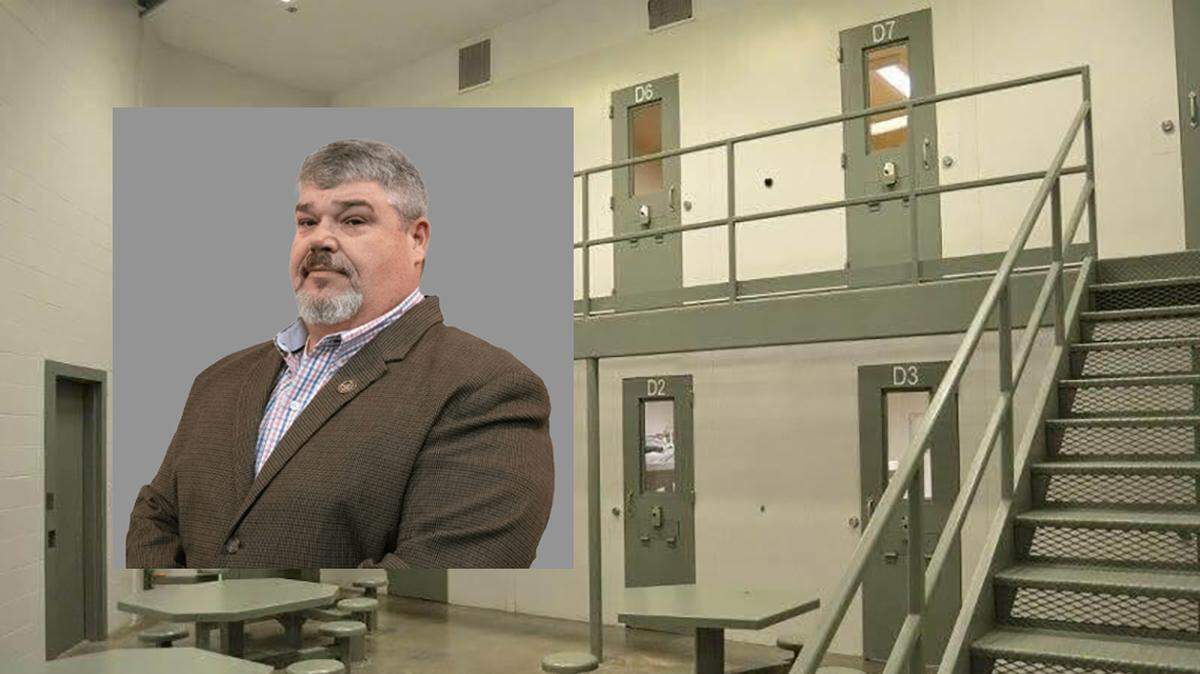
Since Vernon County Sheriff Mike Buehler took office at 12:01 a.m. on Jan. 1, and could finally get inside the jail, which his predecessor had kept off-limits right up until that minute, he’s been working 18-hour days. “And no day off yet,” he told me, to clean up what he won’t come out and call one big old-fashioned mess, but I will.
This is the jail where Kansas City sends all of its male detainees, and where a man died in October after begging for medical care for six weeks straight, according to his family and fellow inmates.
Former inmates, a former chaplain and a public defender with many clients in the facility have since described routine abuse, the regular withholding of medical care and proper access to counsel. Also unsanitary conditions, guards who “rewatch” video of inmate violence, apparently for entertainment, and the racial targeting of Black men from Kansas City in particular. Since I last wrote about these allegations, I’ve received more such reports.
“I don’t know what happened in here,” Sheriff Buehler said, under his predecessor, Jason Mosher, who once again did not return my messages. But “we’re working very hard to get things put back in place the way it needs to be. We’re trying to progress and move forward and fix things and trying to be positive. The commission is aware of what I walked into.”
Some of the changes he’s making are physical, like cleaning graffiti off the walls and fixing the plumbing. “As far as policy,” that, too, is getting a scrub, along with personnel: he’s replaced the entire command staff. And training? “I’m two weeks into it — haven’t gotten there yet.” But the jail staff sees him there two or three times a day, he said, and several people told me they never saw Mosher.
City Council to meet with new sheriff
If you’ve been wondering what our own city officials are doing in response to this situation, which however hard Buehler works cannot be righted overnight, the answer is that they do seem to be taking these concerns seriously at last. Council members are taking a new look at local options while they push to build a city jail that even if approved by voters in April won’t be open for years.
I say “at last” because the first couple of times I asked, I was assured that city staff was already on top of the situation, which clearly was not so, and that in any case, there was nothing to be done, which was not true, either.
Since the Jackson County Jail stopped taking Kansas City detainees a decade ago, women have been sent to Johnson County, Missouri, and men have been shuttled 90 miles south to Nevada, Missouri, where if I’d been the one monitoring conditions, I’d be ashamed to admit it. Having no jail of our own for city detainees all this time has had fatal results for victims of domestic violence, and taken an unnecessary toll on the quality of life in Kansas City. It hasn’t even helped those who needed the intervention and services inmates received at the Municipal Correctional Institution, better known as “The Farm,” before the city closed it in 2009.
But now, there does seem to be a new understanding that accepting the unacceptable is not the way to go.
Mayor Pro Tem Ryana Parks-Shaw told me that she and a group of other council members are going to Nevada to visit the jail in Vernon County in about 10 days. Based on my reporting, “it definitely sounds like a nightmare,” she said, and “it’s unfortunate we weren’t made aware. Why are we just now hearing about this?” Excellent question.
There were some indications. “It’s really bad,” City Councilwoman Melissa Robinson told me in early December. “I went out there last Christmas to bring them some books, and the way they had them housed, it is really bad.” Kansas City Presiding Judge Courtney A. Wachal had that same poor impression: “I was pretty shocked,” she told me. “It’s a big, open room with bunks and humans.”
But the extent of the problem wasn’t known, and I’m going to say that’s at least in part because of the assumption that there were no other options. Jackson County officials, with a jail that’s at capacity as it is, have said for the last decade that they don’t want city detainees because of their shorter stays and intense needs, which often include serious mental health problems and homelessness.
Now that Kansas City officials are aware, Parks-Shaw said, “I am looking into the concerns that were raised about conditions” in Vernon County and meeting with Buehler about how to address them.
Councilman Crispin Rea told me that he will be there, too, “to share thoughts and concerns about what you reported.”
The council is also looking into other “more immediate solutions to the lack of beds right now that we control. As a more immediate option,” he said, council members are also exploring the kind of prefabricated secure temporary housing that Greene County, Missouri, used while they were building their new jail.
That’s a possibility brought forward by the nonprofit Midtown KC Now, he said, and one the council is taking seriously.
Parks-Shaw said that was on the table years ago, and then COVID-19 happened, “and we lost sight of it.” But now, “we’re investigating if that may be a solution. We’re trying to turn every stone and find what solutions there are.”
All of this is especially urgent because even the “stopgap” detention center the city has approved, to be built on the eighth floor of the KCPD’s downtown headquarters, will be a booking center, not a real jail. It will only be able to hold detainees for 24 hours.
“It does give the police department somewhere to take someone in the immediate moment, but those are not detention beds,” Rea said, “and it doesn’t help us with the Vernon County situation, or a longer-term situation.”
Meanwhile, I keep hearing from former inmates in the Vernon County Jail.
‘Sent me back with blood still running down my face’
Charles Bishop, who lives in Nevada, and runs a construction crew in Kansas now, said that when he was struggling with drugs and was in the jail in 2017 on a burglary charge, guards intentionally put him in with men he said would beat him up. Which is what happened, he said.
“They took me to the hospital, did a CAT scan and sent me back with blood still running down my face.” Beatings were routine, he said, “and they did nothing about it. They let it go on.”
After a 2017 lawsuit alleging that inmates were encouraged to attack one another during regular “fight nights,” Sheriff Mosher told a local reporter that while fights do break out, “I and my staff in no way promote, condone or turn a blind eye to any violence, even inmate-on-inmate.”
Even? The case was settled out of court in 2019.
While Bishop was there, some people could leave during the day to work at the local Burger King. “They’d bring drugs back, and they didn’t check them.” he said. A year ago, a man in the jail died and three others were hospitalized after an inmate from Kansas City brought in fentanyl and passed it around.
Guards sometimes wrestled with inmates for fun, Bishop said. He also saw one man put into solitary confinement “because he was trying to sue” over conditions. And the Kansas City men, “it seemed like were just animals to them — guys on the floors with mats.”
Bishop also had untreated MRSA — a knot on his arm that finally exploded, and he got no treatment even then. Finally, he said, he told his lawyer he “just wanted to plead to get to go to prison and get out of there.”
Another former inmate, Jason Moore, said that when contraband was brought in, guards would “pick and choose who to plant it on.” If you needed medical care, “they’d tell you you’re being a baby.”
He saw guards “mace the hell out of” Jeremy Boyd, who told me about his terrible time in the jail, “when he was already handcuffed” and “not doing anything.”
Moore also said guards would “put people in cells with people they knew would beat them up. If you was to beat them up, you wouldn’t get an extra charge for doing that for them. But if they didn’t like you and you got in a fight, you would.”
Neglect was a crime in itself
How none of this was addressed in the decade since Jackson County stopped taking Kansas City detainees and the city started farming them out is a crime in itself.
A laudatory 2016 profile of the former sheriff in the local paper in Nevada, headlined “Raising the Standards,” praised Mosher’s “lively sense of humor” and “ready laugh.” It said he had brought three major changes to the office: “First, there are the dollars being raised every month from housing prisoners from other cities and counties. Second, there is a move towards an increasing professionalization in department organization and staff training. And third, in the recent election, no one thought it necessary to run against the county’s chief law enforcement officer.”
“Dollars being raised,” plus no competition or accountability, either here or there, is exactly how something like this happens. But now that we know, I do have hope that Kansas City will find a way to do right, right now, by both public safety and those accused of violating it.
This story was originally published January 20, 2025 at 5:04 AM.