Golubski victims still don’t believe ex KCK cop is dead: ‘I check every day’ for obit | Opinion
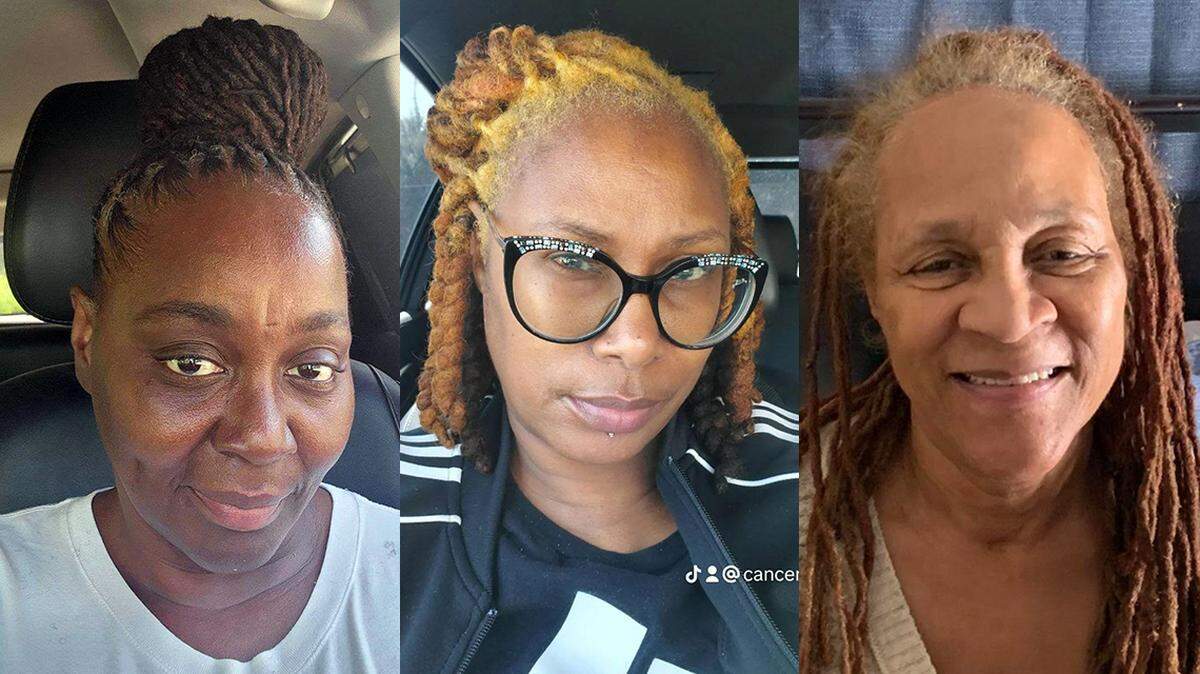
In the more than a month since officials announced that the former Kansas City, Kansas, police detective Roger Golubski had killed himself on what was to have been the first day of his first federal trial, his victims haven’t even started coming to terms with the cop-out of the cop who tormented them.
How could they, when some still don’t believe he’s dead?
Federal prosecutors “just told us, ‘I promise you he’s dead but I can’t show you any proof,’” said Michelle Houcks, who was all ready to testify that Golubski raped her after offering her a ride home from a public park in his police car. “I think they went in and faked his death. Higher up people with a lot to lose” if the case did go to trial “can make him disappear just like the Mafia.’’
I don’t believe that is what happened. But then, I never thought he’d be allowed to turn up dead, either, because I naively believed that even on the loosiest goosiest possible home detention, somebody would have had eyes on him the morning that he was finally going to be called to account for his decades of predation. Instead, as the U.S. Marshal for Kansas, Golubski’s former KCKPD boss Ron Miller, told me, “He was in charge of getting himself to court.”
How that was ever going to end is exactly how it did end, with more Champagne for those who’ve always had plenty to celebrate, and more tears for those who’ve had reason to weep. The women who fall in the latter category are not irrational, but have survived more irrationality than most of us ever could.
So I 100% understand why Houcks and others want a few more facts about what happened on the morning of Dec. 2 before they accept the official narrative. And I still dare to hope that the feds will bend some protocols to offer them and their whole community, where theirs is not a minority view, the proof that they both need and deserve.
Golubski stood accused of raping and otherwise exploiting mostly Black women in the community he was supposed to be protecting for the entire 35 years he was on the police force. And now, pfft, what will come of the bravery of those who risked everything to come forward?
‘I still don’t feel safe’
To me, what they did was still heroic and important, even if his guilty plea did take the form of a single gunshot wound to the head. Had the trial gone forward, his defense attorney was going to tell the court that all of them had made up every word of what they had to say.
Ultimately, Golubski was able to opt out of hearing any of those words because Magistrate Judge Rachel Schwartz decided that the 71-year-old former homicide captain was too old and sick to be a threat, and so should get to sleep in his own bed for the last more than two years, even after he was charged with sex trafficking minors.
Houcks says Golubski threatened to kill her and “have something done” to her brother if she ever told anyone what he’d done to her. It was only after her brother died, 31 years after she was raped, that she did speak; she first told me her story in 2021, and called the FBI right after that. But again, a hold that long, that strong and that frightening doesn’t go away just because somebody tells you it’s safe now, and time to march on as briskly as possible.
When Houcks asked the lead FBI agent on the case if she and others could see a photo of Golubski’s body, or anything else that might show them proof of death, “he said he knows for a fact that he’s deceased but he just can’t do that because of his job.” So now, “I check every day” to see if there’s been an obituary or funeral notice or something. “I checked again this morning.”
Death certificates are not public records in Kansas.
So that no one has provided any official update about the probe into Golubski’s death in the last month, and that much of what was initially reported was contradictory, Houcks said, “makes me think he’s alive and it’s some trickery. It’s like they erased him off the face of this earth past Dec. 2,” when he was supposed to be in court for the first day of jury selection. Because he wasn’t, “I still don’t feel safe. Not knowing won’t let your mind be at ease.”
A spokeswoman for the Kansas Bureau of Investigation, which is investigating what happened, told me in an email that the autopsy isn’t back yet. Kansas U.S. Attorney Kate Brubacher and Tara Allison, an attorney from the DOJ’s civil rights division, who was going to prosecute the case, did not answer messages.
‘Where was his lady friend?’
Ophelia Williams was going to testify that Golubski, who met her when he came to her house to arrest her 14-year-old twins for murder, raped her for years, while also promising to help her sons. Williams does think that he’s most likely dead, though even she is far from sure: “Really, I do not know.”
But so many things don’t add up, she said, like when he reportedly shot himself, “where was his lady friend?” – Lorene Stewart, his longtime girlfriend, who some friends say also felt trapped in that situation. Amazingly, or maybe not, she was his live-in caretaker for the entirety of his time on pretend home detention.
At first, police said a neighbor had heard a gunshot at his Edwardsville home and called 911 around 9 a.m. on Dec. 2, but later reports said the call came from inside the house. A call from a neighbor who’d heard a shot would be very different from one made by someone who’d just witnessed a fatal shooting. Either way, that 911 call was answered by police in Edwardsville, where Golubski worked from 2010, when he left the KCKPD, until 2016. Even whether Golubski has been buried by family, by the state or by no one remains a mystery to those who most need to know.
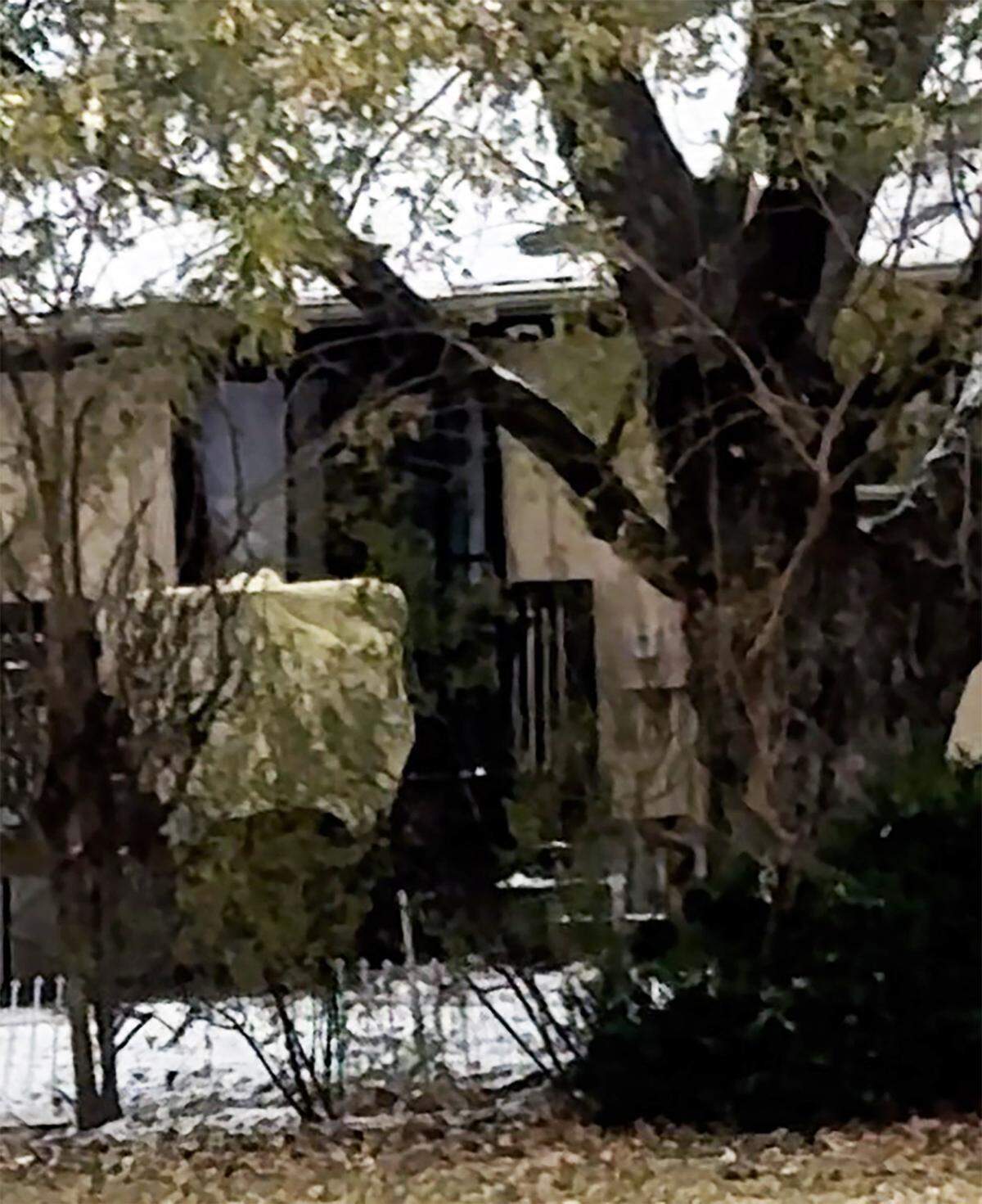
Then there’s the question of exactly where the shooting occurred. Officially, Golubski shot himself on his back deck. Only, another of his victims, who does not want her name in the paper because she fears police retribution, walked around to the back of Golubski’s house just after his death was announced and took some photos.
She saw no crime tape, and no officers working a crime scene, but only a couple of tarps draped over the banister, like towels hung out to dry. That’s what a photo taken at 12:12 p.m. that day does show. If the shooting instead happened inside, she wonders, why say otherwise?
A lot of initial police reports are later shown to have been wrong, of course, and this does not prove that Roger Golubski is alive, or anything of the kind. But it does show why victims have questions that need to be answered.
‘You can never come back to Kansas, Dorothy’
Meka Hobbs, who says Golubski “hunted” her, too, and showed her pictures of dead women during creepy rides that retraced the same circuit, over and over, got a job working a late shift because she couldn’t sleep at night. She does think he’s dead, but not by his own hand or his own choice: “I don’t think he pulled the trigger on himself.” And the idea that his protectors became executioners is disturbing, too.
Niko Quinn, who is part of a civil suit against Golubski, said she hasn’t felt safe enough to sleep at home in the month since he didn’t show up for court. “I just came back home yesterday.” And she, too, “can only sleep during the daytime with my son in there,” she told me.
She was coerced into giving false testimony against Lamonte McIntyre, who served 23 years in prison for a double murder that he did not commit. Golubski, who led that so-called investigation, hounded both her sister, Stacey Quinn, who was murdered in 2000, and Niko Quinn herself, she says. “I believe he’s not dead. It’s a cover-up because of all the things he knew. I sleep with a gun now, and I haven’t done that in years.”
Her cousins, Doniel Sublett Quinn and Donald Ewing, were shot to death in front of a bunch of people in the middle of the day on April 15, 1994. McIntryre was arrested right away, but the real shooter has never been charged, and Doniel’s mother, Saundra Newsom, is part of the civil suit against Golubski, too.
Newsom told me that as recently as three years ago, the former cop was still “stalking” her grandson, with what she sees as devastating results across multiple generations. Last year, that grandson was convicted of murdering his pregnant wife.
“I told you years ago that guy was never going to court,” she said of Golubski, and yes, she did tell me that. Now, “I don’t believe he’s dead,” either.
Golubski’s lawyer, Chris Joseph, said he talked to him “a lot” on the morning he died. He has said that they were supposed to meet at the courthouse at 8 a.m.
After 9 a.m., when voir dire was supposed to start, prosecutors said yes, your honor, they were ready to proceed. That’s when Joseph told the court that he couldn’t find his client, who was “despondent” over unflattering media attention.
“And you didn’t think to send someone to his house?” Newsom asked, incredulous. “I believe they put him on a plane and said, ‘You can never come back to Kansas, Dorothy.’ ”
After all that’s happened, “I’m almost losing my will to fight because I don’t know who to fight or what to fight.” Yet she hasn’t quite lost that will, because she does still have faith in one authority: “He said vengeance is his, and I have that. I know this is not for naught. It can’t be.”
Among those I still want to hear from is the victim who was a former law enforcement officer herself, and was going to testify that when she tried to report being raped by Golubski to KCKPD’s internal affairs department, she was told that it was her word against his.
That took guts for her and all of the others to come forward, and as Newsom says, I still choose not to believe that it was all for naught.
‘Damn them for missing what they could have done’
Ophelia Williams, the most public of all of Golubski’s victims, whom I also first interviewed four years ago, said she asked federal prosecutors Stephen Hunting and Tara Allison “what we’re supposed to do now, and they said it’s over.” Only, it’s not. “They just said how big of a punk he was and how they were sorry we couldn’t have the trial.”
Prosecutors looked so stricken as they rushed from the courtroom on Dec. 2 that I have no doubt whatsoever that they really were sorry.
They’ve told victims that the second sex trafficking case against Golubski’s three co-defendants is still going forward. U.S. District Judge Toby Crouse has yet to rule on whether the civil case will.
William Skepnek is representing five women in that civil suit, which claims that not only Golubski but several former KCKPD chiefs and other detectives operated a criminal enterprise for decades, “preying upon and coercing sexual acts from vulnerable Black women.” Now prosecutors are “on to other things,” he told me. “They’re gone. Bless them for doing what they did do, but damn them for missing what they could have done.”
I feel those two things pretty much equally. They did not have to do what they did do, and I’m truly grateful for their hard work. Nor, however, did they have to let us end up here, with the same system that asked these women to trust it inflicting real and unnecessary pain.
Sure, it would be unheard of to let Golubski’s victims have a look at gory crime scene photos, or even at his body itself, if it still exists. But what about this case has ever been usual? There is no good reason that the feds can’t find a way to ease these victims’ minds.
In physical hostage situations, “proof of life” videos or photos are everything. For these women who are still emotionally held hostage, some proof of death would mean everything, too.