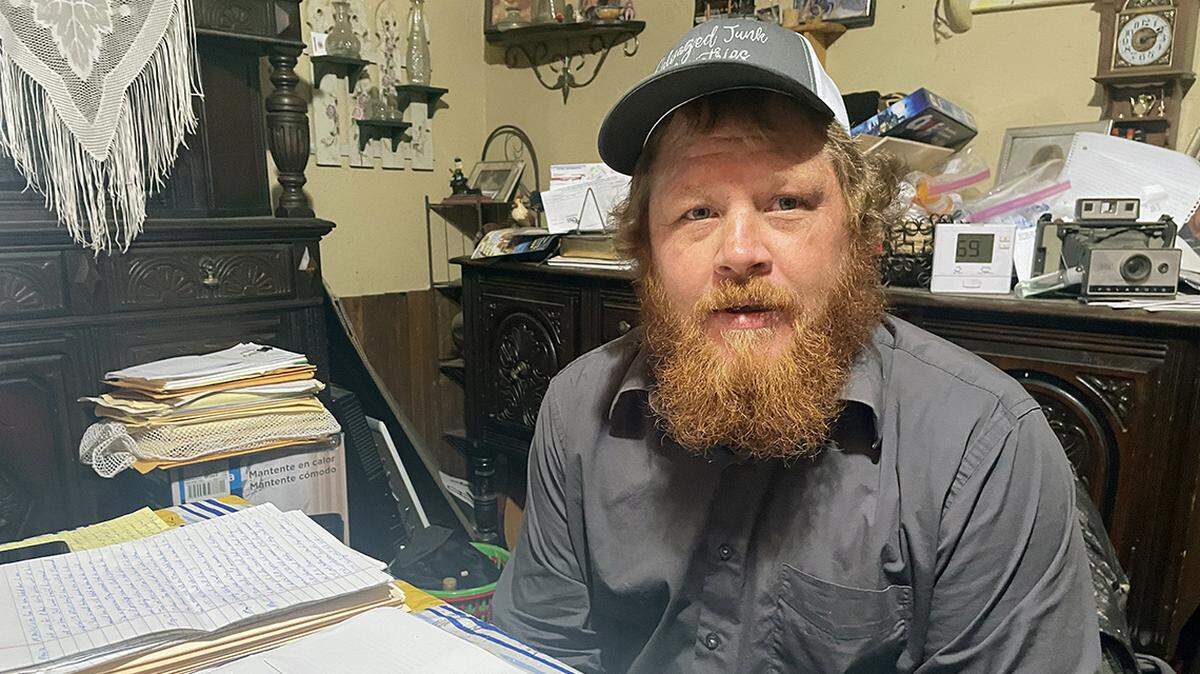
“I’m not a wimp; I’ve boxed my whole life,” said Jeremy Boyd.
Melinda Henneberger
Moundville, Missouri
Reality Check is a Star series holding those with power to account and shining a light on their decisions. Have a suggestion for a future story? Email our journalists at RealityCheck@kcstar.com. Have the latest Reality Checks delivered to your inbox with our free newsletter.
What Jeremy Boyd says he experienced and witnessed during his nearly two years inside the Vernon County Jail, where Kansas City sends all of its male detainees, can really only be described as torture — routine beatings allowed and sometimes inflicted by guards, and medical treatment more often withheld than not. As others have also told me, “they forget to feed you in there. And there’s a lot of people without blankets or mats.”
“I’m not a wimp; I’ve boxed my whole life,” Boyd told me in an interview at his kitchen table in Moundville, a village 10 miles south of the jail in Nevada, and 100 miles south of Kansas City. “But the first year after I got out” in May of 2023, “I could barely leave my room,” because the symptoms of the post-traumatic stress disorder caused by that incarceration were so severe.
On June 11, 2022, after months in solitary confinement for what he said was punishment for complaining that he’d been passing blood and needed medical care, “I cut myself up pretty good so I could get to a doctor.” But instead they just “stitched me up, put me in a pickle suit” — for those on suicide watch — “and made me sleep on the floor.” Like most in the jail, he had not been convicted of anything at that point. And yet, “I had only seen sunlight six times, in very brief increments, in 17 months.”
Boyd got in touch with me after I wrote last month about how a beloved Nevada mechanic, Dean Butterfield, had died in the Vernon County Jail. Butterfield’s family and fellow inmates told me that he had begged for medical care for the grapefruit-sized hernia in his groin virtually every minute of the almost six weeks that he was in custody. Not only that, they said, but he was punished for even asking to see a doctor. Earlier this month, I wrote about the jail again, asking why we are continuing to send people to a place that Kansas City officials know has serious problems. There hasn’t been a place to house those detained by the city locally since Jackson County ended its contract with Kansas City almost a decade ago, in 2015.
But Boyd, who has a copy of every complaint he lodged while in the jail, how those complaints were answered, and also his regular journal entries from those two years, says there’s even more to the story. For instance, that the Black men sent there from Kansas City are routinely treated to especially harsh and blatantly racist punishment.
Sheriff Jason Mosher, who did not run for reelection and is leaving office next month, did not return messages for this column.
‘They do a lot to the Kansas City guys’
“We’re a little bitty country town and there’s racism,” Boyd told me. So if Black inmates annoy the guards in any way, “they put them in with some Vernon County boys and let them tune them up. They do a lot to the Kansas City guys.”
One such man, whose name Boyd gave me, was attacked by someone on staff, whose name he also gave me. “They roughed him up pretty good — tased him, slammed his face up against the wall and left him locked down for eight days. And when they let him back out, they let a couple of the Vernon County boys tee off on him, and that’s a fact.” I could not find this man, but I did find his case, and learned that he was in custody after being arrested for shoplifting.
Another Kansas City man, who was obviously severely mentally ill, Boyd said, asked why he had to surrender his clothes, which were his only belongings, and in response was kicked and maced by a guard he named. Yet another Kansas City man leapt from an upper hand rail and broke his neck in 2022, Boyd said, because he was so desperate to be hospitalized.
Boyd himself was groped by someone who worked for the jail, he said, and for 10 days in a row heard the screams — unanswered by guards — of a Kansas City man being raped by other inmates. That same man’s finger was bitten off during the time he was left alone with the men who were attacking him, Boyd said.
Boyd has the dates, details and names of some of both staff and those they injured in the stacks of papers he has kept and given me copies of. He has called multiple hotlines and a bunch of attorneys, too, and no one has ever called him back. But if I were a lawyer with an interest in human rights, I would get in touch with him.
One thing he never could understand, he said, is why whenever any Kansas City officials came to tour the jail, they always announced that they were coming in advance, so the place and all the people in it suddenly got all cleaned up and everyone got fed for a change.
One of the most Kafkaesque situations reflected in the paperwork Boyd showed me came in answer to his complaint that he couldn’t eat meat, not out of preference but because he has alpha-gal syndrome, a serious allergy to meat.
There is a rule against trading food in the jail, Boyd said, but the response to his complaint told him to feel free to disregard that edict: “Just don’t eat the meat then, i’m sure another inmate will happily trade you vegitables (sic) for the meat that is served on your trey. (sic)” He would have been glad to make that trade, Boyd said, if only the jail served anything recognizable as a vegetable.
‘I’ll never forget the smell’
Maybe you’ve been thinking all this time that you put no stock in the word of anyone who was ever incarcerated.
So here is what a former chaplain at the jail, the Rev. Chance Foster, who served there from 2019 to 2023, told me. He said he had to step around urine, vomit and feces to even get into the place. “For the rest of my life, I’ll never forget the smell. And the Kansas City pod was always wet.”
Wet? In protest of their treatment in a pod “just stuffed with people,” he said, the Kansas City inmates regularly threw cups of urine underneath the door, where it just stayed.
He also says he saw guards “rewatching” surveillance video of “people being beaten up” in their cells. “It looked like it was orchestrated. It was almost like they were trying to break them mentally.”
When you say they were “rewatching,” do you mean the guards were watching this stuff for entertainment? “It almost seemed that way,” he said. Foster also said he saw inmates denied medical care they obviously needed. Even when in bad shape, he said, they were told they were faking it.
Never once, he said, did he ever see Sheriff Mosher in the jail, where the rules seemed to change constantly. “I understand about hiring problems, but we’ve got to do better.”
In January, another man died in the Vernon County Jail and three others were hospitalized after a fourth man, an inmate sent there from Kansas City, brought in fentanyl and gave it to the others.
After a 2017 lawsuit alleging that inmates were forced to attack one another during regular “fight nights,” Sheriff Mosher told a local reporter that while fights do break out, “I and my staff in no way promote, condone or turn a blind eye to any violence, even inmate on inmate.” Even, he said. That suit was settled out of court in 2019.
Lorrie Divine, an investigator for the Missouri Public Defender’s Office, said it was her office that brought the “fight night” situation to light in 2017, and that she, too, has “seen some disturbing things” in the jail. “It’s heartbreaking.” It’s also far more difficult to prepare her clients in the jail in Vernon County, where she lives, for trial than those incarcerated in other counties, she said. “All the other jails I can call and say I need to speak to this inmate.” But when she calls the jail in Nevada, “they ask me to call back in half an hour, and then another half an hour, and I’m put off for hours and days at a time.”
Kansas City’s response to conditions
You would think that Kansas City officials would be all over this completely unacceptable situation, and determined to find someplace else to send people asap, especially when, as I have written before, there are brand new cells sitting empty in police precincts across Kansas City. But no.
When I told Mayor Quinton Lucas all of this, he repeated what he’s said to me before, that he appreciates all of the city’s partners for helping us out by housing our inmates, and that the city continues to talk to both Vernon County and Johnson County, Missouri, where women detainees are sent, about ways they can do better.
City councilwoman Melissa Robinson initially expressed outrage, and said she was going to get the ACLU involved right away. But then she did not take any of my many subsequent calls.
Councilman Kevin O’Neill, who has been pushing for a municipal jail for years, said he would raise the issue of canceling the city’s contract with Vernon County at a meeting the following day. But he didn’t answer my later calls, either.
I also called City Manager Brian Platt, who did not get back to me, and the city spokeswoman, Sherae Honeycutt, who said no, I would not be able to interview the city’s head of corrections, Megan Case. “I have spoken with our City Manager, who told me that the City is working to improve conditions in Vernon County,” Honeycutt said in an email.
She also referred me to a recent news release about the push to build a municipal jail in Kansas City. The renewal of a tax that would fund that construction will be on the April ballot, but that jail, if we do build it, won’t open for years. Even the stopgap, 55-bed detention center on the eighth floor of KCPD’s downtown headquarters, which Mayor Lucas says is moving ahead over the objections of KCPD Chief Stacey Graves, won’t be ready for at least a year.
The one elected official who I think does intend to follow up on any of this is Councilman Crispin Rea. “What you’re describing is very alarming,” he told me, and “I’m certainly going to start asking staff to look into it. Based on what you’re describing, we need to be taking a good look” both at Vernon County and at what other short-term options there might be. Yes, please.
O’Neill told me when we did talk that it was his understanding that as a result of my earlier columns, the city’s head of corrections had already met with the incoming Vernon County sheriff to talk about the changes that Kansas City expects to see.
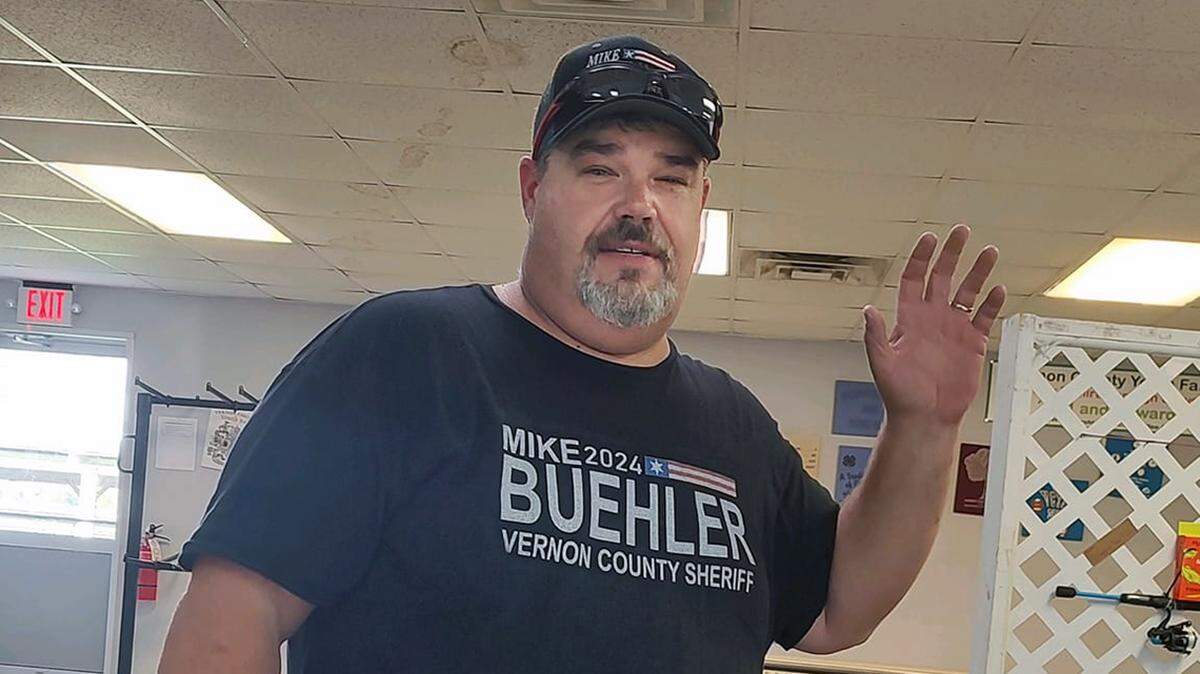
But when I called the incoming Vernon County sheriff, Mike Buehler, he said that his phone conversation with a woman from the city — he didn’t know whether or not it was Megan Case — did not even touch on safety, or on conditions in the jail. “We didn’t get into that. Basically, they just wanted to know if I was going to continue the contract.”
That’s what they were worried about? Whether Vernon County will keep taking our people? “I don’t know what they were worried about. We didn’t get into a lot in-depth.” And anyway, he thinks that conversation happened before “the last in-custody death.” Butterfield died in mid-October. Buehler has been the sheriff-elect since the August primary, since he ran unopposed in the general election in November.
Incoming Vernon County Sheriff Mike Buehler Facebook/Elect Mike Buehler for Vernon County Sheriff 2024
The current sheriff isn’t even allowing the sheriff-elect, a former jail administrator, into the building until he takes office on Jan. 1, Beuhler said, so he won’t know until then what the situation is, and doesn’t want to comment based only on what he’s heard rather than what he’s seen for himself. “I’ve been very reserved on how I’ve commented,” he said, but “if that stuff is happening, we’ll deal with that accordingly.”
Is he surprised that the current sheriff isn’t letting him in the building until then? No, he said. “Everything has been very hush-hush and I’m going in there blind. I wish there was more cooperation, but I’m going to handle everything that needs to be handled.”
He will say that, “I’m a little bit different than the sheriff right now; I took your call. I think there’s training that could be done to combat some of this stuff.” And Buehler said he has “already made some changes,” by deciding to “remove certain command staff” — five in all.
Jeremy Boyd, who told me about his awful almost two years in the jail, says he knew Buehler from an earlier stay in the jail. And it was Buehler, the jail administrator for seven years, up until 2013, who Boyd says saved his life by sending him to rehab, twice. So that’s certainly encouraging.
Boyd struggled with alcohol abuse from age 10, he says, and later got addicted to meth, too. He was in the Vernon County jail up until last May waiting to be tried on charges that he’d held up a local gas station. Eventually, he was found not guilty of robbery and guilty of petty theft. He will have been sober for four years on Feb. 26, and spends most of his time now helping out at a sober living home and ministry for some formerly homeless guys.
“My life is transformed, but those people still need to be held accountable” for what he says has been so long allowed to go on inside the Vernon County Jail. “I was guilty of something, but we’re still human beings in there.”
I do think conditions are likely to improve under Mike Buehler, though that may be a long, hard turn for him to make. And if he does succeed, I’m not sure it will be thanks to any pressure from Kansas City.
I called the ACLU myself, so we’ll see what comes of that.
Gwen Grant, president and CEO of the Urban League of Greater Kansas City, said this is just another reason that the city should be pushing to hold Vernon County accountable and pushing the KCPD to let them use those 50 cells sitting empty in brand new patrol stations across the city.
“Reports of violence, sexual assault, and racial abuse against detainees demand immediate investigation and accountability,” she said in a statement. “Kansas City should not continue to contract with a facility that allows such egregious abuses. It’s unconscionable that Kansas City has five new police stations with empty cells while we send individuals to a jail infamous for horrific abuses, or worse, release offenders back into the community. This is about more than logistics; it’s about public safety, preventing further harm, and respecting human dignity.”
Kansas City officialdom has up until now been remarkably incurious about whether its detainees are being sent to a place where a clergyman had to step over vomit and feces, and where people from our city allegedly receive racially motivated “tune ups” on a regular basis.
They can sigh that there’s just nowhere else to send those arrested by the city, and that in the short term, there’s nothing to be done. But it’s their own smiling, silent, counseled lack of both transparency and willingness to make an unhappy noise when need be that guarantees that outcome. At this point, continuing to express appreciation for all that our “partners” in Vernon County have been willing to do for Kansas City is just wrong. And if that doesn’t change, it will make Kansas City officials willing partners in all that has been happening there.
This story was originally published December 24, 2024 at 5:08 AM.
Melinda Henneberger was The Star’s metro columnist and a member of its editorial board until August 2025. She won the Pulitzer Prize for commentary in 2022 and was a Pulitzer finalist for commentary in 2021, for editorial writing in 2020 and for commentary in 2019.