Inmate who died in Missouri jail was denied care, punished for asking, family says | Opinion
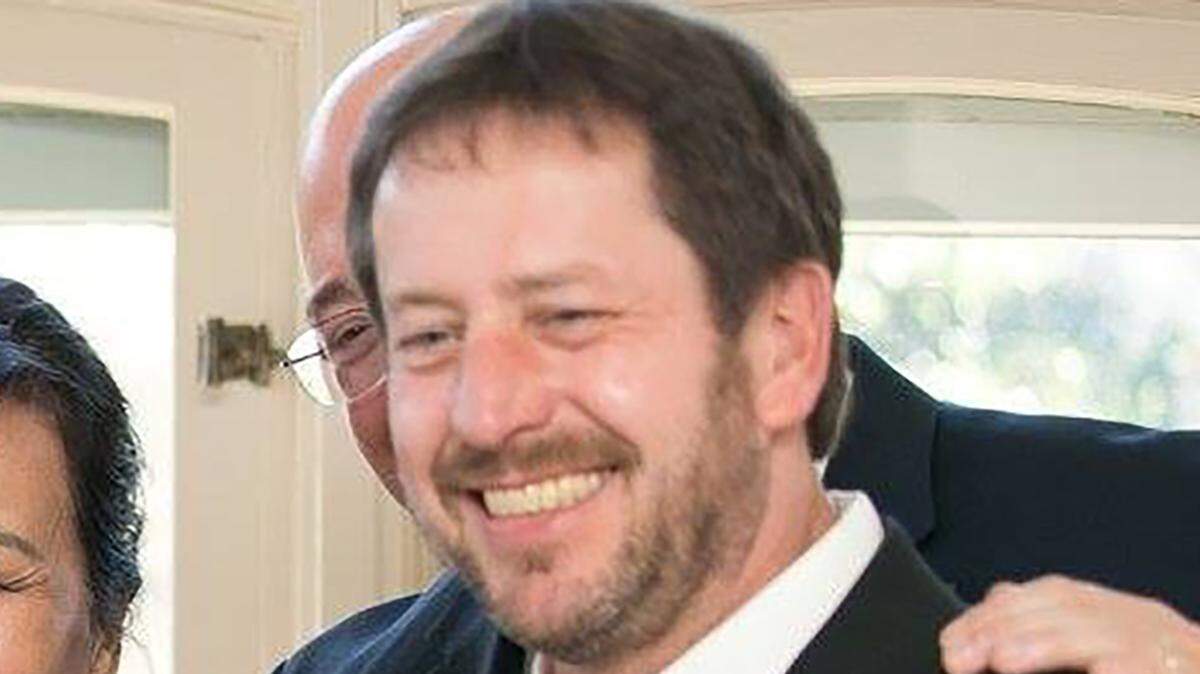
Dean Butterfield died in the Vernon County Jail early on Oct. 13, or else late the night before, and his fellow inmates tell me that he begged for medical care for the grapefruit-sized hernia in his groin virtually every minute of the almost six weeks that he was in custody.
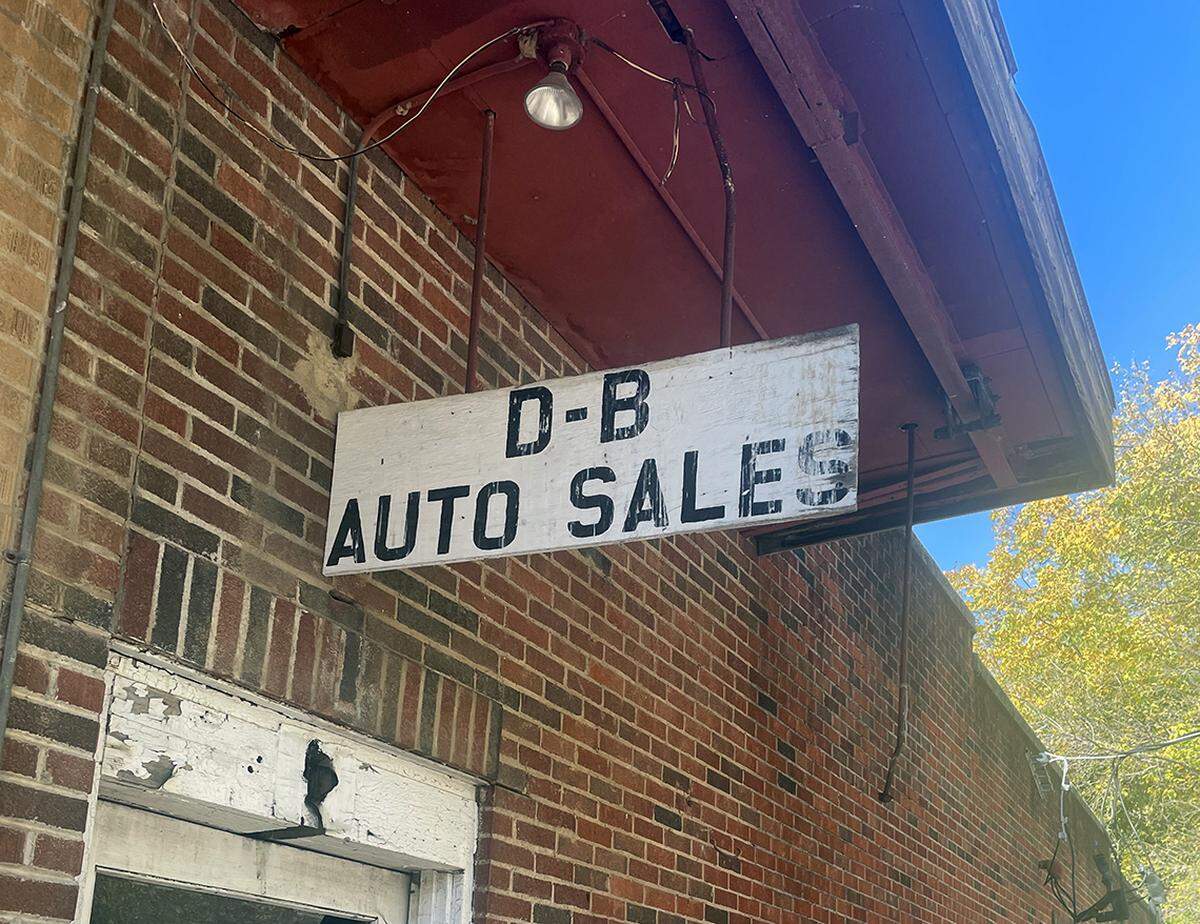
Butterfield, a “gentle, selfless and irresponsible” 59-year-old auto mechanic, his brother-in-law Sam Stella said, never really recovered from a 2015 motorcycle accident. He’d swerved to avoid hitting a cat, and wound up being life-flighted to a hospital in Joplin, running up medical bills that eventually wiped him out. “The entire situation changed his life” and everything about it, said Butterfield’s sister, May Ling Stella.
So why was he in jail? The most serious charge was second-degree assault, for driving his car into the vehicle of someone he incorrectly believed to be that of the longtime friend who’d just bested him in a fistfight over a motor he was apparently too proud to admit he couldn’t fix.
“I let my emotions get overwhelmed,” said that friend, Travis Blurton. His girlfriend had lost her job because the car he’d bought for her to get back and forth to work wasn’t ready. And with Butterfield dodging his calls, which “really hurt my feelings,” Blurton went to his house to fight.
“I’m not saying he didn’t have it coming,” when Butterfield responded out of all proportion and wound up being arrested. “But he didn’t need to be refused like that. I was the first one to look to bond him out. It wasn’t like Dean to do that. He was a good person.”
It wasn’t possible to bond Dean out, in any case, because bail had been denied. Butterfield, who frequently worked until well after dawn in his shop, was in jail without any possibility of bail because the judge, Brandon Fisher, had had it with him repeatedly blowing his morning court dates. The court record says that “due to the nature of the charges, along with the history of failure to appear, no bond change is granted.”
He died still waiting to go back to court, never having been convicted of anything. But Fisher had also ruled that Butterfield could of course be released for surgery for his hernia, should that become necessary: “If doctor determines that defendant needs surgery for hernia, court will furlough for surgery.”
And obviously, that never happened. Instead, according to family members and fellow inmates, he was put in a bare cell by himself for more than a week, up until the day before he died. Butterfield said he was put there for complaining about being in severe pain.
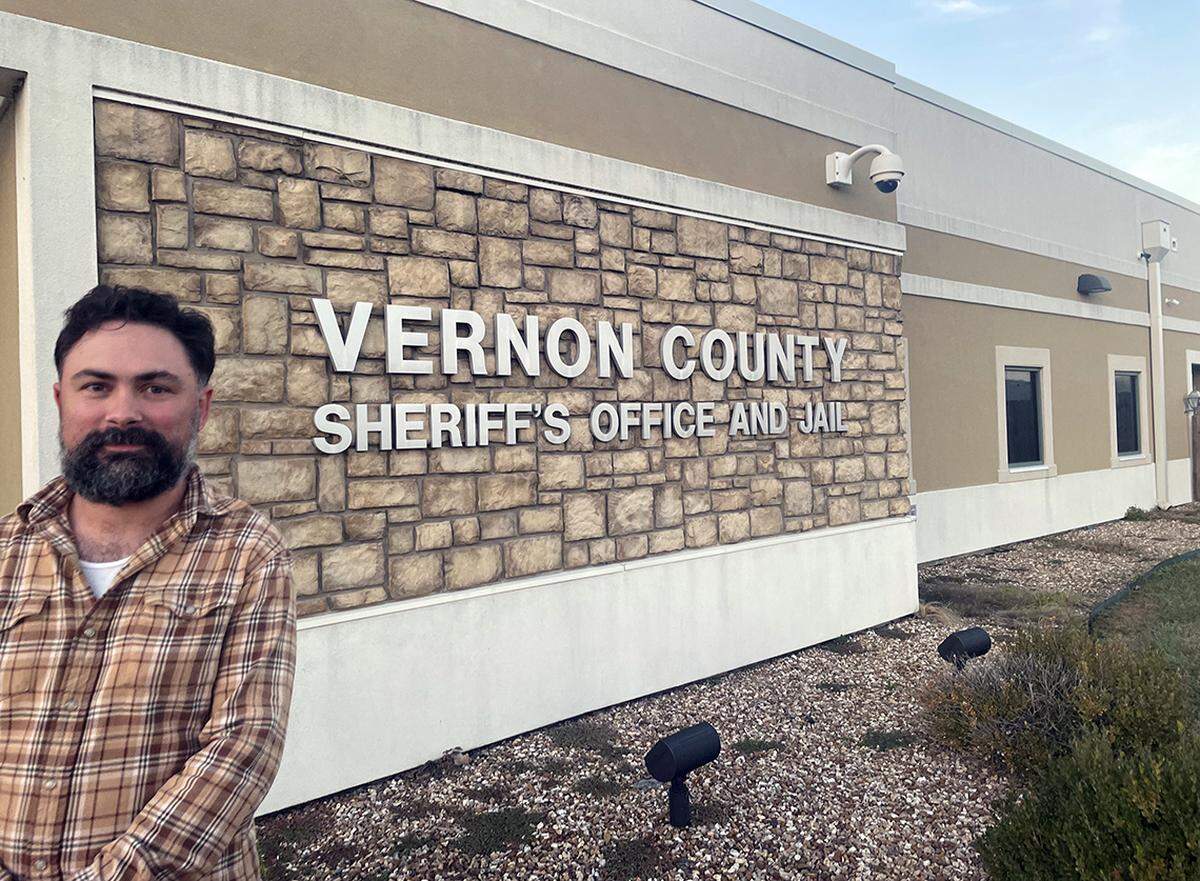
Guards said ‘he just needed to deal with it.’
The preliminary autopsy results emailed to Butterfield’s family on the day of his death don’t mention a hernia at all, but seem to be heading towards ruling that his death was caused by a heart attack. But whatever caused his death, it can no longer be claimed that his condition was, as other inmates said the guards kept telling him, “not life-threatening.”
“He was still trying to reach out to the C.O.” — the correctional officer — right up until the end, said Kyle Jones, who is still in custody in the Vernon County Jail, where I interviewed him. When Butterfield was finally released from his solitary cell and put back with the other inmates, Jones said, he was pale, jaundiced and “very bad,” with a hernia that was “just short of a cantaloupe.”
The night he died, he was too weak to get out of bed and go to dinner, and guards refused to bring his food to him, Jones said. “They were saying that he was having meal refusal, but he couldn’t get out of bed. The last night he was alive, he was scared to go to bed” because “he felt like he was dying.” The response” from guards, Jones said, “was that he just needed to deal with it.”
Butterfield did see a doctor in the local hospital early in his incarceration, which began the first week of September, according to his former cellmate Larry Robertson: “When he came in, he had a hernia as big as a grapefruit.” For days, “they didn’t do anything” in response to his constant written requests for medical attention.
Then, Robertson said, “they finally got him a doctor’s appointment. He said they pushed the hernia back in and gave him some Tylenol. I thought he’d be discharged for sure” for surgery, but instead, he was told that his condition was “not life-threatening.”
So that’s what guards repeated back to Butterfield whenever he screamed for help, or filled out more written requests for medical attention, which is how he spent virtually all his time, said his former cellmate, who is no longer in the jail.
Sgt. Donald Jones of the Missouri State Highway Patrol, which is investigating because Butterfield died in police custody, said he couldn’t talk about this ongoing case, but did say when I asked whether investigators would look into the possibility of negligence that they “absolutely” would. “Early on, he did go to the hospital. We’re getting the medical records.”
Capt. Travis Cole of the Vernon County Sheriff’s Department also said he couldn’t talk about the case, but then suggested that Butterfield would have gotten all the care he needed. “There’s a full-time nurse and part-time doctor if they need to go.”
So Butterfield would have seen this nurse and doctor many times, then? “Yes,” he said. He complained of pain? “Correct, I suppose. If there’s somebody not fit for confinement, we don’t house them.” Cole also said there’s “nothing called medical isolation. There is a medical cell. The nurse will see people as she needs to see them.”
“That is not true,” according to Butterfield’s former cellmate Larry Robertson. “The nurse is a very nice lady, but she can only do what the jail lets her.” Butterfield’s death “is a hush-hush deal around here, honestly.”
’It was the room for complainers.’
For the last week of his life, until the day before his death, he was kept apart from other inmates — according to what other inmates as well as his loved ones said, for asking again and again for care.
“He said they put him in this filthy, nasty room — it was not the medical room,” his longtime partner, Maryann Nathan, told me. “He said it was for complainers. It was the room for complainers, that’s all it was.”
At 3:30 p.m. on the day he died, he told Nathan that the nurse had given him some blood pressure medicine that morning. He wasn’t feeling better after that, he told her, but worse. Still, he said, he’d written the nurse a letter thanking her for being nice to him. After being too sick to get up for dinner, he was found unresponsive in his cell at 11 or 11:30 that night, she said.
Almost immediately, Nathan heard from a friend that there was a medical emergency at the jail and called the sheriff’s department to find out if it involved Butterfield. “I said I heard there was a medical emergency and they said no, there’s no emergency.” Just like there was no need for surgery?
Butterfield had had a doctor’s appointment for the hernia the day he was arrested, Nathan said, “and I feel to the core of my soul that he would still be alive” if he’d gotten proper care.
Earlier this year, another man died in the Vernon County jail and three others were hospitalized after a fourth man, an inmate sent there from Jackson County, brought in fentanyl and gave it to the others. (A spokeswoman for the Jackson County Sheriff’s Office said our county hasn’t sent any inmates to the Vernon County Jail recently, but still considers doing so a viable option.)
After a 2017 lawsuit alleging that inmates were forced to attack one another during regular “fight nights,” Sheriff Jason Mosher told a local reporter that while fights do break out, “I and my staff in no way promote, condone or turn a blind eye to any violence, even inmate on inmate.” Even? The case was settled out of court in 2019.
Sheriff Mosher told Capt. Cole to pass on the message that he couldn’t talk to me about Dean Butterfield, because he had turned the investigation into what happened to him over to the state highway patrol “a long time ago.”
‘There’s something haywire.’
Deep-red Nevada, Missouri, population 8,262, 90 miles South of Kansas City, is not the kind of place where people tend to assume the worst of law enforcement, and that includes Butterfield’s family and closest friends. “You have to have law and order,” said Darwin Bennett, who worked with and for Dean Butterfield for years, “but you can’t box somebody up and not take care of them.”
I sat down with Dean’s family — his brothers Todd and Tim Butterfield, sister May Ling Stella and brother-in-law Sam Stella — the day before his memorial service, at the Chinese diner where Dean had lunch almost every day.
When Todd, who lives in Neosho, talked to Dean on Friday evening and saw him the next day, the Saturday he died, he said Dean was in tears and losing it over the way he was being treated and not treated: “He showed me his hernia, and it was a big hernia. He looked terribly frail and greasy, dirty. They put violent people in isolation, and he was put in there as punishment for asking for medical attention.”
Tim, who lives in Montana now, said that when the family tried to call someone they know at the sheriff’s department to try to learn more, they immediately got a call back asking how they could help — in a way that let them know that their questions not only would not be answered, but were not appreciated. “It was, ‘Don’t call us, we’ll call you.’”
The sheriff’s office, they said, has not even responded to the notarized affidavit requesting the medical records they are legally entitled to as Dean’s next of kin.
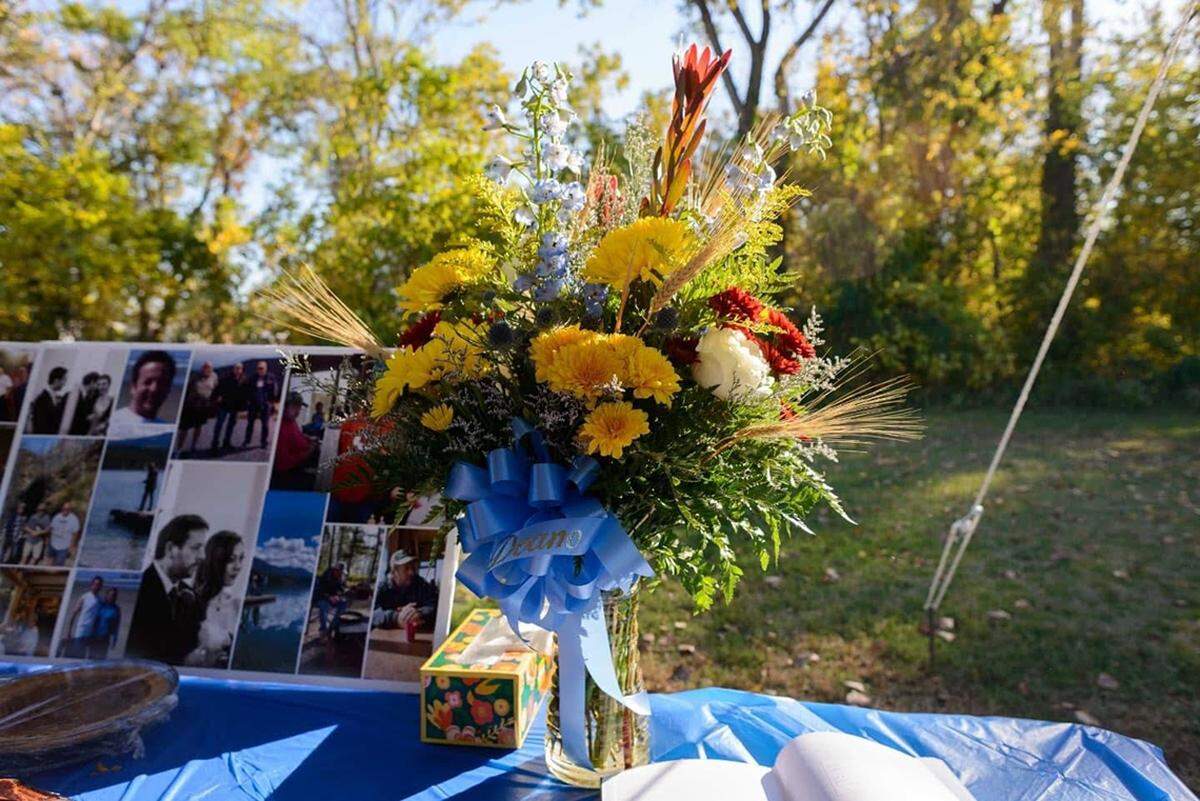
The well-attended memorial for Dean Kenneth Butterfield the next day was just as he would have wanted it, his family said, held under a tent just down the street from where he lived and where he worked. Friends in jeans and ball caps shared memories along with a spread of some of Dean’s favorite foods and a rock and roll playlist that included a couple of his favorite Doors songs, “Riders on the Storm” and “L.A. Woman.”
The service began with a prayer from Sam Stella. “When I call, be swift to reply,” Stella read from Psalm 102. He told the others that when he and his wife, Dean’s sister May Ling, found out that Dean had died, they happened to have been at their church in New York City, and their priest, when they told him the terrible news, reminded them that “Jesus was in prison and suffered at the hands of corrupt police. He suffers with Dean, and promises justice in this life and in the next.”
A bunch of Dean’s friends got up and told how he never sent anyone who asked him for help away without it, how he’d taken apart his first engine at age 12, and then put it back together in a single afternoon, and how he probably had a wrench in his hand in heaven.
One of them, Terry Peters, said that “of all the Christians I’ve ever known” — and Peters has been one all of his life — “this was the most Christian-behaving.” When I spoke to Peters later, he said that he doesn’t blame the judge, who wouldn’t have known that his friend kept missing his court dates because he never turned away those who stopped by for free advice all day long, and then he ended up working all night to try and catch up.
“I don’t know everything — never have known everything,” but he does know this, he said. “There’s something haywire,” and that’s why Dean is dead.
His sister was sent this report on Oct. 13, by the highway patrol investigator Sgt. Jones: “Autopsy was conducted this morning at 0830. … Upon examination of Dean’s heart, the pathologist observed an obvious blockage which was either complete or close to complete with only a pinhole of flow if any. I would estimate the size of the blockage was just below the size of a pencil eraser in diameter, so a pretty significant one. All of the external and internal symptoms (skin discoloration, emphysema, enlarged heart) are all corroborative of one another in conjunction with the blockage in Dean’s heart, that Dean suffered a fatal heart attack. The official pathology and toxicology reports are pending. There is additional investigation that will be done in the case in the coming days and weeks.”
His family doubts that that investigation will include interviews with everyone in the jail about why he never got the help he said all along that he needed. But it has to, to keep what certainly looks like negligence from hurting others waiting to be tried, no matter what bad choices or hard luck put them there. It has to, because Dean Butterfield might still be alive if he had gotten the intervention that he kept begging for.
This story was originally published November 7, 2024 at 5:06 AM.