‘It’s really bad.’ Kansas City sends its inmates to jail where man begging for care died | Opinion
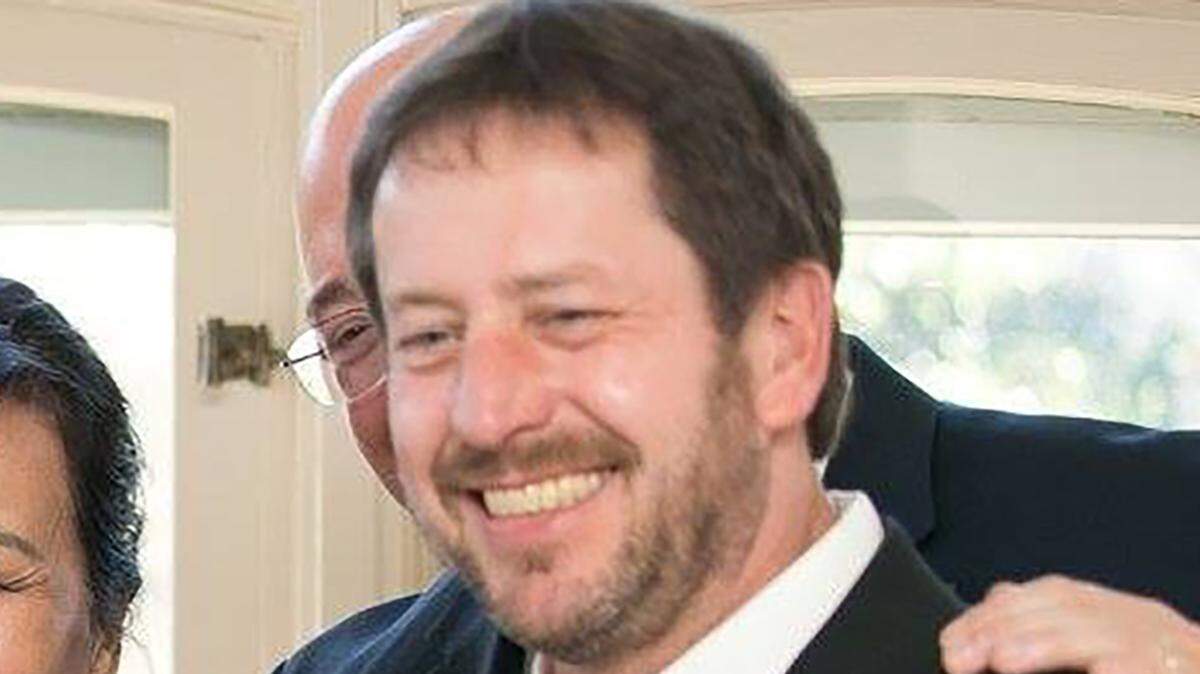
Several weeks ago, I wrote about Dean Butterfield, a 59-year-old Nevada, Missouri, auto mechanic who died in October in the Vernon County Jail, where he was being held without bond, essentially for irritating the judge. His family and those incarcerated with him told me that not only was he denied the medical care he begged for every day of the nearly six weeks he was in custody, but that he was punished for even asking.
So where do you think Kansas City sends most of its inmates?
Yes, to the Vernon County Jail, 90 miles away. Men are sent there, while women are sent to the jail in Johnson County, Missouri.
“It’s really bad,” City Councilwoman Melissa Robinson said of the Vernon County facility. “I went out there last Christmas to bring them some books, and the way they had them housed, it is really bad.”
“It happens far too often,” that inmates don’t get the care they need, City Manager Brian Platt told me. “We’ll continue to have conversations with them. Our team has been in touch about what we can do better.”
Let’s say — though most of those we send to Vernon County have not been convicted of anything, and if Jesus is your guy, he did say to visit the incarcerated — that inmate safety is not one of your top concerns.
There are plenty of other reasons to want us out of this expensive and risky arrangement, which is also a needless legal liability for the city.
“When I saw the Vernon County one, I was pretty shocked,” said Kansas City Presiding Judge Courtney A. Wachal. “It’s a big, open room with bunks and humans. If people knew we were paying to bus them 90 miles twice a day,” she thinks they’d be shocked, too.
We do that because we have no capacity — zero — to house anyone arrested on municipal charges in Kansas City. And that’s without any doubt compromising public safety.
“We have no holding facility at all; it’s so horrible,” said Wachal, who runs both the municipal domestic violence court and the drug court. “It wouldn’t be so bad if these were traffic offenses, but we handle more than 95% of the DV cases in Jackson County” in her municipal court.
The lack of anywhere local to send offenders is “a big mess; it’s craziness.” And the craziest part of all is that it doesn’t have to be this way.
KCPD ‘wanted to explore other options’
“We appreciate all of our partners” who take in Kansas City inmates, Mayor Quinton Lucas told me. But “we recognize it’s not a long-term solution to have people bused far away.”
It is a long-term problem, though, and a worsening one, with effects that have grown more obvious over time. There hasn’t been a place to house those detained by the city locally since Jackson County ended its contract with Kansas City almost a decade ago, in 2015. And no, these inmates won’t be housed at the new county jail that’s already under construction, either. For a bunch of reasons, “we’re actively pursuing” a short-term solution, Lucas said, while hoping to build a separate new city jail, which will likely be on the ballot in April. “We’re working in a hurried way.”
A stopgap measure — building a $16 million, 55-bed detention center on the eighth floor of KCPD’s downtown headquarters — was approved by the Kansas City Council in September.
But in October, Police Chief Stacey Graves wrote city officials asking them to consider other alternatives, like building on the site of the old East Patrol Division station on East 27th Street instead. The city doesn’t like that option because it’s right in the middle of a residential neighborhood.
Platt expressed some irritation that “we went through months of collaborative conversations” about the police headquarters, only to hear now that “they decided they wanted to explore other options.”
And city officials don’t understand why we’re not using the 50 or so potential jail spots available in the five new precinct stations across the city.
“If you opened all the patrol stations, at least you’d have somewhere to take” domestic abusers and others we now either release or drive back and forth to Vernon County, the mayor said.
Quinton Lucas: City would hire staff tomorrow
As we know, intimate partner abuse escalates over time, so having nowhere to hold these offenders, even for what Wachal calls “a sit-down” is no minor matter: “You can’t hold those people who reoffend over and over.” And a municipal jail with detox beds and mental health services would “address some of the lower-level crimes” that degrade the quality of life for all Kansas Citians.
Meanwhile, “just open every space” in those precinct stations, Lucas says. “But we’re told by the KCPD that we can’t.”
Robinson said police insist that’s not possible because there’s no staff to run those cells, “but our corrections staff right now are driving people back to Vernon County every day.” And if the KCPD agreed to open those cells, Lucas said, the city would hire staff to make that possible tomorrow.
Until that changes, the mayor said, “we’re sitting with five new police stations” with empty cells that aren’t operational. Whatever obstacles make changing that so impossible need to be cleared.
A police spokesman gave me this statement about the situation: “The Kansas City Police Department shares the city’s commitment to solve this challenge. Chief Graves and city leaders have had and continue to have productive discussions around municipal corrections and detention possibilities.”
To me, this is yet another reason Kansas City needs local control of its own police department.
But I think we can all agree that no one should die the way Dean Butterfield did. And if his death doesn’t get our city and police officials to end the current arrangement ASAP, let no one say we didn’t know the risk we were taking.