How is food insecurity linked to gun violence in KC? Here’s what the data shows
READ MORE
Missouri Gun Violence Project
The Missouri Gun Violence Project is a two-year, statewide journalism effort supported by the nonprofits Report for America and the Missouri Foundation for Health. The Star has partnered with the St. Louis Post-Dispatch, the Springfield News-Leader, and the Missouri Independent.
Expand All
Nearly all of the Kansas City neighborhoods with the highest rates of shootings last year lacked access to a grocery store within half a mile.
A recent analysis by The Star found that of the 10 census tracts in Kansas City with the highest rates of shooting in 2020, 80% were low income areas without access to a supermarket or grocery store for at least half a mile.
These communities with high rates of shootings and low access to fresh food are concentrated in the northeastern portion of the city’s metropolitan core, data shows.
Around 70% of homicides reported in 2020 occurred in the Kansas City Police Department’s metro and east patrols, according to police data. Of the total homicides last year, about 90% involved some kind of a firearm.
The Star’s analysis follows up on the Missouri Gun Violence Project’s reporting in St. Louis, which found that nearly 70% of the city’s 271 homicides last year occurred in low income census tracts without access to a grocery store or supermarket for at least half a mile.
Both St. Louis and Kansas City lead the state in shootings and firearm homicides. Kansas City experienced the highest number of homicides in the city’s history last year with 182 killings. There was also a surge in nonfatal shootings — 631 people were shot and survived.
The analysis looked at federal food and local police crime data. About 6% of shootings last year in Kansas City lacked address or census data.
Researchers say a host of factors contribute to a city’s gun violence problem including deficits in social determinants of health such as income, housing, healthy living environments and quality education. And food insecurity.
Missouri is second only to Arkansas as the most food insecure state in the region, according to Feeding America’s 2019 data.
BEHIND THE STORY
MOREWhy did we report this story?
This story is part of a series The Star and its partners across the state are producing this year focusing on public health issues that contribute to gun violence. These include income, housing, food insecurity, school quality, and living environments.
After kicking off the series earlier this year and publishing a pair of stories that explored the role of income and housing in gun violence, we began reporting on food insecurity issues. Future stories will take on additional topics.
The effort is undertaken as part of the Missouri Gun Violence Project, a two-year, statewide solutions journalism collaboration supported by the nonprofits Report for America and the Missouri Foundation for Health. The Star has partnered in the project with the St. Louis Post-Dispatch, the Springfield News-Leader and the Missouri Independent. Read more by clicking the arrow in the upper right.
How did we report this story?
To research this story, a reporter from The Star analyzed data from the U.S. Department of Agriculture and the nonprofit Feeding America to show where food insecurity hits hardest in St. Louis and across Missouri. She compared that with data on firearm death rates from the state health department and homicide data gathered by the St. Louis Post-Dispatch. She interviewed public health experts about how the problems of gun violence and food insecurity are related.
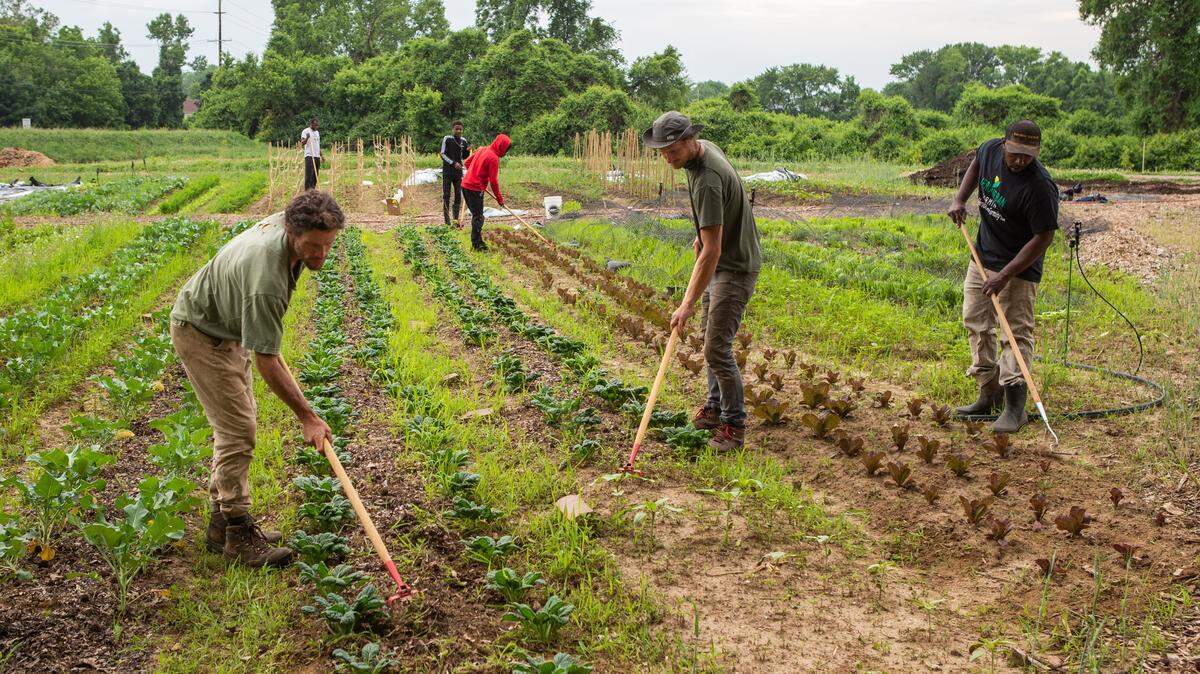
To learn more about how these issues play out on the ground, the reporter traveled from Kansas City to St. Louis to visit people working toward solutions: urban farmers, entrepreneurs, local public health workers, food justice activists, and state lawmakers.
The story builds on reporting the Star gun violence team began last year, examining gun violence as a public health problem. For this story, the St. Louis Post-Dispatch contributed data, photography and videography.
Lacking a complex nutritional diet can harm brain development in childhood, according to public health experts. That can cause later problems dealing with peers, handling authority and responding to situations of extreme stress.
“We know that you do need stability, you need support in a safe environment, you need nourishment — you need access to food, healthy food,” said Dr. Marvia Jones, violence prevention and policy manager at the Kansas City Health Department. “Anytime those things are disrupted, we know that development is disrupted. And when development is disrupted, that puts the child at a severe disadvantage of being able to integrate into society in a way that will keep them safe.”
Food insecurity across an entire community can lead to higher rates of health problems, including mental health, according to researchers. That long term stress can increase suicide and confrontations that lead to gun violence.
Across Jackson County, about 45% of the total census tracts lack access to a grocery store or supermarket for at least half a mile and about 20% don’t have access for at least one mile.
“If there’s no supermarket in your area and you’re relying upon these types of stores (convenience stores) to provide your food, it’s gonna be a big problem,” Jones said.
However, the presence of a grocery store does not always mean access to fresh, healthy produce.
A 2018 Star report in 2018 found many stores east of Troost Avenue lack healthy food, so residents often have to travel to more affluent areas in the western half of the city to find fresh produce.
To learn more about gun violence and the social determinants of health in Missouri, read more from the Missouri Gun Violence Project here.
This story was originally published October 6, 2021 at 5:00 AM with the headline "How is food insecurity linked to gun violence in KC? Here’s what the data shows."