
‘In the trenches’: How a St. Louis group uses Narcan and barbecue to stop gun violence
READ MORE
‘Stop killing each other’
Here’s how a St. Louis group works to prevent shootings. It’s an approach that hasn’t been tried in Kansas City
Expand All
An ex-cop and a former gang leader team up to prevent murders, one hotline call at a time
Here are six organizations that fight crime and support victims in Kansas City
‘In the trenches’: How a St. Louis group uses Narcan and barbecue to stop gun violence
A Missouri group takes a unique approach to preventing gun violence
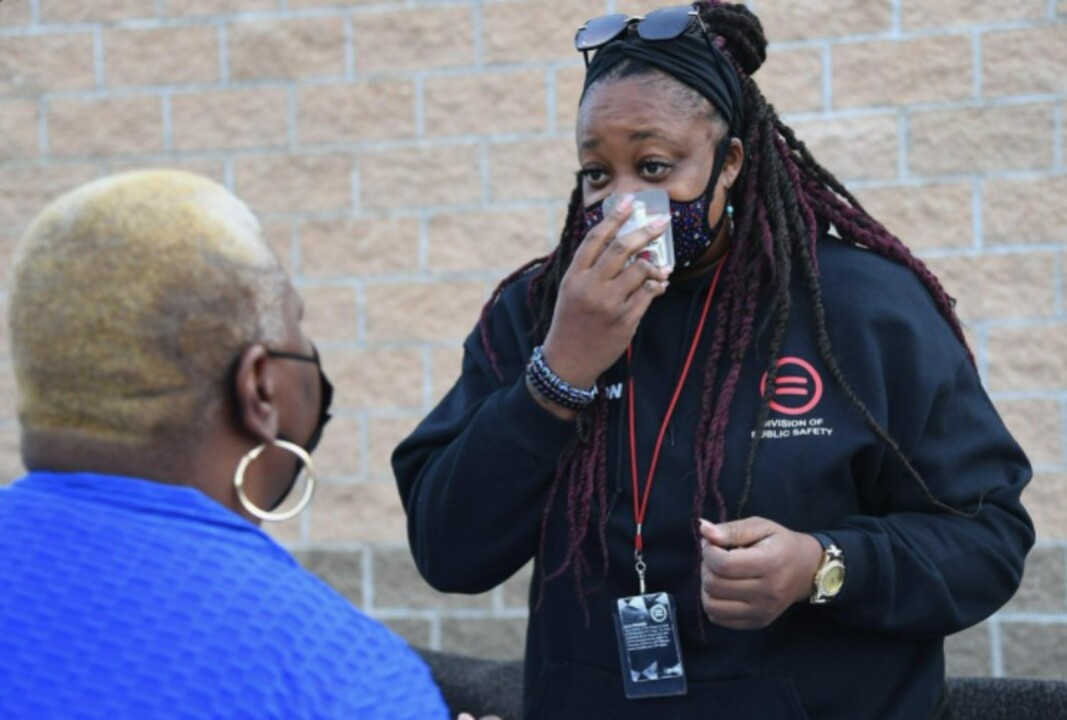
On a chilly day earlier this winter, Rashonda Johnson showed Antoinette Graves how to use Narcan, a medicine that reverses opioid overdoses.
Spray it in the person’s nostril like a regular nasal spray and wait a couple minutes. If the person still isn’t showing signs of life, try a second spray in the other nostril.
Graves had stopped by a community outreach event hosted twice a week in St. Louis by Serving Our Streets, an organization that takes a holistic approach to stopping gun violence. The Kingsway East resident picked up some fliers about SOS and several bottles of Narcan.
“My brother uses and I can’t get him to stop,” Graves said. “I was on drugs, but I got off on my own ... but he won’t stop.”
Johnson, an urban engagement specialist with SOS, organizes these outdoor events in areas where people buy and use drugs. The group offers a variety of resources: Narcan, public health information, even hot dogs off of a barbecue — a variety of things people in an underserved community need.
This kind of street level outreach is how the team is able to get to know people in the community and build trust, she said. To ensure that people call SOS when they know there might be a situation heading towards violence, the team needs to be active and helpful in their service area every day, she said.
How street-level outreach prevents violence
If it’s too cold or rainy, the team adjusts to a portable model – a caravan of cars stopping at spots they know they can find people to deliver free food to and offer services.
“A lot of times, people may be involved in gun violence due to the fact that they have trauma going on, or they don’t have resources that they need. It may be food, jobs, or whatever the case may be – and we’re able to help with that,” Johnson said.
“So everything that we do is like a big spider web, it correlates with the next thing. So case management, de-escalation, urban engagement, open air triage, all that stuff fits into one box together.”
On the day Graves dropped by, SOS staff members were nestled into the corner of a patio in front of a convenience store on North Kingsway Boulevard cooking hot dogs on a grill. Behind them, tables of supplies including Narcan, face masks, hand sanitizers and chips and drinks for the food were carefully laid out.
Drawn in by the smell of barbecue smoke in front of the convenience store, dozens of people stopped by. The team chatted with them – checking in, introducing themselves and giving away fliers with information about a mass food giveaway on the front and the phone number for free mental health services on the back.
They easily pivoted from a casual conversation to helping people fill out intake forms for resources while distributing dozens of masks and diapers in addition to Narcan.
The program’s success is tied to the fact that every team member knows how to navigate in the community naturally, said Barryman Rivers, lead urban engagement specialist.
“Who else is out here with their feet on the ground, in the trenches every day?” he said.
Wider efforts to prevent gun violence
Rivers leads a team of over half a dozen urban engagement specialists who canvass the JeffVanderLou, Hyde Park and Kingsway East neighborhoods daily, keeping meticulous data of which doors they’ve knocked on, where they leave fliers and the names of those they speak to throughout the day.
But to be effective in these neighborhoods – which recorded 13 homicides total in 2021 and 22 in 2020 – takes the social intelligence that only people who grew up in the community have, Rivers said. That’s something he says researchers and other social service organizations haven’t been able to mimic.
“I can see you heavy with artillery, literally extended clips, drums and walk up on you like ‘Hey, what’s going on brother? How you doing today?’ I’m not afraid that you got that, I’m not tripping,” he said. “We’re in St Louis, everybody carrying.”
The canvassers knock at every door as they maneuver down streets, stopping to check-in with those who answer. If a person asks for services, they quickly fill out a one page intake form with basic information and hand it off to caseworkers when they return to the office.
Reducing barriers like extensive paperwork and needing to take time off of work to go to welfare offices, is important when working with vulnerable populations, said lead case manager Kileia Wise.
“Once I call the client and see what type of resources they have, I put it into the database and and then I follow up twice a week to see if everything went through for them,” she said. “My day to day is just making sure that the clients got all the resources that they need.”
Other arms of SOS include a 24/7 hotline that people who want intervention in conflicts that could end in gun violence can call, a weekly grill out involving over 100 religious leaders and youth programs to combat gun violence.
This story was originally published February 9, 2022 at 5:00 AM.