While KCPD struggles, this city made its police force more diverse than its residents
READ MORE
Racism in the KCPD
A Star investigation found discrimination, racist abuse and unfair discipline in the KCPD. White cops are accused of using slurs and racially profiling Black members of the force.
Expand All
When Kansas City police leaders talk about the department’s diversity problem, they sometimes speak as if it is an unsolvable mystery.
But there is one city that has figured it out.
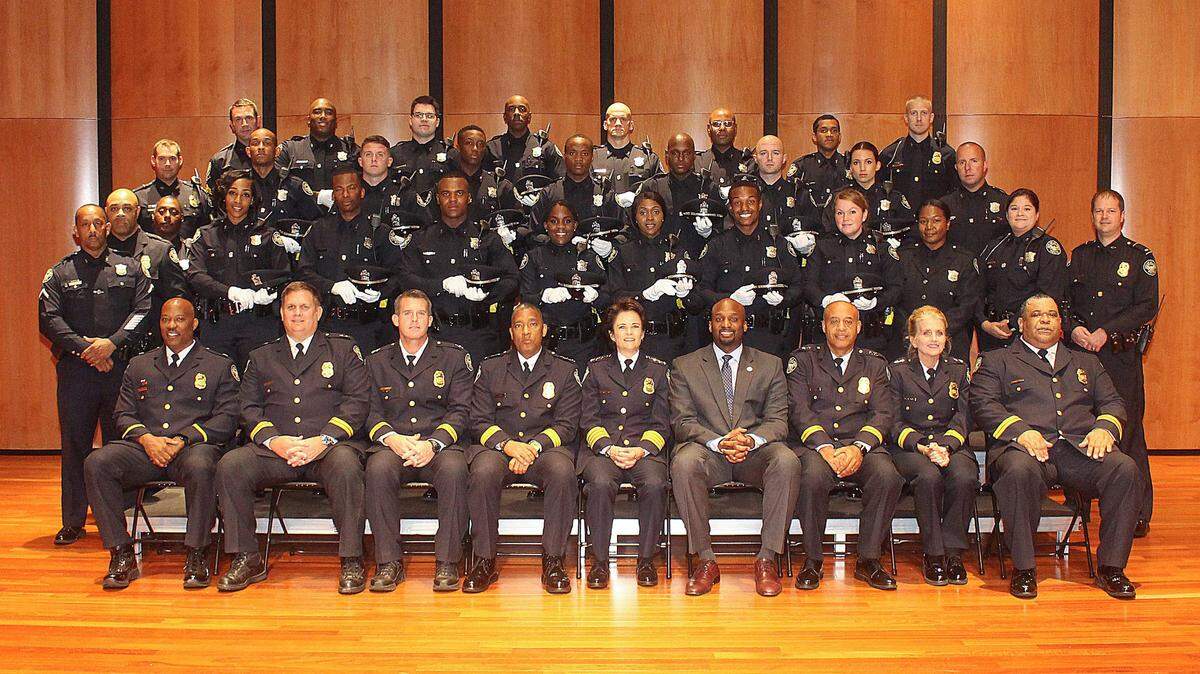
Across the country in Atlanta, city leaders have created a police department that is even more diverse than the population it serves.
The Atlanta Police Department is 56% Black in a city where Black residents make up 53% of the population, according to 2015 data. It counts 1,700 officers — hundreds more than the KCPD.
It was not achieved by accident, said the department’s deputy chief, Darin Schierbaum.
The APD goes to great lengths to ensure it has a diverse department. It puts up billboards in other parts of the U.S., has recruitment booths at gay pride events and travels to Puerto Rico to recruit Spanish-speaking officers. Efforts to better align demographics at the Atlanta force date back to the 1970s, Schierbaum said.
Today, it is one of the most diverse in the country.
When Atlanta citizens look at the department, it’s important they “see themselves,” Schierbaum told The Star.
“If you … have the perspective of the community, you are invariably going to enforce the law in a more equitable manner and with an understanding of the challenges any community may have,” he said.
“You will see our strategies evolve as we do our best to make sure that what you see on that spreadsheet is no accident.”

Other cities, including Denver, Baltimore and Boston have also succeeded more than Kansas City in having police departments that reflect their overall population.
Kansas City’s problems with keeping Black officers on the job were highlighted in a year-long Star investigation that found they have faced discrimination and unfair discipline, pushing them off the force.
After decades of problems recruiting and retaining minority cops, the Kansas City Police Department remains just 11.6% Black in a city that is 28% Black.
Police officials have bemoaned longstanding issues of community trust, saying they can’t get Black candidates to apply.
Adding to the officers’ troubles: There is no local organization that lobbies specifically on behalf of Black patrol officers.
In some cities, Black officers who experience discrimination can count on more support.
In St. Louis, where 30% of the department is Black, officers can turn to the Ethical Society of Police. Founded in 1972, the organization takes aim at racism within the department and throughout the city, which is 45% Black.
Heather Taylor, who resigned from the St. Louis Police Department as a homicide sergeant, said SLMPD faces many of the same challenges as KCPD: retaining officers of color, discrimination and a lack of Black officers assigned to coveted units.
But the organization gives them a voice, Taylor said. They can collectively advocate for diversity in hiring and express concerns through their group.
“We go as far as assisting people with filing complaints against officers,” said Shanette Hall, second vice president of the Ethical Society of Police.
Capt. Wendell Nicholson, past president of the Wichita chapter of the National Organization of Black Law Enforcement Executives, said some Black officers may fear joining such groups will make them targets for retaliation. But he said when they organized their chapter, Wichita’s chief provided money for them to receive training at a national conference.
“When you have the type of leadership in place that doesn’t really value diversity, then you will have some issues,” Nicholson said.
This story was originally published March 27, 2022 at 5:00 AM.