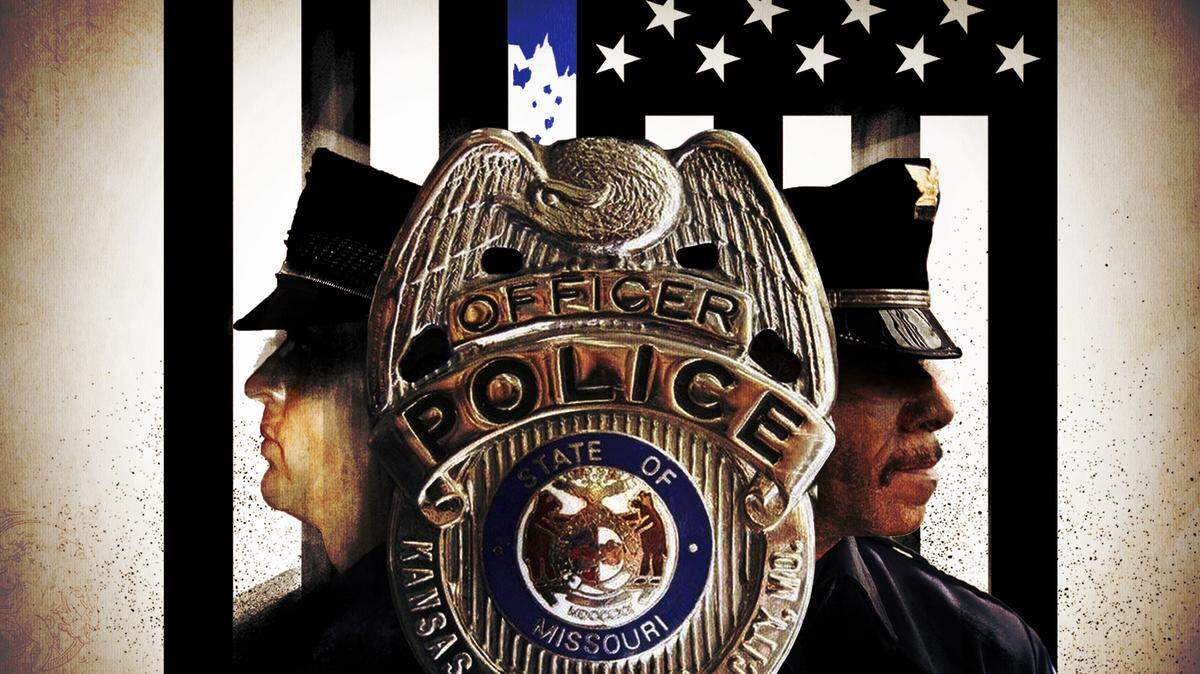
KCPD Chief Rick Smith knelt in honor of George Floyd. Then he said he didn’t mean it
READ MORE
Racism in the KCPD
A Star investigation found discrimination, racist abuse and unfair discipline in the KCPD. White cops are accused of using slurs and racially profiling Black members of the force.
Expand All
In a closed-door meeting with Kansas City police commanders last year, Police Chief Rick Smith said he had taken a knee in solidarity with Black Lives Matter protesters in 2020.
But, Smith said, he didn’t mean it.
“I may be doing things or saying things and that may not be my personal beliefs, but I’m gonna do what I need to do that’s best for the department,” Smith said, according to one commander who attended the meeting and requested anonymity for fear of retaliation.
Smith told the commanders he took a knee that day to silence his critics and to protect his officers — not because he believed in the message of the protests unfolding on the Country Club Plaza after the murder of George Floyd in Minnesota.
He made the remarks in April 2021 as police leadership mapped out their strategy for how they would deploy officers on Kansas City’s streets in case of disorder if a Minneapolis jury acquitted the white officer who killed Floyd.
Three commanders in the room confirmed Smith’s comments to The Star.
Some Black officers said a fake show of unity was a poor example of leadership and that the remarks behind closed doors lacked perspective and empathy for members of the force who are also people of color. It sent a message inside the Kansas City Police Department that the agency was not seriously committed to serving the community rather than just policing it, one said.
Titus Golden, a Black KCPD officer, said Smith’s alleged remarks were “horrible.”
“He’s 100% right he kneeled to protect certain officers but not the Black officers,” he said. “He doesn’t know the pain of my ancestors or the shoes I walked in to get to where I’m at in life. Behind closed doors that’s why us Black officers continue to get picked on.”
Golden said KCPD needs a chief “who’s going to lead no matter what race you are.”
Some law enforcement advocates defended Smith’s actions. Whatever he thought personally, they suggested, the public actions of unity with protesters demonstrated understanding and may have been the right move to support his officers that day.
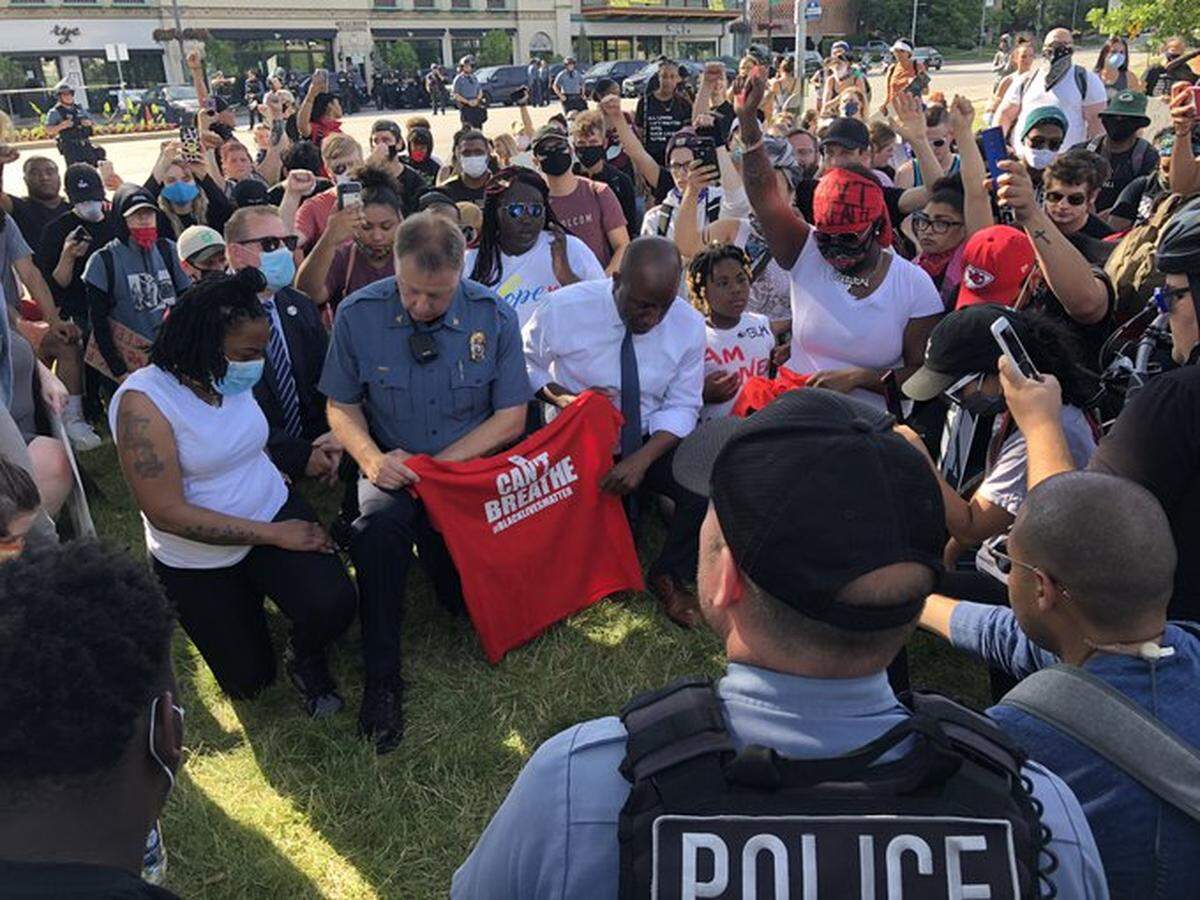
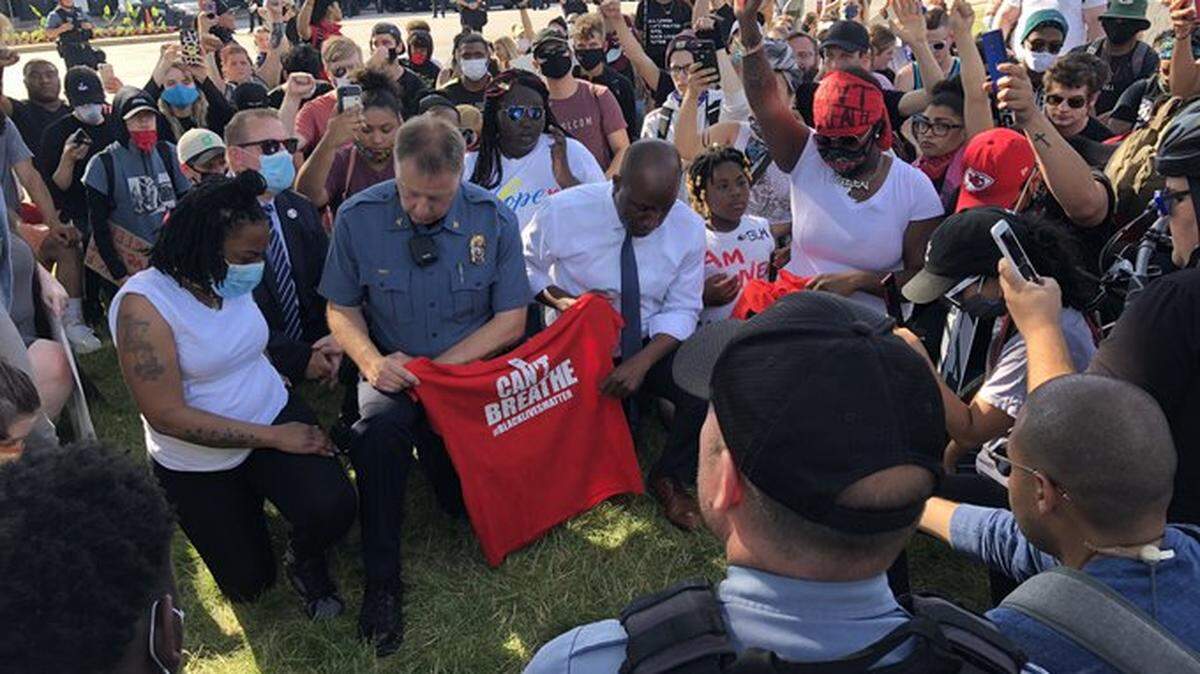
Mayor Quinton Lucas was with Smith when they knelt with the demonstrators.
Recalling that day, Lucas said he knew some activists thought the moment was done to placate protesters, while others saw it as a lack of support for law enforcement.
The mayor believed everybody, including the police department, was trying their best to listen.
Their sincerity was opened to question almost as soon as the moment had passed: Minutes after Smith left, police officers moved in to pepper spray the demonstrators. The department would eventually have to pay hundreds of thousands of dollars to settle claims resulting from police use of force at the protests.
Lucas said city and police leadership must do “right” by their residents. He hoped that those officials, “today or in the future,” remember that their statements help underscore that.
“To the extent they do not, I think that is a departure from our job,” Lucas said.
Smith declined The Star’s request to discuss his comments to commanders about the protest, and he did not respond to questions about the remarks included among dozens sent to the police department during the newspaper’s investigation. He did not deny making the comments.
In a written statement, Smith said “community outreach and trust” is key to KCPD’s service to citizens.
“The department remains focused on building relationships in our community,” Smith said.
Ultimately, the Plaza protesters pushed the police department to implement some reforms. The department began turning over police shooting investigations to the Missouri State Highway Patrol and secured funding for body cameras.
A moment of silence for George Floyd
It was on June 1, 2020, amid a crowd of raised clenched fists with some hoisting “Black Lives Matter” placards, that Smith lowered himself to one knee as Lucas did the same. It was the fourth straight day of the Plaza protests.
Someone in the crowd yelled, “We need a moment of silence for George Floyd.”
Smith surveyed the crowd and bowed his head as television cameras and a sea of cellphones captured the action. Moments later, Smith stood up, facing the crowd.
“Thank you all,” he told them.
Minutes earlier, Smith had said making the police department look “different” required people to get “in it,” though the environment to do so was difficult.
“Do you think we don’t want the same things? We want the exact same things,” Smith told protesters. “I can tell you it’s a struggle to get anybody in the door anyway, anybody.”
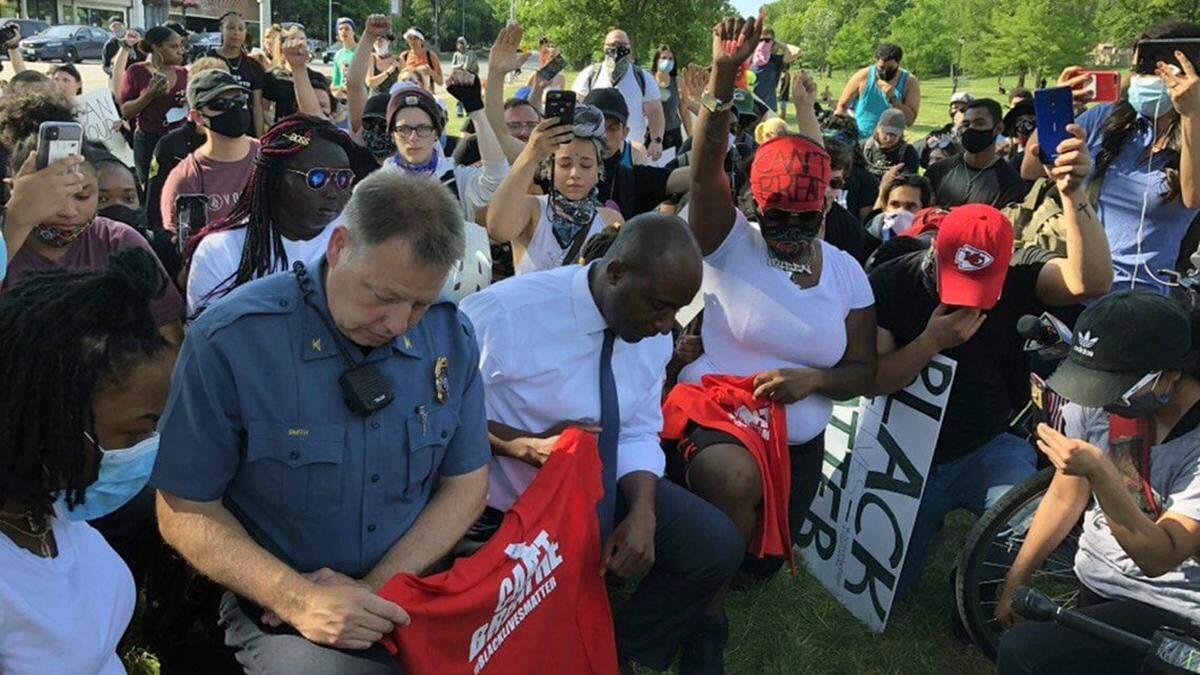
That day, protesters told the mayor they want to see more training, de-escalation and body cameras for police. Lucas told the crowd he agreed.
“This is where we’re going to build it bit by bit to try to make it better,” Lucas said that day. “Know that we and the city are trying to make a change.”
Twenty minutes after Smith and Lucas knelt, police deployed pepper spray. The crowd broke up, with people running in different directions. Some were seen coughing.
‘Out of touch with reality’
The Rev. Darron Edwards, who had worked with KCPD on community initiatives, said Smith’s kneeling with Lucas was not about “philosophy or principles” but simply a “staged scene.”
“I can say emphatically whatever Rick could do to make the department look good — he would do,” Edwards said.
But Edwards had also seen Smith make comments that raised questions about how Smith saw problems of race and policing.
That summer, Getting to the Heart of the Matter, a community-police initiative Edwards helped launch, hosted a community forum on policing at St. James United Methodist Church. He asked how the city got “to this tenuous and tough moment,” he recalled.
Smith raised his hand and stood to answer.
“His reply was (that) race relations have been good for a long time until this George Floyd incident happened,” Edwards told The Star.
Smith is “out of touch with reality,” Edwards said.
“Rick’s problem is that he thinks he’s right even after being shown or told documented truth,” he said. “That kind of person is scary.”
If Smith made those comments to the commanders about the protest as reported, it showed he is “just a liar and a hypocrite,” said Henry Service, an attorney who helped organize the Plaza protests.
The kneeling moment made it seem like Lucas and Smith were on the activists’ side, but Service thought they were trying to co-opt what protesters had set out to do that day.
“It’s the appearance of caring without actually caring,” he said. “So they felt like all they had to do was take a knee and pretend they were on our side.”
No concrete steps were taken to change the reasons the protesters were there in the first place, Service said.
“We don’t need those kinds of people leading an arm of the government with so much power,” he said.
Law enforcement views
Some who have worked in law enforcement suggested police chiefs at times do things that are not their personal beliefs but that represent the majority of their organizations.
Tim Parrish, director of government affairs with We Back Blue, which was formed in 2020 to show support for police during the protests, said it appeared Smith was making a gesture representative of a “large swath of people he potentially leads and represents.”
“Black officers, I’m sure, were hurting. They were dealing with this whole issue of the racial conversation that we’re having during George Floyd,” said Parrish, who is a Black former Washington, D.C. police officer. “If he took a knee to stand in solidarity with those officers … I don’t know that that’s necessarily bad.”
Parrish said, for example, he would bow his head with employees he represents as they pray to a God he may not worship to show solidarity with them.
Chuck Wexler, executive director of the Police Executive Research Forum, a law enforcement policy group, said it would have taken courage for Smith to take a knee amid protesters.
“You judge a man by, ‘What did he do that day?’” Wexler said. “And if that helped to empathize with the murder of George Floyd, and show empathy to the demonstrators, then I think that’s important.”
Still, Smith’s comments did not sit well with some Black officers months after the meeting.
“It sends a message that we’re not seriously committed to the community,” said one officer, who asked not to be named for fear of retaliation.
“We will say whatever but we don’t believe it. You’re policing the community and not serving the community. It also means that you’re out of touch with what’s going on.”
This story was originally published March 27, 2022 at 5:00 AM.