FBI had eyes on KCKPD Golubski co-defendants throughout alleged sex trafficking | Opinion
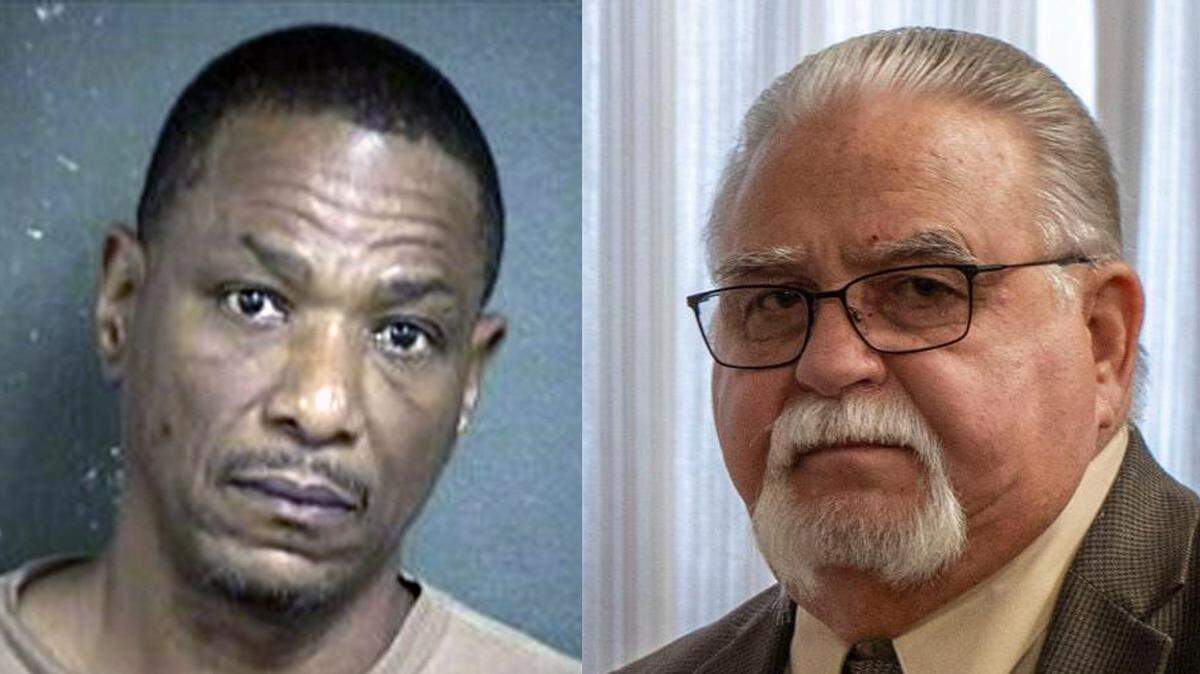
Then-KCKPD detective Roger Golubski and his sex trafficking conspiracy co-defendant Cecil Brooks allegedly held minor girls and women against their will at the Delavan Apartments in Kansas City, Kansas, between 1996 and 1998. A new motion in that case says that Brooks and another co-defendant, Richard Robinson, were also under FBI investigation for racketeering that whole time and well beyond, from 1995 until 2008. Yet somehow, that 13-year probe yielded no indictments.
If you want to read that first paragraph again before we go any further, please do. Because the implications range from uh-oh to horror show.
The federal racketeering statute includes trafficking. And though it’s not clear that’s what the FBI was looking at decades ago, this new information does raise the question of how, given what the government has laid out about the current case, based on an FBI investigation that began in 2019, they could possibly have missed it during their long investigation decades ago.
Did FBI know 30 years ago what FBI says now about Delavan?
Put another way, did the FBI know 30 years ago what the FBI now says was going on at Delavan back then? If they did know, why were there no indictments after 13 years? And if they didn’t know, how could they have missed it?
The defendants, who have pleaded not guilty, have said that they were not trafficking women but were running a drug operation in broad daylight, and one, they say, that authorities definitely knew all about. That last point has always seemed beyond dispute.
If this operation, as described in the indictment, had been stopped 30 years ago, imagine all of the suffering that so many in the community would have been spared. That’s the most outrageous and inexcusable part of all of this.
This new motion, filed last Thursday, says the government just dropped 79,000 pages of discovery on the defense teams.
It’s been nearly three years since this current case was filed. To have it delayed by discovery at this point is beyond disappointing. Yes, Golubski killed himself on the December 2024 morning that would have been the first day of his first trial. He did so rather than face his victims in a court of law. Nine women were going to testify that he had raped or sexually assaulted and/or kidnapped them. And they and so many others are still looking for some accountability from a system that has so far done nothing but fail them.
This latest motion in what would and should have been the second case was filed by another codefendant, LeMark Roberson. It says, “This means that during the entire timeframe of the allegations of the current Indictment, which spans 1996 through 1998, at least two of the Defendants in this matter were under federal investigation. The Interstate Transportation in Aid of Racketeering investigation file is over 3,700 pages long and includes over 700 FBI serials” — individual file items.
How does a 13-year investigation of Golubski co-defendant Cecil Brooks, the self-described one-time “major figure in the Kansas City, Kansas, drug business” — who was only convicted once he expanded his operations beyond Wyandotte County, into Topeka, yield absolutely nothing?
In Topeka, he was initially reported to police for ironing a man’s back as a form of torture. To say that he is still feared in KCK is an understatement. During one hearing in the trafficking case, a federal prosecutor told the court that victims frequently became physically ill while telling investigators about him.
An April filing in the current conspiracy case confirmed that Brooks was also for a time a DEA informant.
‘They were just keeping their eyes shut’
This latest motion “shows what we’ve been saying,” said William Skepnek, an attorney for five women in a civil suit against Golubski’s estate and others in Wyandotte County. “It shows they were being protected all along. We’ve said all along there’s been protection from people higher up who were enabling Roger Golubski and other people. More than 20 years ago they were looking into this.”
“Golubski was a part of the conspiracy,” according to the indictment in this case, Skepnek said, “and if we’d been allowed to continue with our case as we should have been,” victims would know what’s in this mountain of discovery, he said. U.S. District Judge Toby Crouse threw out the civil case in January as beyond the statute of limitations, and that decision is now on appeal.
I sent the new motion to Ophelia Williams. If Golubski had lived, she was going to testify that after coming to her home to arrest her 14-year-old twins for murder, Golubski kept promising to help her boys and also kept raping her. And here’s what she makes of the existence of an earlier FBI investigation: “I know it’s bigger than Roger Golubski. They knew what was going on — all of ‘em — but they were just keeping their eyes shut.”
Golubski killed himself on the morning of what was to have been the first day of jury selection in his first federal trial. That’s the one in which Williams was to have been one of the two main witnesses.
Brooks seemed to have been protected
Another now deceased former KCKPD officer, Ruby Ellington, said in a 2015 affidavit that “Golubski’s misconduct and his exploitation of black women was well known throughout the Department. Despite this, he was never punished. In fact, he rose steadily through the ranks and became a powerful detective and, ultimately, a captain.” She also said in that same affidavit that Brooks seemed to have been protected, too:
“Those who dealt crack cocaine were often powerful and well known in the community. One of those big-time dealers was a man named Cecil Brooks. He was notorious. During the years I worked in vice and narcotics at the Department, we tried many times to bust Cecil Brooks and bring charges against him. We used informants, we attempted controlled buys, and we obtained search warrants. But we never were successful.”
“Whenever we got there, Brooks was always clean. He had nothing on him. It was apparent to the officers trying to arrest Brooks that he was being tipped off. … We had strong reason to suspect that unknown officers within the Department were working against our efforts and were warning Brooks about planned raids or stings.”
As a result of the 79,000 pages of material just provided to defense teams, all parties have agreed to seek a three-month delay of a hearing of pretrial motions now scheduled for Aug. 14.
Obviously, the trial of Brooks, Roberson and Richard Robinson, which had been scheduled to start in November, will be pushed back as well.
So justice is put off yet again, and what that looks like now, I have no idea.
‘My response is I’m almost speechless’
The agreed-upon delay is intended to give the defense a chance to wade through this new information, which was only turned over on July 24.
A former FBI agent told me that the existence of these 79,000 pages almost certainly means that there was a wiretap.
The U.S. attorney for Kansas from 2002 to 2008, Eric F. Melgren, the chief district judge of Kansas now, did not respond to a message seeking comment.
Former Kansas federal prosecutor Mike Warner said that to get a wiretap, there would have to have been a grand jury, and over that length of time an ongoing one, which makes the fact that there were never any indictments “baffling” and “totally weird.”
“It does raise a boatload of questions,” Warner said. “I don’t know how the same agency could just suddenly discover they had all this information. My response is I’m almost speechless.”
This story was originally published August 12, 2025 at 5:08 AM.