How Cecil Brooks, charged in KCK sex trafficking conspiracy, became a DEA informant | Opinion
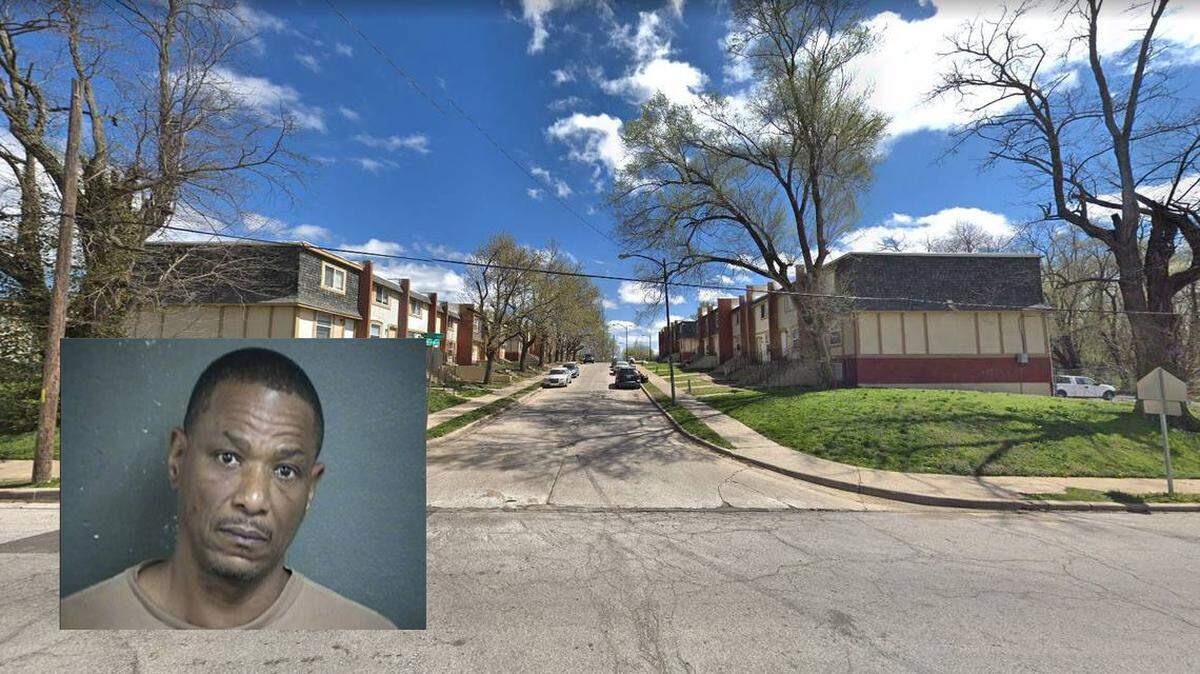
Yes, as it turns out, Cecil Brooks, the self-described one-time “major figure in the Kansas City, Kansas, drug business” who is scheduled to go on trial on federal sex trafficking conspiracy charges in November, was a DEA informant.
That’s what the defense itself said in a court filing I wrote about last week, in the case that would have prosecuted former KCKPD detective Roger Golubski, too, had he not committed suicide on what was to have been the morning of his first federal trial last December.
But that’s what I’ve also since heard from Mike Harris, the former federal public defender who says he suggested in late 1991 or 1992 that Brooks should see if the feds wanted to make a deal with him.
That means Golubski wasn’t the only one of the original four co-defendants in this case whose work in and for law enforcement would have made prosecuting this alleged operation back then so unlikely.
It would have been another potential layer of protection for men who, according to the state in their court filings, held girls as young as 13 in “involuntary servitude.” Brooks owned the apartments at KCK’s Delavan Avenue and 26th Street where all of this allegedly went on between 1996 and 1998.
Even later, prosecuting this case against not one but in a sense two of their own — at least, in Brooks’ case, he was someone they relied on — would have been a colossal embarrassment. And knowing that all of this was going to come out, you have to give them credit for prosecuting it even now.
Brooks and the other men charged in the conspiracy, LeMark Roberson and Richard Robinson, say in their own defense that they were running a good old-fashioned drug operation, as their friends in high places were well aware, but they were not trafficking anybody.
‘The only way is to do a deal’
Here is how Mike Harris says Brooks became involved with the DEA: It was in late 1991 or 1992, he said, when a client of his showed up without an appointment and with Brooks, someone he introduced as a cousin. “I’d never heard of Cecil Brooks. He was not then who he became.”
He remembers the timing because this was after Harris’s office moved off-site for a time, to 400 State Avenue, but before the indictment came down in the big Carl Marshall crack-running conspiracy case in May of 1993. (Hold that thought, because we’ll get back to this case in a minute.)
The day that Brooks came in, he “said he’d been caught on a hand-to-hand sale” of some drugs, and he had a couple of questions for his cousin’s lawyer. “Back in the day, an urban legend was that if someone puts drugs on the table and another person puts money on the table, it’s not a sale. I told him no, you’re pretty much toast.
“And he asked — another urban legend back in the day was if you ask them if they’re an informant they have to tell you the truth. I said no, get a brain. He wanted to know what he could basically do here” to get out from under the drug charge.
“I said the only way is to do a deal. I gave him the name and phone of Dave Major, a senior DEA agent” and told him to have his own defense attorney, Mike Redmon, a Washburn law school classmate of Harris’s, “make a call and see if they’re interested. I do know he was never charged.”
Major didn’t return my call, and when I reached Redmon, he said “I really don’t remember that,” in part because the 8 times he represented Brooks all kind of blur in his mind. He seemed genuinely shocked, though, when I said Brooks himself was coming forward as a former informant. “He said that? That’s surprising because he’s in prison” – where someone who ever wore a wire is not a good thing to be.
Prosecutors sent document by accident
Harris never knew any more about whether Brooks actually had made a deal with the DEA until, while working the Carl Marshall case, prosecutors accidentally sent him a document in discovery that showed that Brooks, while wearing a wire, had made a buy from someone in the Marshall operation named Frank Ashley.
“They’d mistakenly included one on a controlled sale — they sent Cecil Brooks in to buy cocaine from Frank Ashley, who was the top of the food chain in crack cocaine in those days. ‘Top Gun’ they called him, and Carl was ‘King Carl.’ And I thought well, Cecil did get something worked out after all.
“I’m assuming Cecil had probably” done business with him before, Harris said. “He just didn’t know Cecil had gotten into his own little hometown jam and was wearing a wire to get himself out of trouble.” Harris went on to represent Ashley, who waived the potential conflict of interest of Harris having given Brooks legal advice, and Harris again saw the evidence that Brooks had worn a wire.
Al Jennerich, who worked the Ashley case for the FBI, said, “he would have worn that for the DEA, not me.” He referred me to an agent who he thought “did some stuff with Cecil, but I don’t know what.” And that agent, who is not well, did not return my call.
Melody Brannon, the current Federal Public Defender for the District of Kansas, said, “I wouldn’t doubt his memory” — Harris’ memory — but the document that he said showed Cecil Brooks wearing a wire with Frank Ashley would no longer be available. “We don’t maintain files from that long ago.”
‘Does not recall the name of the agent’
Here’s what the defense for Brooks and the other defendants wrote in the recent motion: “In the 1990s and early 2000s, Mr. Brooks was an informant for the DEA. This point is not disputed by the Government. Assistant United States Attorney Stephen Hunting has confirmed this fact. The Government indexing system confirms that an informant file once existed and that Mr. Brooks was the informant. However, the contents of that file, including the name(s) of the DEA Agent(s) that worked with Mr. Brooks has been lost, destroyed, or simply not retained. Mr. Brooks does not recall the name of the agent or agents that he worked with. The defense has no way to gain that information.”
The defendants say that, in effect, they’ve been handicapped by not being prosecuted sooner, arguing that if the case had been filed decades ago, “the file would have still existed. The defense could have called one or more federal agents who had contact with Mr. Brooks” and would have tried to persuade the jury that while “law enforcement was having contact with Mr. Brooks … no one noticed the young women being held captive.”
“The DEA agent or agents would have testified as to the steps they took to vet Mr. Brooks as an informant and would have testified regarding their familiarity with him. … The testimony of that agent or agents would have directly undercut an essential premise of the Government’s case, that Mr. Brooks was somehow invisible to authorities.”
So when Harris says that the Cecil Brooks who showed up in his office wasn’t yet what he later became, just what is it that he became?
According to Hunting, the federal prosecutor, at a July 2023 hearing on why Brooks shouldn’t get out on pretrial release — and he hasn’t — he’s a man with a “long history” of sex crimes and such “depravity” as burning someone he thought had stolen from him with an iron.
He once poured acid on another man suspected of cheating him, Hunting continued, while “pliers were used to snip his skin away from his body.” He sodomized someone with a broom handle, the prosecutor said, and stuck a gun up an enforcer’s anus and threatened to fire if the man didn’t do as he was told.
Went right back to selling drugs
Hunting also told the court that while Brooks was out on home confinement during COVID, while still serving an earlier sentence, he went right back to selling drugs. Or at least, that’s how it looked on footage captured by the camera the FBI had installed, which showed “what appeared to be hand-to-hand drug transactions.” When the FBI had his room searched, Hunting said, they found a loaded handgun, a silencer and some drug residue.
Some of the victims at Delavan, prosecutors said in an earlier filing, were recruited straight out of a juvenile correctional center, then were raped and used “like chattel” while Golubski protected the operation from any real scrutiny. Victims still fear Brooks so much, Hunting said, that “it’s not uncommon for them to be physically ill” while giving a statement about him.
Brooks mostly stayed out of trouble in Wyandotte County, where he told Natasha Hodge, who lived at Delavan, after getting involved with him at age 14, in what she told me was a “fire to frying pan situation,” that he had nothing to worry about because police looked out for him. The few charges that were filed against him were either dropped or dismissed, including a 1995 aggravated kidnapping and aggravated battery case.
Here’s what Ruby Ellingon, a now deceased KCKPD officer, said about how the “notorious” Brooks managed to evade arrest in a 2015 affidavit: “During the years I worked in vice and narcotics at the Department, we tried many times to bust Cecil Brooks and bring charges against him. We used informants, we attempted controlled buys, and we obtained search warrants. But we never were successful. Whenever we got there, Brooks was always clean.
“It was apparent to the officers trying to arrest Brooks that he was being tipped off. Each time we tried to make a case against Brooks, we came away with nothing. We had strong reason to suspect that unknown officers within the Department were working against our efforts and were warning Brooks about planned raids or stings.”
Expansion into Topeka
But then Brooks expanded beyond KCK, into Topeka, where he was arrested. In 2007, after the man whose back he ironed turned him in, his drug trafficking operation there became the target of a joint investigation by the Topeka Police Department, the FBI, and yes the KCKPD and the DEA.
The defense filing I wrote about last week also claims former Wyandotte County and federal prosecutor Terra Morehead, who was forced to surrender her law license last year, regularly bought cocaine from Aaron Robinson, a cousin of Brooks who worked for him.
The defense argues that she didn’t bring the case at the time because she would have wound up on the witness stand instead, testifying that as a customer she never saw any women being held hostage. Morehead’s lawyer, John J. Ambrosio, again did not respond to a message asking for some response.
Now Cecil Brooks is turning on the connections that he says helped him stay out of court decades ago. But you could say that they got there first; both the DEA and Morehead were among those interim U.S. Attorney Lanny Welch congratulated for their work in putting Brooks behind bars in a 2009 news release headlined, “Hot Iron Drug Trafficker Sentenced to 18 Years in Federal Prison.”
This story was originally published April 25, 2025 at 5:09 AM.