Woman Golubski paid to sit with him at Christmas: ‘He’s been thinking like this for years’ | Opinion
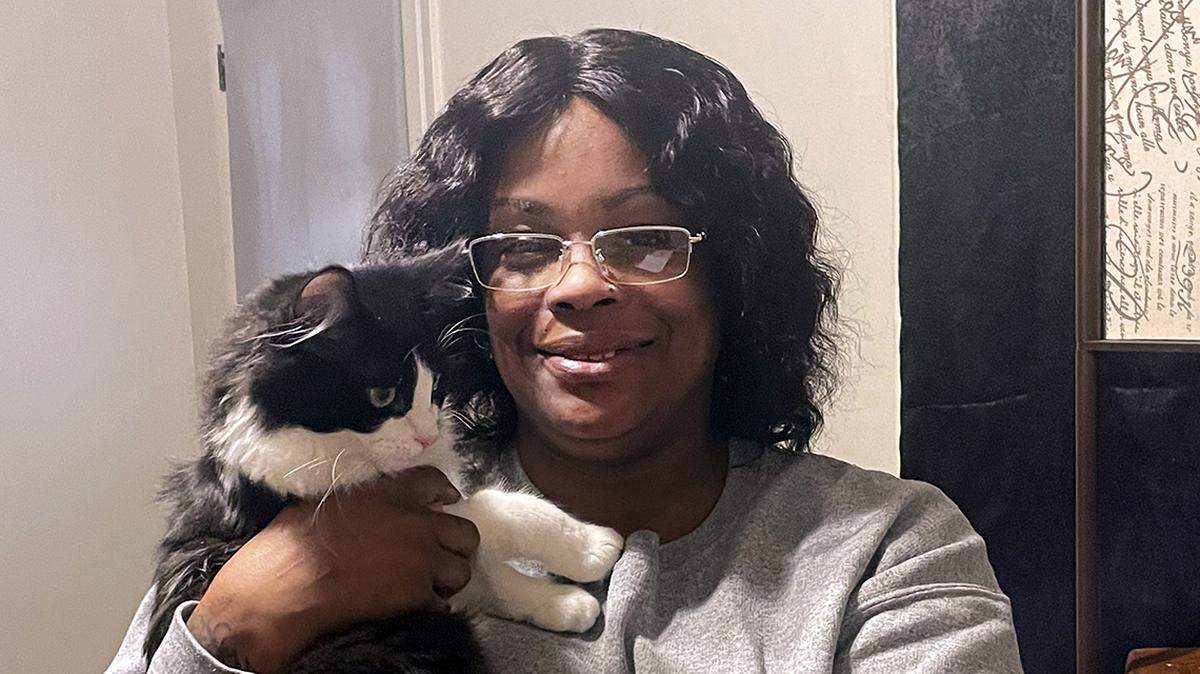
When Natasha Hodge heard that former KCK police detective Roger Golubski had apparently killed himself rather than face nine accusers in federal court, she flashed back to a day two decades ago, in 2004 or 2005, she thinks it was. On that day, he paid her not for sex, as he usually did, but just to sit with him.
“It was around Christmas time — this time of year. He had taken me back to his place” — or anyway, to an apartment that he said was his, off Rainbow Boulevard in Kansas City, Kansas, in a building where he told her he was moonlighting as a security guard.
“There was a Christmas tree up, beautifully decorated. There was no sex involved; he just didn’t want to be alone on that day. We sat there and stared at the Christmas tree for several hours.”
Mostly, they were silent, but he did want to talk about one thing, which was “how the suicide rate skyrockets this time of year. He was considering it way back then,” though he did not come out and say that. “He was an extraordinarily troubled person, and wasn’t even exempt from himself.”
Everything we know about 71-year-old Roger Golubski — that he kept a prayer book in the same police office where more than one woman said he sexually assaulted her, or tried to — argues that he was not only a man of violence, but one at serious odds with himself.
‘Wanted to be a priest, but he had sinned’
Someone Golubski recruited into the drug business at age 12, right after her mom died and she and a bunch of other kids were caught breaking into a building, sometimes defended him when I first knew her: “He did a lot wrong, but he never wanted to be in police” in the first place, she told me in 2022. “He wanted to be a priest, but he had sinned.” Golubski does feel guilty about the life he’s led, she said then, and to atone, he would carry out his own disfigured rituals, dressed as a priest and lighting candles in front of a makeshift shrine. That’s a distortion of religion, but shows revulsion, if not remorse.
In the 2020 deposition in a civil suit against him, he invoked his Fifth Amendment right against self-incrimination 555 times in a single day. One of the only things he was willing to talk about was that he had wanted to become a priest, and had spent four years in a Catholic seminary. He was still so faithful, he said that day, that he’d kept a prayer book in his police office “until someone stole it.”
If his apparent suicide was a confession to all of the allegations of raping and kidnapping Black women and girls during the decades that he served on the KCKPD, it was one he never made in court.
And it’s a bleak testament to the power he held over so many for so long that more than 48 hours after he was found lifeless on his back patio, some of his victims are still not sure he’s even dead.
The distance between the man who according to a former wife kept a rosary in his pocket and was in church every Sunday and the one who prosecutors said promised to kill a 13-year-old’s grandmother if she ever told anyone he was raping her shows someone who, to the extent he still had the remnants of a conscience, must have loathed himself.
Obsessed with dead women
Ophelia Williams, who was ready to testify that he repeatedly raped her, said she has no idea whether he was some tortured soul — “He didn’t talk to me. I didn’t even know him” — but only that he tortured her for years.
Jermeka Hobbs, who says that Golubski for years blackmailed her into a sexual situation that involved him driving her endlessly around the exact same route, only knew him as obsessed with dead women — as a man whose idea of foreplay was a slow roll through a cemetery while showing her photos of homicide victims and asking her over and over whether she’d known them.
Never once, she says, did she ever see him laugh or even smile. Mostly, he drove without speaking: “It spooked me out,” she told me last year. “Our rides would be silent. … He never asked me how my day was.”
The only conversation happened when he showed her the stacks of photos he kept in a plastic zip-lock bag and in a yellow folder. Most were of Black women who Meka says he told her he used to “mess with,” and whose cases he was supposedly working. After a while, “I thought he was the suspect” as well as the investigator. Surely “your cases are not all women,” she remembered thinking.
So no, this exit is not one that no one saw coming, even though I foolishly believed someone might have been guarding him against himself.
Natasha Hodge, who sat with a morose Golubski in front of a Christmas tree all those years ago, says he was never violent with her. Whether that’s because she had long been involved with his alleged partner in a sex trafficking conspiracy, I don’t know.
But after being sexually abused at home from the age of 6, Tasha got involved with convicted drug kingpin Cecil Brooks at only 14, and moved in with him at 16, in what she has described to me as a “fire-to-frying-pan situation.”
Brooks was charged along with Golubski and two other men with sex trafficking girls as young as 12 out of the Delevan Apartments. At 16, Tasha moved in there, living rent-free but at great cost. It was Brooks, she says, who got her addicted to crack and got her started selling sex. She later killed a different abusive partner and served almost 13 years behind bars.
Today, she has a steady job, a solid relationship and the heart to wonder why she watched women die of cancer right in the Topeka prison infirmary — they didn’t get compassionate release even then — while Golubski was shown so much tender care that he ultimately choked on it.