Kansan whose murder charges dismissed after 16 years: ‘Golubski is why I was in jail’ | Opinion
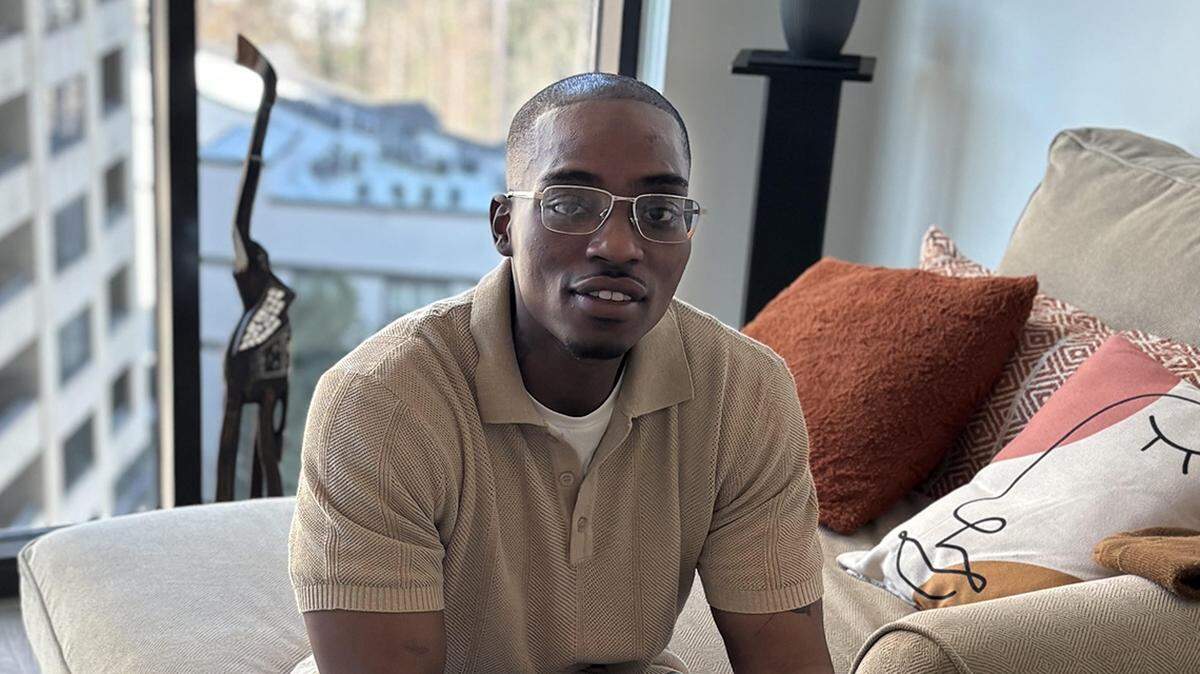
How did the KCKPD and Wyandotte County prosecutors not know that their only witness was severely mentally ill, when even the teenager they were prosecuting for the 2009 double murder in a Webster Avenue drug house could see that?
“You could tell that he was off,” said Cedric Warren, now 34, in his first interview since being released from prison two months ago, when all charges against him were finally dropped. “When he was testifying I thought, c’mon, there’s no way y’all are using this to convict me for a homicide. And you’re wrong for doing him like that; y’all know this man.”
That witness, Brandon Ford, was so ill that KCK police drove him to an inpatient psychiatric unit and interviewed him there. Of course, Wyandotte County prosecutors failed to disclose that to Warren’s defense attorney. Nor did they admit that Ford, who’d been in the house on Webster when the shooting happened, and told a bunch of different stories about what he did or didn’t see there, had been found mentally incompetent to stand trial in a previous case.
A KCKPD transcript of Ford’s crucial identification of Warren shows that a detective asked him, “At some point during our interview did you advise that you believed the name of this individual to possibly be Ced or Cedric?”
“That’s the name you had, that you had said,” Ford answered. “That’s the name that I was told when I was shown a photo.” On the strength of that statement, Warren was charged with killing Charles Ford and Larry LeDoux an hour later, and was originally sentenced by a Wyandotte County judge to 50 years in prison.
Seeing that statement now, Warren said, in a Facetime interview from his new home in another state, “I was a suspect before the witness ever even said my name.”
So why arrest a kid who was with his dad in Missouri when all this happened? Warren believes he knows.
His father, Cedric Toney, told me in December that long before his son’s arrest, Roger Golubski, the former KCKPD homicide captain who committed suicide on what was to have been the first day of his first federal trial for crimes that included rape and kidnapping “under color of law,” spent about a year stalking his former wife, Kathy Warren, Cedric Warren’s mother, who died of cancer in 2018.
Toney and Kathy Warren used to play cards with Golubski and his wife Ethel Spencer, Kathy’s close friend since childhood. But then Golubski started harassing Kathy, Toney said: “He was trying to get her to meet up with him. She was afraid he was going to come after me. I couldn’t believe they were trying to charge Cedric, because he wouldn’t hurt a fly, but when they told him who the lead detective was, I knew it was all bad.” Even as Cedric Warren was being arrested, Golubski called Kathy Warren.
Golubski was at the scene
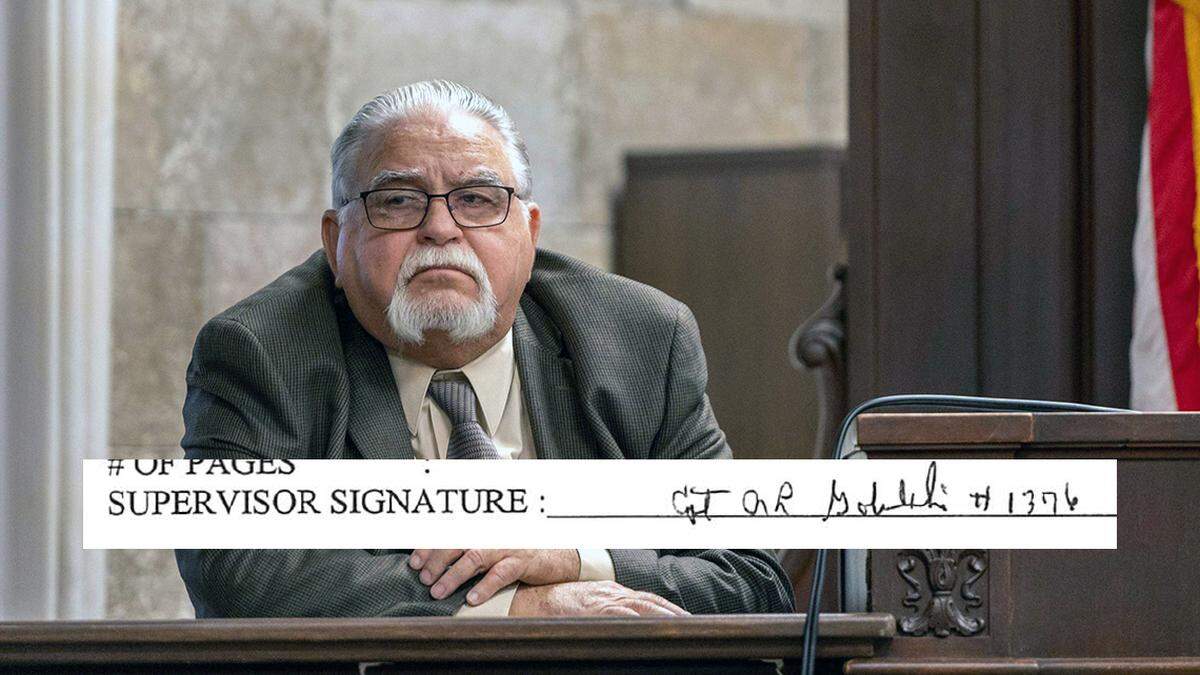
When Toney told me the case “had Golubski written all over it,” that wasn’t just a figure of speech. Police records show that after the shootings, “Captain Roger Golubski entered the scene at 1:21 a.m. and assumed command.”
This was an investigation supervised by Golubski, who signed and initialed the police report.
And this was a decade after, according to the federal sex trafficking conspiracy case against Golubski, he was in the drug business with one of the major dealers in KCK. Some $20,000 in drug money that had been in the house on Webster at the time of the shootings was never recovered.
“Golubski is why I was in jail,” Warren told me. “He was married to my auntie” — his mother’s friend Ethel Spencer, he means. “Once she divorced him, he harassed her for years, and he tried to have sex with my mama. She refused him, and my daddy and him got into it about that. How did it become so easy for him to put cases on people like this, and make it look like it did? People really believed that I did this. I did 16 years!”
One bit of encouragement that he held onto, he said, came from the sheriff’s deputy Theresa King, who was later murdered in the line of duty, along with her colleague, Patrick Rohre: “The officer that took me to my trial, Ms. King, she was one of the officers that got killed. She was the one that took me to trial back and forth and I’ll never forget, when I had got found guilty and I was headed to the elevator to go back to the county jail, Ms. King looked at me and said, ‘Even I know you didn’t do that.’”
“So when I heard that about Ms. King, that hurt me. Dang, why the f*** would somebody do that to Ms. King? The other guy, he was cool, too. That was messed up. When Ms. King said that, I knew that was going to get figured out.”
He did not know, of course, that it was going to take so long.
But from the first, there were strikes against him, none of which had anything to do with evidence in the case.
Original defense attorney disbarred
His original defense attorney, Don Charles Ball, seemed so disinterested that “I knew if he kept representing me, I was going to jail. He told me he was ready for trial and he didn’t even have discovery.” Ball was later found guilty of stealing from a disabled client with brain damage and was disbarred.
Warren’s trial attorney, Joshua Allen, who died in 2023, did file to get Ford’s mental health records from prosecutors, but they said they didn’t have anything to turn over.
“The only party that had these records” — in particular, of a prior finding of mental incompetence — “was the district attorney’s office,” then run by Jerome Gorman, Warren’s attorney Lindsay Runnels told the court in December.
Wyandotte County Judge Aaron Roberts ruled that Warren was entitled to a new trial because prosecutors had violated his due process rights to a fair trial in 2010. Sheryl Lidtke, the chief deputy DA who originally prosecuted the case, Roberts said, “had an obligation to make at least a limited inquiry” into Ford’s mental health. Roberts noted that the state argued that the defense request “was overly broad. This court disagrees with that.”
Lidtke also agreed to look into Brandon Ford’s history of honesty, and yet seemed not to have found Brandon Ford’s 2005 bad check charge in her office’s own files, along with the subsequent finding that he was mentally incompetent to stand trial.
“It is hard for this court to believe that had such a check been done,” the key witness’s history of severe mental illness would not have come to light, Roberts said. “The records were within the possession of Miss Lidtke.”
“The state had a duty to learn of and disclose” what was not just some “passing reference” but “police physically taking him to a mental health facility, and shortly thereafter, visiting him there and asking him questions about the case. … The police’s failure … became the prosecutor’s failure,” the judge said.
Judge: Warren convicted ‘against all odds’
Gorman, the DA Mark Dupree defeated in 2016, was later fired from a new job with the Kansas Department of Revenue after complaints that he made inappropriate comments at work. Allegedly, he remarked upon a job applicant’s breasts, said that women in law enforcement are lesbians and that Hispanic people are ruining the Catholic Church. When Dupree took office, he did not retain Lidtke, Gorman’s chief deputy.
It was because of what the judge called the “prosecutor’s failure” to make sure Warren got a fair trial that he was released in December. This was not a finding of innocence, though Roberts did comment from the bench that it had been “against all odds” that Warren had ever been convicted in the first place.
It wasn’t really, though. We often say that no one is above the law — or we used to say that, anyway. But plenty of people turn out to be beneath its protections, without the resources to either access justice or prevent its perversion.
Current Wyandotte County District Attorney Mark Dupree’s office fought Warren’s current defense team, the Midwest Innocence Project, Cheryl Pilate and Lindsay Runnels in their attempts to remedy this miscarriage. They opposed subpoenas for records, opposed a new trial and initially opposed Warren’s release – right up until taking credit for it at a news conference.
“What the previous administration did was, indeed, improper,” Dupree said the day Warren was released, soon after the court found he was entitled to a new trial. “It was a foul strike, and yet another stain on the criminal justice system if the right people do not do the right thing.” Dupree also told reporters that Golubski had nothing to do with Warren’s conviction.
As Warren put it, Dupree’s position was: “You can’t come out, you can’t come out. Oh, we helped you get out!”
There was never going to be a retrial, because that would have put the whole system that enabled Golubski on trial, and nobody still in power wants that.
Warren’s attorneys still intend to prove his innocence in court. Under state statute, that would have to happen before he could be compensated for the years he spent behind bars.
Prison: ‘I stayed in trouble if I’m being honest’
Those years were not spent as a model inmate. “I felt like none of the rules should apply to me. I felt like I didn’t do s*** to be in here and why should I have to abide by these rules? So I stayed in trouble if I’m being honest.”
But he was also “determined not to let them break me mentally, physically, spiritually or emotionally. Not one day did I sit in there and say this is going to be it for me.”
When he did get out, his huge and hugely supportive family was waiting. But hard as it was, he almost immediately “moved far away from Kansas City, because they’ll never do that to me again.”
KCK, he said, did look more posh: “It looked like they’re bringing some money out here; the cars are different. Everybody’s got two cars, and that’s different. But it felt the same, though, and that’s why I left. The buildings were different – nice – but it still felt the same.”
He’s living with a brother now, and as soon as he is able to get on the lease and then get a driver’s license will go to work in a family trucking business.
Meanwhile, “every day is an adventure for me, as long as I can wake up and go turn my lock and walk out my door. Now I’m not existing, I’m actually living. I got a family full of women,” many of whom have been to visit him. One in particular, he said, is helping him brush up his table manners.
“But the most I’m having to relearn is people. Because 16 years ago, people thought different. Everybody is all of a sudden famous, everybody living on social media.”
And the biggest surprise? “Going to the restroom and they had both genders. I really didn’t know where to go.”
As with other wrongly convicted former inmates I’ve interviewed, what I find most surprising about Warren is his lack of beaten-down bitterness.
“They stole so much from me — years. My grandma died, my grandpa died, my cousin committed suicide not a year before I came home. My mama died, somebody killed my sister. So there’s no amount of money that will repay me for the time I lost with those people I’ll never get to see again.”
And yet somehow, “I’m happy now, and I just want to stay happy.”
To do that, he doesn’t think too much about Roger Golubski or Wyandotte County. “They tried to end me,” he says, but did not, and that victory is “something that isn’t going to wear off for a nice little second.”