‘Powering the entire city’: Kansas City looks to build solar farm by KCI airport
READ MORE
Climate change in Kansas City
The effects of climate change, including more extreme weather, are being felt across the Kansas City region. Here’s what’s being done and how you can help.
Expand All
Solar power could eventually power most of Kansas City.
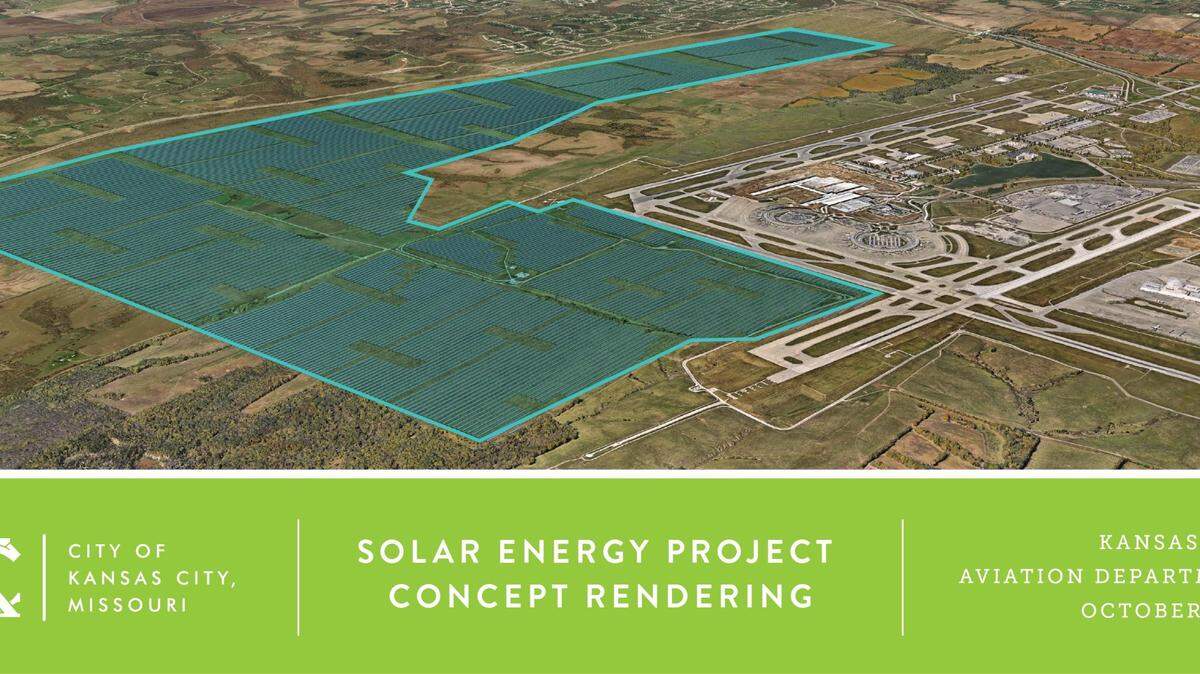
That’s the idea behind a new project the city is pursuing: building a 300-megawatt capacity solar farm on a few thousand acres by the Kansas City International Airport.
It would be one of the largest solar farms in the country, let alone one created by a municipality.
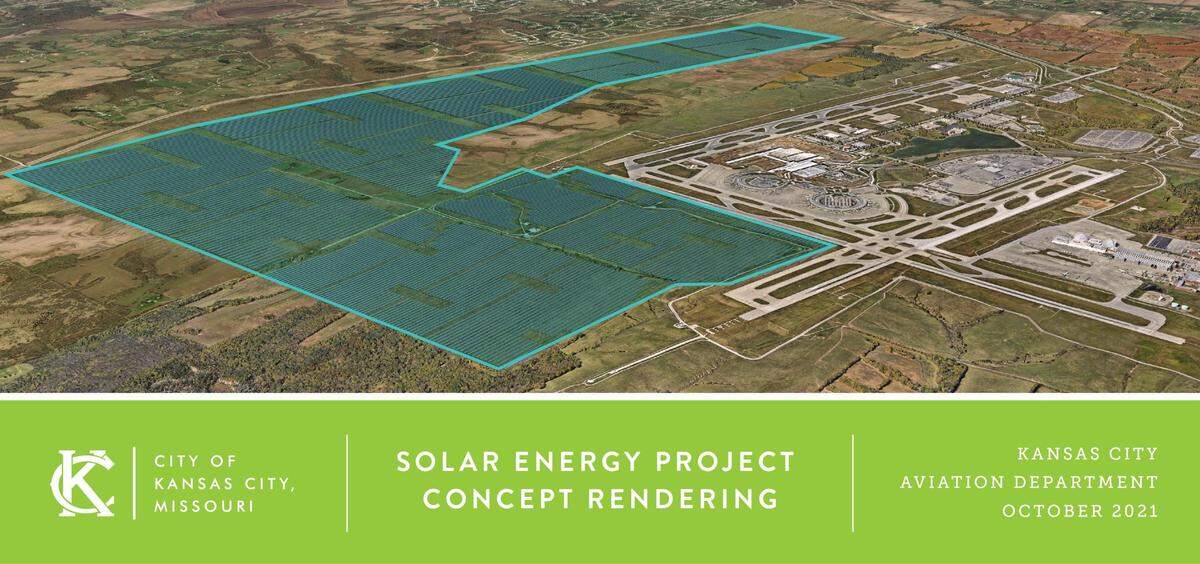
City Manager Brian Platt said the city is currently conducting a feasibility study to see how they could implement it and how much power it would be able to provide.
“We think that there’s an opportunity here for a solar array at this site to provide power to most or all of the homes and residences in the city,” Platt said. “This is not just about powering city facilities. It’s about powering the entire city.”
There are 4,000 to 5,000 acres of undeveloped land around the airport, Platt said, though they may not be able to use all of it.
Sustainability, reducing carbon emissions and improving air quality for the health of Kansas Citians have been priorities for the city, Platt said. Plus, the city has to think about the resiliency of the energy grid, especially considering the deep freeze of last February that led to rolling blackouts throughout the region.
“We know there is an opportunity to do better there and create a more resilient energy supply for us,” Platt said.
He said it’s cheaper to use solar panels and a local energy production site. There’s also the possibility of the city being able to charge rent for a third party operator, he added, though that’s not a goal.
Federal funding would help facilitate the project, Platt said, though there’s been hesitancy at the state and federal level to move forward in the same way Kansas City is seeking.
“It’s disruptive in the sense that it changes the status quo,” Platt said. “Most of our energy is fossil fuel based and most of our energy production facilities are not local in nature. This is also a rare occurrence where a city is contributing its own resources to a massive energy production facility.”
He said the city’s approach would not require significant upfront taxpayer investment as a third party would likely construct and operate the facility, paying the debt through energy sales to the grid.
“As our city and cities around the world work to address a changing climate, Kansas City is proud to explore bold and creative strategies to protect our residents and our environment,” Mayor Quinton Lucas said in a statement. “This solar farm could be one of the largest and most ambitious solar projects in our country to date, span thousands of acres, cover electricity needs for a sizable portion of city, and help us march toward our goal of carbon neutrality by 2040.”
The feasibility study is just weeks away from completion.
Southwest Airlines said in a statement that it is still in the early phases of learning what impacts there could be to its operations and the long term growth of the airport.
“We look forward to getting a better understanding of the project’s specifics and are supportive of their efforts to explore expanding their solar capacity,” the company said. “As a company, we’re focused on our overall sustainability efforts to reduce emissions and our carbon footprint.”
Brett Oakleaf, partnership development manager with National Renewable Energy Laboratory, said they work with airports on similar projects across the country. NREL offers advice to the city and solutions based on the data the city gives to them.
Kansas City’s project, he said, would be one of the biggest in the country.
“I think it’s very forward thinking,” Oakleaf said. “It opens up a tremendous amount of opportunity.”
Solar farms have been developed on airport land, including in Indianapolis, Denver and Pittsburgh.
Andy Knott, interim central region director for the Sierra Club’s Beyond Coal Campaign, applauded Kansas City’s move, saying the proposal for the airport is a “great example of the City of Kansas City putting its words into action.”
He said the solar farm would reduce the region’s dependence on coal.
A report issued last week by the Sierra Club found that Evergy would save millions by retiring their coal plants sooner. Evergy has claimed that finding is false.
The report also found that in the Kansas City metropolitan area, Black and Hispanic households face at least twice the average energy burden compared to white households. Ty Gorman, a Sierra Club Kansas Campaign representative, said Evergy, as a monopoly utility company has a critical role to play in alleviating that burden.
“Energy burden is really why we should care about this so much,” Gorman said. “Due to generations of systemic racism and disinvestment in Black communities, the Black communities are at least twice as likely to experience energy burdens as white communities.”
Evergy spokeswoman Gina Penzig told The Star in a statement that the company has been working with the city and the airport for years on building solar around the new terminal.
“Once the feasibility study is completed, we look forward to continuing conversations with the city to explore further partnerships on solar energy and increasing overall sustainability,” Penzig said.
She said Evergy customers receive half of their electricity from carbon and emission free resources. Evergy and Kansas City also partnered to place solar panels on dozens of city buildings. And Kansas City is enrolled in Evergy’s Renewables Direct Wind program, she added.
“Kansas City is one of the most sustainable cities in the country and has a history of leading on progressive environmental policies,” Penzig said.
Councilman Dan Fowler, District 2, represents the district the airport is in.
“I think for Kansas City as a whole it’s going to have a very positive impact because we’re going to be able to generate probably as much power as we need for the city, the airport and the city,” Fowler said. “I think environmentally it’s a great, great project. That’s as clean energy as you’re going to get.”
This story was originally published November 5, 2021 at 11:30 AM.