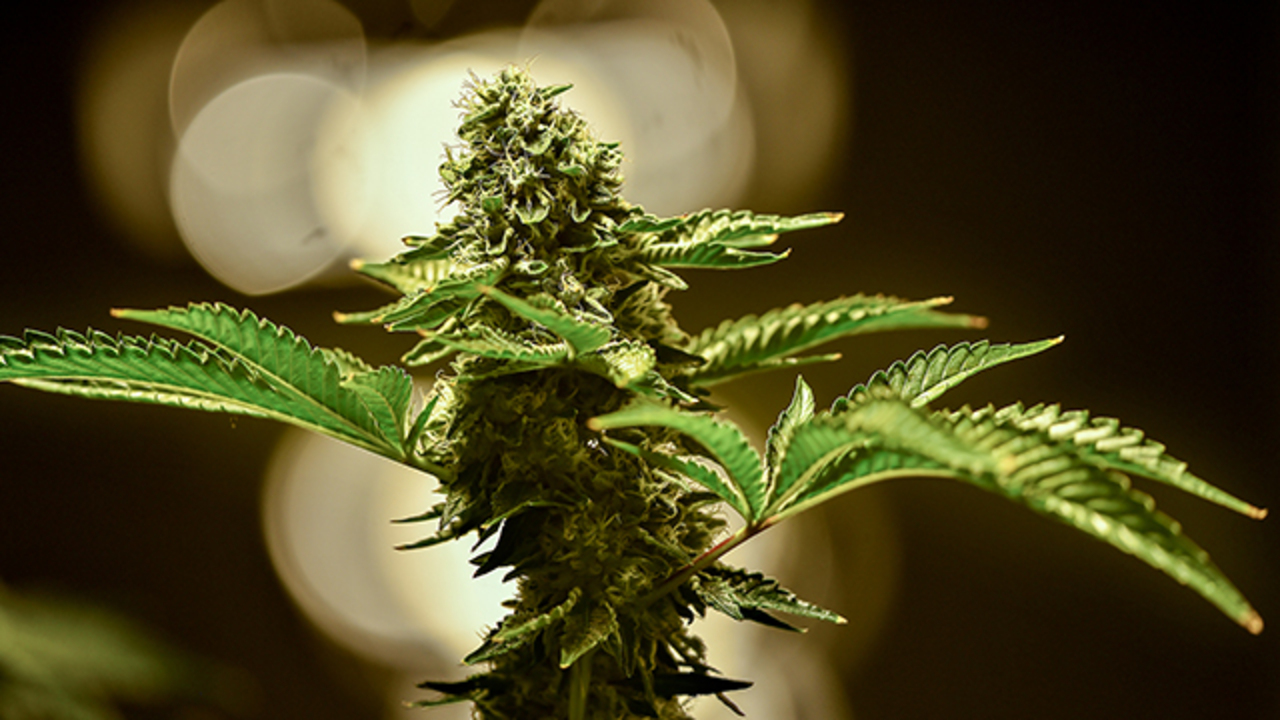
Recreational marijuana could be legal in Missouri next year. Who will cash in?
READ MORE
Legalized recreational marijuana in Missouri
Voters in Missouri will decide in November whether to legalize adult recreational marijuana use, paving the way for Missouri to potentially become the 20th state to legalize and tax the drug.
Expand All
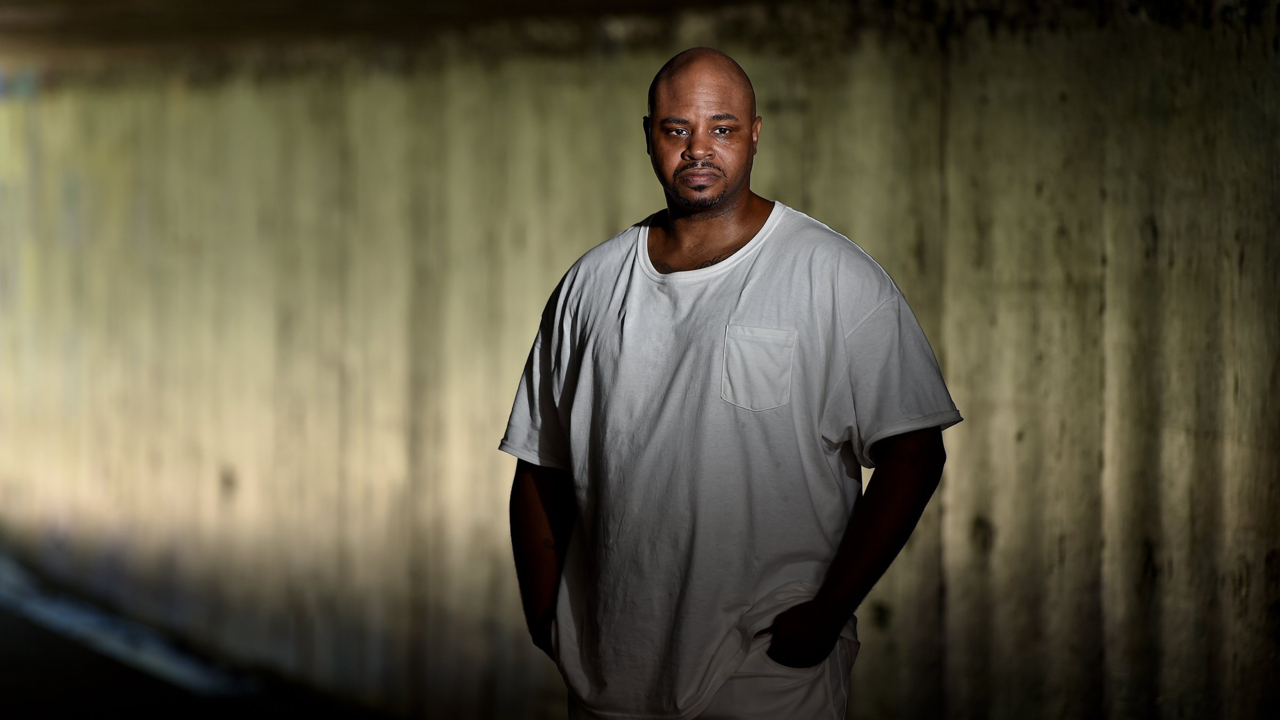
When Robert Franklin walked out of the Moberly Correctional Center in July, the line of work that led to his incarceration in 2007, the sale of marijuana, had changed drastically.
Back home in Columbia, he couldn’t believe the state-licensed dispensaries, where people openly picked up marijuana for treatment of conditions from post traumatic stress disorder to chronic pain or cancer. Missouri voters approved medical cannabis by a two-thirds majority in 2018. Thirty-six states now sanction it.
“All you got to do is have a card and you can walk in and get whatever you want, to a limit,” said Franklin, now 41. “It’s just crazy to me.”
More changes are coming. Barely a year after its first sale of medical marijuana, Missouri is on a path to legalize recreational use for adults 21 and older. At least three groups are organizing petition drives or promoting legislation to get a spot on the November 2022 statewide ballot.
If recreational marijuana goes to voters, it has a legitimate chance of winning, if not next year then sometime soon after. Support for legalization has grown significantly in the last 20 years. An April Pew Research Center survey found that 60% of Americans think marijuana should be allowed for adult use.
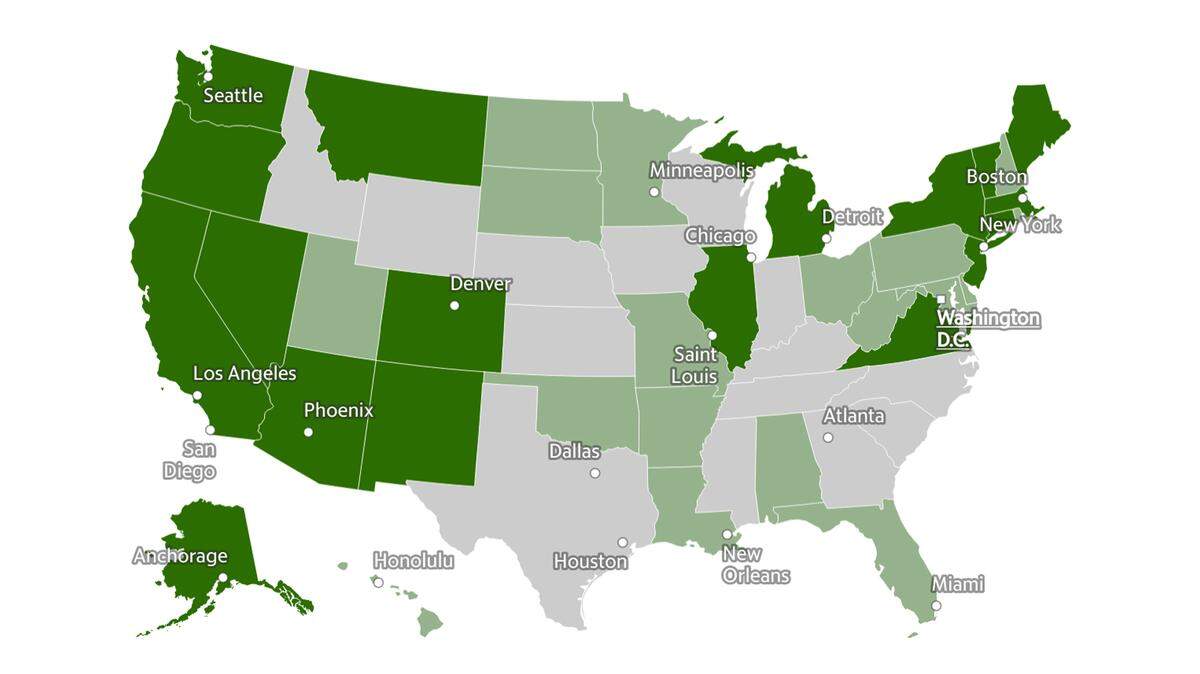
Nineteen states, including neighboring Illinois, and Washington, D.C. have passed some form of recreational cannabis, supported by a mix of social and criminal justice reform advocates, libertarians and business interests. All but one of these states started by permitting medical use.
“I certainly think legalization in Missouri and across the country is inevitable,” said John Payne, campaign manager for Legal Missouri 2022, the most prominent group pushing for a ballot question next year. “Whether it happens this year or in 10 years, that’s the question.”
Though proponents tout the popularity of legalization, opposition in the law enforcement and medical communities remains. They argue that because marijuana is still illegal at the federal level, research on its long-term effects has been limited.
The Missouri State Medical Association opposed creation of the medical program. Director Jeff Howell said the group generally opposes all legalization efforts for recreational use, “until further research can better clarify the risks and benefits.”
Prosecutors in St. Louis, St. Louis County and Jackson County no longer press charges for most cases of marijuana possession, which is decriminalized statewide for limited amounts. Most others have explicitly rejected the move. They cite concerns about legalization’s possible effects on impaired driving. Dan Patterson, the Greene County prosecutor and president of the Missouri Association of Prosecuting Attorneys, said he’s also wary of proponents’ claims that legalization would reduce crime.
And while legalization enjoys majority support in polling, the Pew survey found that older adults are far less likely than young people to favor legalization for recreational use. Sentiment also varies with party affiliation. Seventy-two percent of Democrats and Democratic leaners support both medical and recreational use, compared with 47% of Republicans and Republican-leaning independents.
‘All this money out there’
Should recreational use reach the ballot next year, it will be about more than whether to simply decriminalize an illegal substance. Who will benefit? Should sales be modeled after the regulated system already in place for medical use, which has been criticized for its high fees and state-imposed caps on licenses? Or should legalization be a purely free-market enterprise?
What would it mean for people like Franklin? Should their records of non-violent marijuana offenses be expunged? Should those still imprisoned for such crimes — many of them Black people serving extremely long sentences imposed during the now-widely discredited War on Drugs — be released? If it’s legalized, should there be limits on the amount a person can possess?
The advocacy groups, currently collecting public comment before seeking approval from the secretary of state’s office to gather signatures, come down differently on some of these issues.
Legal Missouri 2022, led by architects of the successful 2018 campaign, is backed by much of the established medical marijuana industry. It favors a similar system to regulate full legalization, along with automatic expungement of past non-violent marijuana offenses. Their proposal also calls for those incarcerated to have their cases reviewed for release.
Fair Access Missouri is highly critical of the state’s medical program, which offered a limited number of licenses for cultivation, manufacture and sale. It proposes a free market approach to legalization, without caps on the number of businesses.
Crossing Paths, a pro-legalization PAC, is working with lawmakers to decriminalize the drug without industry caps or any limitations on personal possession.
Whichever measure reaches the ballot, Franklin wants a chance to get back into the business, on the legal side. In Missouri, sales of medical marijuana to more than 137,000 state-approved patients neared $22 million in August, according to the industry’s trade association. A 4% tax on all sales goes to health services for veterans.
Recreational use would be even more lucrative; industry experts predict it would more than double the number of legal consumers.
“They’re making all this money out there, and I suffered the price, the consequences,” Franklin said.
Who’s keeping score?
Many activists want legalization to address equity and transparency issues with the state’s medical program.
The 2018 constitutional amendment approved by Missouri voters allows marijuana use for medical purposes, with a certain number of plants that can be grown at home. It set a minimum —but no maximum — number of licenses for dispensaries, manufacturing plants and cultivation sites.
The Department of Health and Senior Services chose to issue only the prescribed minimum — 192 licenses for dispensaries, 86 for manufacturing and 60 for cultivation. The result was rejection of hundreds of applicants. A wave of lawsuits and 857 administrative appeals soon followed.
The scoring of license applications, performed by a third-party state contractor, appeared to be riddled with inconsistencies. Many licenses were awarded to members of MoCannTrade, the primary industry organization whose lobbyist, Steve Tilley, is a close friend and former legislative colleague of Gov. Mike Parson.
Earlier this year, many of the individuals and companies awarded the lucrative licenses held a fundraiser for Parson’s political action committee, Uniting Missouri.
In one lawsuit challenging the system, a Cole County judge upheld the cap on licenses. In another, a state Western Court of Appeals judge ruled that Missouri must provide examples of successful applications, documents the state has withheld. Kansas City attorney Jon Dedon said the records are “anxiously anticipated” by those still challenging their denials, who are hoping to show the state scored applications unfairly or arbitrarily.
Dedon, who represents some of those unsuccessful applicants, said many spent six figures to apply for licenses, much of it on consultants with experience in the legal marijuana markets.
The state is continuing to litigate 603 appeals of license denials, according to a health department spokeswoman. The state’s millions in legal costs are coming out of application fees the department collected, leaving less to go toward a veterans’ health care fund, the intended target of the program’s revenues.
Legal Missouri 2022, the established industry group, maintains that the medical program is a success. It cites the even geographic distribution of dispensaries, and more licenses issued per capita than most other states.
Legal Missouri’s campaign manager said the program’s initial scale had to be limited to ensure that marijuana licensed for medical use was not overproduced and flowing onto the black market. Payne, who campaigned for the 2018 ballot initiative and advised the state on its current health department regulations, said Missouri “found the best possible middle ground.”
Jack Cardetti, another architect of the 2018 campaign and spokesman for MoCannTrade, said he believes the medical-use market will expand as the health department resolves appeals and issues more licenses. The number of active dispensary licenses currently hovers just above the initial department-imposed cap of 192, according to DHSS. Prices will fall, too, Cardetti said, as licensed facilities open and increase supply.
Of 197 dispensary licenses granted, 142 have opened. Twenty-nine of 62 cultivation plants have opened, as have 40 of 89 manufacturing facilities.
Black market concerns
Legal Missouri and Fair Access disagree on how medical and recreational marijuana would be regulated. Fair Access proposes an unregulated system, with no limits on licenses and lower costs for applicants.
With more businesses allowed to operate across the state, campaign manager Eric McSwain said, prices will fall and consumers will turn to the legal market naturally. He called the current regulatory system “a tried-and-true method for a limited number of people to have complete ownership of an entire market.”
In addition to unlimited licenses, the Fair Access proposal includes a $2,500 cap on fees and the opportunity for reductions if an applicant is a veteran, a member of a protected minority group or someone who was denied a license during the medical rollout.
McSwain said he doesn’t want “a wild wild west situation,” just more businesses allowed to compete in the market. His proposal includes elements of the current system, like a bar code that allows the state health department to track every plant in a cultivation facility to its final product and sale.
But Payne and other proponents of the current system point to the unlimited-license state of Oklahoma, which officials there say has become a magnet for black market operators who are undercutting legal business owners on price.
“You have to make sure it’s tightly regulated, not getting out of the state, and not getting into the hands of minors or getting into organized crime.,” he said.
“I don’t think that’s a good argument,” McSwain said of black market concerns. “What has been the point of prohibition? To limit production. Has that worked? No.”
Under Legal Missouri’s proposal, the health department would still be able to impose the current license caps. Current medical marijuana licensees would get the first chance to convert their licenses to include recreational sales; any new licenses would be chosen afterward by lottery.
Proponents say they also are encouraging smaller applicants to participate through a “microbusiness” provision. It would grant 144 additional licenses to lower-income applicants, veterans and those convicted of marijuana offenses or related to someone with a conviction. Ex-cannabis offenders eligible to have their crimes expunged would be able to participate in the industry as employees or owners.
All agree on expungement
Franklin, the ex-prisoner, said he began selling weed in the 2000s because he felt he had no choice.
He had been convicted of selling and possessing drugs in Columbia as he turned 20. Almost a decade later, living in south Kansas City, he said he tried to find a job, but couldn’t land one because of his criminal record, though none were violent offenses.
By then, he had a young daughter and needed to buy diapers.
“I knew people that smoked,” he said. “And I knew where to get it.”
He described himself as a “middleman” selling nickel and dime bags to a small circle of people he knew.
In 2007, Franklin tossed a brick of marijuana from a car during a brief pursuit at a Missouri State Highway Patrol drug checkpoint in Saline County. Because of his past convictions, a judge found him a “prior and persistent drug offender” and sentenced him, at the age of 27, to 22 years in prison.
He got out this year after earning a commutation of his sentence from Parson, with the help of the Canna Convict Project, an activist group that works to free nonviolent marijuana offenders.
Current state regulations require anyone with a felony conviction unrelated to the “medical use of marijuana” to be off parole for five years before they can own or work in a licensed facility; the determination is made by the health department when it screens and approves employees. Franklin is on parole for 10 years, which means he can’t use marijuana as a patient either, even if he has a medical card through the state.
Payne said the most popular aspect of Legal Missouri’s proposal is automatic expungement of marijuana-related offenses.
It would negate the need for former offenders to get a lawyer on their own and apply for an expungement, he said.
“They’re naturally paired together,” he said of legalization and expungement. “We should be able to say, if that’s now legal, the people that did this and received a criminal charge for it, they should be able to have that wiped off the record. That just makes sense.”
The proposal would cover all non-violent, marijuana-only crimes that involved less than three pounds and did not include driving under the influence of marijuana or selling to anyone younger than 21.
It also goes a step further, allowing anyone serving time for the eligible crimes to ask a judge to be freed. That would affect 44 prisoners and 528 on probation or parole statewide, the Department of Corrections estimates.
It’s one area where all three legalization campaigns agree. Similar expungement and release provisions are included in the Fair Access proposal, and a bill expected to be filed next year in the General Assembly by Ballwin Republican Rep. Shamed Dogan.
“When it comes to anything with cannabis I think the first priority should be getting rid of criminal charges and helping people get out of prison for past charges,” said Bharani Kumar, director of the pro-drug-legalization Crossing Paths PAC which is advocating for passage of the bill. “I think it’s kind of ridiculous that people are making millions of dollars off this industry that people are getting put in prison for.”
Dogan, who is running for St. Louis County executive, did not respond to requests for comment on his proposal.
If lawmakers approve it, the legislation would also go to the voters.
Rep. Tony Lovasco, an O’Fallon Republican and a proponent of the bill, said he believes releasing marijuana offenders would be the hardest hurdle to clear politically.
“I think a lot of people are probably sympathetic to changing our cannabis laws, but are still of the mind that if you broke the law at the time, that you broke it,” he said. “That’s not my view but I think it’s the prevailing one.”
Kumar said he favors the legislative proposal because it has no restrictions — on how much weed a person could possess for recreational or medical use, on how much they would be allowed to grow, or on the amount sold by applicants for criminal amnesty. The intent is to allow the plant to be bought, sold and consumed with no licenses or regulations more stringent than those for alcohol.
Legal Missouri’s ballot initiative would allow the state to limit personal possession to three ounces (with greater allowances for cultivation), three times the amount allowed by most states with legalization. Fair Access Missouri’s proposal puts the limit at eight ounces.
Lovasco and Kumar said it’s better to have no limit — and no one criminally penalized for it. They said their priority was to get government out of marijuana rather than more involved in the industry.
“At the end at the end of the day, the more we start getting into, well the plant’s this tall and you can possess this many ounces, that’s just adding more complexity and ultimately, you’re gonna throw people under the bus at the end of the day when something goes wrong, and someone steps over one of those lines,” Lovasco said.
‘Shut out’
Franklin’s daughter wasn’t even walking when he went to prison. Since his release, he’s been able to visit her in Kansas City.
“Being able to be around her, that’s the greatest joy of my life,” he said.
He’s been staying with family in his hometown of Columbia, and is drug tested regularly under the conditions of his parole. He’s worked a couple of construction gigs but is worried about finding a stable job. Managing or owning a marijuana business would be good money. Technically, he has experience.
But no licenses are being issued now. And Franklin doesn’t have the money to apply for one. He can’t help feeling “shut out.”
“I’m going to try to start at the ground level, applying for different jobs” in the existing licensed businesses, he said. “I’m gonna see what position I can get.”
Christina Frommer, co-founder of the Canna Convict Project, said she considers people like him “POWs” — prisoners of the War on Drugs.
Through marijuana activism, she and Franklin have met with industry representatives, gathering signatures to get other nonviolent marijuana offenders out of prison in Missouri. Frommer said she’s advocating for Franklin to have “a fair shot at management or executive-level” participation in the legal market.
“These individuals risked their lives and freedom to provide this medicine, and lost that freedom due to prohibition,” she said. “These are the people you want.”
A previous version of this article incorrectly reported the licensing provisions for the medical marijuana program. The constitutional amendment approved by voters mandated only a minimum — not a maximum — number of licenses. The state health department chose to cap the number it issued.
This story was originally published September 26, 2021 at 5:00 AM.