Kevin Strickland testifies, swears he had ‘nothing to do with’ 1978 triple murder
READ MORE
Kevin Strickland exonerated
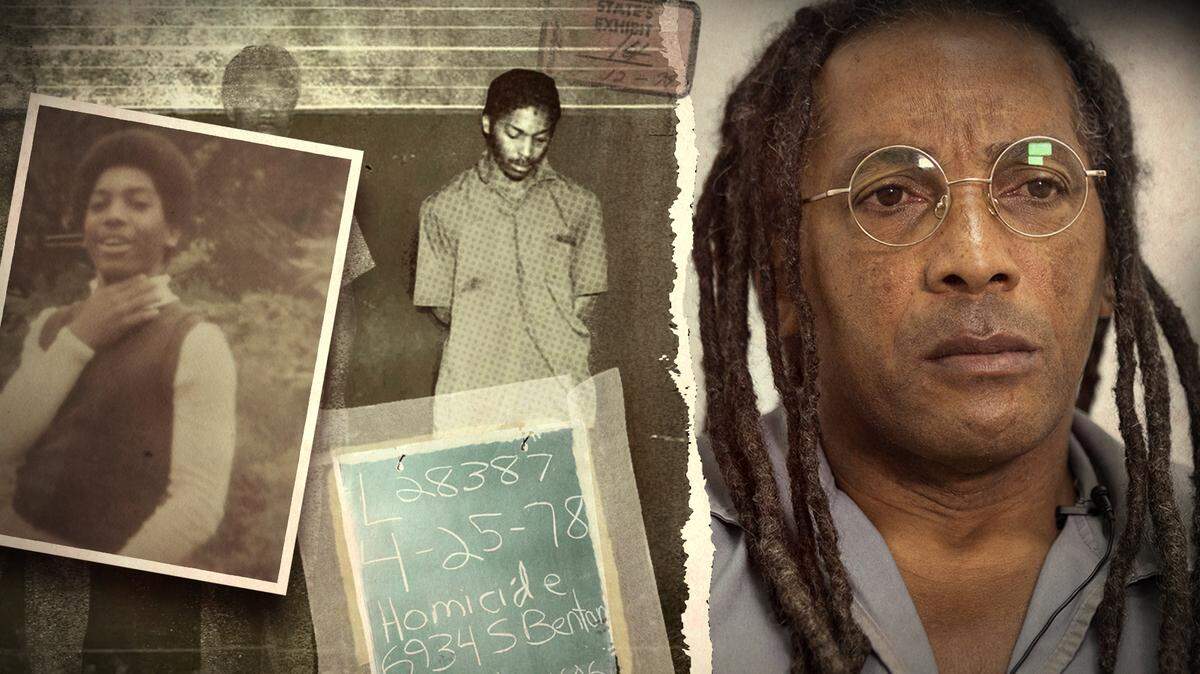
Kevin Strickland spent 42 years in a Missouri prison for a crime that he, and prosecutors, says he didn’t commit. Prosecutors argued in a 25-page motion that Strickland’s innocence is “clear and convincing.” Missouri Gov. Mike Parson and the state Attorneys General’s Office have contended that Strickland received a fair trial and should not be freed.
A judge on Nov. 23, 2021, granted Jackson County prosecutors’ motion to exonerate Kevin Strickland in a 1978 triple murder and ordered his immediate release, confirming that Strickland suffered one of the longest wrongful convictions in U.S. history.
Expand All
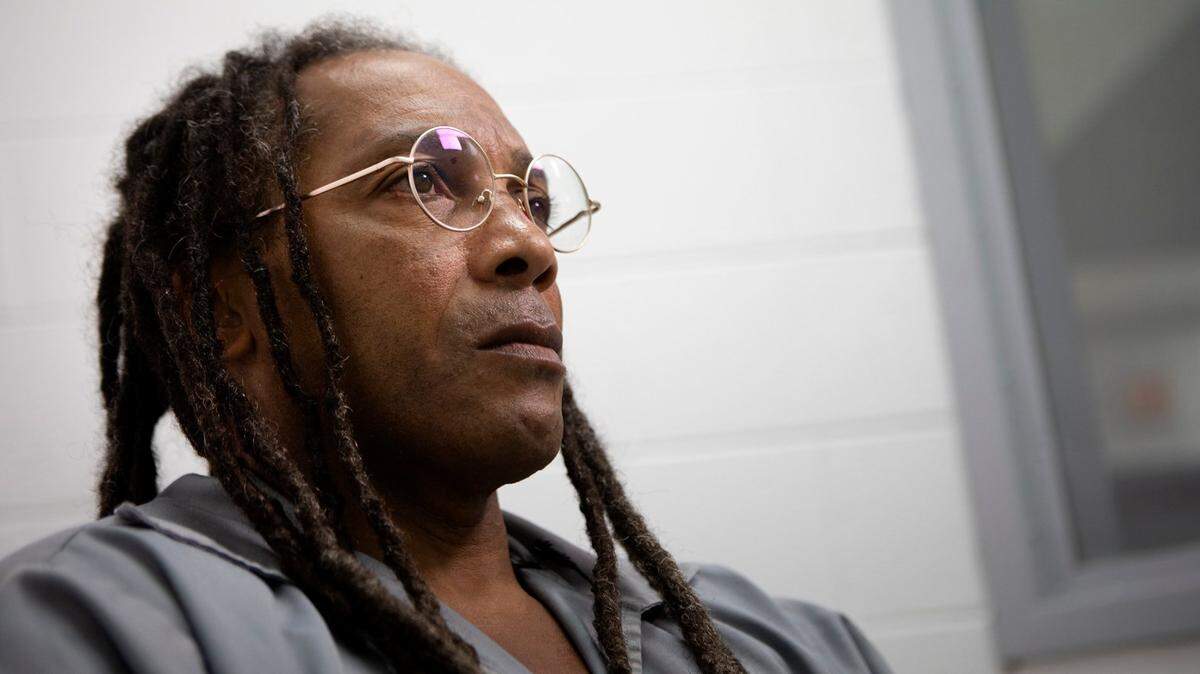
For the first time in decades, Kevin Strickland took the stand and denied any involvement in the 1978 triple murder in Kansas City for which he remains imprisoned.
“I had absolutely nothing to do with these murders,” Strickland, 62, said at the first day of his evidentiary hearing, during which Jackson County prosecutors are seeking to exonerate and free him.
During brief opening statements, Prosecutor Jean Peters Baker said the “tragedy” stemming from the execution-style triple murder was made “much, much worse” by Strickland’s wrongful conviction and continued imprisonment.
Baker told Judge James Welsh that in the course of the evidentiary hearing she intended to show that the recantation from the lone eyewitness to the killings — whose testimony was paramount in the case against Strickland — was “true and real.”
“It burdened her, your honor, it aged her,” Baker said.
One of Strickland’s attorneys, Robert Hoffman, said the eyewitness’ 1979 testimony was unreliable from “the outset,” adding that it was “so weak” that a reasonable prosecutor would not charge Strickland today with it alone.
Baker also noted that “dozens upon dozens” of fingerprints collected at the crime scene, including one found on the shotgun Strickland was accused of carrying that night, were not Strickland’s.
People want to think the criminal justice system is infallible, Baker told the judge, but it can “do the unthinkable” and convict an innocent man. She said they now have the chance to correct a 43-year wrong, adding that her decision to seek Strickland’s freedom was “unlike any” other she has made before.
Strickland was the first witness called to the stand during the hearing, which was attended by more than 50 people. He was questioned in the morning by Baker and Hoffman. He will be questioned by a lawyer with the Missouri Attorney General’s Office, which contends he is guilty, Monday afternoon.
In his opening remarks, Assistant Attorney General Andrew Clarke said recorded prison phone calls between the eyewitness and her husband, who is incarcerated, will show the eyewitness was “not trying to pursue” Strickland’s innocence claim.
“That’s not a recantation, your honor,” he said.
Clarke also argued that one of Strickland’s fingerprints was found on the getaway car, which was owned by Vincent Bell, one of the men who pleaded guilty in the murders.
But in answering Baker’s questions, Strickland said he lived down the street from Bell and that he drove the car more than Bell did because Bell did not have a driver’s license. He said he was surprised the police did not find more of his fingerprints in the car.
Strickland also acknowledged he gave Bell some of his father’s shotgun shells about two to three weeks before the killings because Bell had asked for them. But Strickland maintained he did not know they would be used in a triple murder.
Before he went to trial, Strickland said, prosecutors offered him a 20-year plea deal, which he turned down. Prosecutors at the time additionally offered him a 15-year prison sentence if he would testify against the other suspects.
Instead, he went to court maintaining his innocence and facing the possibility of being sentence to die. Prosecutors ultimately waived the death penalty and he was sent to life in prison without the possibility of parole for 50 years.
‘We’ve waited so long’
In May, Baker announced that her office had determined Strickland is “factually innocent” in the murders. The evidence used to convict him as a teenager had since been “eviscerated,” prosecutors have said.
In a 2020 investigation, The Star reported that, for decades, two men who pleaded guilty swore Strickland was not with them and two other accomplices during the killings at 6934 S. Benton Ave. The men, Bell and Kilm Adkins, were convicted after Strickland and spent about 10 years in prison before they were released in 1989 and 1990, respectively.
“I know because I’m one of the ones who did it, God forgive me,” Bell previously told The Star.
BEHIND THE STORY
MOREOur coverage of Kevin Strickland's story
The Kansas City Star has been covering Kevin Strickland and his innocence claim since September 2020, when we published a deeply reported story from Luke Nozicka that explored the details surrounding the 1978 triple murder Strickland is accused of helping to carry out, as well as the men who have admitted guilt, and the the only witness to the murders saying Strickland is innocent. That report from The Star served in part as the basis for local prosecutors’ review of Strickland’s case in November 2020. Now, Jackson County prosecutors, Kansas City’s mayor and others agreed he deserved to be exonerated, but the state, and specifically the Attorney General’s Office maintains he’s guilty. Read more by clicking the arrow in the upper right.
Why is he still in prison?
Kevin Strickland has spent 42 years in a Missouri prison for a crime that he, and prosecutors, says he didn’t commit. Prosecutors argued in a 25-page motion that Strickland’s innocence is “clear and convincing.” But previously, without the support of Missouri Gov. Mike Parson handing down a pardon or the state Attorneys General, prosecutors in Missouri have had no legal tools to seek to free prisoners they have deemed innocent. That changed in August 2021, however, in a new law that passed as part of a package of criminal justice reforms the Missouri legislature approved and sent to Gov. Mike Parson’s desk in May.
That law gives local prosecutors a mechanism previously missing in state law to pursue freedom for the wrongfully convicted, a step prosecutors’ offices around the nation are taking in the age of criminal justice reform. Prior to the law change, petitions to have convictions tossed have generally only come from the inmates themselves.
In a separate interview in 2019, Adkins told The Star: “The man is innocent. He spent 40-some years in prison. I mean, you know, I don’t know what more you can say. That’s about as bad as it gets.”
Terry Abbott, a third suspect who was never charged, told a Midwest Innocence Project investigator in 2019 that he knew there “couldn’t be a more innocent person” than Strickland, who also went by the nickname Nordy. Serving time for robbery in a Colorado prison, Abbott said he keeps Strickland in his prayers because he was “just a kid when this happened to him,” the investigator recalled in an affidavit.
“Terry returned to saying this many times throughout our long conversation, repeating that Nordy is innocent and that there is no way that Nordy would do something like this,” the investigator, Blair Johnson, wrote.
The lone eyewitness, Cynthia Douglas, recanted her identification of Strickland, prosecutors have said. She died in 2015, but many of her relatives, including her mother and sister, have said or signed affidavits saying she wanted to see Strickland freed because she believed she made a mistake.
“I believe that if Cynthia were here today, she would tell others that Strickland was innocent and needs to come home,” her sister, Cecile “Cookie” Simmons, wrote in an affidavit this year.
Prosecutors started reviewing Strickland’s conviction in November 2020 after speaking with his lawyers and reading The Star’s investigation. He is the first person who Baker’s conviction integrity unit, which was formed in 2017, has determined is innocent.
At the time, Baker had no power to free Strickland. But she filed a motion seeking to exonerate him when a new law allowing her to do so went into effect in August. Strickland has also gained the support of other officials, including Mayor Quinton Lucas, who tweeted ahead of Monday’s hearing that he was thinking of Strickland.
“May this begin the righting of a long-term wrong in the lives of this man, his family, and our community,” he wrote.
Speaking to reporters before the hearing, Strickland’s older brother, L.R., said his family remains hopeful he will come home. L.R. Strickland, 65, called his brother “clearly innocent” and has maintained he was at home with Kevin Strickland when the shooting unfolded nearly three miles away.
“We’ve waited so long for this,” he said.
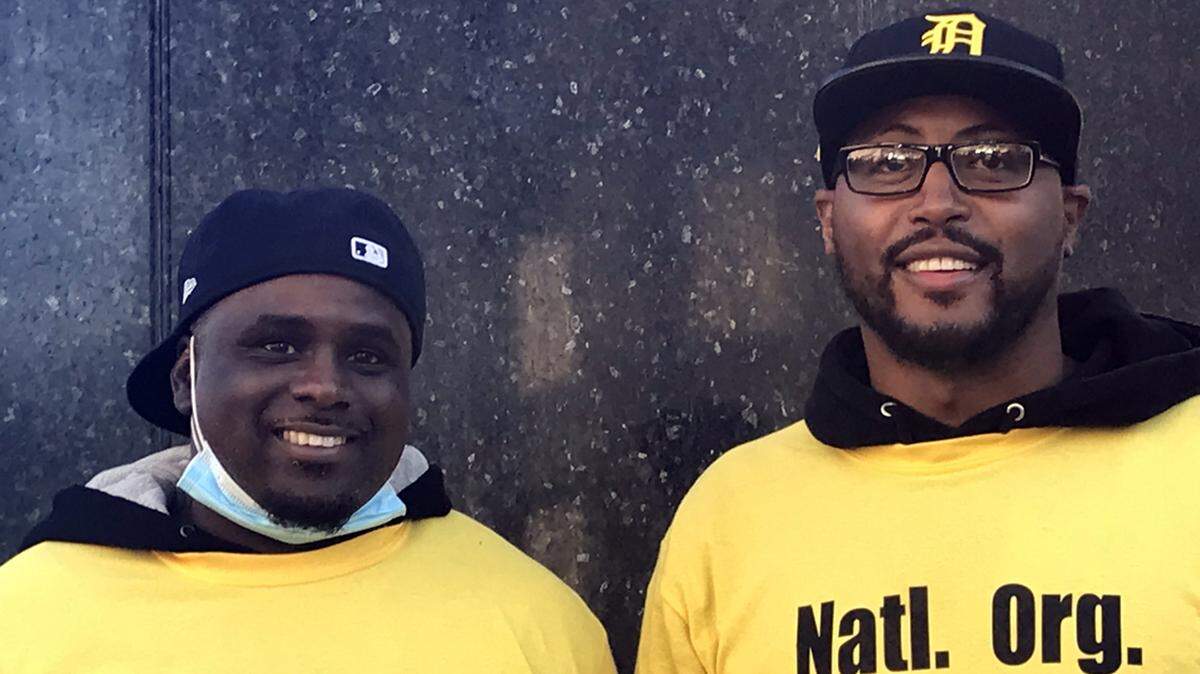
Four men freed after wrongful conviction sat in the courtroom to support Strickland. They are part of a Michigan group called the National Organization of Exonerees.
One of them, Larry Smith, who spent 26 years in prison for a Detroit murder before his name was cleared, said ahead of the hearing that he was “hoping we are going to see some justice” done.
If Baker prevails and Strickland is exonerated, his imprisonment will mark the longest known wrongful conviction in Missouri history.
Testimony in Strickland’s hearing will continue Monday afternoon. Check back for updates.
This story was originally published November 8, 2021 at 12:52 PM.
.PNG)