‘I lost my life’ in prison: Kevin Strickland speaks after officials say he’s innocent
READ MORE
Kevin Strickland innocence claim
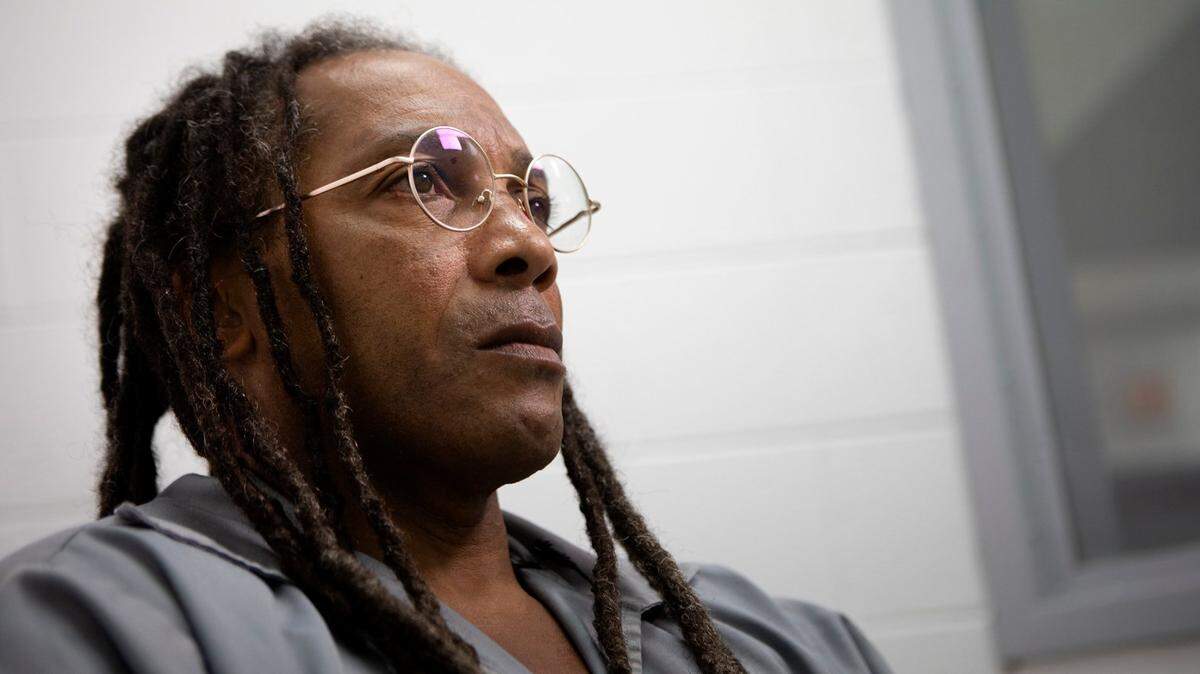
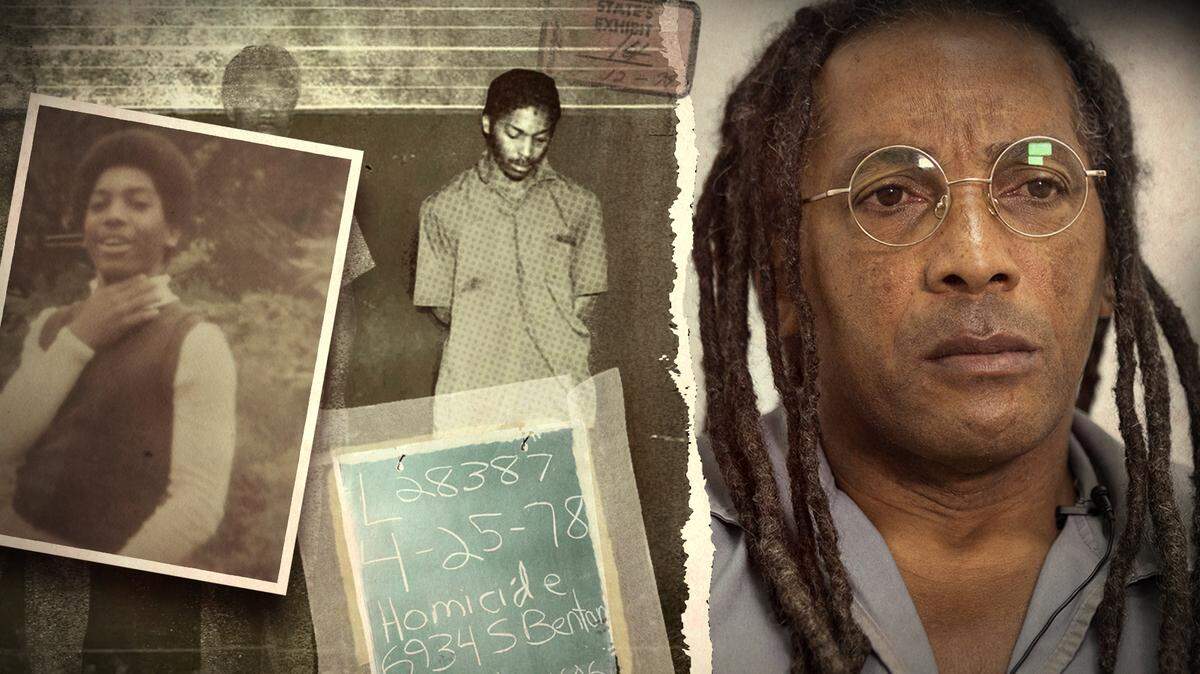
Kevin Strickland, 62, has spent the last 40-plus years in prison for a 1978 triple murder he says he did not commit. His lawyers, local prosecutors and Kansas City officials have urged he be released, but the Missouri Attorney General’s Office maintains he’s guilty.
Expand All
Kevin Strickland was in his cell at the Western Missouri Correctional Center in Cameron when his attorneys called.
Tricia Rojo Bushnell, executive director of the Midwest Innocence Project, broke news to him that he said is still surreal: prosecutors determined he is innocent in the 1978 triple murder for which he has been imprisoned for more than two-thirds of his life. They would call for him to be released immediately.
Strickland’s eyes widened, and he was flooded with every emotion possible, he recalled Tuesday in his first interview since that day.
Strickland has proclaimed his innocence for more than four decades. Prosecutors began reviewing his conviction in November after speaking with his lawyers and reviewing a Star investigation into his innocence claim. Now, Jackson County prosecutors, Kansas City’s mayor and others agreed he deserved to be exonerated.
“Joy, anger, fear, disappointment,” Strickland recalled feeling. “Just disbelief. … It’s just finally happening; someone’s finally hearing me.”
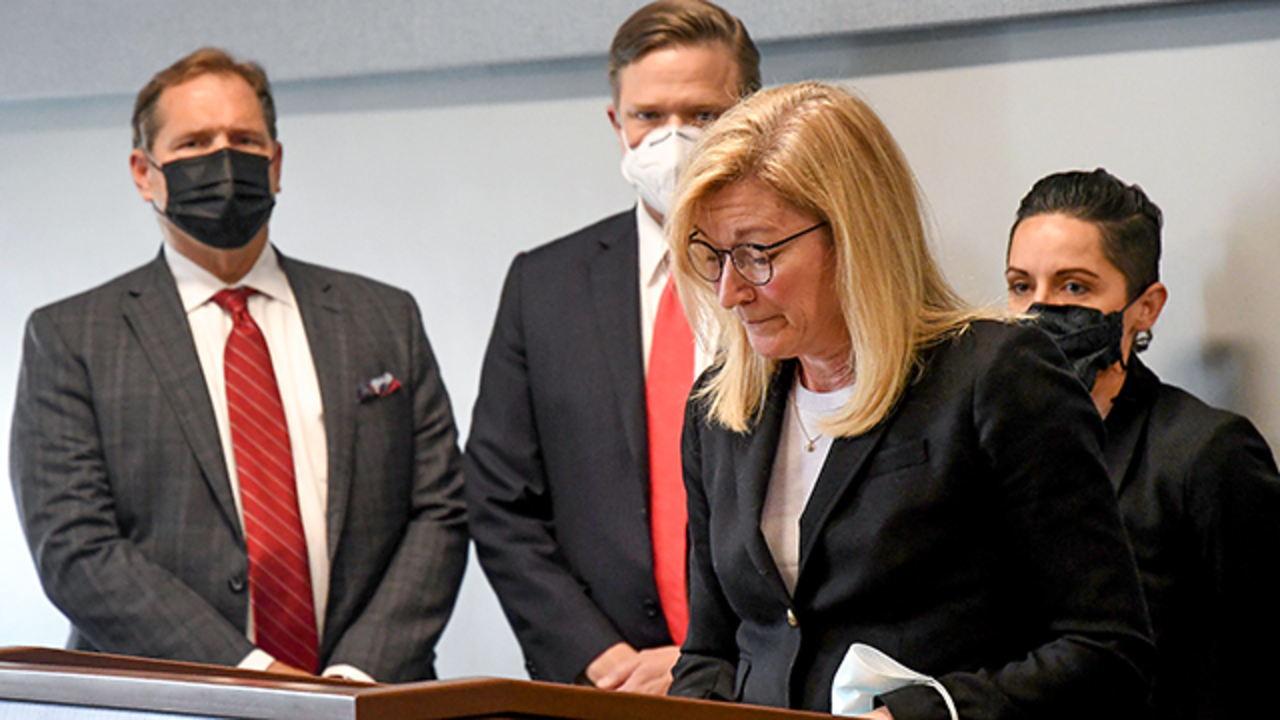
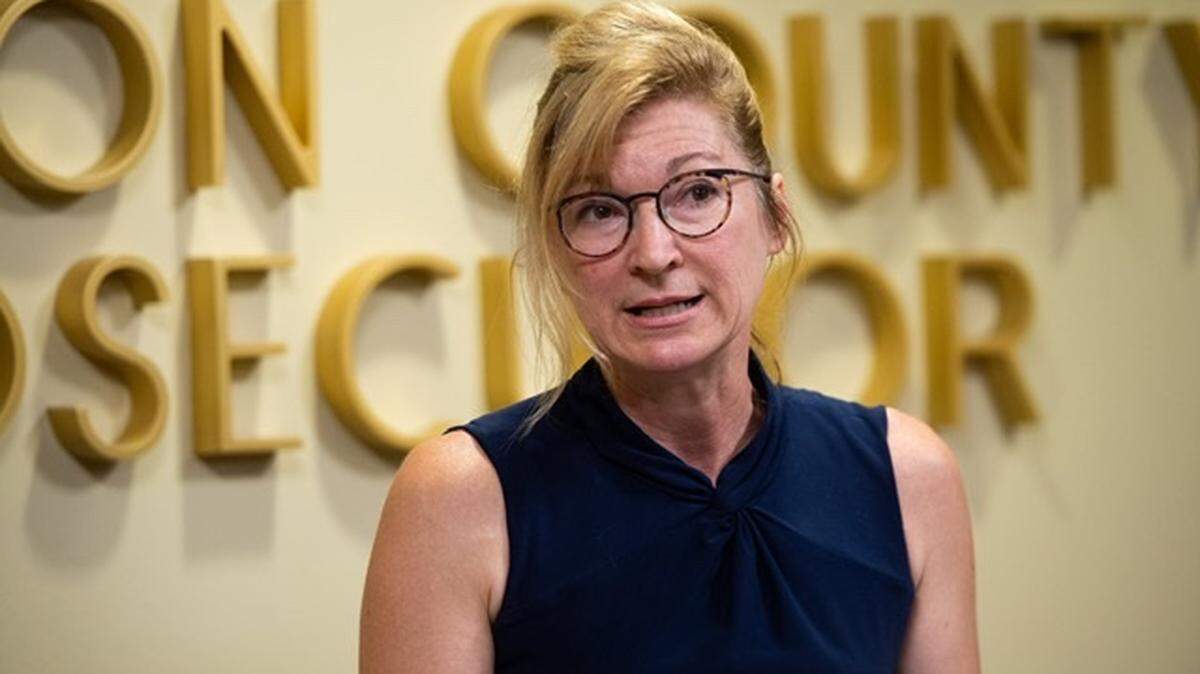
On May 10, Jackson County Prosecutor Jean Peters Baker spoke with Strickland by phone before announcing that her office concluded he had been wrongly convicted in the April 25, 1978, killings at 6934 S. Benton Ave. in Kansas City.
She apologized to Strickland. She was emotional and chose her words carefully, Strickland remembered. He accepted Baker’s apology, saying she had “nothing to do with it.”
Strickland, who turns 62 next month, is still in disbelief because, despite the outpouring of public support, he remains incarcerated in Missouri, where he has been imprisoned since he was 19.
“There’s no giving those 43 years back to me,” he said. “I lost my life.”
His fate is now in the hands of the Missouri Supreme Court, which could resolve the question of whether innocence alone is enough in the state to free a prisoner not sentenced to death. His lawyers also argued his trial was marred by constitutional violations.
Strickland remains hopeful. It’s what has gotten him through the last 43 years, he said.
If he is exonerated and freed, he plans to go straight to his younger brother’s house, where his mother is in hospice care. She has dementia, and Strickland does not know if she will even recognize him. But every minute could be her last.
“We’re going to speed down the highway,” Strickland told The Star. “I got to get there. I got to get there.”
Decades in Missouri prisons
On the day 18-year-old Strickland was arrested, his girlfriend dropped their 7-week-old daughter off at his family’s home on Jackson Avenue. It was going to be his first time watching her.
Strickland, who dropped out of Southeast High School, had recently applied to join the military. He figured he could see the world and marry his girlfriend that way.
But before his girlfriend left, a relative glanced outside and hollered: “It’s the police.” Two officers, emerging from an unmarked squad car, came to the door. They were there to arrest Strickland for a shooting that left three people dead the night before.
Perplexed, Strickland was handcuffed and taken downtown.
The case against Strickland was “thin from its inception” and relied almost entirely on the testimony of a traumatized woman who was shot during the murders, prosecutors now say.
Strickland’s first trial in 1979 ended in a hung jury of 11 to one, with the only Black juror holding out for acquittal. He was convicted two months later by an all-white jury.
Prosecutors waived the death penalty, which Strickland believes shows they were not convinced of his guilt at the time.
“You don’t prosecute a triple murderer for a week — a young kid that’s an animal, killing people repeatedly, one after the other,” Strickland argued, describing the way he said he was portrayed at trial. “Why would you take it off the table?”
Strickland was sentenced to life in prison without the possibility of parole for 50 years. He was sent to the Missouri State Penitentiary in Jefferson City. Standing 5-foot-3 and weighing 140 pounds, he had to fend for himself.
“They threw me in a maximum security prison with murderers, rapists, child molesters, arsonists,” he said.
Strickland equated the conditions at the penitentiary to the 1981 movie “Escape from New York,” in which Manhattan was turned into a prison. If there was a body on the ground, Strickland said, prisoners would simply step over it.
In the decades that followed, two men who pleaded guilty in 1978 murders swore Strickland was not with them and two other accomplices during the shooting. The lone eyewitness also recanted and wanted Strickland released.
A third suspect, who was never charged, said in 2019 that he knew there “couldn’t be a more innocent person than” Strickland, according to a Midwest Innocence Project investigator.
Over the years, Strickland spent $1,000 on stamps to write dozens of law firms, some in other parts of the world, asking for help. One non-profit declined to represent him because he was picked up by police for taking a car on a joyride when he was a juvenile.
Strickland also met numerous innocent men who were later exonerated.
In the early 1980s, he was celled with Joseph Amrine, who was wrongly convicted of killing a fellow prisoner in Jefferson City. Amrine spent 17 years on death row before he was freed.
He’d later sit about 25 feet from the cell of Ricky Kidd, who spent 23 years in prison for a 1996 double murder in Kansas City that he did not commit. He was exonerated in 2019.
Strickland also used to drink coffee and play cards with Reginald Griffin, who was exonerated in 2013 after he was sentenced to die in a 1983 murder.
It’s impossible to know how many innocent people sit in Missouri’s prisons, but some attorneys believe that figure is in the hundreds.
From prison, Strickland watched major national events unfold: the Sept. 11 attacks; the murder trial of O. J. Simpson. He thinks “The Juice” was guilty.
Prison staff have treated Strickland better since prosecutors called for his release. Someone sent him a prepaid envelope with a return address from California. Normally, prisoners are not allowed such mail, he said, but staff gave it to him anyway.
Strickland is disappointed it took so long for his professed innocence to be recognized. One of the men who pleaded guilty, Vincent Bell, repeatedly proclaimed Strickland’s innocence in court in 1979 — just four months after Strickland was convicted.
It’s frustrating how slow the system works, Strickland said, even when prosecutors know a conviction “isn’t right.”
No compensation
Since he was sentenced, Strickland has languished in prisons for nearly 41 years and 11 months — 15,306 days.
If he were exonerated today, he will have endured the seventh longest wrongful imprisonment acknowledged in U.S. history.
The country’s longest serving exoneree, Richard Phillips, was incarcerated for 45 years and 2 months for a Detroit murder. He was exonerated in 2018.
Michigan awarded Phillips more than $1.56 million in compensation.
Recently, Kansas paid Lamonte McIntyre $1.55 million for serving 23 years for two murders he did not commit in Kansas City, Kansas.
If freed, Strickland will not receive a dime from Missouri.
The state’s compensation law is very limited, according to legal experts. It only allows payments to innocent people exonerated through DNA evidence, which would not be the case for Strickland.
Sean O’Brien, a University of Missouri-Kansas City law professor, said even some prisoners who have proven their innocence using DNA have not qualified for compensation in Missouri.
Most exonerations are not won with DNA evidence. Of the 2,788 since 1989 across the country, DNA was central to proving innocence in 375 cases, according to the National Registry of Exonerations.
The only way Strickland could receive compensation is if lawmakers pass special legislation dictating they pay him a certain amount, or if he can find someone to sue who violated his civil rights and is not immune from civil liability, O’Brien said.
“Both of those are difficult and at his age, he’d be lucky to survive to see a judgment, frankly,” he said earlier this month.
Rojo Bushnell said the Midwest Innocence Project believes every wrongly convicted person should be compensated. While money will do nothing to regain Strickland’s decades behind bars, it would be a “good faith effort” to give him a new start at life, she said.
Strickland will also not be entitled to Social Security benefits, she noted.
“They will have taken away decades of his life and given him nothing back,” Rojo Bushnell said.
Strickland called on legislators to change Missouri’s compensation law. He would re-enter the outside world without healthcare or any real job skills, he said.
“I mean, how am I going to make it out there?” he asked.
But no money will make him a teenager again, he added.
Waiting for ‘vindication’
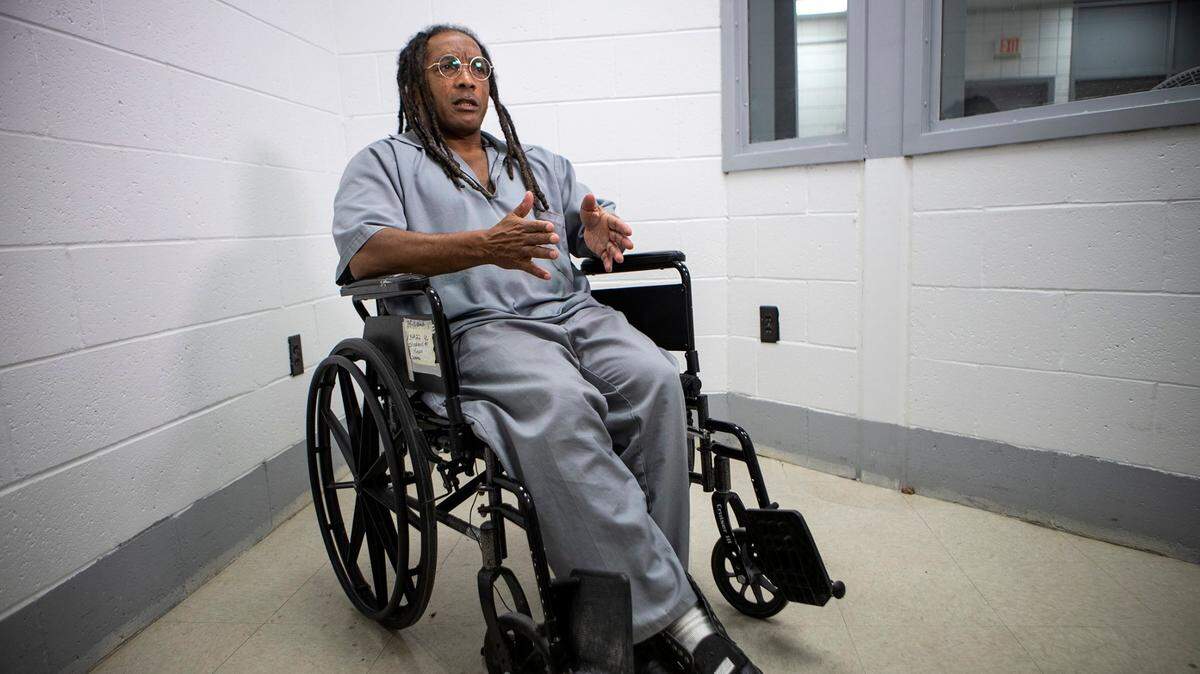
Strickland has had two heart attacks in prison. He uses a wheelchair because he can’t stand for longer than three minutes at a time.
On a recent trip to Truman Medical Center to have his back evaluated, he noted that East 23rd and Harrison streets, where his family once lived, no longer exists.
Kansas City has changed so much in the last 40 years that Strickland said he would not be able to find his way from parts of the city to downtown.
Through media reports he has seen new highways constructed. Four of Kansas City’s tallest buildings weren’t yet built when Strickland was arrested. In that time, the city has had seven mayors.
Strickland’s father, who served in the Korean War, was disappointed when his son was arrested. The two were close, but he didn’t show at his trials.
Now that Strickland might be “vindicated,” he said, his father is not alive to see it. It’s one of the things that chokes Strickland up. He was not allowed to attend his father’s funeral.
“He don’t get to see none of this,” Strickland said. “He’ll never know.”
If he is exonerated, Strickland will stay with one of his brothers before he finds a place to live. He has been supervised for most of his life. He needs some time alone.
Strickland has thought about his first day out of prison. He’d like to get a bite of fried fish, cornbread, over-easy eggs and maybe a “good salad.”
He does not intend to live in Missouri. He has never seen the ocean and wants to go somewhere warm with a coastline. Maybe California or Florida, he said, away from the cold.
“I want to feel the power of the ocean,” Strickland said. “Yeah, I want to do that.”
This story was originally published May 26, 2021 at 5:00 AM.