With 101 homicides in 2020, Kansas City on pace for deadliest year ever
Anger roiled a crowd gathered at a gas station where a man was shot and killed Thursday night, marking the 101st homicide of what is on pace to be Kansas City’s deadliest year on record.
One man in the crowd threatened an officer, police said, and another person tried to enter the crime scene at 35th Street and Prospect Avenue. Police expressed frustration that they weren’t getting much help from witnesses.
The killing came after a series of shootings Wednesday and Thursday propelled the year’s homicide count past 100 earlier than it ever has before, according to data kept by The Star, which includes law enforcement shootings.
On Wednesday, three people were killed in separate shootings across the city. The next day, police were involved in two shootings — one that left a bus driver, an officer and a suspect wounded, and another that ended with a suspect dead and an officer in critical condition. The homicide at the gas station came hours later.
After the police shootings, Mayor Quinton Lucas said he was “heartbroken and disgusted” by violence in the city and told The Star by phone that he planned to meet with Missouri Gov. Mike Parson and would support legislation that enhances penalties for gun-related crimes.
“Four-year-olds, police officers, everyone. It is unsafe right now,” Lucas said. “This has been a season of lawlessness in our city and it needs to stop.”
Lucas referred to 4-year-old LeGend Taliferro, who became the youngest homicide victim in Kansas City this year when he was fatally shot around 2:30 a.m. Monday while sleeping at the Citadel Apartments on Bushman Road. No one had been arrested in that shooting as of Friday.
At this time last year, the city had recorded 33 fewer homicides, with 68. The year ended with 153.
The number of killings this year is also outpacing 2017, the bloodiest year in the city’s history with 155 homicides when counting police shootings.
More people have already been killed this year than in all of 2014, which saw 86 homicides. Not even halfway through the year, homicides in 2020 have also surpassed the totals from 2002, 1984, 1973 and 1972.
“The amount of gunfire in the city is absolutely horrible,” Police Chief Rick Smith, a former homicide detective, said in late June, calling the number of homicides this year “unprecedented.”
Sgt. Jacob Becchina, a police department spokesman, confirmed the city has “never had this many” killings at this point in a year.
Jackson County Prosecutor Jean Peters Baker described the homicide rate this year as especially devastating.
“I am heartbroken,” she told The Star on June 24. “It’s breathtaking what is happening right now.”
Three hours after Baker made those comments, a man was found shot on the porch of a home at 45th Street and The Paseo. He later died. His killing was the sixth in four days.
Talking to reporters there, Becchina said detectives were working hard to “bring justice to those families.”
The majority of homicides in which the circumstances are known stem from arguments, Becchina said in an email. And more than 80 killings this year have been committed with a firearm, a continuing trend in the city.
In addition to homicides, nonfatal shootings throughout the city are “exploding,” the Rev. Ronald Lindsay of Concord Fortress of Hope Church said this week in a virtual town hall.
More than 314 people have been shot and survived this year, leaving them with physical and psychological injuries. Eleven were shot June 21, including five victims struck by gunfire at Baccala, an adult entertainment club along Independence Avenue, police said.
That number of living victims is up from the 244 people who were wounded as of June 28 last year, according to police data.
In the 31 days of May this year, 82 people were struck by bullets — a nearly 75% increase compared to May 2019.
‘It takes a toll’
Members of a Jackson County Prosecutor’s Office committee usually meet each Friday to discuss and vet homicide cases with the investigative team.
This year, they’re gathering “all the time,” Baker said.
Prosecutors are making do, but Baker said the growing case files are worrisome. She isn’t sure where to get more staff.
“It’s just taxing on everybody,” she said.
The year began with 17 people killed in January, marking the most slayings in that month in at least the last decade.
As homicides continue at a pace of one every other day, Baker said she doesn’t see it changing. There isn’t the political will to get it done, she said.
Baker announced Thursday evening she’s stepping back as chair of the Missouri Democratic Party, citing recent developments in her job as Jackson County prosecutor.
Baker was one of the chief architects of the Kansas City No Violence Alliance, or KC NoVA, which aimed to use a strategy called “focused deterrence” to target violent people and their associates and offer them a choice: change your behavior or go to jail. In exchange, they would get help finding jobs and getting an education, along with other assistance.
Following the plan’s initial success in 2014, the police department dismantled the strategy when homicides increased again by the end of 2015. It has not been replaced with anything, Baker said.
“Things got a whole hell of a lot worse, that’s what happened,” she said. “A hell of a lot worse.”
The police department has said it is instead partnering with federal authorities on a program that has been around since 2001 and focuses on targeting the most violent individuals, but not their associates.
Police took the advice of experts who audited the program and recommended a change, Smith said.
Law enforcement needs to change the way it thinks about and judges shooting victims, the way it has for domestic violence survivors, Baker said. Understanding the victimology could help prevent shootings.
“You can’t look at a shooting victim as your enemy, even if they are shooters on other days,” Baker said.
Damon Daniel, president of the AdHoc Group Against Crime, said KC NoVA worked for the first year, but some involved in the program felt officers were harassing them. Daniel, however, called it an effective strategy that could be brought back with changes.
As for this year, Daniel said, there was no concrete information to indicate why homicides have increased. It’s a combination of issues, he said: Anxiety, depression, substance abuse, drug deals gone bad, retaliation.
“When I meet with the mom or dad who is struggling to come to grips with the reality of burying their child, it takes a toll,” Daniel said. “Every life lost is a detriment to our community.”
Daniel called for an official witness protection program, saying he has heard from people who have information about homicides but do not want to become the next victim. He pointed to Omaha, where he said a foundation provides funds for police to protect witnesses. He believes it could reduce future violence here.
Organizations such as AdHoc as well as police and prosecutors have said the coronavirus outbreak has been a hindrance to violence intervention programs, community gatherings and meetings with victims’ relatives.
Mayor Lucas called it a “priority for all of us” to keep people from getting shot in the city.
The mayor made the comment at City Hall on June 25 as he announced plans to introduce an ordinance that would ask voters whether they wish to proceed with gaining local control of the police department.
The mayor has said he would like to see Kansas City suffer fewer than 100 killings a year, and has noted a newly formed public safety study group will try to come up with ideas to make the city safer.
“It’s not working right now,” Lucas said, calling shootings and homicides “something that has been an issue as long as I’ve been alive in Kansas City since the mid-1980s.”
‘They’re shooting’
Among those lost this year was 50-year-old Paul Garcia, who had received dialysis treatment and was sleeping on a couch about 5:15 p.m. on June 22 when gunfire erupted outside his hom in the 1600 block of Elmwood Avenue
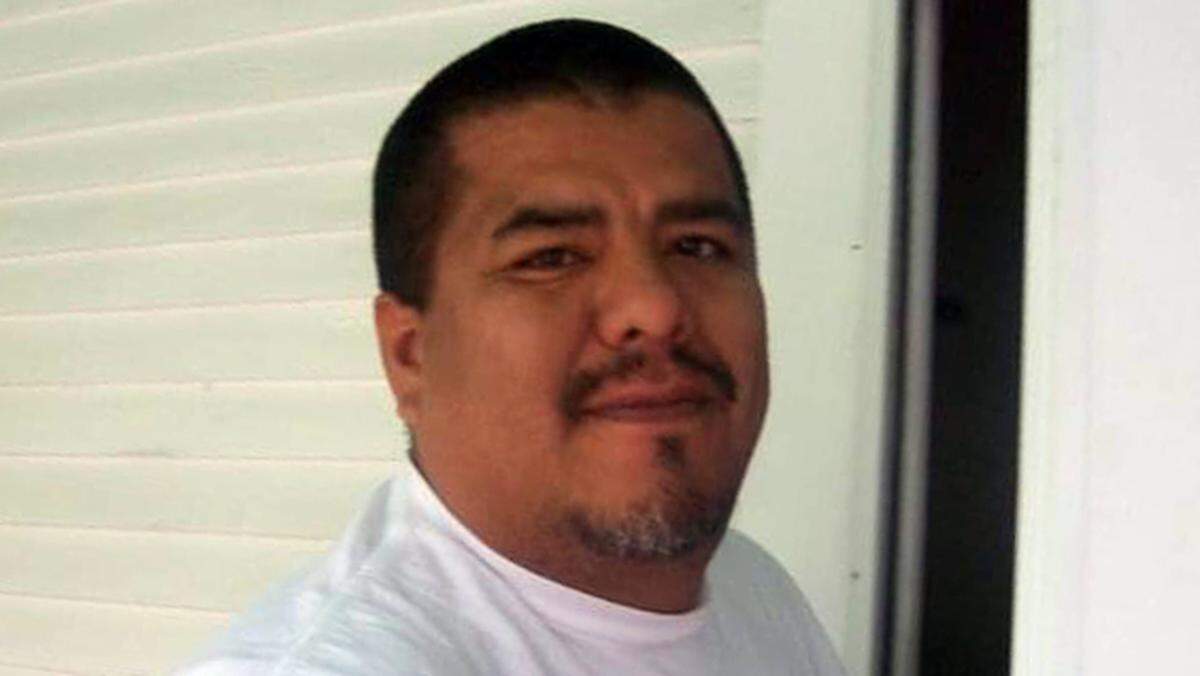
Garcia’s 16-year-old niece, Rhonda Soriano, was in the living room with three other children at the time. She recalled the first gunshot sounding like an M-80, a powerful firecracker. Glass shattered as bullets were sprayed into the home.
She grabbed the other kids and told them to get down. She began to cry. Garcia woke as the shooting ended and asked her what was wrong. “They’re shooting up the house,” Soriano responded. “I don’t know who it is.”
As he rolled over on his back, Garcia yelled in pain and went unconscious. He was rushed to a hospital, where he later died.
“That was the only person I would run to to tell all my secrets,” Soriano said, calling her uncle her best friend. “He was the one that was there when I needed him the most.”
It was not the first time gun violence struck the Garcia family. His brother, Robert Garcia, was fatally shot after an argument in 1992.
Rhonda Garcia, who had been married to Paul Garcia for 20 years, said it was hard to understand why he was killed.
“I’m just still traumatized by all this,” Rhonda Garcia said as she brought her hands to her face Thursday. “I wonder, ‘Why my husband?’ He’s . . . in his house, asleep after dialysis.”
Like dozens of other loved ones of those slain this year, Rhonda Garcia hopes the killer or killers are caught.
“I just want justice,” she said.
The Star’s Anna Spoerre, Katie Moore and Andrea Klick contributed to this report.
This story was originally published July 3, 2020 at 12:00 PM with the headline "With 101 homicides in 2020, Kansas City on pace for deadliest year ever."