What’s on the Kansas primary ballot? Here’s your voter guide to the Aug. 2 election
READ MORE
KCQ Votes: Aug. 2 primary election resources
What’s on your ballot for the Aug. 2 primary election? The Kansas City Star Service Journalism team has compiled election guides and resources for Kansas and Missouri voters.
Expand All
Kansas voters will have the chance to cast a primary ballot on Aug. 2 for a whole bunch of positions: governor and other statewide offices, congressional representatives to send to Washington, D.C. and state representatives to serve in Topeka.
And all Kansas voters—regardless of party affiliation—will also vote on a proposed constitutional amendment that would remove the right to abortion from the state constitution.
There is a lot of confusion and misinformation swirling around about the amendment. We answered the most common questions we’ve been hearing from readers and fact-checked some common claims in this guide here.
BEHIND THE STORY
MOREYour quick guide to the Kansas abortion amendment
The Kansas state constitution currently protects the right to abortion, but the upcoming Aug. 2 vote will ask voters to decide on an amendment that would get rid of that right.
If Kansans vote yes on the ballot and the amendment passes, the legislature will have the opportunity to impose new restrictions on abortion, which could include banning the procedure. A ban would not go in place immediately, but legislators would be able to pass one. Earlier this year, a state legislator introduced a bill that would have banned and criminalized nearly all abortions, but it never got a hearing and died once the legislative session closed in May.
If Kansans vote no and the amendment does not pass, the legislature would continue to be barred from passing most legislation that impedes on an individual’s access to abortion. Any new abortion restrictions would need to clear an extremely high level of “strict scrutiny” from the court to become law. Current abortion restrictions could be challenged in court, but any actual changes to the current restrictions would depend on Kansas courts ruling that the regulation in question violates the state’s constitution.
All registered voters can participate in the vote, regardless of party affiliation.
The Star answered the most common reader questions we received about the abortion amendment here.
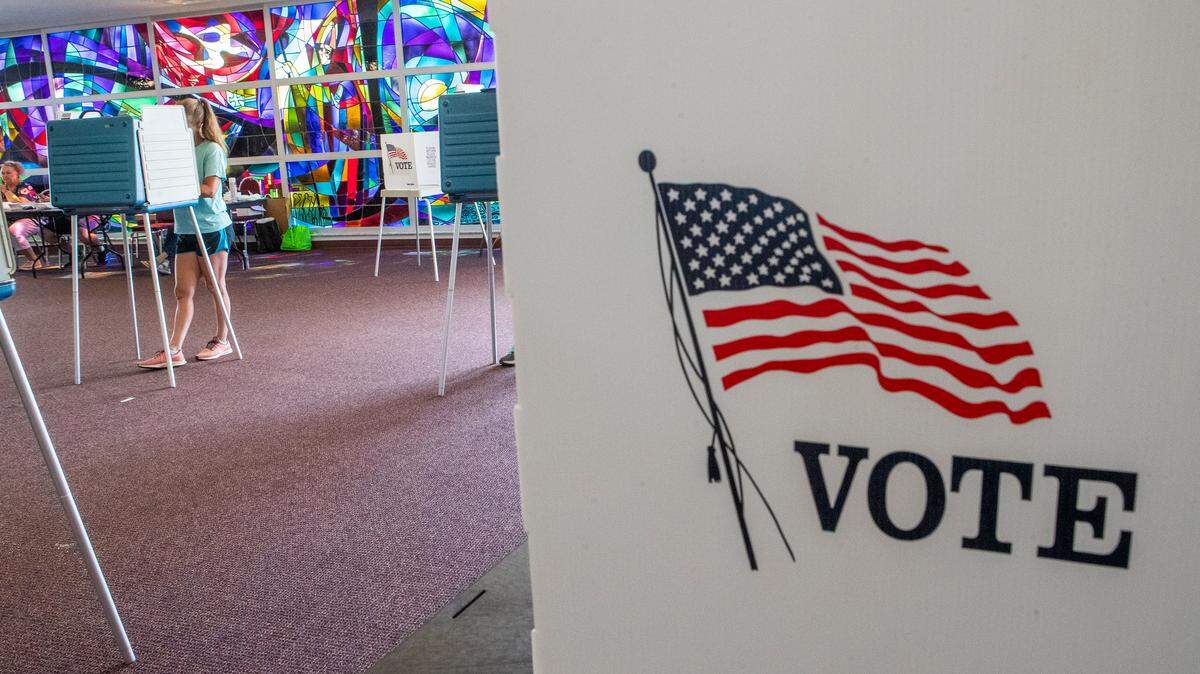
On Election Day, polls will be open from 7 a.m. to 7 p.m. You can check your voter registration and find your polling place through the Kansas secretary of state. Early voting has already started in many Kansas counties, including Johnson County. Early voting starts in Wyandotte County on Saturday, July 23.
A lot is on the line for the future of the state, and at The Star, we believe that our democracy is stronger when more people have the information they need to participate in and shape it. We want to make it as easy as possible for you to decide who is most likely to make choices you believe will best serve you and your community.
Below are candidates’ responses to a short survey shaped by what we heard from nearly 60 readers who shared questions with The Star.
The most common issues readers asked the candidates to weigh in on that we included in the survey were: abortion rights, gun laws, the state of K-12 education in Kansas and the cost of living. The next most-asked about topic was climate change.
How the voter guide works:
Click on the race you are curious about, and the candidate names and their responses will be listed in the order that they will appear on your ballot. You can filter by political party to see what will be on your party’s primary ballot, or by district, depending on the race.
Candidates for Johnson County commission will be added later this week.
Any candidates that do not have answers below their names did not respond to the survey. Our team at The Star contacted campaigns multiple times via both email and phone calls over the past several weeks.
If you are a candidate and would like to get in touch with us and submit responses still, you can email us at kcq@kcstar.com.
A note on editing and fact-checking
Some survey responses were very lightly edited for grammar, but the substance of the responses were not edited at all and are the candidates’ own words. The Star did not fact-check all of the candidates’ responses.
If you are concerned about misinformation or would like to learn more about some of the issues referenced in candidates’ responses, we wanted to include the following resources from The Star’s past reporting:
- How to spot misinformation: How to tell if a politician is lying? A scholar who studies what they say has some advice
- Election integrity: Johnson County sheriff tells Las Vegas crowd his election fraud investigation continues
- Kansas abortion amendment: Confused about the Kansas abortion amendment? We answer your questions ahead of vote
- Gas prices, inflation and President Biden: As inflation hits 41-year high, prices in KC become a concern and political flashpoint and What’s the U.S. Strategic Petroleum Reserve and will tapping into it lower gas prices?
- Gun laws: How easy is it to buy a gun in Missouri and Kansas? These are the laws in each state and Kansas lowers concealed gun carry age to 18 as Legislature overrides Gov. Laura Kelly veto
- School choice: Gov. Kelly signed Kansas’ school choice bill. Here’s what that means for your student
- Parents bill of rights: Joining nationwide trend, Kansas Legislature advances ‘Parents Bill of Rights
- Critical race theory: Critical race theory roils Kansas and Missouri politics. Here’s what it is and is not
- Medicaid expansion: Kansas leaders have failed in attempts to expand Medicaid. Will Congress do it for them?
U.S. Senate
Senators create and vote on bills that can become federal laws if also passed through the House of Representatives and signed by the president. Senators also hold hearings on different issues, confirm people the president appoints to certain positions in the federal government and try impeachment cases for federal officials.
Each state gets two senators that serve six-year terms in Congress in Washington, D.C. Currently, Republicans Roger Marshall and Jerry Moran represent Kansas in the Senate. Moran is running for re-election this year.
U.S. House
Representatives create and vote on bills that can become federal laws if also passed through the Senate and signed by the president, and serve on committees. The House of Representatives is the chamber of Congress that first introduces spending bills and can impeach federal officials.
The representatives for the state of Kansas serve the people of their district in Congress in Washington, D.C. for two year terms. Kansas has four U.S. representatives.
If you don’t know your district, look here.
Governor
The governor is the head of the state government and is responsible for carrying out state laws, administering the executive budget and overseeing and appointing the heads of state agencies. The governor can sign bills into state law or can veto a bill and send it back to the Legislature.
Governors serve four-year terms. Democrat Laura Kelly is the current governor, and she is running for re-election.
Secretary of State
This official’s office is responsible for conducting elections in the state of Kansas, issuing official state publications and maintaining business records for all companies authorized to do business in the state.
The position is currently held by Scott Schwab, a Republican who is running for re-election.
Attorney General
The attorney general is responsible for enforcing Kansas’ laws and is the state’s top lawyer, bringing and defending lawsuits on behalf of the state and issuing legal opinions. The office also defends consumers from fraud.
The attorney general serves a four-year term. The position is currently held by Derek Schmidt, a Republican who is now running for governor.
State Treasurer
The state treasurer is responsible for managing the state’s funds and acting as a chief banker of sorts for the state. The state treasurer’s office handles items such as bond services, cash management, the state’s education savings program and unclaimed property. The state’s current treasurer is Lynn Rogers, a Democrat who was appointed by Kelly in 2021 after Republican Jake LaTurner was elected to Congress.
Kansas Insurance Commissioner
This statewide official is in charge of regulating the insurance policies and financial securities offered by private companies in Kansas. The position is currently held by Republican Vicki Schmidt.
State House
State representatives are lawmakers responsible for drafting and voting on legislation. They also help create the state budget and create legislation that helps regulate state agencies.
There are 125 state representatives in the Kansas House, each serving a two year term at a time.
If you don’t know your district, look here.
Board of Education
The state board of education has 10 members elected for four year terms. The board oversees public schools and represents the educational interests of the state.
If you don’t know your district, look here.
District Court Judge
The district court judge oversees trial courts in a given Kansas district, and makes decisions on civil and criminal cases. There are currently 18 district court judges in Johnson County and 15 in Wyandotte County.
The following judges up for election are all in District 29 in Wyandotte County.
If you don’t know your district, look here.
Johnson County Board of County Commissioners
The Board of County Commissioners is responsible for creating and changing local legislation for the county about matters related to health, safety and general well-being. The board adopts an annual budget for the county and a capital improvements plan for major county projects. It’s also responsible for making and enforcing the rules around land use and helps ensure the county is delivering services well.
All voters will get to vote for the nonpartisan board chair, and those who live in District 5 will also get to vote for their district commissioner. The rest of the districts will be on the ballot for the general election.
If you don’t know your district, look here.
This story was originally published July 19, 2022 at 5:00 AM.