If Kansans vote ‘no,’ will the state’s abortion regulations go away? What to know
READ MORE
KCQ Votes: Aug. 2 primary election resources
What’s on your ballot for the Aug. 2 primary election? The Kansas City Star Service Journalism team has compiled election guides and resources for Kansas and Missouri voters.
Expand All
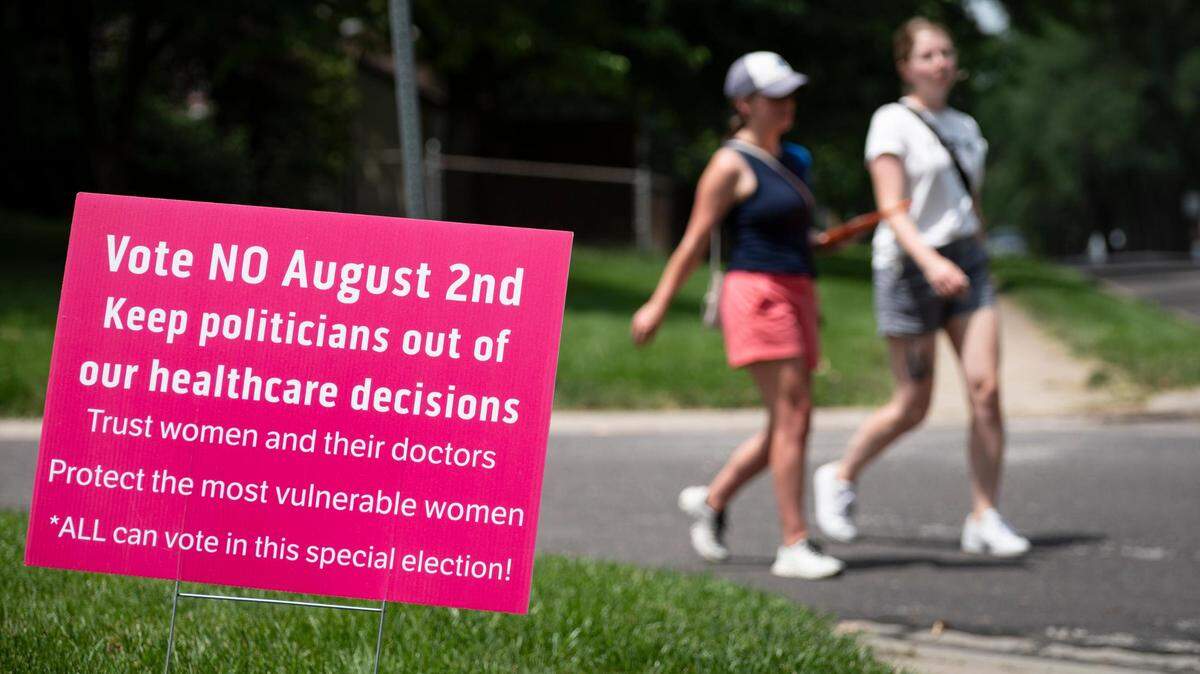
Abortion rights are on the ballot in Kansas on Aug. 2, with the opportunity to vote on an amendment that would remove the right to abortion from the Kansas constitution.
There are a lot of half-truths floating around about the amendment, and we’ve heard from readers with a lot of questions about what is actually at stake.
Quick reminder: If Kansans vote yes on the ballot and the amendment passes, the Legislature will be able to impose new restrictions on abortion, which could include banning the procedure. If Kansans vote no and the amendment does not pass, state lawmakers would continue to be barred from passing most legislation that impedes an individual’s access to abortion.
One of the most common questions we’ve heard at The Star is along the lines of: Will all of Kansas’ restrictions on abortions go away if the amendment does not pass?
The short answer is no, not automatically.
Any actual changes to the current restrictions would require legal challenges for each individual regulation and would depend on Kansas courts ruling that the regulation in question violates the state’s constitution. Some existing restrictions have already been struck down or challenged, but others have stood for years without legal challenges.
The rest of this story digs deeper into that question of what a ‘no’ vote really means. If you have other additional questions, check out The Star’s Kansas abortion amendment FAQ.
Now, let’s bring it back a bit to how abortion became something protected in Kansas’ state constitution in the first place.
Why does Kansas have a right to abortion?
The reason Kansans have this explicit right goes back to 2015, when Kansas lawmakers passed a law banning “dilation and evacuation,” a common second-trimester abortion procedure that is sometimes also used after a miscarriage. The bill itself referred to the procedure as “dismemberment abortion.”
After lawmakers passed that ban, two doctors who owned an Overland Park abortion clinic filed a lawsuit challenging the law.
That lawsuit went all the way up to the Kansas Supreme Court, and in 2019 the justices ruled the Kansas constitution contains a right to bodily autonomy, including the right to end a pregnancy.
Because of that legal challenge and the court’s decision, dilation and evacuation abortions have continued legally in Kansas.
The court’s decision named a state right to abortion and continues to protect the right to abortion in Kansas even after federal protections ended when Roe v. Wade was overturned.
How did the court decision lead to Kansas’ abortion vote?
Anti-abortion lawmakers voted last year to place a constitutional amendment on the ballot that would add language to the state constitution stating that nothing in the document protects the right to an abortion.
Kansans will vote on the amendment Aug. 2. If it passes, it essentially overturns the 2019 ruling, opening the door for lawmakers to impose new restrictions on abortion.
What does the court decision mean for abortion restrictions?
That 2019 decision that said Kansans have a right to abortion established a new legal standard over how the procedure is regulated and restricted in Kansas, and how it will continue to be regulated if the amendment does not pass.
Kansas lawmakers did not pursue new abortion restrictions in the wake of the ruling, instead focusing on getting the constitutional amendment on the ballot. However, any abortion restrictions passed after the 2019 decision would have needed to clear an extremely high level of “strict scrutiny” from the court before becoming law in Kansas. Challenges to existing abortion restrictions were evaluated by the court using that framework too.
If you want to get technical: If a law is challenged, attorneys for the Kansas government must prove that any abortion restrictions further a “compelling governmental interest” and are narrowly tailored to that purpose by the least restrictive means possible.
That legal standard means that most restrictions on abortion, including a total ban, would be considered unconstitutional in Kansas.
If the amendment does not pass, this standard would stay in place.
So is abortion not regulated in Kansas?
No. Even with the right to abortion protected, Kansas heavily regulates the procedure.
Abortions after 22 weeks are strictly limited. Patients must receive mandatory state-written materials before going through with an abortion.
An ultrasound is required, and so is parental consent for minors.
Abortion clinics in Kansas face regulation from the state health department for safety, sanitation and cleanliness. Practicing clinicians must abide by license requirements and investigations by the state, just like all other licensed medical professionals in Kansas.
Telemedicine abortion is banned, so patients must go to appointments and be prescribed abortion medication in person.
How did the 2019 decision change regulations already in place?
Even after the 2019 decision found the right to abortion in Kansas, all of those regulations listed above have remained in place.
But the campaign advocating for the amendment warns that the existing regulations could be struck down under the 2019 ruling.
Only a couple have so far.
Based on that 2019 ruling, two abortion restrictions have been struck down in Kansas: the ban on dilation and evacuation abortions that sparked the court ruling in the first place, and a 2011 law that established an extra set of licensure and safety requirements for abortion procedures on top of the state health and safety and medical licensing requirements already in place.
If the amendment passes, top anti-abortion lawmakers have said they will prioritize ensuring these two laws that have been struck down will be enforced. That could take court filings or new legislation.
A third abortion restriction—Kansas’ ban on telemedicine abortion—is currently being challenged in court based on the 2019 ruling too. Right now, it is illegal for Kansas doctors to prescribe abortion medication virtually, and this lawsuit is seeking to strike down that ban and legalize telemedicine abortion.
If Kansans say no to the amendment, what would change?
Nothing would change immediately if the amendment does not pass, and the legal standard that abortion regulations are held to would stay the same.
The same standard that currently determines the legality of abortion restrictions in Kansas—the extremely high level of “strict scrutiny” in place because of the 2019 ruling establishing a right to abortion—would remain in place as is.
It is possible that abortion rights advocates, or others, could sue to block existing abortion regulations in the future based on the findings of the 2019 ruling, but it is not guaranteed that those restrictions would then go away. It would depend on the facts of the individual cases and decisions made in Kansas courts.
In order for any of the current regulations to change, individual restrictions would need to be legally challenged one at a time, and Kansas courts would need to decide that the restriction is unconstitutional, because it violates the right to abortion or another part of the state constitution.
Like the lawsuit challenging the dilation and evacuation ban, a legal challenge to a restriction is likely to be a long process. At any stage of a case, courts can decide to issue an injunction, which would block the enforcement of specific laws while the case progresses.
Who can vote on the amendment?
All registered voters can participate in the vote, regardless of party affiliation.
If you have other additional questions, check out The Star’s Kansas abortion amendment FAQ, or email us at kcq@kcstar.com.
This story was originally published July 27, 2022 at 5:00 AM.