KC Black History: Here are five trail-blazing entrepreneurs you may have never heard of
READ MORE
KC Black History: KCQ answers student questions
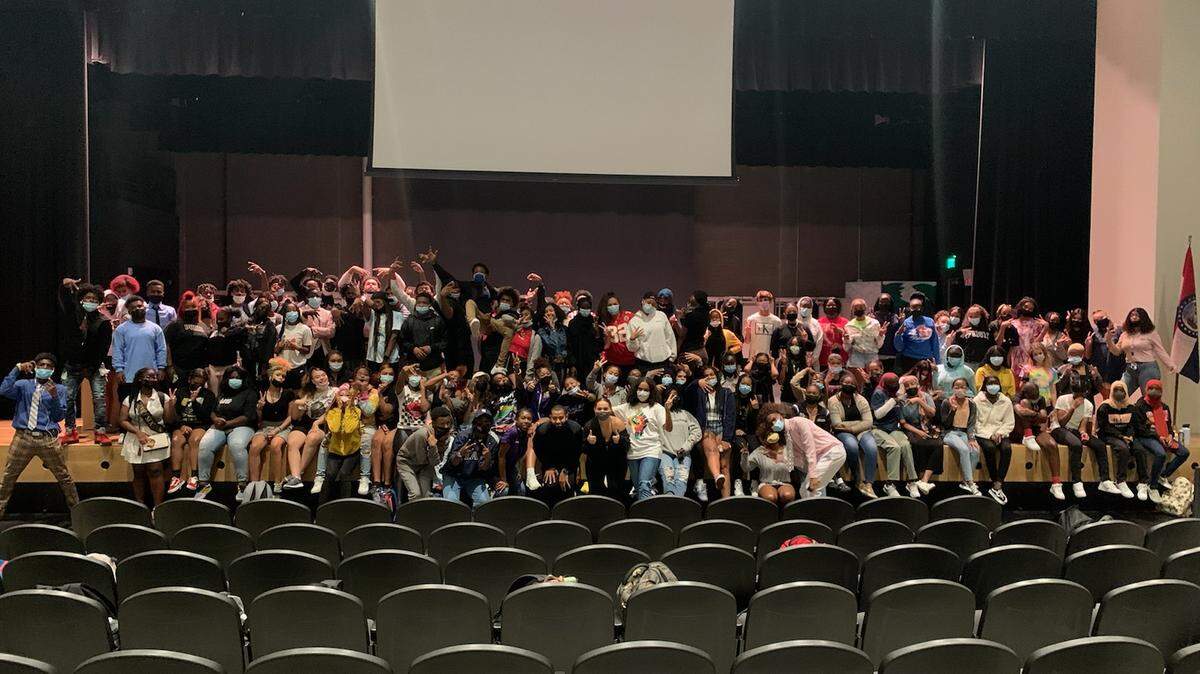
For Black History Month in 2022, our KCQ team worked with students in Black Student Unions at three high schools around Kansas City to see what they wanted to know and what they wished more people knew about our local Black history. These stories are fueled by those students’ curiosities.
Expand All
Editor’s note: This story is part of our Black History Month KCQ series and was fueled by questions from students in Kansas City area Black Student Unions. Students at North Kansas City High School and Washington High School in KCK asked about the history of Black-owned businesses and the mark that Black entrepreneurs left on KC. These are the stories of just a few of many influential Black business leaders here. This story was originally published in Feb. 2022.
Kansas City’s history is Black history. One way that Black Kansas Citians have carved their legacies into the city we know today is through the businesses they brought to life and the opportunities they created for more people to benefit from their success. Here are the stories of five remarkable Black entrepreneurs that helped make KC what it is today.
A lot of what we learned to share these stories came from KCBlackHistory.org, which is an archive of local Black history that the Local Investment Commission, Kansas City Public Library, and Black Archives of Mid-America worked together to create. It’s a resource you can use to learn more about our city’s history too.
The dynamic hotelier duo
Before building one of the most iconic businesses in Kansas City history with his wife, Reuben Street was a cook bouncing from hospitality jobs in Chicago and Indiana. In 1900, he married Ella Davidson before relocating to Kansas City in 1903. The two would soon own and operate a small restaurant at 18th Street and Troost Avenue, according to KCBlackHistory.org. According to the archival site, Ella worked on the business end and Reuben worked as a chef. By 1918, the power couple would open a slew of new endeavors, including the legendary Street Hotel at Paseo and Vine.
As the hotel grew more successful, the Streets expanded the business to include a restaurant, a cocktail lounge, barbershop and pool, according to KCBlackHistory.org. The Streets’ goal was to make Street Hotel “the most complete hotel for Negro patrons in the county,” according to Northeast News. By 1947, the couple successfully purchased the hotel building for $67,000.
The hotel, and its restaurant and cocktail lounge, would be a huge resource to the Black community. They hosted dinners and events for local organizations and the hotel was listed in the Black motorist handbook, the Green Book.
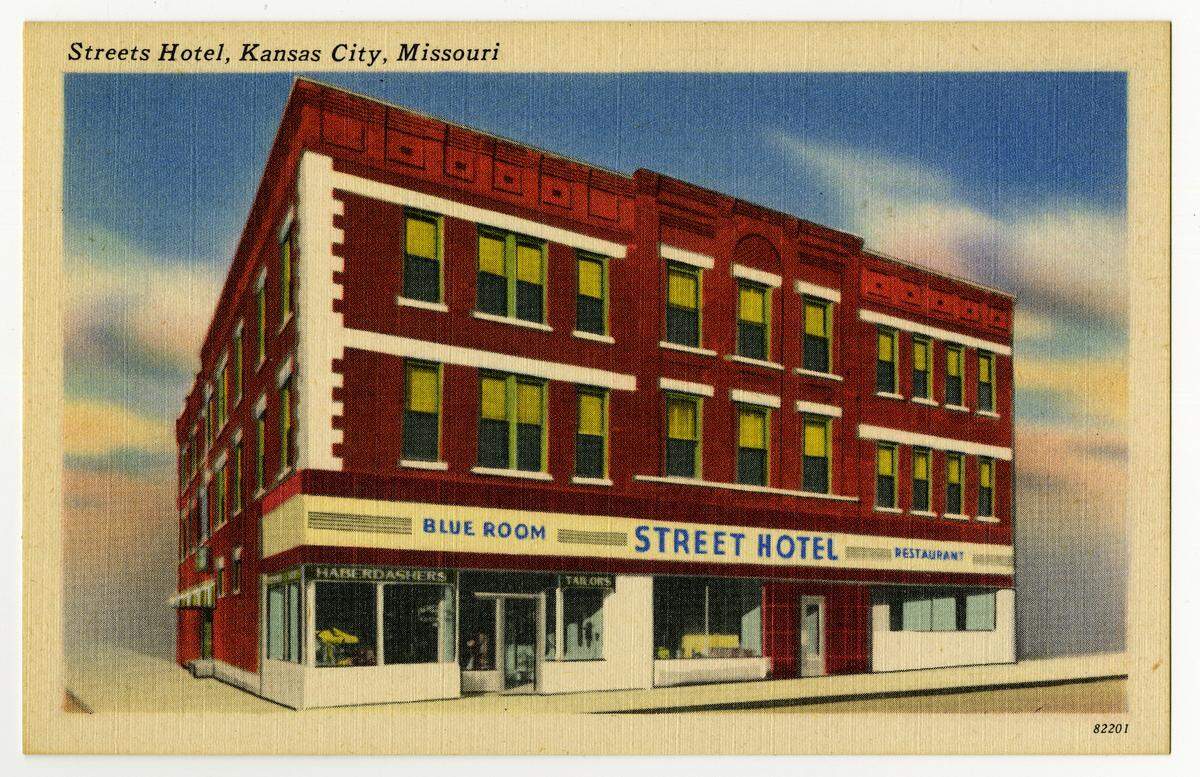
The hotel even welcomed a number of celebrities, including Kacie Robinson, who lived at the hotel while playing for the professional Negro Leagues baseball team, the Kansas City Monarchs, in the 1940s.
Ella died in 1953, and Reuben died in 1956.
A PR maven and mentor
Born and bred in Kansas City, Kansas, Inez Y. Kaiser is best known for her role as the first African American woman to own a national public relations firm in the United States. After receiving her degree from the University of Pittsburgh, Kaiser became a teacher in Kansas City, where she also wrote and published a fashion column for Black newspapers across the country.
The column, named Fashion-wise and Otherwise, covered the fashion world in New York and Paris and advocated for more Black representation in the scene, according to Affect.com.
Her column eventually got so popular that it soon launched her career as a PR agent. By the early 1960s, Kaiser was running her own PR firm, Inez Kaiser and Associates, which locked her in as the first Black woman to own and operate a national PR firm that helped businesses and brands communicate and share their message with the public. Her firm scored a number of major national clients including 7-Up, Sears and Lever Brothers.
Along with her work as a PR giant, she was a fervent advocate for other Black and brown women in the field.
“She was inspirational. She was an encourager,” Denise Jordon, managing editor of the Kansas City Globe said about Kaiser as a mentor.
Jordan met Kaiser after graduating from Central Missouri University in 1974, where she was advised by one of her communications department professors to “be sure to get in touch with Mrs. Inez Kaiser and introduce yourself to her.”
Kaiser agreed to let Jordon intern for one week, and that’s where Jordon got to experience Kaiser’s greatness up close.
“That one week provided a glimpse for me as to what a Black pioneering business woman such as Mrs. Kaiser had to deal with and go through,” she said.
“Being a Black woman, she had to be very bold at times, stern at times and just fearless,” Jordon said. “That first impression that I got of her sharp business acumen back in the 70s, really has kind of helped me through the years while working alongside my husband in publishing a Black-owned newspaper.”
Kaiser’s efforts to mentor Black women reached far and wide. Throughout the years, she became the first Black woman to join the Greater Kansas City Chamber of Commerce, and she helped charter the Kansas City Alumnae chapter of the historically Black Delta Sigma Theta Sorority, Inc. Later she also founded an organization called Del Sprites, which aimed to uplift young Black girls and raised money for scholarships for their education.
“Mrs. Kaiser made an impact on many aspiring professional Black women in Kansas City,” Jordon said. “Many of us have benefited a lot from her encouragement, and by modeling her stick-to-it-iveness [and] her courage.”
Kaiser died in 2016.
A car sales magnate
One of America’s first Black-owned car dealerships was founded in Kansas City by Homer B. Roberts at a building at 19th and Vine Streets in 1923.
Roberts was born in Ash Grove, Missouri, and was later raised in Wellington, Kansas. Prior to taking on the car dealership business, Roberts studied at Tuskegee Institute and Kansas City Agricultural College.
As a student, Robert studied electrical engineering, and he used those skills in the U.S. Army during World War I as the first Black commissioned officer in the army’s Signal Corps.
Following World War I, Roberts returned to Kansas City where he began to set the foundation for his dealership. He purchased a building on 19th and Vine, and it became home to a number of businesses, including his car dealership.
By serving the Black community, Roberts earned over $2 million in car sales by 1928, in his first five years of being open, which would be worth about TKTKTK PRICE NOW. A year later, Roberts expanded his business to the Chicago area.
Roberts eventually had to take a step back from the car enterprise when World War II called him back to service. Roberts continued to move up the ranks in the army, and he traveled around the U.S. and other parts of the world promoting the contributions of Black soldiers. He died in 1952.
A banking legend
Henry Warren Sewing founded Douglass State Bank, the first Black-owned bank in the Midwest, which helped Black folks around Kansas City get loans to start businesses and to manage and grow their families’ wealth.
Sewing was born in Texas in 1981 to Thomas Wesley Sewing, a church deacon and laborer, and Margaret Sewing who was a washwoman, according to a 1976 interview by a woman named Ella Pruitt that is part of the Black Archives of Mid-America Oral History Collection. In that interview, Sewing said he also remembers picking cotton for a few months at a time to bring in more money for his family.
Sewing went on to attend Tillotson College, where he graduated in 1915. Later he would serve in the U.S. Army during World War I. Throughout his life, Sewing worked as a teacher, a laborer in meatpacking and railroad industries.
In 1922, he became a successful life insurance salesman. At one point he was a regional supervisor for the National Benefit Life Insurance, overseeing offices in Missouri, Kansas, Oklahoma, Texas and Arkansas. He later moved on to the Atlanta Life Insurance Company, where he was eventually fired for making too much money, according to his interview with Pruitt.
Later, Sewing transitioned to general insurance and founded the Sentinel Loan and Investment Company. After speaking with colleagues in the Kansas City area, Sewing came to the conclusion that the banks in the area didn’t have adequate services. So, he began researching banking operations with his business partner James Brown. Sewing also went to visit eight banks across the country.
“That trip was more beneficial than anything I’ve ever done,” he said in the 1976 interview.
By 1947, he opened the Douglass State Bank in Kansas City, Kansas. The bank offered home mortgages, small business loans and other tools for economic development.
“Uncle Henry really expanded opportunities for Black people to not only have personal accounts for their finances but to have loans for their businesses to get people to expand and grow their businesses and their families,” said Sewing’s niece Joy Sewing, who is currently a columnist at the Houston Chronicle. “His impact was pretty far reaching.”
Sewing died in 1980, and Douglass Bank remained open until 1983.
Want to learn more about Black Kansas City entrepreneurs?
The Kansas City Public Library has resources to check out to learn more about Black entrepreneurs throughout Kansas City history, including this Kansas City directory of Black owned businesses from the 1940s.
The directory includes Black churches, schools and businesses. You can also explore KCBlackHistory.org, a project from KCPL, the Black Archives of Mid-America and other local groups that have worked to preserve our history and showcase the strides Black people have made in Kansas City.
If you want to learn more about and support Black owned businesses in Kansas City today, you can check out Black Kansas City Magazine’s Black-owned business directory, this series The Star did highlighting local Black entrepreneurs, and this list of some of the Black-owned restaurants around KC.
This story was originally published February 23, 2022 at 9:03 AM.

.jpg)