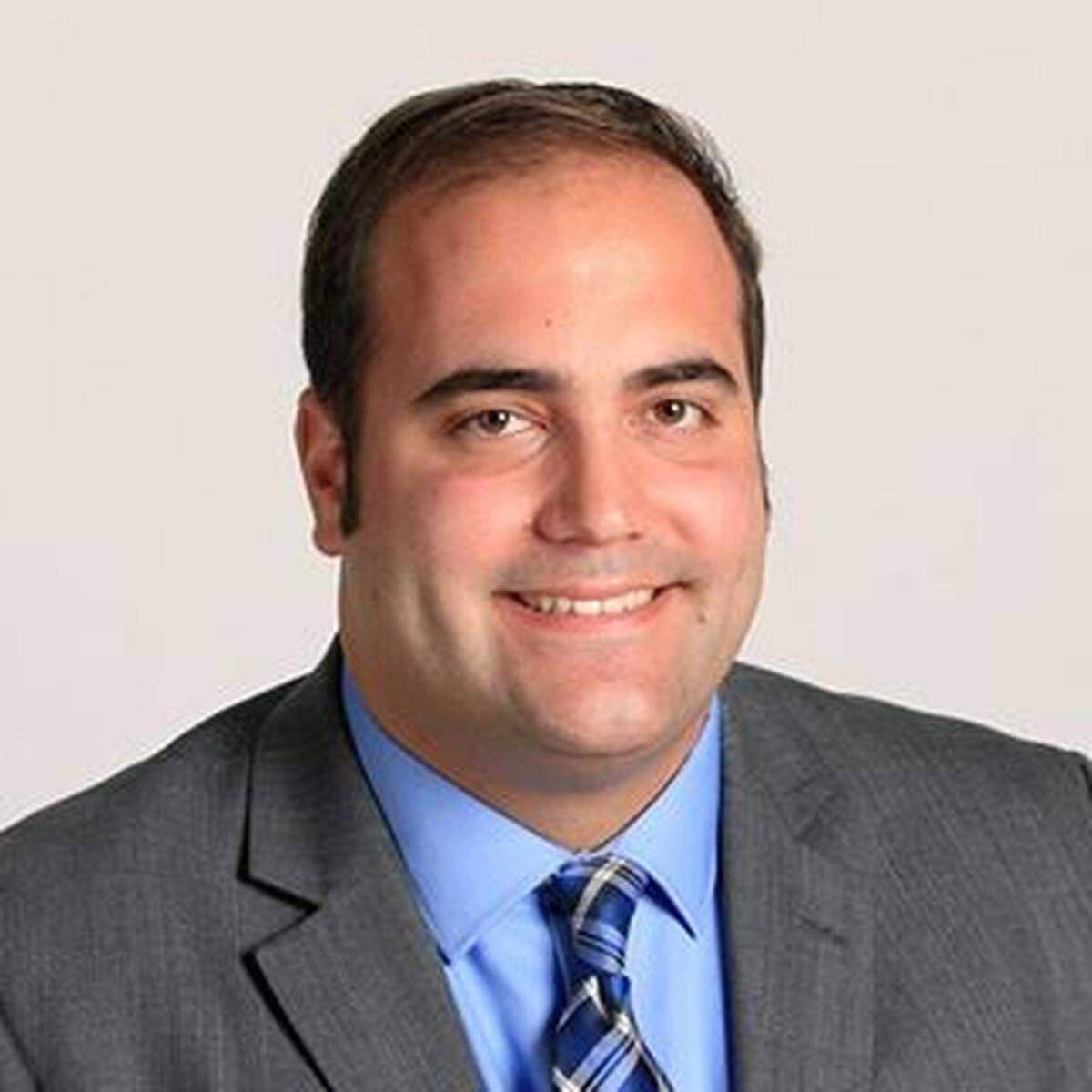
How Marshall’s Senate campaign overcame Pompeo’s shadow and the pandemic to win
A little more than a week before Election Day, Roger Marshall was in Smith Center, Kansas, a town of less than 2,000 near the Nebraska border, to address a crowd of pickup trucks with Trump campaign flags.
“It’s snowing and it’s sleeting and there’s 70 trucks there to meet us. Maybe that was my moment when I said this was real,” Marshall, the senator-elect, said Wednesday morning after his 13-point victory in the U.S. Senate campaign against Democrat Barbara Bollier.
The race to replace retiring GOP Sen. Pat Roberts was the most expensive in Kansas history. Candidates and outside groups spent a combined $80 million as the reliably Republican state appeared for a time within reach for Democrats after a crowded and contentious GOP primary.
Ultimately, it ended like every Senate race in the state since 1936: With a GOP victory.
As word spread through Kansas Republican circles in November of 2018 that Roberts, the longest-serving federal lawmaker in the state’s history, was contemplating retirement GOP leaders in the state began floating Marshall as the likely successor.
It was an easy calculation.
The OB-GYN from Great Bend had just been re-elected to a second term in the 1st Congressional District by more than 36 points. The “Big First” seat had launched the careers of three senators since the 1960s, including Roberts, and other potential GOP contenders appeared removed from the board.
Republican Rep. Kevin Yoder was ousted from his suburban Kansas City seat. Mike Pompeo, the three-term Wichita congressman, had ascended to secretary of state under President Donald Trump.
And Kansas Secretary of State Kris Kobach had just lost an election for governor.
Marshall had been laying the groundwork by traversing his massive district, holding town halls in all 63 counties, showing up at GOP events outside his district in Wichita and stockpiling campaign funds that could be shifted to a Senate run.
But when Roberts announced his retirement plans in January of 2019, it was Pompeo and Kobach that national pundits were mentioning.
Not Marshall.
Pompeo, the pandemic and the plumber
His campaign team identified three major hurdles to win the nomination and eventually the Senate seat: Pompeo, the pandemic and the plumber.
“It was just the Pompeo shadow loomed so large. It was frustrating from our standpoint,” said Brent Robertson, Marshall’s chief of staff.
Senate Majority Leader Mitch McConnell repeatedly boosted Pompeo, the nation’s top diplomat, as his preferred choice.
Pompeo made public statements downplaying his interest, but multiple trips to Kansas in 2019 and outreach to GOP donors sent a different message.
“We would get signals that he’s not doing it and then a story would come out and it would flip the narrative,” Robertson, noting that any Pompeo story would trigger a two-week freeze in their fundraising.
As the Pompeo speculation finally began to subside in early 2020, two other developments severely complicated Marshall’s strategy against Kobach.
Marshall and his competitors began to cancel campaign events as public health officials barred gatherings of more than 10 in the COVID-19 pandemic.
Marshall showcased his experience as a doctor and volunteered in clinics in Kansas City, Kansas, and western Kansas, a move criticized by Kobach because it caused him to miss votes when he was forced to quarantine.
The pandemic upended every campaign in the nation this year, but another event in March posed a unique challenge to Marshall: The entry of Bob Hamilton, a businessman with deep pockets who was well-known in the Kansas City area because of his commercials for Bob Hamilton Plumbing.
Hamilton threatened to split the GOP vote and hand the nomination to Kobach, said Eric Pahls, Marshall’s campaign manager.
And the Club For Growth, a super PAC hostile to Marshall after his 2016 primary win against Tea Party Republican Rep. Tim Huelskamp, announced plans to spend millions for the sole purpose of thwarting Marshall’s candidacy.
“There was a 24-hour period in the program when a self funder and the Club For Growth announced they were going to be joining the race,” Pahls said. “The minute that the self funder got in the race, it suddenly shrunk our lead—the ‘not Kobach’ vote and chopped it up. I’ll be the first to admit to you I remember calling our team and saying, ‘How do we navigate this?’”
Former Senate Majority Leader Bob Dole, who represented Marshall’s district in the 1960s, called to offer his advice: Stick to the plan.
The campaign adopted a “hold the fort” strategy. It called for ceding northeastern Kansas to Kobach and Hamilton in the primary while focusing on turning out the Big First and winning the Wichita area.
“Winning a United States Senate race should not be easy,” Marshall said Wednesday. “Big First congressman is off to a rolling start and I think that made us the favorite from Day 1. We never looked back. I know there were different stories out there.”
After millions in spending by GOP groups seeking to boost Marshall and Democratic groups seeking to prevent his nomination, Marshall resoundingly won the August primary.
Some Republicans were ready to declare victory in November at that moment. Marshall lacked Kobach’s baggage and entered the general election with a 2-to-1 voter registration advantage.
But Marshall still had a problem: Bollier’s money.
Bollier’s comments on guns
The state senator and retired anesthesiologist from Mission Hills who switched parties in 2018 had a message tailor-made for unaffiliated voters and moderate Republicans in the suburbs.
She also had the campaign cash needed to make sure that message was heard— $24.5 million to Marshall’s $5.9 million as of mid-October.
Pahls said he was on his way to the first stop on Kansas Republicans’ statewide bus tour in El Dorado Oct. 3 when he received a message with the video he thinks sealed the GOP victory in the race.
It showed Democratic nominee Barbara Bollier praising measures Australia took in the early 2000s to curtail gun violence after mass shootings.
“They have no guns. They don’t allow them. They just took them all away,” Bollier told an audience in Olathe, noting that her daughter lives in Australia. “And you know what? It’s pretty darn safe.”
The comment didn’t draw any objections from the crowd in Johnson County, a community which has experienced mass shootings.
But it gave Republicans the material they needed to tarnish Bollier’s moderate image in the rest of the state, where support for gun rights remains a powerful political force.
“Here was the proof that Kansas Republicans needed,” Pahls said. “And she can’t talk her way out of it.”
Republicans sought to paint her as a liberal based on her voting record, but the message hadn’t caught on. The video gave Marshall new leverage to make it stick even as Bollier repeatedly asserted her support for the Second Amendment.
The campaign aired an ad with Australian-accented narrator that called Bollier a “bloomin’ liberal” whose money comes from California and whose “ideas come from the Outback.”
Bollier’s campaign said the comment was taken out of context and said it had always anticipated attacks related to her support for gun control and abortion rights as a member of the Legislature.
Still, in a state where Republicans outnumber 2 to 1, it was a way for Marshall to remind voters that he had an R next to his name.
“The most dishonest campaign I’ve ever seen,” said Max Glass, Bollier’s campaign manager. “At the same time, their advertising reminded people that Marshall was a Republican and Barbara was not.”
Rural Kansas vs. Kansas City metro
The map bears out the deep divide between the Kansas City area and the rest of the state.
Bollier won Johnson, Wyandotte, Douglas, Shawnee and Riley counties — the counties which cover the Kansas City metro, the capital city and the state’s two biggest universities.
“Even though Barbara didn’t win she woke a lot of people up to the fact that this state is changing. And the next candidates ought to be aware,” said state Rep. Stephanie Clayton, an Overland Park Democrat who is close with Bollier.
“This is not just a rural state,” she said.
But Marshall’s rural dominance made it impossible for Bollier to win statewide. He took 100 of the state’s 105 counties.
“It’s still a red state,” Glass said. “I don’t think it was any misstep by our campaign. It’s just that he has an R after his name.”
Marshall also won the state’s second most populous county, Sedgwick County, by more than 22,000 votes.
Bollier had spent $3.6 million on television ads in the Wichita market and had made multiple trips there, but some Democrats had pushed for a greater presence in an area rich with blue collar voters who can swing elections.
“Did we spend enough time in Sedgwick County? Did we spend enough time in Shawnee (County) and Salina? Because I think Barbara Bollier hit the maximum numbers she could hit in Johnson County and the 3rd District months ago,” said Chris Reeves, the Kansas Democratic national committeeman.
State Rep. Jim Ward, a Wichita Democrat, agreed.
“If I were in her position, I would’ve moved to Wichita, OK?” said Ward, who lost his own race for the state Senate Tuesday night.
Bollier’s team said that there is second guessing about the candidate’s travel or spending in any losing campaign.
Marshall said he had always figured that turnout in the Big First would offset Bollier’s margins in the Kansas City area and that the race would hinge on Wichita.
Marshall, who grew up roughly 30 miles away in El Dorado, said voters in the Wichita area had chosen a candidate from central Kansas over someone from “near the Missouri border,” in a dig at Bollier’s Johnson County’s residence.
During trips through south central Kansas, he often stopped at his parents’ home in El Dorado to spend the night. His 81-year-old father, Victor Marshall, served as police chief in the community for 25 years.
During one of those visits, Marshall said, his mother, Nancy Marshall, was watching Fox News coverage of civil unrest in cities and pondered why any young person would want to become a police officer.
“She looked at me as, basically, go fix this,” Marshall said.
Bollier had mostly campaigned from her home through August, favoring virtual town halls. In September, she began a tour of the state with strict COVID-19 precautions at her events.
Marshall offered an inconsistent message on the virus, urging voters to wear masks at some events but appearing maskless at others. He kept up an aggressive schedule of in-person events from May through November despite the pandemic.
“I just really believe that Kansans want to look a person in their eye and hear you themselves,” he said. “And even if they don’t come out, they know you were in their community working for their vote.”
While Marshall was favored to win, most public and internal Republican polls had the race much closer in the lead-up to Election Day than the final tally.
The only poll that approached the final result was a poll released by the pro-Marshall Keep Kansas Great PAC in October, which showed the GOP congressman leading by 12 points.
That poll, an outlier even among Republican polls, had been weighted for geography and factors based on past presidential year turnout in Kansas. Travis Smith, the PAC’s consultant, said the use of text messaging to reach voters gave a more complete picture of the state’s electorate.
“If you are a traditional pollster and you’re trying to reach voters live with a human being in 2020, you’re screwing up,” Smith contended.
Bollier received only about 2,000 more votes than former Vice President Joe Biden statewide. Marshall trailed Trump’s statewide total by 3 percentage points, which shows the results for the presidential race and Senate race were closely intertwined. .
“Nothing I have learned in the past four years since Trump won by 21 (points) in 2016 led me to believe there was some massive tidal wave going the other way,” Smith said. “Yeah, northeast Johnson County hates him. Douglas hates him. But they did in 2016. It’s a Republican state.”
The Star’s Jonathan Shorman contributed to this report.
This story was originally published November 4, 2020 at 1:43 PM.