Mayor says ‘guardrails’ on Chiefs deal are meant to protect KCK’s wallet, future
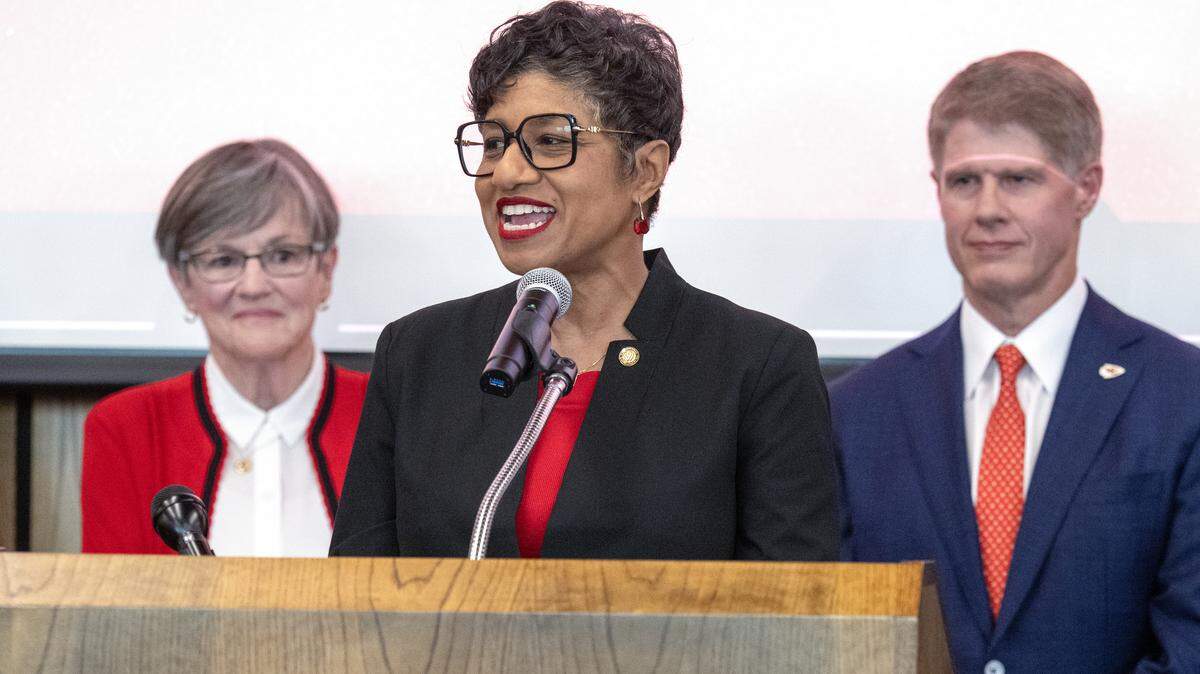
When Wyandotte County officials approved giving up some future local tax dollars to help pay for a new stadium for the Kansas City Chiefs, they did so with a handful of conditions.
And if the state and team don’t follow through with those terms, they won’t be getting any local sales tax revenues from Kansas City, Kansas, its mayor said this week.
Local government leadership during a public meeting last week pledged a portion of its sales, use and transient guest tax revenues to pay off bond debt to pay for the team’s nearly $4 billion move across state lines and into Kansas.
But their decision was contingent on having more say in whether their western KCK bond district’s size can change; final approval on specific documentation — including a stipulation that infrastructure for the stadium must be paid for with STAR bonds; a local government-appointed local representative on a planned community impact committee; and a bond issuance happening before the end of 2030.
In other words, the local government wants to have a more involved role in future decisions related to the project, rather than those being made unilaterally by team or state officials.
Terms like this can protect Wyandotte County’s financial future at a time when residents are already struggling to keep up with rising property tax bills and cost of living, Mayor Christal Watson wrote in a statement she posted online Tuesday.
“That concern is exactly why the ordinance includes conditions, not as window dressing, but as guardrails,” Watson said. “A core purpose of those conditions is to protect Wyandotte County families from unintended tax increases, especially property taxes, while keeping the County financially whole.”
Residents, including dozens during recent public meetings and out in the community, have expressed concerns that having a stadium in Wyandotte County and paying for the infrastructure upgrades needed to make that happen will inflate their home values and increase their property tax bills.
But Watson said the local government is trying to make sure infrastructure upgrades, like roads and public safety, are financed through sales tax and revenue, or STAR, bond dollars, not local cash. This would help keep costs from overly falling back on residents in the area, she said.
And, keeping the STAR bond district out in west KCK, around where the stadium will be built, would prevent local sales taxes generated on the county’s east side, for example, from diverting toward the project.
During Thursday’s meeting, commissioners pledged between $350 million and $450 million of future local sales tax revenues generated near and around the Chiefs stadium project to help pay off the billions in STAR bond debt that will be used to finance it.
Their vote means all local sales, use and up to 8% transient guest tax revenues generated on about 236 acres in KCK would go back to the stadium project bond debt for up to 30 years. That area spans north of State Avenue and between 126th and 118th streets.
Olathe City Council also approved using their dollars to help build the team’s new training facility and team headquarters on 165 acres in Olathe city limits.
Beyond the requested local contributions, the stadium incentives rely heavily on a forthcoming STAR bond district from which new state sales taxes will go toward paying off the Chiefs project. A preliminary map of that district shows it could stretch across all of Wyandotte and about half of Johnson County — which means it could pull state money from both counties. That said, the Kansas Department of Commerce has said their map will not be finalized until later on.
In December, state and team officials proposed a plan to pay for the bulk of the Chiefs’ move with $2.8 billion worth of state-issued STAR bonds, which would then be paid back with new state sales tax revenue.
“The goal is straightforward,” Watson said. “If the outlined conditions are not satisfied, the local sales tax pledge would not take effect.”