Kansas’ stadium subsidies differ from STAR bonds. Why that matters for taxpayers
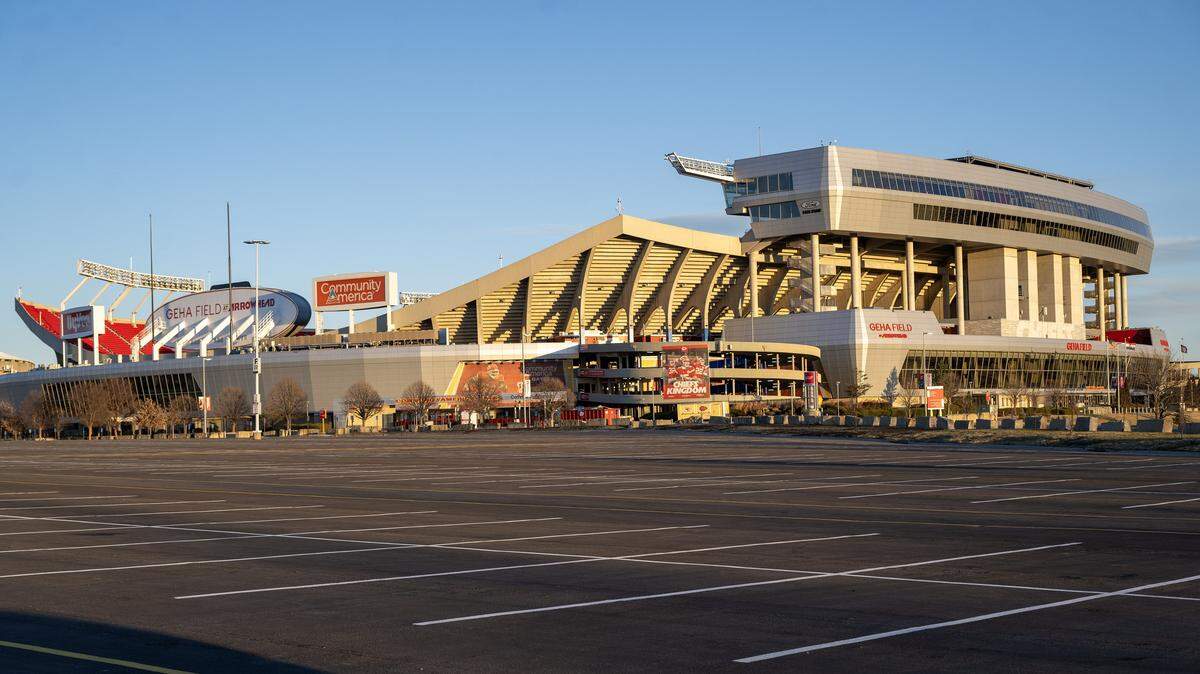
While the proposal for a mostly publicly funded new stadium and practice facility for the Kansas City Chiefs leans heavily on a Kansas-born financing tool called sales tax and revenue bonds, or STAR bonds, it isn’t like other STAR bond projects passed previously in Wyandotte and Johnson counties.
And it’s important for taxpayers to know the difference between the two types of projects, said Zachary Mohr, an associate professor for the University of Kansas’ School of Public affairs. Mohr, who teaches and conducts research on public budgeting, accounting and financial management, worked in city administrative roles before joining the university’s staff.
“I think the Chiefs stadium is in a class of its own,” he said. “It’s this whole other piece that should be talked about and discussed.”
The crux of how the STAR bonds would work for a stadium is not necessarily new. Kansas has used STAR bonds since 1999 to front a portion of construction costs for major development projects aimed to attract tourism. Tax money from sales at the attraction and within a surrounding district are then used to pay back the bond amount over several decades.
STAR Bonds funded the construction of things like the Kansas Speedway in Wyandotte County — touted as one of the most successful uses of the program — and Prairiefire in Overland Park, which defaulted on its bonds in 2023 after not generating enough money to pay the debt back.
But the special incentives Kansas lawmakers passed to help pay specifically for stadiums — often referred to as a supercharged bond agreement — goes beyond what regular STAR bonds offer developers.
The stadium incentive law allows the state to offer significantly more money in bonds than past STAR bond projects, and it gives state officials more discretion over the size of the district that will help pay back the bonds and more control of the terms of the deal.
However, unlike regular STAR bonds, the stadium incentive law gives local governments like the Unified Government and the city of Olathe the option to keep their local sales tax revenue from within the bond district, or to vote to redirect it to paying back the bonds. For regular STAR bond projects, that local money is automatically redirected to help pay off the debt for decades.
$2.8 million in bonds
The proposed deal with the Chiefs offering nearly $2.8 billion in bonds — $1.8 billion for the stadium and $975 million for the practice facility — is more than twice the amount of Kansas’ 23 other STAR bond projects combined.
Some experts have referred to it as the largest government subsidy for a professional sports team in U.S. history.
Part of the reason the subsidy is so big — aside from the development of a stadium and practice facility being a huge undertaking — is because the 2024 Kansas law allows these supercharged STAR bonds to cover more of a development’s cost than regular STAR bonds.
Bonds can cover up to 70% of the cost of a stadium project compared to the 50% that regular STAR bonds can cover.
The preliminary agreement with the Chiefs says the state will issue bonds for up to 60% of development costs for its proposed Kansas stadium, less than the 70% that would have been allowed by the law.
A sweeping district
As a financial tool, Mohr said sales tax increment financing projects have been largely successful in Wyandotte County and elsewhere. The whole point of a STAR bond project, after all, is to attract tourism and sales tax revenues that wouldn’t have otherwise existed in blighted areas using public resources. And it’s not just about developing the attraction itself, but adding to the stock of infrastructure, utilities and amenities around it.
Economic theory would suggest that the best place to make a major investment such as a STAR bond would be in a place that has low, or lacks, economic activity. He said that at the turn of the century, Wyandotte County was exactly that.
But western KCK, where the county’s STAR bond projects are isolated, isn’t a ghost town anymore. It’s home to shopping, tourist and housing developments and a growing public school district. And so, Mohr said, that’s no longer an economically ideal place in the county to put that project.
“The use of STAR bonds in that area is much less of an economic ideal of what STAR bonds should be used for,” he said, adding that instead of spurring economic flow to an area, it’s creating an environment where projects are “speculative and competing with each other.”
Typically, STAR bond districts encompass a small area around an attraction, redirecting the sales taxes generated by that development to pay off the debt used to build it, such as the area immediately surrounding Children’s Mercy Park. The logic is that people who visit the attraction are the ones whose tax money helps pay back its debt.
But the district that state officials proposed for the Chiefs’ bond district extends well beyond the immediate area surrounding a stadium. It stretches across nearly all of Wyandotte County and most of western Johnson County.
That means new state sales tax money — and possibly local too — throughout that entire area would be put toward paying back stadium debt instead of other government priorities for 30 years.
And although Mohr said STAR bonds are in general an effective tool if used as they’re intended, evidence shows that public subsidies for sports stadiums don’t generate the additional economic benefits to justify it, which could be why the proposed bond district includes plans to pull sales tax money from other parts of the city and county.
Local money
Part of the tradeoff for using regular STAR bonds to cover the upfront costs of building a new attraction is that local governments then agree to divert the local sales tax money generated in the district to pay back the bonds.
That foregone local tax money is one reason why STAR bonds have been controversial, with some people criticizing how local governments don’t get to reap the benefits of new attractions in their communities until that debt is paid back.
That’s also different for these special stadium STAR bonds.
Since the state gets to set the terms of and approve the deal without local signoff, the law only authorizes it to pledge state — not local — sales tax money to pay back the bonds.
However, the law says that local governments can choose to divert their local sales tax revenue to the stadium bonds too.
Local approval
The preliminary Chiefs deal asks both Wyandotte County and Olathe to contribute their local sales tax revenue to the stadium debt in addition to the state tax money. Both local governments would need to vote to approve diverting that local money.
So far, both have confirmed that they will each have a public hearing to decide whether they want to pledge local sales tax revenue to the project.
Olathe Mayor John Bacon called the agreement a “once-in-a-generation” opportunity for the Johnson County city, but Wyandotte County officials shared more skepticism.
KCK Mayor/CEO Christal Watson said in a video-recorded statement that she still has questions about the long-term impacts a stadium could have in Wyandotte County, making it clear that negotiations are ongoing and the local government hasn’t yet locked down a deal with the team.
The municipalities have until Feb. 20 to make their decision.
The Star’s Taylor O’Connor contributed reporting.
This story was originally published January 21, 2026 at 6:19 AM.