Kansas program aims to draw Chiefs, Royals. Does it fuel growth or pick winners & losers?
When Mike Jacobi helped spur efforts to turn around Wyandotte County in the 1990s, then a moribund region shedding residents and businesses, local leaders turned to a new state economic tool to finance the Kansas Speedway and the sprawling Village West shopping area.
A quarter-century later, Jacobi remains impressed with the results the tool – Sales Tax and Revenue, or STAR, bonds – brought to Wyandotte County. The once-undeveloped western portion of the county near Interstates 435 and 70 now hums with activity.
“I don’t know anything that is a starker image,” Jacobi said.
STAR bonds face a key test this year, as Kansas lawmakers debate whether to authorize the program for another five years. State officials are also attempting to use a supercharged version of the bonds to lure the Kansas City Chiefs or Royals into Kansas from Missouri.
But while Wyandotte County’s success story is often lauded, STAR bonds continue to attract skepticism, criticism and opposition from a vocal minority of lawmakers.
The program’s purpose has been diluted, they say. One Johnson County project defaulted on bond payments. And the tool is accused of distorting the free market and subsidizing growth that would have happened anyway.
The push for the sports teams is only intensifying the focus on the program. Under a law approved last spring, Kansas could issue STAR bonds to finance up to 70% of the cost of new stadiums for one or both teams, an incentive valued at potentially billions of dollars. Some experts have questioned whether Kansas could even sell enough bonds to raise that amount.
“I have grave concern over this,” Sen. Caryn Tyson, a Parker Republican, said about STAR bonds at a Senate Commerce Committee hearing on extending the program. “This is government picking winners and losers.”
If the Legislature does nothing, the STAR bond program will sunset in July 2026. Lawmakers will likely eventually vote to keep the program in place, but the debate over its future provides an opportunity for critics to highlight their concerns and potentially demand changes.
STAR bonds are issued by municipalities that raise funds to pay for the construction and related infrastructure of major attractions. Future sales tax growth from the attraction and retail in a district surrounding the site are pledged toward repaying the bonds, typically over 20 years.
The Kansas City area houses several STAR bond projects. Children’s Mercy Park, Homefield, BluHawk, and Prairiefire – all located in Wyandotte or Johnson counties. At least 17 projects are operational or in development statewide.
“STAR Bonds play an important role in growing the Kansas economy,” Bob North, chief counsel for the Kansas Department of Commerce, which administers the program, told lawmakers in written testimony this month.
“It is a unique program that creates tourism and entertainment attractions.”
STAR bonds for stadiums?
STAR bond supporters repeatedly emphasize that, unlike many government bonds, the bondholders assume all risk, which they cast as a major safeguard.
In other words, Kansas and local governments can never be forced to use their general funds to pay back bondholders.
When STAR bonds have been issued in the past, official documents have warned prospective buyers the investments come with a “high degree of risk.” If a project fails, the bondholders are simply out of luck.
If that sounds too good to be true, STAR bond critics say that’s because it is.
While Kansas could theoretically tell bondholders of a failed project to pound sand, it would call into question the trustworthiness of the state and local governments. Future STAR bond projects would become more difficult as buyers would either see the bonds as too risky or demand greater returns in exchange for the risk, making the debt more costly.
The stakes are even higher when it comes to stadiums.
A new Chiefs stadium could cost $2-3 billion; a new Royals stadium $1.5-2 billion. If STAR bonds financed the full 70% authorized under state law, the stadiums would be the largest projects to date.
State law authorizes the Kansas secretary of commerce, currently Lt. Gov. David Toland, to negotiate a STAR bond agreement for a stadium. Any deal would have to be approved by the Legislative Coordinating Council, which includes top House and Senate leaders from both parties. Republicans hold a 6-2 majority on the council.
The debt would be repaid over 30 years by a combination of tax revenue from the stadiums and surrounding development. But in a crucial change that appears to tacitly acknowledge that the stadium districts would struggle to generate enough sales tax revenue, some sports gambling, and lottery revenue would also go toward repayment.
As part of the bill, annual lottery revenues above $71.5 million each year will now be redirected into a fund to help pay off the bonds, a change likely worth about $10 million a year.
Researchers over several decades have consistently found that stadiums and arenas are not major drivers of economic development. A 2022 review of 130 studies over 30 years found that nearly all empirical studies found “little to no tangible impacts of sports teams and facilities on local economic activity” and that the level of subsidies typically provided for stadiums “far exceeds any observed economic benefits.”
“Stadiums themselves are arguably one of the worst things from an economic development perspective,” said John Mozena, president of the Center for Economic Accountability, which opposes government subsidy programs. “An NFL team serves about as many customers in a year as a single, average American supermarket does.”
But decades later, the Kansas Speedway and Village West remain a crown jewel among STAR bond supporters. They are together, perhaps, the single best argument supporters have for the value of the tool.
The Speedway was the first STAR bond project, with about $24.3 million in bonds issued. The Legislature first enacted STAR bonds in 1993 and then rewrote the law in 1997 and 1998 to allow Wyandotte County to issue the bonds for the Speedway and Village West.
Today the area hosts an array of businesses and attractions, including Great Wolf Lodge, Nebraska Furniture Mart and Bass Pro Shops. Other attractions are under development nearby, including a Margaritaville Hotel. And the area has been widely discussed as a possible site for the Chiefs if the team moves to Kansas.
Still, more than $10 million in STAR bonds on the Speedway have yet to be paid, according to Commerce’s 2023 STAR bonds annual report, the latest available.

STAR bond goals
Jacobi, who formed a political action committee that led to the consolidation of Kansas City, Kansas, and Wyandotte County in 1997, said “in our situation, there was absolutely nobody who was going to do anything” absent STAR bonds.
Some lawmakers looking critically at STAR bonds aren’t sure that’s true for all projects anymore.
Between 1999 and 2009, Kansas signed off on just four STAR bond projects, including the Speedway. Since then the pace has accelerated, with 17 districts in 13 cities in total now.
While the program was initially pitched as a way to finance major attractions that draw tourists, some recent projects appear less likely to draw large numbers of visitors from far away.
Overland Park has issued $53.5 million in STAR bonds for BluHawk, a 227-acre project anchored by a 300,000-square-foot indoor sports complex that includes an ice rink, basketball courts and a fitness and training center, according to the 2023 STAR bonds annual report.
The same annual report says STAR bond projects must “be capable of being characterized as a statewide and regional destination” and include a high-quality tourism and entertainment attraction. Projects must also contain “unique features” that will increase tourism.
A state audit released in 2021 found that at the time just three of 16 STAR bond attractions reviewed by auditors met tourism-related goals in 2018 and 2019. The goals included drawing 20% of visitors from outside Kansas and 30% of visitors from at least 100 miles away.
Hutchinson’s Underground Salt Museum, Topeka’s Heartland Park and the Speedway met the goals for at least one of the two years.
“I don’t know that we’ve really been honest about what that program is,” said Sen. Kenny Titus, a Wamego Republican.
Titus, who sits on the Senate Commerce Committee, said the STAR bonds program has had successes, along with projects that weren’t well thought out. He said lawmakers should always examine the program because it “does pick winners and losers.”
Village West is a great example of the program’s success, he said. But “not everything is Village West.”
“It’s really more of a structured development act than it is a tourism act,” Titus said. “And I think if we were more straightforward about what we’re using it for, I think you’d get less pushback on the program.”
For a new state audit released in October, city officials in four of the six STAR bond districts examined told auditors that their districts would have likely developed without the bonds as their cities expanded into undeveloped land.
“But officials thought STAR bonds made an important difference, and the development would’ve happened later or looked different without STAR bonds,” the audit report says.
Development questions
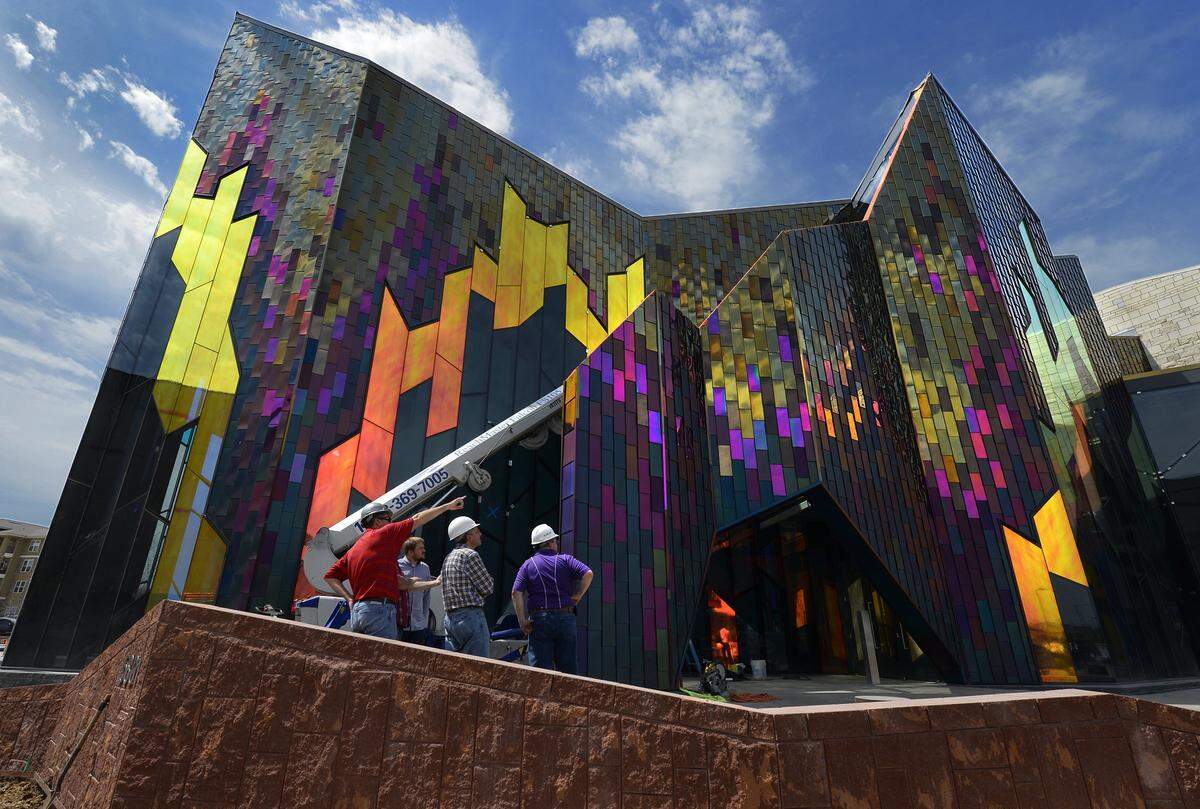
That includes the Prairiefire district in Overland Park – an entertainment area anchored by the Prairiefire museum.
According to the report, Overland Park officials told state auditors that the Prairiefire district area would have likely developed absent STAR bonds, but without the museum or parking garage that received bond funding.
Instead, the project became the first STAR bond district to ever default, after it didn’t make a $15 million payment on time in 2023. The late payment came after the project had struggled for years to make sales tax revenue projections.
The 60-acre development – a combination of restaurants, shopping, and the museum – collected about $4.6 million in sales tax revenue in 2023, but projections offered to bond buyers in 2012 had called for more than $5 million a year.
Toland, a Democrat, said in a letter responding to the audit report that it was important to note some areas may have developed anyway. But he appeared to signal that Commerce doesn’t judge the likelihood of development without STAR bonds when evaluating potential projects.
“The STAR Bond program should not be viewed through any type of ‘but for’ analysis. Whether a district would or would not have been developed is not part of the Act,” Toland wrote, referring to the state’s STAR bonds law.
After this story published online, Commerce spokesperson Patrick Lowry said in response to questions that whether a site is or isn’t likely to develop without STAR bonds isn’t a defined objective of the law or program administration. Without the state’s investment, the attractions are unlikely to locate in Kansas, Lowry said.
Feasibility studies are required for each potential project, Lowry said, and examine whether they will attract enough visitors, the anticipated economic impact, whether the project will generate enough new sales tax revenue to pay off the bonds, and if the public benefits exceed the public costs.
North, the agency’s general counsel, told lawmakers last fall the Prairiefire district is now generating enough sales tax revenue to service its bond debt. The project got into a hole early, he said, because a grocery store left the area and issues with a movie theater.
“Those difficulties created a gap, a lag in revenue,” North said, adding that there’s now sufficient revenue.
‘Eye of the beholder’
Lawmakers could be debating the STAR bonds program renewal for weeks, if not months.
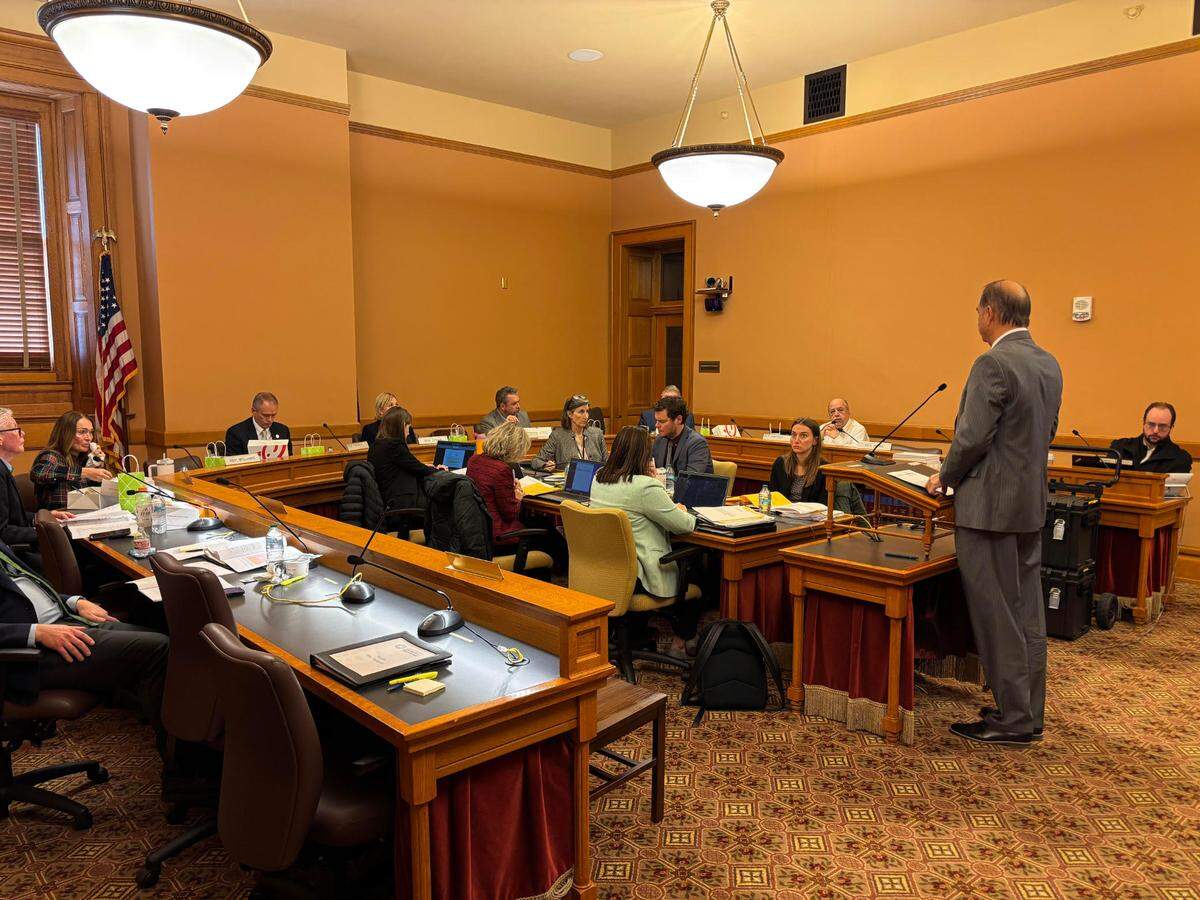
The Senate Commerce Committee, which held a hearing Monday on legislation to keep the program in place, has not yet advanced the bill. A similar bill in the House has yet to receive a hearing.
The program appears to enjoy broad bipartisan support in the Legislature. When lawmakers approved a plan last spring to lure the Chiefs and Royals with STAR bonds, the measure passed the House in an 84-38 vote and 27-8 in the Senate.
Sen. Ethan Corson, a Fairway Democrat on the Senate Commerce Committee, said that while he’s open to tweaks, he doesn’t see any glaring problems.
At a certain point, Corson said, STAR bonds enter the realm of a philosophical debate – are municipalities losing out on tax revenue because the dollars go toward paying off bonds, or would the revenue have never otherwise been collected without the STAR bond project?
“It becomes a little bit in the eye of the beholder,” Corson said.
This story was originally published February 13, 2025 at 5:30 AM.