KCK still paying millions for Schlitterbahn, other STAR bonds. Chiefs want more
Wyandotte County is no stranger to the kind of public financing tool the state of Kansas and the Kansas City Chiefs want to use to help pay for a new professional football stadium and practice facility in the county.
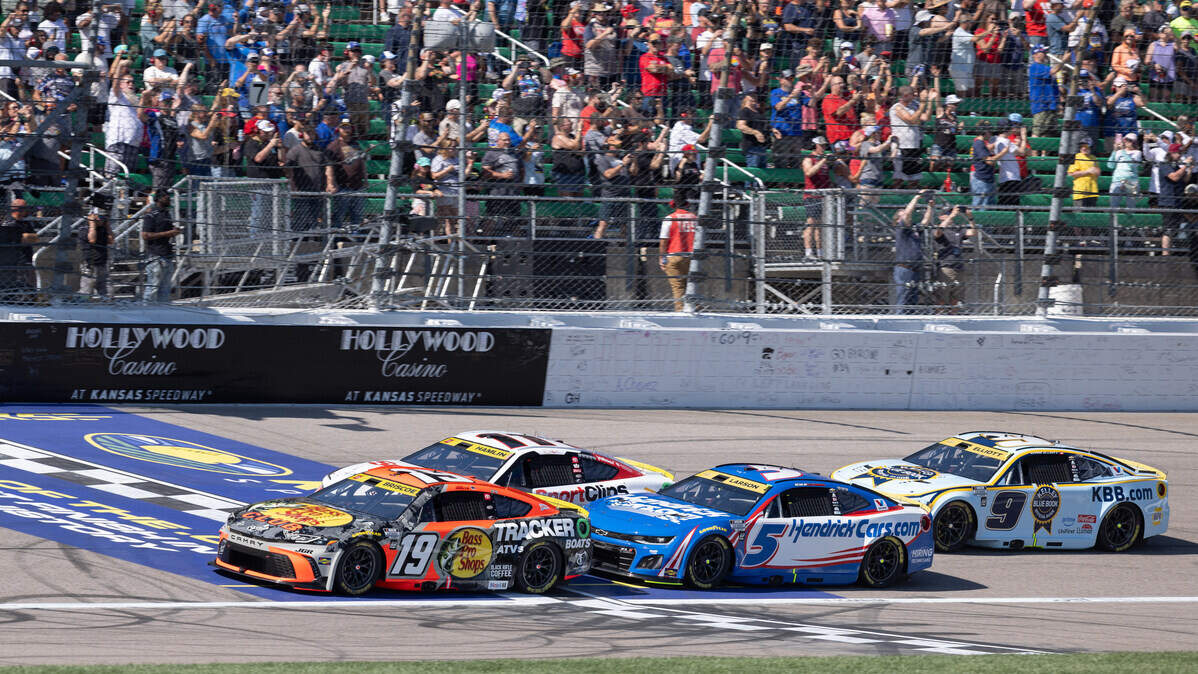
Already, it’s home to more sales tax and revenue, or STAR, bond projects than anywhere else in Kansas — think the Kansas Speedway and Children’s Mercy Park. And it’s dedicating millions of new local sales tax dollars generated by those projects to paying off the bond debt used to build them.
Last year, the Unified Government of Wyandotte County and Kansas City, Kansas, redirected more than $5 million in new local sales tax dollars to pay off bond debt on four STAR bond projects, according to the government.
And depending on how local government officials vote sometime in the next month, it’s possible new local sales tax dollars generated across Wyandotte County could be used to help build a $3 billion, domed stadium for the Chiefs. The project, which Gov. Laura Kelly announced in Topeka alongside local and state officials last month, will also include a training facility and new team headquarters in Olathe.
STAR bonds are a Kansas finance tool that allows state and local governments to issue bond debt for major construction projects. The projects are intended to attract tourism and spur economic development within an area that wouldn’t otherwise have it. The bonds are then paid off using incremental sales tax revenues generated by the project and any other developments included in a geographic bond district.
Although STAR bond districts have typically included nearby or adjacent land and developments, the proposed district that would fund the Chiefs’ move to Kansas spans all of Wyandotte County and a large portion of Johnson.
State officials have already said they’d pitch in $2.7 billion in these bonds to go toward the stadium’s and practice facility’s construction. Local leadership have until late February to decide if they want to contribute local sales tax revenues generated across the county.
It’s unclear exactly how much local tax money from Wyandotte County could be used to help pay for the stadium — officials are allowed to keep those calculations and negotiations secret for now — but the amount the county is already putting toward paying off existing STAR bonds gives a small sense of the scale of what could be expected.

STAR bond projects to pay off
As of 2025, the Unified Government was paying off four ongoing STAR bond projects using local sales tax dollars generated in those project areas’ bond districts. Bonds for these projects must be paid off after 20 years from when they were approved.
During that year, it spent $280,581 repaying bonds for the Kansas Speedway project area; about $1.4 million for the U.S. Soccer bond series; about $1.7 for the Schlitterbahn and Automall series; and about $1.7 million for the Homefield series.
The Kansas Speedway project area, born from a 1999 bond issuance, includes only the speedway and no other businesses in its bond district. The government expects to finish paying that off, using revenues generated by the Speedway alone, in 2027.
The U.S. Soccer project area, from a 2015 bond, includes the U.S. Soccer Training Center, Compass Minerals, the Homefield Training Center and Village West, “consisting of Nebraska Furniture Mart, Great Wolf Lodge, Bass Pro, Legends Outlet, and Children’s Mercy Park,” according to the Unified Government. Revenues from Village West and U.S. Soccer pays for those bonds.
The Schlitterbahn and Automall series bonds from 2015 do not include the shuttered waterpark that officials demolished after a child died on a water slide. It instead includes an auto mall that was in the district already and an apartment building that was developed on the park’s property. The apartment complex, which doesn’t generate sales tax revenues, was financed using private dollars. Officials issued two bonds for this project. One of them was refinanced for the Homefield project, and the other was dedicated to the apartment complex and auto mall area, which includes dealerships, a car wash, gas station and more.
The Homefield projects’ 2022 and 2025 bonds are repaid through local sales tax revenues from projects like Margaritaville, the baseball complex, restaurants and hotels in the area and a future gas station to be built nearby.
“For all STAR bonds districts that have issued bonds, all these project areas have businesses that are generating sales taxes which is the bond repayment source,” CFO Shelley Kneuvean said.
Some project areas, like the U.S. Soccer and Schlitterbahn, have a base amount of sales tax revenues that the Unified Government can directly collect from pre-existing development in that area, because those developments were already generating sales tax revenues.
Only revenues that exceed that base amount can go to paying off the bonds for that project, Kneuvean said.
During 2025, U.S. Soccer’s base collected $981,242 that went directly to the government. The $1.4 million that went toward paying the U.S. Soccer STAR bonds were additional revenues that came after the Unified Government collected $981,242.
The base for Schlitterbahn netted $300,585 for the Unified Government, Kneuvean said.
“Village West and Plaza at the Speedway base sales tax revenues are deposited into the city and county general funds based on the source of the tax rate,” she said. The government paid off bonds on Village West in 2016 and uses revenues that exceed the base local sales tax revenues to help pay for the U.S. Soccer series.
American Royal incoming
Come 2027, when the government expects to pay off bonds on the Kansas Speedway, it’ll pick up STAR bond payments for development of the American Royal and other property northwest of the speedway.
The Unified Government recently established a new STAR bond district that will include the American Royal (which is relocating to KCK from the West Bottoms) Plaza at the Speedway, and vacant property for future development.
The Unified Government hasn’t formally issued the bonds for this project, but will discuss that issuance during a Jan. 29 public meeting. The government expects it will contribute $2.9 million in local sales tax revenues in 2027 to pay for the first series of the bonds.
“... and sales tax revenue projections increase throughout the 20 years as the project gets built and operational,” according to the Unified Government.
The American Royal also pledged a $5 million up front payment and a $1.3 million annual payment to the Unified Government throughout the course of that 20-year period, totalling about $30 million in payments, Kneuvean said. Commissioners’ next decision will be if they want to opt into diverting more of its new local sales tax money to paying off similar bonds for the next 30 years for the Chiefs stadium. Their deadline to decide that is Feb. 20.
This story was originally published January 21, 2026 at 11:00 AM.