Chiefs stadium can’t move forward without OK from KCK. Mayor still has questions
Despite the fact that state lawmakers rolled out plans to construct a $3 billion domed stadium in Wyandotte County and a new team headquarters and practice facility in Olathe, plenty still needs to happen before the Kansas City Chiefs can kick off their 2031 season in Kansas City, Kansas.
Leadership at the Unified Government of Wyandotte County and KCK have made it clear that negotiations are ongoing and that the local government hasn’t officially locked down a deal with the team.
Before construction can move along, county commissioners must first approve a development agreement between the local government and team. That’s key given the agreement would be legally binding and set rules, fees, timelines and more for both parties.
Commissioners must also decide whether new local sales tax revenues generated across the county can be dedicated to paying back the debt for bonds used to build the new Chiefs stadium.
Neither has happened yet, and as of publication time the Unified Government had not responded to questions seeking what the tentative timeline would be.
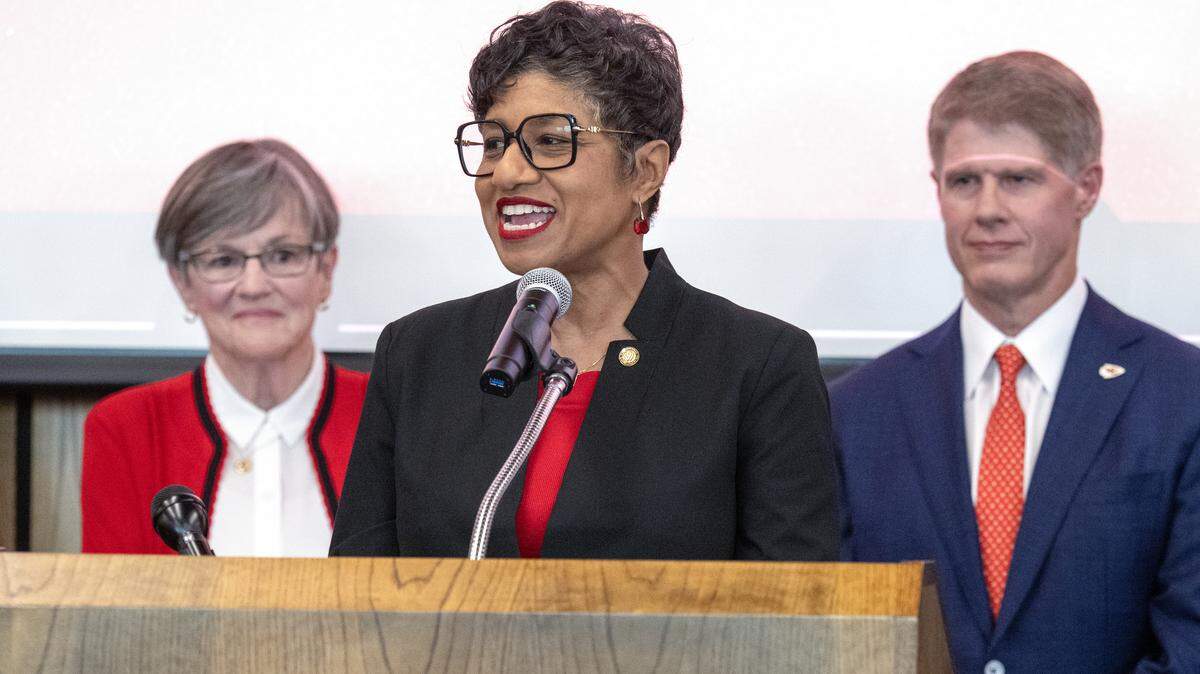
Mayor/CEO Christal Watson, sworn into office last month, said in a video-recorded statement that the government is still weighing the long term impacts of a stadium in Wyandotte County, asking thorough questions and trying to get a clearer picture of how the move would affect residents.
She also alluded to the local government planning to field public input throughout the process.
“Your voices matter in this process, listening matters and so does making decisions rooted in facts, accountability and long term benefit, not pressure or speculation,” Watson said in the statement, posted Dec. 26 on her official Facebook page.
The statement came just days after county leadership joined state and team officials in Topeka for a joint announcement that the Chiefs would be leaving Kansas City and crossing state lines into Kansas. The facilities in KCK and Olathe will also be surrounded by entertainment districts.
Paying for a stadium
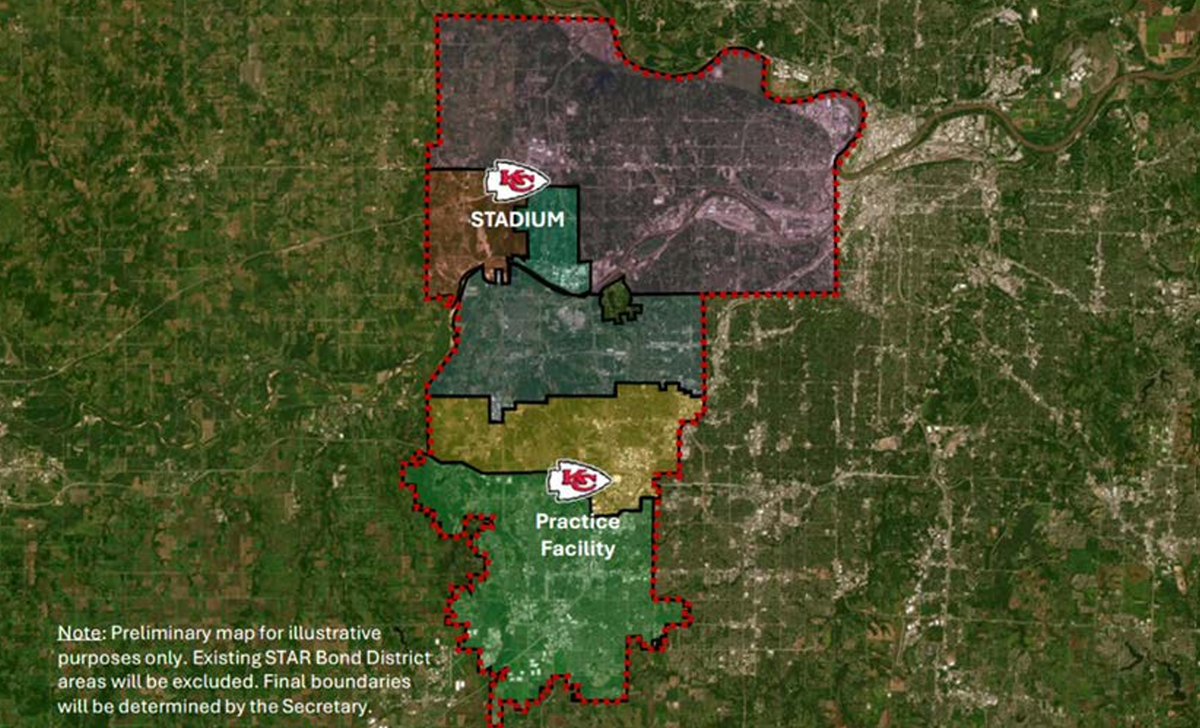
The move would be financed utilizing sales tax and revenue, or STAR, bonds, which would be paid off over 30 years using new state sales tax revenues — and potentially also local taxes — generated within a dedicated district. State officials already pledged to pitch in, through these bonds, $1.8 billion for the stadium and roughly another billion for the training facility and headquarters.
Typically, STAR bond districts encompass a new development aimed at attracting tourists and its immediate surrounding area, redirecting the sales taxes generated by that development to pay off the debt used to build it. But the district that state officials proposed to pay back the stadium bonds covers nearly all of Wyandotte County and most of western Johnson County. That means new state sales tax money — and possibly local too — throughout that entire area would be put toward paying back stadium debt instead of other government priorities.
Watson, under her Dec. 26 post, wrote that she’s opposed to any deal that would result in Wyandotte residents seeing higher property taxes. Residents have expressed concerns that the presence of a stadium in the county would naturally inflate taxes through raised home valuations.
“My personal stance is that if there is even the slightest chance that this deal will raise property taxes — as a result of the ongoing public safety and infrastructure requirements for around the stadium — we need to change the terms of the agreement to benefit our people,” Watson wrote. “The people made it clear that they don’t want their property taxes to go up, and I am committed to advocating for our people so that it doesn’t happen.”
Wyandotte County residents in recent years have struggled to keep up with increasing property tax bills prompted by rising home valuations and local financial decisions. Officials last year also voted to collect more property tax revenues during the 2026 budget year than they did in the year prior.
Local officials have previously said in public meetings that increasing the amount of sales tax revenues the county collects could offset its reliance on property tax revenues and eventually make it possible to offer more tax relief to residents.
If officials agree to give up new local sales tax revenues across the county to help pay back the debt for a new Chiefs stadium, that money would not go into the local government’s budget.
This story was originally published January 6, 2026 at 6:18 AM.