Kevin Strickland’s fate in judge’s hands; Baker urges him to right a ‘terrible mistake’
READ MORE
Kevin Strickland exonerated
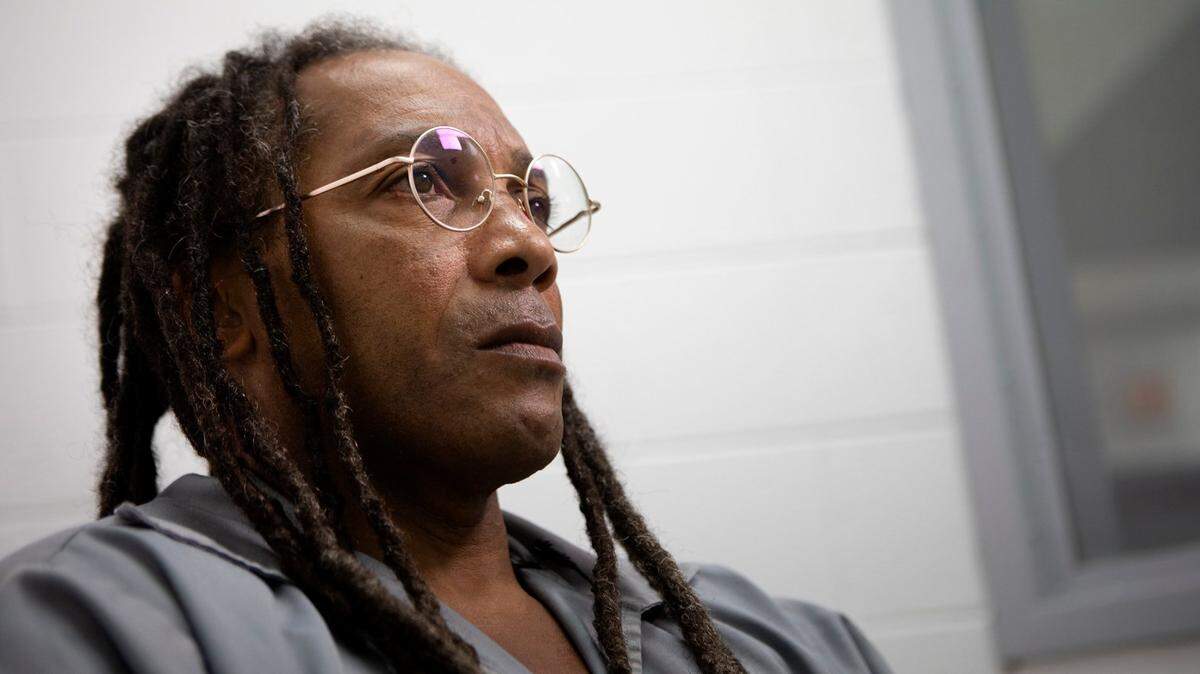
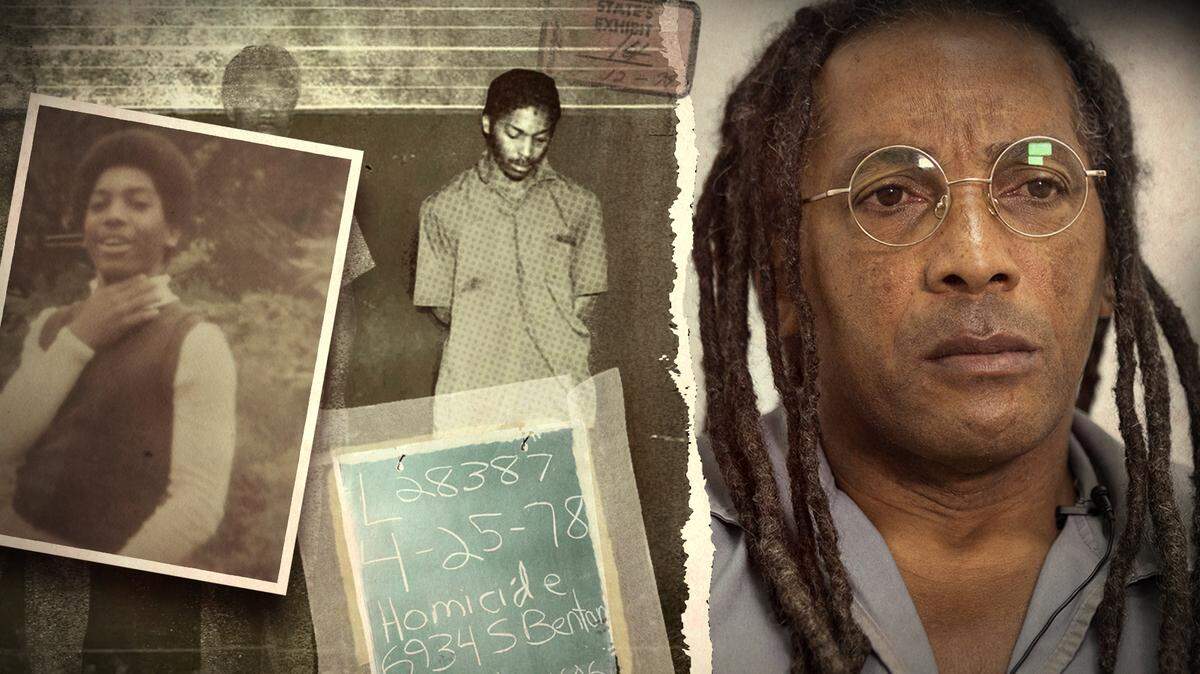
Kevin Strickland spent 42 years in a Missouri prison for a crime that he, and prosecutors, says he didn’t commit. Prosecutors argued in a 25-page motion that Strickland’s innocence is “clear and convincing.” Missouri Gov. Mike Parson and the state Attorneys General’s Office have contended that Strickland received a fair trial and should not be freed.
A judge on Nov. 23, 2021, granted Jackson County prosecutors’ motion to exonerate Kevin Strickland in a 1978 triple murder and ordered his immediate release, confirming that Strickland suffered one of the longest wrongful convictions in U.S. history.
Expand All
At the end of a three-day evidentiary hearing, Jackson County Prosecutor Jean Peters Baker asked a judge on Wednesday evening to free Kevin Strickland.
Baker told Judge James Welsh she is an officer of the court who is proud each time she gets to say she represents the state of Missouri. She’s proud of the criminal justice system, she told him.
“One of the reasons I’m proud of this system, and one of the reasons I know that it is one of the best systems in the world — even when we stand amid a terrible mistake — is because we have built into our system an ability ... to correct wrongs,” Baker said, calling herself hopeful. “I now trust in you to return just a fraction of what we’ve all lost, what Mr. Strickland lost, by bringing him home.”
Since Monday, Jackson County prosecutors and Strickland’s attorneys presented more than a dozen witnesses in their effort to prove he is innocent in an April 25, 1978, triple murder and has wrongly spent more than 40 years in prison. If Welsh agrees with them and exonerates Strickland, 62, his imprisonment would mark the longest confirmed wrongful conviction in Missouri history.
Baker’s team has been facing off in court with the Missouri Attorney General’s Office, which contends Strickland is guilty in the Kansas City killings and received a fair trial.
In closing statements Wednesday, Edward “Chip” Robertson, a former Missouri Supreme Court chief justice who joined Baker’s efforts, argued that the evidence boiled down to one thing: Cynthia Douglas, the lone eyewitness whose 1979 testimony was paramount in the case against Strickland. Robertson called her testimony “the entire case.”
In the innocence case of Joe Amrine — whose exoneration set legal precedent in Missouri — attorneys had to go to the recanting witnesses, Robertson told the judge. But in Strickland’s case, he said, she came to them.
In 2009, Douglas sent an email to the Midwest Innocence Project before she died in 2015, Robertson noted. Its subject line read: “Wrongfully charged.”
“I am seeking info on how to help someone that was wrongfully accused,” the email stated. “I was the only eyewitness and things were not clear back then, but now I know more and would like to help this person if I can.”
Douglas risked losing her job by sending the email from her account with the Jackson County Family Court Division, where she worked, Robertson said. It was the only way she could “get someone to listen,” he said.
Robertson argued that several witnesses had nothing to gain by testifying that Douglas over the years recanted her identification of Strickland, who was arrested at 18.
That included Laurie Maytubby, a former co-worker of Douglas’, who confided in her that she identified the wrong suspect in the shooting that killed her best friend and forever scarred her left knee. Douglas cried during their conversation; Maytubby believed her.
None of the dozens of fingerprints collected from the crime scene, nor the one on the shotgun that Strickland was alleged to have wielded, matched him, Robertson told Welsh. Robertson also read statements from two men, Kilm Adkins and Vincent Bell, who pleaded guilty in the killings at 6934 S. Benton Ave. and swore Strickland was not with them and two other accomplices.
“That’s good, ‘cause they starting off wrong,” Adkins told Bell when they saw Strickland’s arrest on the news, according to Bell’s 1979 testimony. “They picking up the wrong man.”
Additionally, Robertson said, Strickland turned down a “sweet” deal before he went to trial. Prosecutors had offered him 20 years in prison to plead guilty and 15 if he would testify against Adkins and Bell. Instead, he maintained his innocence.
“He faced the death penalty,” Robertson told Welsh.
Throughout the hearing, prosecutors aimed to prove that Douglas recanted her identification of Strickland.
On the night of the murders, Douglas identified Adkins and Bell as two of the shooters. She could not, however, identify two other suspects who fled into the night.
One of Strickland’s attorneys, Robert Hoffman, said Strickland’s name was “planted” in Douglas’ mind at the suggestion of Randy Harris, her sister’s boyfriend, after she described the shooter for him the next day.
Douglas repeatedly said she could not identify Strickland on the night of the killings — which she should have been able to had the gunman been Strickland, who she already knew, according to an eyewitness expert. Hoffman on Wednesday displayed a police report taken that night during a presentation in front of the judge. In it, Douglas was asked if she knew the man who fired the shotgun.
“No,” she replied, signing her initials at the bottom of the page.
Douglas testified against Strickland at trial. Though her testimony did not align with that of police officers, she said there was “no question” Strickland was one of the gunmen.
But Hoffman described the witnesses who Douglas recanted to — including her mother, sister and daughter — as credible. She was telling something painful to the people she was closest to, he argued.
“These are the people she loves,” Hoffman said, later adding: “The state of Missouri knows who committed this crime,” and it “wasn’t Kevin Strickland.”
AG opposition
In his closings, Assistant Attorney General Greg Goodwin reiterated that at trial, Douglas testified that Strickland was the suspect with the shotgun. She “was sure” about it, and the jurors at Strickland’s second trial — his first ended in a mistrial — believed her, he said.
Goodwin called testimony from those who claimed Douglas recanted “hearsay.” He said if Douglas had wanted to recant, she would have done more. He attacked the credibility of Douglas’ sister, who testified Douglas reached out to various officials to walk back her testimony.
“It’s just not true,” Goodwin told Welsh, indicating that if she had, there would have been a larger paper trail. “She didn’t do it.”
Goodwin also mentioned Amrine’s case, saying that Amrine had sworn affidavits signed by recanting witnesses. Douglas never signed an affidavit for Strickland, he noted. He called Baker’s evidence “woefully short” of meeting its burden of proof.
One of Strickland’s fingerprints was found on the getaway car, which was owned by Bell, Goodwin said.
But when he took the stand Monday, Strickland said he lived down the street from Bell and that he drove the car more than Bell did because Bell did not have a driver’s license. He said he was surprised the police did not find more of his fingerprints in the car.
Goodwin also told Welsh that after the murders, Strickland tried to bribe Douglas to keep “her mouth shut,” citing a police report. The AG’s office previously described the accusation as a “tampering campaign” by Strickland. The claim, however, was never mentioned at trial, and current Jackson County prosecutors have said they don’t know why it wasn’t.
Additionally, Goodwin pointed to statements Strickland allegedly made to detectives. Police claimed Strickland said if he had been with Bell on the “deal” that night, he would have been shooting because, “I love to shoot my gun, I’m a good shot and I love to kill people.” Strickland, the detectives alleged, said if they let him go, they better “draw first” next time or he would kill them.
Jackson County prosecutors have said those statements, which Strickland denied making at trial, did not prove Strickland was at the South Benton home on the night of the killings.
Hoffman on Wednesday described Strickland as a cocky teenager, but that the alleged statements did not make him guilty of capital murder. Hoffman said the known killers fled to Wichita after the shooting, but that Strickland remained at home, where the police could and ultimately did find him.
Giving the final arguments, Baker accused the attorney general’s office — which has fought just about every wrongful conviction case to come before it in recent memory — of not finding the truth in Strickland’s case for more than 40 years. The AG’s office, she said, had a copy of Douglas’ email before she died, but did not previously interview a single witness.
Baker said when she reached out to the AG’s office about Strickland’s case, she did not find a partner in “seeking the truth,” but opposition. She accused the AG’s office of not truthfully representing at least one piece of evidence, described Bell and Adkins as proclaiming Strickland’s innocence during a 40-year “odyssey” and also noted that Strickland turned down plea deals.
“He bet his life on the system,” Baker said.
The judge took the case under advisement. Welsh said he would make his decision in a “timely fashion,” though he did not indicate when that would be.
A ‘historic event’
Throughout the week, Welsh heard from a memory expert who testified that Douglas’ identification of Strickland was “extremely unreliable” as well as Eric Wesson, publisher of The Call, Kansas City’s Black newspaper, who said Douglas recanted to him.
On Wednesday, John O’Connor, who at the time worked as an investigator for the prosecutor’s office, testified that Strickland could not have been tried without Douglas’ testimony. He initially found her recantation hard to believe, calling her a strong witness. But he said he now found Strickland’s innocence claim valid based on everything he has read.
“Based on the recantation, yes,” O’Connor, who was called by the AG’s office, said in response to a question from Robertson.
Robertson also asked O’Connor about former police detective Richard Zoulek, who conducted the lineup in Strickland’s case. Douglas’ relatives have said she was pressured by detectives to identify Strickland.
O’Connor responded that he was a “cowboy” who had a bad reputation. He called him “wild” and compared him to officers who used excessive force.
In late 1978, Zoulek fatally shot his wife before he took his own life, apparently over their divorce, according to reports at the time.
Former police Sgt. Larry Gilmer, who was the first officer at the 1978 murder scene, was also called by the AG’s office. He recalled Douglas providing the names of Bell and Adkins as well as a nickname that sounded similar to “naughty” when he asked who carried out the shooting that night. He later learned Strickland went by the name “Nordy,” which stemmed from his middle name, Bernard.
But Hoffman, one of Strickland’s lawyers, said Douglas’ testimony was not consistent with that. He read some of Douglas’ trial testimony, in which she said: “I didn’t never say Kevin. It was Vincent and (Kilm). If I said Nordy, I would have remembered saying Nordy.”
Strickland’s proclaimed innocence was the focus of a September 2020 investigation by The Star, which interviewed more than two dozen people, including Bell, Adkins and some of Douglas’ relatives.
The AG’s office referenced The Star three times throughout the hearing. One of its lawyers appeared to try to discredit The Star’s reporting by asking Gilmer, 75, about the time he called a reporter after the investigation published and mentioned that Douglas allegedly told him about the nickname at the scene. Asked if the newspaper published that information, Gilmer said it did not. Gilmer at the time, however, told The Star he did not want his comments published.
The hearing was the first of its kind under a new Missouri law that allows local prosecutors to file motions seeking to free prisoners they have deemed innocent. On Wednesday, Jackson County Executive Frank White, Jr. called it a “historic event.”
Jackson County prosecutors began reviewing Strickland’s conviction in November 2020 after speaking with his lawyers and reviewing The Star’s investigation.
In May, Baker announced that her office’s months-long review had concluded Strickland is “factually innocent.” Baker filed her motion seeking to free him when the law went into effect in August.
After the hearing Wednesday, Tricia Rojo Bushnell, executive director at the Midwest Innocence Project, bent down and hugged Strickland, who was seated in his wheelchair in an orange prison uniform. His hands remained cuffed.
An officer wheeled him to an elevator. He was then driven back to the Western Missouri Correctional Center in Cameron.
This story was originally published November 10, 2021 at 10:02 PM.
.PNG)