Some U.S. cities see less crime in pandemic, but KC starts May with rash of shootings
Sharon Oliver simply wishes the killings would stop.
Her family has been struck with violent death twice — first in 2006 when her nephew Arthur Timley was gunned down during a melee. Then last week another nephew, Charles Shirley, was found fatally shot in the River Market area in Kansas City.
“It is sad how one person can take another person’s life without thinking about the consequences behind their actions,” Oliver said. “I wish there was something that I could do, that the city could do, the mayor, anybody.”
Shirley, 41, was among the victims of a recent spate of violence during which Kansas City recorded a killing almost every day for some stretches of May, with three double homicides in two weeks.
The rash of violence comes as some cities across the country have reported a decline of crime amid the coronavirus pandemic and the restrictions that were imposed to stop the spread of the disease.
The U.S. virus epicenter in New York saw major crimes — such as murder and rape — decrease by 12% from February to March. In Los Angeles, key crimes statistics were consistent with last year’s figures until mid-March, when they dropped by 30%.
In some ways, Kansas City appeared to follow the trend as the number of police calls decreased by 12% from late March to early May this year compared to 2019, according to the department’s data. Police saw declines in reported rapes, robberies, burglaries and auto thefts.
But shootings and homicides were up. They increased this year after stay-at-home orders were imposed and haven’t let up halfway through May.
The first homicides of this month came on May 2, when Terence Rodgers and Frederick Tolbert, both 24, were killed in a shooting that also wounded a juvenile. The next day, Mauricia Strother, 18, was found shot in a vehicle, with wounds that would kill her later. Shirley was killed the next day.
The day after that, William Shimp, 34, was fatally shot in Kansas City by an Independence police officer. Then on May 6, Cleveland Fuller III, 36, and Michael Groves, 42, were killed in shootings that occurred minutes apart. More killing followed in the next several days.
“In our battle (to reduce violence) right now, the streets are winning,” Mayor Quinton Lucas said. ”We see ourselves as Kansas Citians not necessarily defined by the violent incidents and how they have colored too much of our daily experiences here.
“That is regrettable and frustrating,” he said. “It has allowed us to have greater tolerance for the situations that we are seeing now.”
In the seven-week period before the stay-at-home order started, 18 people were killed in homicides and 55 people were shot and survived. In the seven weeks after, there were 22 killings and 84 nonfatal shootings, according to police data.
However, police have not established any connections between the uptick in killings and the pandemic, or the orders to stay inside.
“It is concerning,” said Sgt. Jacob Becchina, a Kansas City Police Department spokesman. “We would obviously like to have zero homicides and zero nonfatal shootings but as they occur, we are well equipped to investigate them to their fullest and bring justice.”
Shooters generally are not rule followers, Becchina said.
“So a rule that is requiring people to stay home, stay off the streets and socially distance themselves,” he said, “if someone who is going to engage in violent crime they are also not likely to follow the suggested rules regarding pandemic conditions.”
Damon Daniel, president of the AdHoc Group Against Crime, said the stay-at-home orders have not flattened the curve of violence.
“In fact, as of Thursday, May 14th, we’ve suffered the loss of 60 people,” Daniel said, citing police data. “That’s 10 more than last year, 15 more than 2018, 16 more than 2017, and 25 more than 2016.”
Not nearly enough of the killings have been solved, Daniel added.
“That reality has left a lot of hurt and angry residents in our Kansas City metropolitan community,” he said.
Shifting trends
As of Sunday morning, 32 people have been killed by violence in Kansas City since the World Health Organization on March 11 declared COVID-19 a pandemic. The number includes a May 5 fatal police shooting.
During the same period in 2019, there were 28 homicides.
Shootings tend to ebb and flow throughout the year, Becchina said. And killings often increase in the spring and summer months.
“As far as the continuing circumstances of nonfatal shootings and homicides, there is really no change in pre-pandemic to current as far as the breakdown,” he said. “Those patterns or known contributing patterns have not really changed.”
As of Sunday, 66 people have been slain in the city this year, according to data kept by The Star, which includes fatal police shootings. By that time last year, which ended with 153 killings, there had been 51.
Eighteen homicides this year have been linked to arguments. Seven were drug-related. Three were tied to domestic violence and three were robberies, according to police. The causes of many others are unknown.
The department’s East Patrol Division, which includes neighborhoods roughly bound by the Missouri River to the north and Brush Creek to the south, accounted for 14 — or almost half — of the killings reported since March 12, police said.
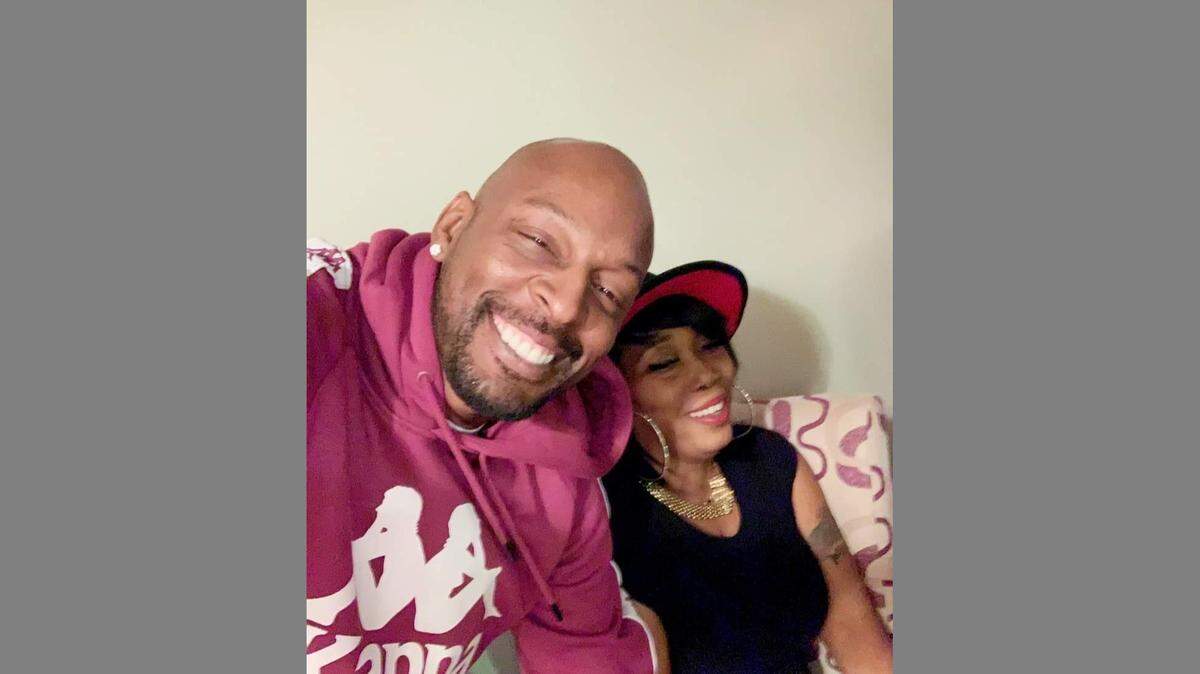
As of Thursday, the shooting death of Shirley remained unsolved. Yet Oliver, his aunt, is hopeful the killer will be caught.
“I don’t blame the Kansas City, Missouri police department because somebody knows who is doing whatever to these people and they just ain’t talking,” Oliver said.
She asks anyone who knows something about the homicide to come forward.
“We can be angry at the system and we can be angry at the people, but we can’t blame nobody but ourselves.”
In an effort to reduce the violence, Mayor Quinton Lucas on Wednesday announced details of a newly created public safety study group that will, among other things, devise ideas to reduce homicides and gun violence.
He called the number of killings in the city during the shutdown “crazy.”

‘Totally devastated’
The killing of Mauricia Strother is also unsolved.
A neighbor’s security camera recorded the sound of 12 gunshots and captured a car driving by. Strother was found in a vehicle in the 8000 block of Michigan Avenue.
After Strother was taken to a hospital in critical condition, doctors approached her family about organ donation.
For her grandmother, Amy Acklin, it brought to mind a story.
Strother was 4 or 5 years old when her grandfather went blind, Acklin recalled. The child said: “I have got to give Papa my eyes so he can see me.”
When Acklin asked how Strother would see, the girl responded: “Well I’ll just give him one eye.”
Her organs were donated when she died, days after the shooting.
“We are totally devastated,” Acklin said. “We just ask God to strengthen us and get us past this.”
Acklin worries about how many young people are carrying guns, and how many are dying. Nine of this year’s victims have been 20 or younger.
“It’s so sad that life has become so short for these children,” she said. “It’s like a snowball that doesn’t melt, but instead it just keeps rolling and it keeps getting bigger.”
Gun violence will be the subject of a new, statewide journalism project The Star is undertaking in Missouri this year in partnership with the national service program Report for America. As part of this project, The Star will seek the community’s help.
To contribute, visit Report for America online at reportforamerica.org.
The Associated Press contributed to this report.