A new gun violence plan starts in KC’s Oak Park neighborhood. What’s different this time?
READ MORE
Grappling with gun violence
Kansas City’s Oak Park neighborhood has a high homicide rate from gun violence. KCPD and local leaders are rolling out a new anti-crime plan, KC 360, in the area, but residents have doubts and their own ideas of what the city could do improve things.
Expand All
They used to call it Family Fridays.
It started with Derrick Davis firing up his red charcoal grill on the front lawn of the family home on Benton Boulevard in Kansas City’s Oak Park neighborhood. Inside the house, his mother prepared the side dishes as brothers, cousins and other relatives showed up to eat, drink and chat.
They did it every week, even when the weather grew cold and snowy. It was Davis, his mother Cynnita Oliver said, who kept the family together.
And in the summer of 2020, the 28 year old had something more to look forward to — a baby. The child would be Davis’ second daughter.
But just hours before she was born, someone shot and killed the expectant father inside the house.
Family Fridays came to an abrupt end. After that, the family barely kept in touch, Oliver said.
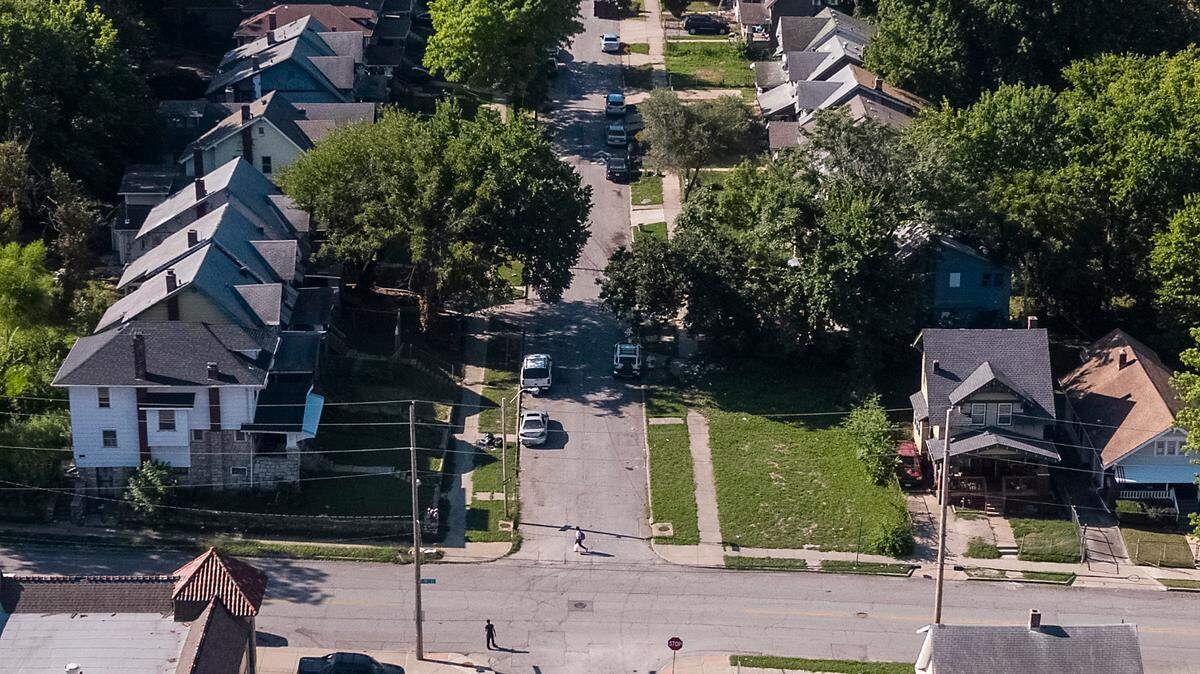
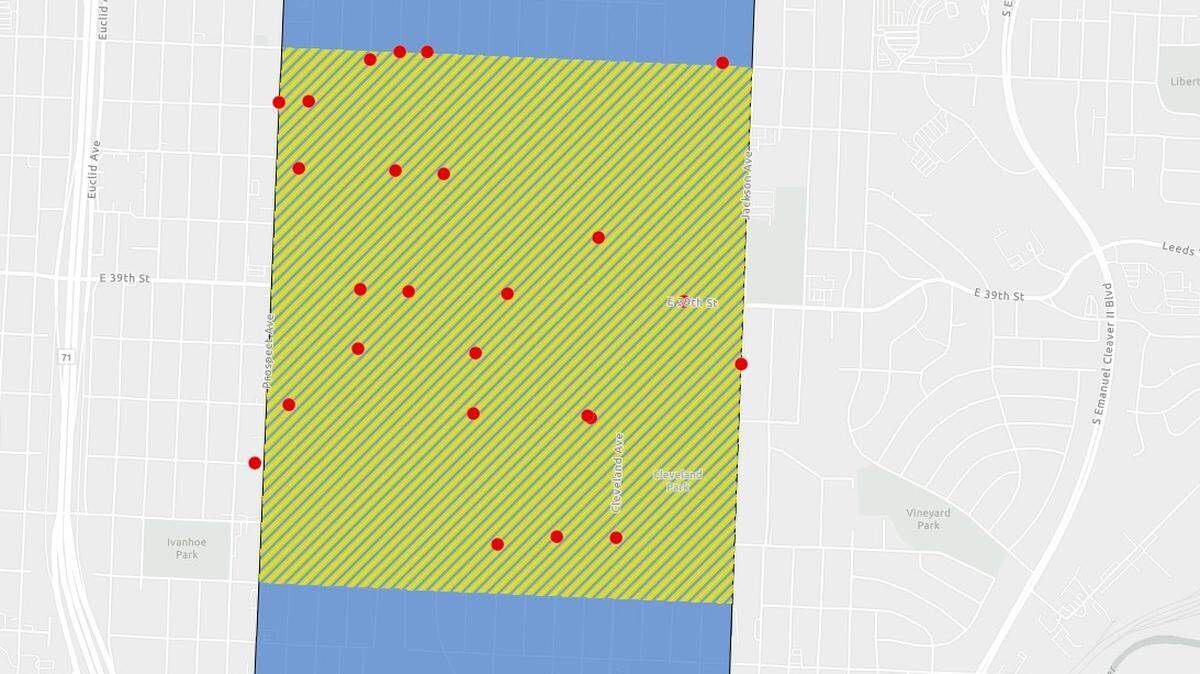
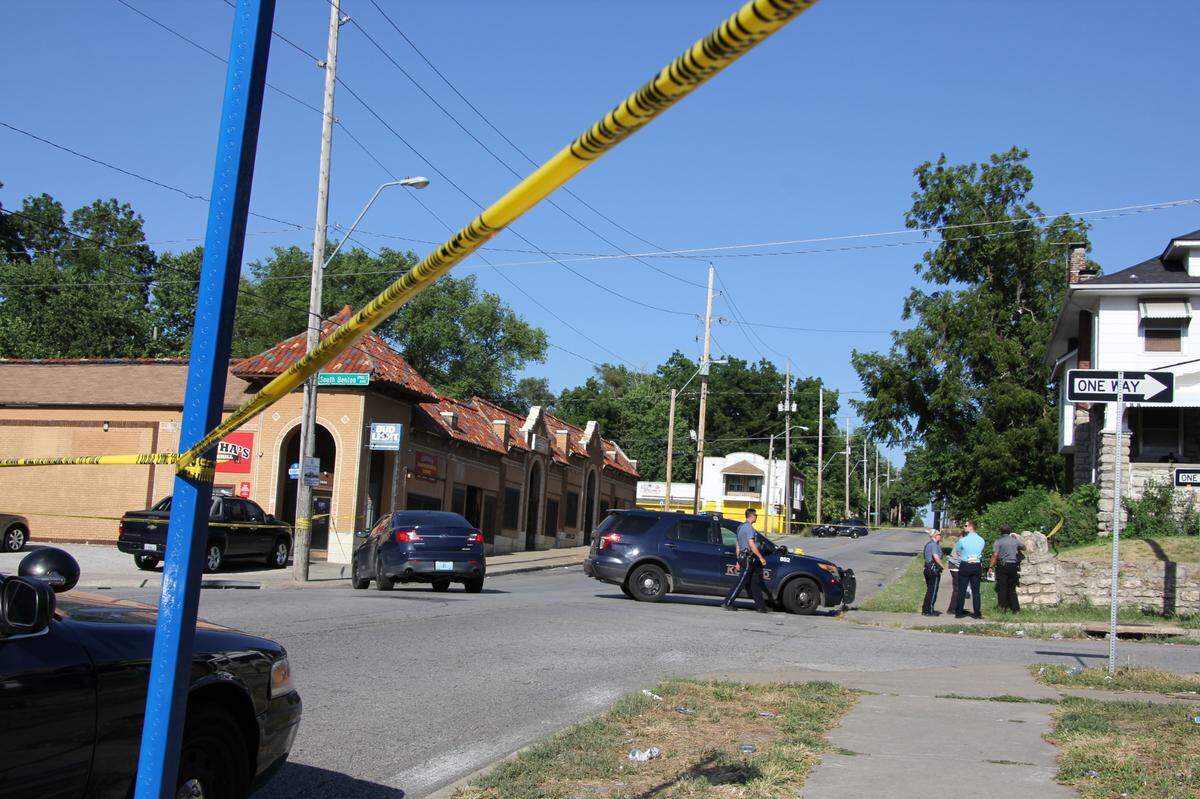
Davis was one of dozens of people killed in recent years in Oak Park, long one of the city neighborhoods most plagued by gun violence. Stretching 16 blocks from Prospect to Jackson avenues and from Linwood Boulevard south to Emanuel Cleaver II Boulevard, it has been a hot spot for homicides.
In one-square mile of the neighborhood, 27 people have been killed in the past three and a half years. The victims were as young as 15, as old as 60. Nearly all — 26 of the 27 — were shot.
Now Oak Park is a test case for a new violence prevention strategy imported from an unlikely source — Omaha, Nebraska. Local nonprofit leaders and the Kansas City Police Department have said they are rolling out a pilot program called KC 360. It is the latest in a series of efforts that have come and gone over the years, some announced to fanfare and then fading into obscurity, others failing and another scrapped by KCPD after some success.
Omaha officials have touted their program’s progress in achieving dramatic decreases in shootings and homicides. In Kansas City, leaders of the nonprofit KC Common good, which brought the KC 360 effort forward, have said they are still working out what the effort will look like here. Talking with Oak Park residents to identify their needs will be an important part of that process, they said. The program does not have city funding and will not fully launch until next year.
“These communities are often not being heard and so that’s why this grassroots approach is really critical and that’s why we’re in the planning process as opposed to a full launch because we recognize we have to build trust first,” said Klassie Alcine, CEO of KC Common Good. “Trust is key.”
When the initiative was announced at an Aug. 19 news conference, organizers had not yet met with Oak Park Neighborhood Association President Pat Clarke, who said he was not invited to the event.
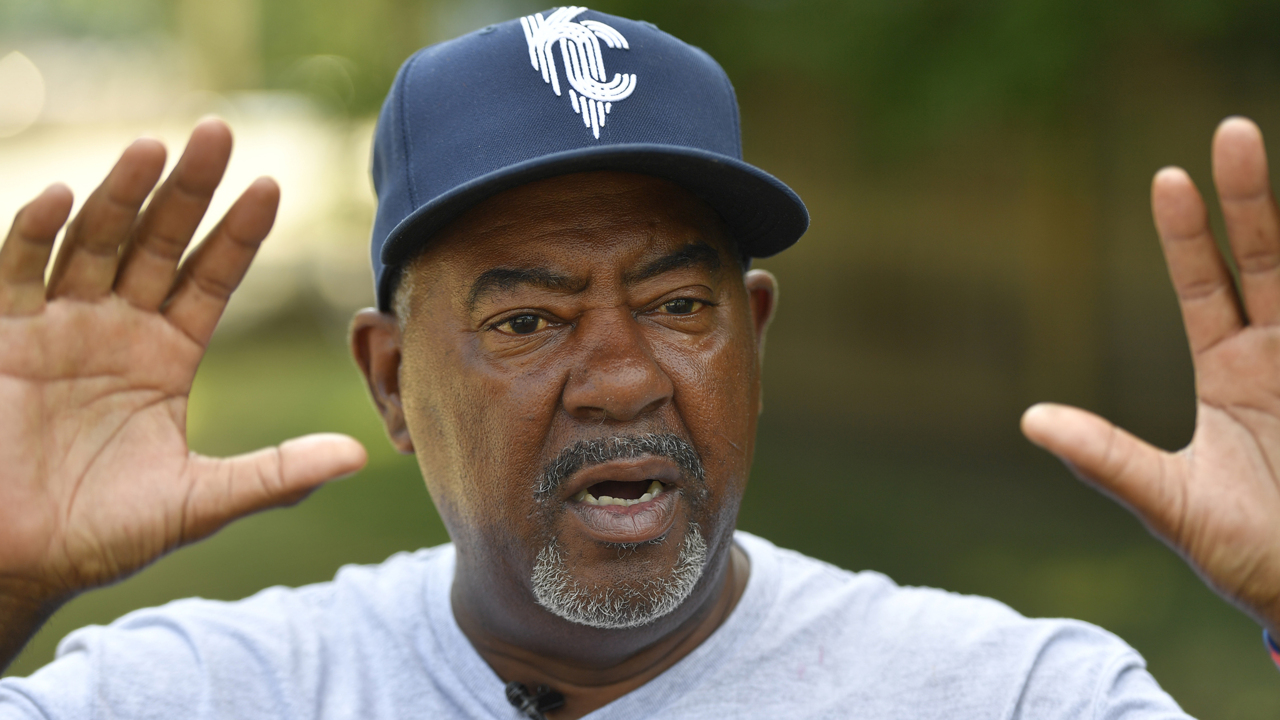
Clarke, 58, grew up on the 4000 block South Benton Avenue. He remembers when the neighborhood had a movie theater, bowling alley, grocery stores and a diner. But it’s suffered from decades of disinvestment.
He said he’s unsure how successful KC 360 will be if there isn’t enough community input.
“You have to utilize the people that are really working out here,” he said.
Among more than a dozen residents approached by The Star after the news conference, only one had heard of the initiative, because he works for a local advocacy organization. He said he was doubtful that it would have an impact.
Others had their own ideas for improving life in the neighborhood.
A man who works in roofing construction grew up in Oak Park but has been homeless and wants to see more affordable housing. A convenience store employee who has worked at the shop at 43rd and Cleveland for 25 years said he was in favor of better housing and more development, including restaurants.
Bus riders at 39th and Prospect had a range of ideas: establish a jobs center for daily work, expand bus services, reduce racial profiling, get automatic weapons off the streets, have more programs for residents to get help with tasks like trimming trees and painting their houses.
One man waiting for the bus, La Winstead, had not heard of KC 360, but said for it to work, the group needs to reach out, communicate and listen to people.
When it comes to addressing gun violence, experts point to evidence-based strategies that tackle social determinants like income, housing, food security and schools. They also recommend having a comprehensive approach to violence prevention and improving trust between police and the community.
Mayor Quinton Lucas is quick to point out the city is doing more.
With KC 360 handling the prevention side, the city’s strategy is now focused on violence interruption, Lucas said. KC NoVA, the much-lauded violence interruption program killed by former police chief Rick Smith, is being revived by a coalition of groups under the banner of Partners for Peace. To that end, the city is working with a network of organizations, such as Ad Hoc Group Against Crime and the Center for Conflict Resolution.
In Aim4Peace, the city has its own local arm of Cure Violence, an intervention model that has been effective in other cities.
“There’s like 50 other programs,” Lucas said. “The challenge is once you have so many, it’s kind of hard to know which one to reach out to and which one is doing what and I think it then leads to sometimes our lack of creativity in what solutions are.”
Lucas said he thinks renewed efforts will lead to more coordinated action, especially with new leadership at the police department.
But nothing in recent years has proven able to stop gun violence from growing worse then ever.
In 2020, the year Davis was killed at his home, the city set a new record with 182 homicides. The next year saw 157. And so far this year, Kansas City has recorded 111, including seven in Oak Park.
Daughter without a father
Davis was working as a cook at Hotel Indigo downtown in June 2019 when he started making breakfast for a housekeeping employee whose shift also started at 5 a.m.
Her name was Kristal Findley. They started off as friends and he began inviting her to Family Fridays.
When Findley got pregnant, Davis was excited, she said, though they saw each other less often because she was being cautious about COVID.
Her water broke on the morning of Aug. 9, 2020. She was in labor at the hospital when she found out on Facebook that Davis had been killed.
The baby, Laina, looked like Davis.
“I felt like it was him,” Findley said.
She said she doesn’t know why Davis was killed. The family had suspicions about who was responsible and was eager to see the case go through the legal system. A suspect was later charged, but died in a hospital and the case was dismissed, according to Jennifer Dameron with the Jackson County Prosecutor’s Office.
Oliver, Davis’ mother, believes others may have been involved in setting up the shooting, but doubts her family will see justice because the case is closed.
She feels like the police and prosecutors gave up on the investigation and that this lets people “slide by” without consequences.
“Don’t you think there should be more justice than that?” Oliver said.
She had not heard of KC 360 and doesn’t have much hope things will change, with or without the program.
Police and community relations
KCPD Maj. Kari Thompson was not unfamiliar to the two dozen people gathered in the auditorium of Central Middle School one August evening.
She had been in the news as a department spokeswoman for years, and has served as the East Patrol division commander for about a year and a half. She is a candidate to take over as chief of police.
Standing up to address this meeting of the Oak Park Neighborhood Association, she started off light, noting that she had worn sandals to be a little more comfortable. The group chuckled.
Then, Thompson turned serious.
She began reciting the latest crime statistics for the neighborhood, which were also detailed on a sheet of paper distributed to the group.
There has been an increase in homicides this year in Oak Park. Assaults are way up, with 241 compared to 193 at this time last year. Car thefts have also increased, though there have been 14 fewer robberies compared to this time last year.
A few residents expressed concerns about calling in a crime and being met with a slow response. One woman shared her experience of hearing a shooting in front of her home a couple years ago and how that made her afraid to let her teenage grandson wait for the school bus. He later became a homicide victim.
Thompson walked up to the woman and gave her a hug. Later, she took down contact information from the other residents to check on the police’s response.
Lack of trust in police has long been a problem in Oak Park and has only gotten worse in recent years. Researchers across the country have found that a lack of trust in police is a driver of gun violence, causing fewer witnesses to come forward and cooperate with investigations.
Of the 27 most recent homicides within a mile area of Oak Park, at least 48% remain unsolved.
One of the slayings was the 2019 police shooting of Cameron Lamb which further fractured trust between the community and police.
Lamb’s name rung out during the 2020 protests, and the trial of the detective who killed him became a watershed moment in Kansas City. The detective’s conviction hastened the forced exit of Smith, who had deemed Lamb the “bad guy” minutes after the shooting.
To garner allies, Thompson said, officers in East Patrol have been creating “intentional, pro-active instances of contact with our community that are not enforcement related.”
Some in the neighborhood and beyond directly attribute a lack of allies to Smith.
Forest Tyson Jr., the association’s vice president, said residents lost trust during the former police chief’s five-year tenure. In particular, Tyson said, Smith lost credibility when KC NoVA was dissolved with no public explanation.
The program was credited with reducing homicides to a historic low in 2014. Abandoning the program gave the green light to criminals that they could “do whatever,” Tyson said.
‘Hits close to home’
Third District Councilwoman Melissa Robinson’s two sons spend half their time at their father’s house in the Oak Park neighborhood, which is on the western side of the district she represents.
In winter 2020, she asked them what they wanted for Christmas.
They both said bulletproof vests.
The boys, then ages 7 and 12, weren’t joking. They hear gunfire and see people walking around with large automatic weapons, Robinson said.
“It is something that hits close to home for me, having two young African American males that have to be in the midst of that,” she said.
Crime needs to be tackled, she said, by clearing out the known illegal activities going on while also being intentional — and empathetic — about longer-term solutions like access to employment.
One man who recently wrote to her said he was returning from the penal system and having a hard time getting a job because of his record. He wanted to buy school supplies for his kids, but turning to illegal activity was the only way he could get money right now.
“What’s going on behind the scenes is very real,” Robinson said.
“When people don’t have access to basic necessities, individuals become desperate and they do desperate things, and we need to acknowledge that and we need to figure out how the city can work on the back end of the desperation people are feeling.”
In February, Robinson sponsored a $500,000 measure to support prisoner reentry, food security, mental health and small business growth.
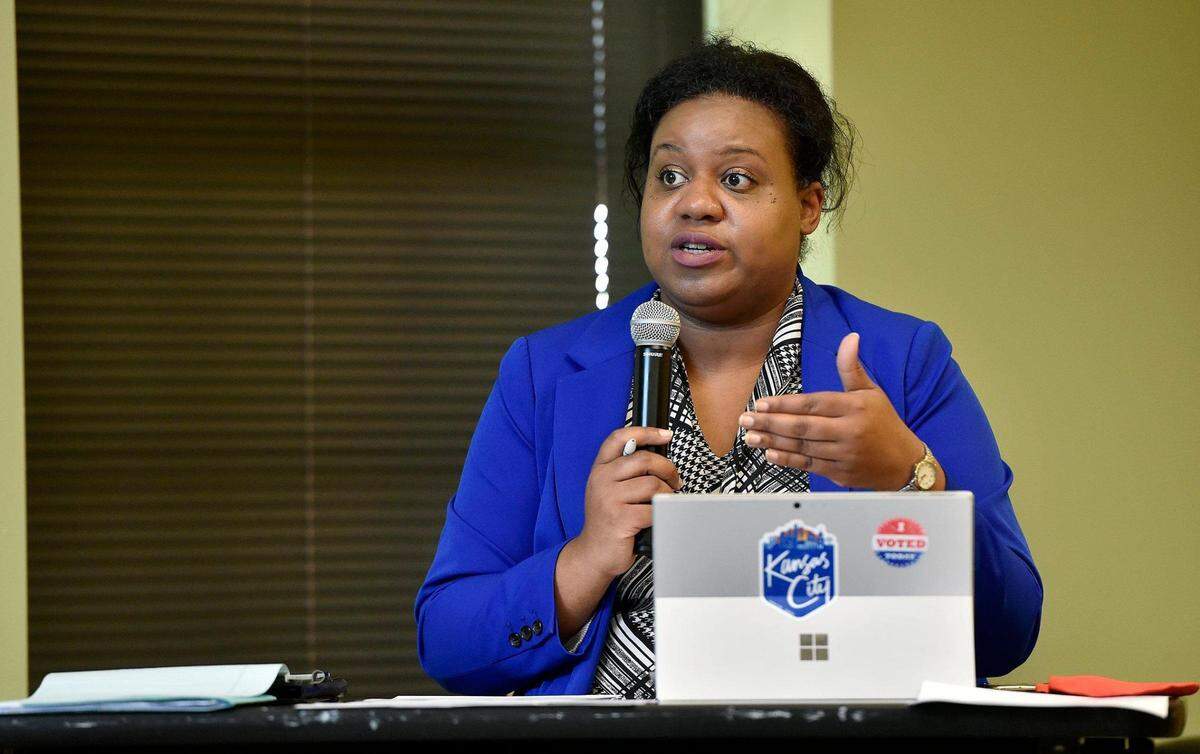
The council tabled the proposal, but at least one of those groups will be funded using federal money. Kansas City received about $194 million from the American Rescue Plan Act. About 8% or $15.7 million is earmarked for neighborhood improvements through Rebuild KC which awarded grants Aug. 18.
Robinson also pointed to major investments in the KC Streetcar, 2026 FIFA World Cup and the new airport terminal and said areas of disinvestment should get attention, too.
“There should be one central conversation about what are we doing to address the urban, the East Side and the urban community? And making sure that there’s balance.”
Anti-violence efforts over the years
In summer 2020, the Kansas City Health Department published a blueprint on violence prevention which identified risk factors.
The blueprint outlined an outreach strategy through various sectors of society, including education, faith groups and local government. For the past two years, the health department has worked on those ideas. But parts of it have been delayed because of the pandemic.
Health Department Director Marvia Jones said addressing violence with a public health approach “requires commitment over a long term to say ‘We’re all going to work together, we’re all going to think about health and equity in all of our different roles.’
“We have to focus resources on areas just like (Oak Park) to see what is it that we can do around not just connecting people to resources, but making a sustained investment in addressing social determinants of health in that area.”
U.S. Census data shows Oak Park continues to be left behind.
Both ZIP codes that cover the neighborhood have low median household incomes. In 64128, the median annual income was $27,045, less than half the city’s $56,179 median.
About 8% of the ZIP code’s residents hold a bachelor’s degree and about one in four homes sits unoccupied, over double the citywide rate of 11%.
A couple months after the blueprint was released, Lucas announced another ambitious strategy that brought together the mayor’s office, the prosecutor’s office and the police department: Reform Project KC.
But it “kind of fell flat,” according to Melesa Johnson, deputy chief of staff for Lucas’ office.
No one knew who owned the initiative.
Next, city officials trumpeted a third program, the Community Safety Partnership.
But it didn’t have full buy-in from the major stakeholders. About a month ago, it was rebranded as Partners for Peace, Johnson said.
In this framework, weekly meetings with various stakeholders including nonprofits help with collaboration, she said. A subcommittee on violence interruption began convening three weeks ago.
Much like KC NoVA, their work is focused on violence intervention by working with people at risk of committing a crime, stopping retaliation and connecting people to services.
“We believe that if we can assist them, we can get them out of the cyclical nature of violence in certain pockets of our city. So in the short term, we would like to see less shootings,” Johnson said.
“In the long term, we would like to see sustainable reduced shootings. We would like to see this program become so successful that no matter who is in the mayor’s office, no matter who is in the chief’s office, no matter who is in the prosecutor’s office, we have been able to demonstrate such success that we really take a long term paradigm shift towards helping people instead of just trying to arrest our way out of this problem.”
Lucas said the previous plans built on each other and they learned what worked and what did not. Recording under 100 homicides a year remains a goal.
Another pillar — violence prevention — has been outsourced to a local nonprofit. It’s called KC 360.
A new program
KC 360 is modeled on an initiative in Omaha, where officials say they have achieved a 74% drop in shootings in the past 15 years.
Omaha invested in a range of areas from housing and education to targeted neighborhood outreach and entrepreneurship.
Kansas City’s 360 effort was first announced by interim Police Chief Joseph Mabin who said in July that the pilot program is being rolled out in the Oak Park and Santa Fe neighborhoods.
KC Common Good, which is leading the local effort, was founded in 2018 with a focus on addressing the root causes of violence. Lucas, along with leaders in violence prevention, business and the faith community sits on the nonprofit’s board.
Gregory Jackson is the executive director of the Community Justice Action Fund, a nonprofit working to decrease gun violence in communities of color. He said he had not heard of Omaha’s 360 program. But the most effective gun violence prevention strategies, he said, are culturally competent and led by or reflect the communities where gun violence is happening the most.
The fund recently gave Kansas City 42 out of 100 points on a community violence intervention scorecard. Jackson credited the health department’s work, but encouraged Kansas City to focus on the root causes that drive violence.
KC 360’s strategy is still in development. Leaders say that although the program won’t be off the ground until next year, eventually community organizations and residents will meet weekly.
“There’s going to be a lot of ‘Can we really do this?’ And I get this, people are exhausted,” said Alcine, KC Common Good’s CEO. “But I think the benefit of this model is thinking smarter. We have a model that’s been effective (in Omaha), let’s take the best practice and actually invest into doing this for 10 years. That’s where we’re standing out.”
The nonprofit will seek to diversify its funding so that the program is sustainable, Alcine said, adding that the budget is “still being solidified.”
The city has not committed any money yet.
‘A little bit of heartburn’
Some are not fully on board.
Councilwoman Robinson said the data from Omaha is compelling. But she noted the city already has the health department’s blueprint and 80 groups are connected to that plan.
“Don’t just create something new, implement what you have,” she said, adding that there’s been a recommendation to fully fund Aim4Peace because the program has worked.
But instead, the violence interruption program run through the city’s health department has had its funding cut from $1.75 million in 2020 to $1.24 million in 2021 to $1.02 million in 2022. Mayor Lucas said funding is likely going towards other efforts.
Robinson said she does “have a little bit of heartburn. While I don’t want to turn away any chance for help, I do have some issues with not fully implementing what community has said we needed to do and just jumping onto a new thing.”
Clarke, Oak Park neighborhood association president, said he wasn’t invited to KC 360’s Aug. 19 announcement. He found out about a 10 a.m. KC 360 meeting on Aug. 20 just a couple hours before it was scheduled to take place.
Standing by the basketball court that bears his name near 44th and South Benton Avenue, he talks about the hardships families in Oak Park face, like kids who have only pop to drink for dinner. He talks about seeing a teenager carrying around an assault rifle and kicking him out of the park. He talks about how he wants to see Black entertainment return to the area.
He and Tyson, the neighborhood association vice president, would love to see a bowling alley or skating rink come back.
Tyson said he also wants the former Martin Luther King Junior High School building near 43rd and Indiana to be turned into a job training center.
Clarke said KC 360 will only work if it utilizes people that are already on the ground who have an intimate understanding of the neighborhoods. So far, he hasn’t seen that happening.
Two-year memorial
In the two years since Derrick Davis died, Oliver, his mother, has struggled.
She left the house where they lived and where he was killed, for a time becoming homeless or staying in a mental health facility. Recently she found a new place in Oak Park and a new job as a dietary manager at a nursing home.
“I just prayed and pulled it together,” she said.
On Aug. 9, his family gathered at Oliver’s new home to mark the anniversary of his death.
His ashes rested in a silver urn surrounded by three framed photos on a table on the porch. Family members sat around the table telling funny stories about him, recalling how much he loved to cook and marveling at how much his daughter Laina looks like him. In the two years since Davis has been gone, she has begun to learn to walk.
On the driveway, his uncle Antonio Hall flipped chicken on the red grill that used to belong to Davis. Hall said more needs to be done to pass stricter firearms laws.
“Right now it’s so easy to get guns,” he said.
At times, Oliver smiled remembering her son and her face lit up whenever Laina toddled up to her.
But the hurt she has suffered rises easily to the surface. Oliver doesn’t trust the police and said she wouldn’t turn to them for help. She doesn’t think Lucas cares about what happens in Oak Park. She believes the city has prioritized other things rather than life or death problems like shootings and homicides.
“This city doesn’t give a damn about you,” she said. “It’s just going to be the same.”