This anti-violence strategy has shown results. But Kansas City hasn’t invested in it
READ MORE
A Cure For Violence
A public health program might be Kansas City’s best chance at preventing gun violence. Will City Hall ever bet big on it?
Expand All
As midnight neared on a fall night in 2014, a fight broke out between some kids at Night Hoops, a popular event hosted by former Mayor Sly James.
After several of the teenagers were asked to leave, they ran to their cars, only to return with their backpacks in hand. They tried to re-enter Hillcrest Community Center, which was filled with over 200 people.
Salahuddin Abdul-Waali, along with three colleagues from Aim4Peace — a city violence prevention program — quickly assessed the situation. Guessing that the teens had come back with firearms, they blocked the entrance, two on the inside and two standing outside. Eventually, they were able to talk everyone down, and the crowd began thinning out before police arrived.
“There was a whole lot on the line, so we had the good fortune that night that those young people went ahead and dispersed,” he said. “Aim4Peace put out a ton of fires.”
Aim4Peace, modeled on the national Cure Violence public health approach, represents one of Kansas City’s only viable strategies for reducing gun violence. But City Hall has never expanded it beyond a pilot program. It has been running on minimum funding for years and has seen its budget cut repeatedly.
While other cities, including St. Louis, bet big on the Cure Violence model to the tune of millions of dollars, Kansas City has not, even after breaking its homicide record last year with 182 killings. Years after the Kansas City Police Department effectively gave up on the KC No Violence Alliance, once touted as the most advanced law enforcement approach, the city is left with few new ideas.
The Cure Violence strategy, popularized in Chicago, depends on conflict mediation by trained staff rooted in communities, not law enforcement.
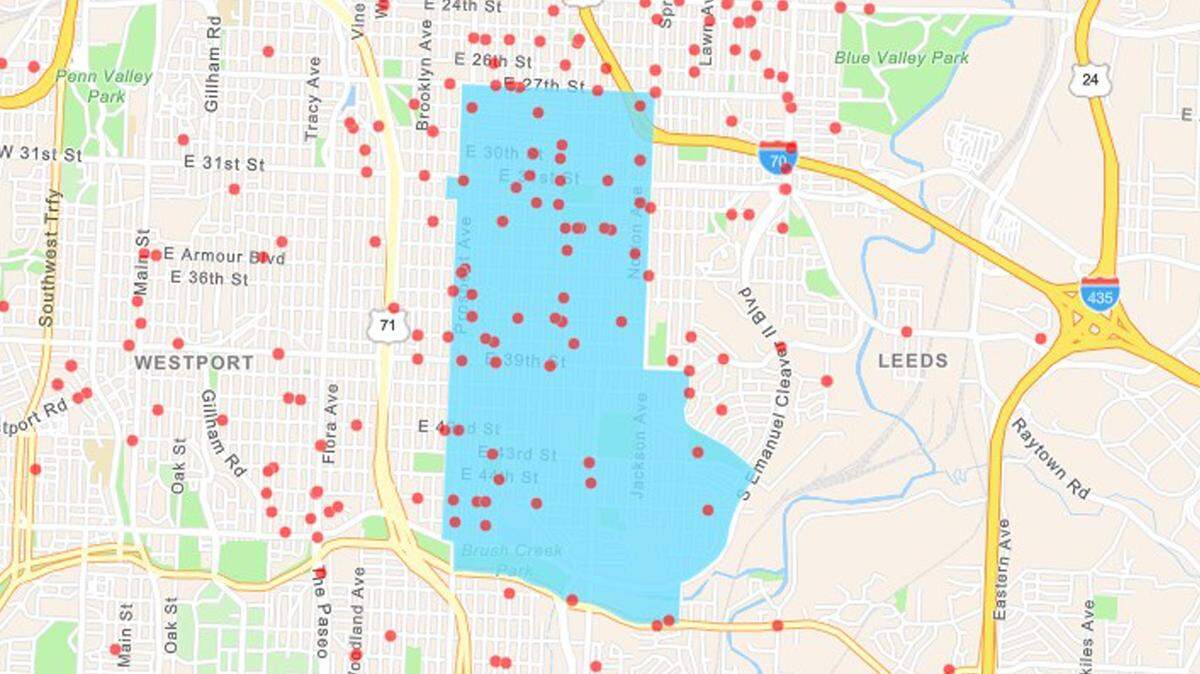
Kansas City’s Aim4Peace program has been run by the health department since its founding 12 years ago. It’s always been limited to a 20-by-25-block section of the east side of the city, including the Santa Fe and Ingleside neighborhoods.
At its peak in 2014, when it had 18 community health workers, the neighborhoods recorded five total homicides, city and police data show.
But by 2020, after budget cuts, the program had only five health workers left. Homicides in the program’s operating area jumped to 18.
This year, the city allocated less than $440,000. Program leaders say Aim4Peace would need $1.2 million to be effective in its current operating area — that’s less than 1% of the Kansas City Police Department’s budget. It would take more to expand across the city.
Rashid Junaid, violence prevention supervisor at Aim4Peace, said the program works when it is adequately funded. But city leadership has neglected it.
“It’s disheartening, it’s like disbelief,” he said. “They don’t realize they have a Cure Violence site here. We feel unappreciated. And the people don’t realize the value of the program that we already have been implementing.”
Mayor Quinton Lucas, in an interview with The Star, said he would give thought to an ordinance increasing city funding for Aim4Peace.
“I would consider it,” Lucas said. “I think that at a certain point, and maybe Kansas City is not there yet, we need to understand that these conversations are not in silos.”
St. Louis, which also has severe gun violence problems, launched its own Cure Violence program last year with a $7 million investment in three neighborhoods. So far, health officials there say, the neighborhoods are on track to see violent crime reduced by half by the end of the year.
In Kansas City, critics argue that the record homicide numbers mean Aim4Peace is not working well and a different strategy should be developed. They also say that reduction in gun violence in the area the program serves just means crime was pushed to other neighborhoods.
The program’s defenders say the inadequate funding means the program was never given a chance and it was never expanded beyond a few neighborhoods.
Ken Novak, a professor of criminal justice and criminology at the University of Missouri-Kansas City, said the Cure Violence model has been rigorously evaluated in multiple cities and has shown results.
“So more likely than not, places that implement the violence interrupter, or Cure Violence model, tend to see positive results,” he said. “It is an evidence based crime prevention strategy.”
Early success, budget cuts
Aim 4Peace saw success early on, receiving national awards showing reduction in gun violence.
However, even as the program brought in accolades for the city, it was surviving by stringing together grants from the federal government and nonprofits. The city typically contributed about $400,000 each year.
After startup funding from the national Cure Violence organization and several large federal grants ran out, staffing dropped by about 70% over five years.
By the beginning of this year, the community outreach program had been completely cut. Now staff respond only to hospitals to counsel people injured in shootings and their families, to try to prevent retaliation.
Without staff in the streets, it’s harder to prevent the shootings from happening and harder to respond.
To truly evaluate the effectiveness of the program, staffing needed to remain at levels that allow it to maintain a consistent presence in the priority zone, according to a review of Aim4Peace by The Work Group for Community Health and Development at the University of Kansas in 2015.
Abdul-Waali left Aim4Peace that same year, when the program was near its peak. When he returned four years later as a supervisor, the program had “flatlined,” he said.
Still, he stayed for years, until his job was cut in April. He was transferred to another position in the city’s health department unrelated to violence prevention.
Now, at 51, Abdul-Waali is planning on moving away from Kansas City for the first time in his life.
He feels there’s not much more he can do in his hometown, where he has seen conversations about violence prevention go in circles for decades. He feels let down by his city and its leadership, who, he says, has not taken solutions outside of policing seriously.
He’s frustrated by city leaders who say they don’t have money for Aim4Peace while the city invests heavily in other projects.
“You got money to develop these communities that have been torn down by violence and drugs,” Abdul-Waali said. “You’ve got the money.”
Cure Violence in other cities
It took six years to get the funding approved to start St. Louis’ Cure Violence program, said Lewis Reed, Board of Aldermen president.
Convincing city leadership to kick off the initiative with a large investment wasn’t easy, he said.
“We were going up against an entrenched system — a system where they said, ‘Well, hot spot policing is all we need.’ A system where, you know, the typical approaches to addressing issues of violent crime are those approaches that people believe are the only way we can address it,” Reed said.
But when the city made national headlines for its rate of gun violence in 2019, the alarming numbers put pressure on city leaders to act. Moms Demand Action, an anti-gun violence advocacy group, lobbied the city government for the program, adding to pressure from local voices.
The program has been operational for only about one year, but early results have been promising.
In a May update to the Board of Aldermen, the city shared preliminary data showing the three neighborhoods where the program was operating were on track to have a 50% reduction in violent crime.
With positive numbers, aldermen in other sections of St. Louis City have asked for the program to be expanded to their districts.
But the already established sites will need to be evaluated more before the program is scaled up, said Dr. Fredrick Echols, acting director of the St. Louis City Department of Health.
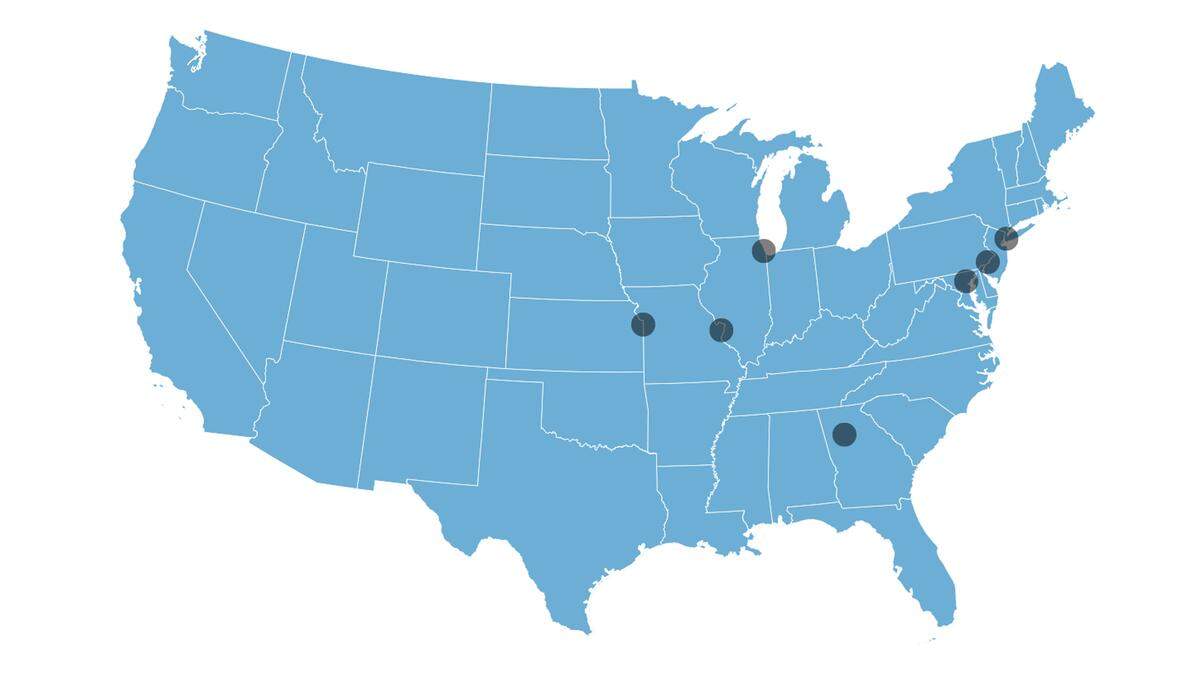
Other cities across the country are launching Cure Violence programs or are investing more after seeing success.
The model is spreading and demand is high, said Charles Ransford, senior director of science and policy at Cure Violence Global.
“There’s just more cities that are interested in (the program) than we can help because of our capacity,” he said.
Since the model was implemented in New York City in 2010, it has expanded to over a dozen sites throughout the city. Mayor Bill de Blasio announced the additional expansion of the program this summer.
He plans on budgeting an additional $120 million to the city’s Crisis Management System in 2022 to go toward initiatives like doubling the number of violence interrupters across 31 sites and expanding services to more police precincts, hospitals and school systems.
Baltimore Mayor Brandon Scott recently announced that $50 million of the city’s American Rescue Plan Act money will go toward violence prevention over the next three years, including the city’s Safe Streets program.
In Atlanta, Mayor Keisha Bottoms asked that $5 million of the city’s COVID-19 federal allocation go toward expanding the Cure Violence program, which launched there this year.
Kansas City is not using any ARP funding for violence prevention, according to Maggie Green, with the city communications office. The funding has been prioritized for things like housing and homelessness services.
Billions in federal funding for violence prevention is also on the horizon for cities. The Build Back Better bill’s most recent draft has retained a $5 billion budget to fund community level violence intervention programs, part of President Joe Biden’s larger plans to combat gun violence.
BEHIND THE STORY
MOREWhy we did this story
Kansas City recorded the most homicides in the city’s history last year, with 182 killings. Earlier this year, reporters with The Star’s Missouri Gun Violence Project learned that Aim4Peace, Kansas City’s public health-modeled violence prevention program, was struggling with a lack of funding. Meanwhile, city leaders have been calling for solutions to gun violence and increased funding for violence prevention.
The team decided to look into why the program in Kansas City was faltering while the Cure Violence model for violence prevention has been growing nationally. Read more by clicking the arrow in the upper right.
How we did this story
To research this story, a reporter from The Star analyzed city data that tracked the program’s funding and effectiveness since it was launched in 2008. That included police department data that showed the numbers of homicides recorded within Aim4Peace’s operating zone. The reporter interviewed officials in City Hall, as well as public health experts and violence prevention experts, and spoke with Cure Violence program leaders in other cities to understand the impact of funding on the efforts.
The reporter also looked through the city clerk’s documents to understand the actions taken by City Council on the Aim4Peace and to find letters of support for the initiative.
What is the Missouri Gun Violence Project?
The effort is undertaken as part of the Missouri Gun Violence Project, a two-year, statewide solutions journalism collaboration supported by the nonprofits Report for America and the Missouri Foundation for Health.
The federal administration has been holding meetings with the Community Violence Intervention Collaborative, a group of 16 jurisdictions that have committed to using ARP or other public funding to scale up and strengthen their community violence intervention efforts.
St. Louis is part of the collaborative group. Kansas City is not.
The fight over Aim4Peace
Critics on the City Council are not convinced that Aim4Peace’s internal data is enough to prove the program has worked.
“When I got on council, we started looking more, particularly after I got appointed to the Health Commission, and I saw data that suggested that [Aim4Peace] really did not do very much,” said Dan Fowler, Kansas City’s 2nd District council representative.
City Councilman Brandon Ellington has also expressed doubt about the program’s effectiveness.
“That’s almost impossible to judge because there are no metrics of ‘We talked to candidate A and candidate A hasn’t committed violence against anybody.’ They don’t keep that record,” said Ellington, who represents the 3rd District. “You can’t say that no gun violence happened after somebody was talked to because that evidence isn’t actually tracked or kept.”
Ellington has argued that the federal grants that have sustained Aim4Peace over the past decade would be better allocated to smaller grassroots organizations.
The councilman’s ordinance to create an Office of Citizen Engagement passed in February — the new city department that would act as a resource hub where smaller groups could apply for city funding while getting help to write grant proposals. The office will also act as an open source for community members to learn about resources available through the city.
The administrators will regularly require data showing metrics of success from the organizations they fund, he said, something Ellington argues Aim4Peace has not shown.
Ellington said his mission was to expand the diversity of violence prevention programs in the city and to increase the kinds of services they provide — like job placement and other wraparound services.
In May 2020, Ellington introduced an ordinance to defund Aim4Peace.
More than half a dozen public health officials, religious leaders, community leaders and medical professionals wrote in support of Aim4Peace.
Aim4Peace works, they argued, and cutting it would hurt Kansas Citians.
Dr. Michael Moncure, a trauma surgeon at University Health in Kansas City, said Aim4Peace’s hospital program led to a drop in the rate of victims returning with new gunshot injuries, even as overall violent crime rates increased in the city.
Prior to Aim4Peace, patients were returning with new gunshot injuries at rates of 40% to 50%, Moncure said. Those dropped to about 10% once they interacted with the program.
The program also helped stem retaliations, he wrote.
“I would say, definitely hundreds, hundreds of individuals have been saved by virtue of having Aim4Peace,” he said in a recent interview.
The city’s health commission also defended Aim4Peace.
“The Health Commission feels strongly that the community-based, public health approach represented by Aim4Peace is the only violence prevention approach that also responds to the racial inequities that are driving much of the violence in the Kansas City region,” wrote Dr. Erica Carney and 5th District Councilwoman Ryana Parks-Shaw, commission co-chairs.
They recommended that funding for violence prevention efforts be increased, not decreased.
The Rev. Eric Williams, Calvary Temple Baptist Church pastor and executive director of Calvary Community Outreach Network, wrote that he has worked in collaboration with Aim4Peace since the program’s inception.
“They have helped to de-escalate retaliation and prevent the occurrence of multiple crime scenes as a result of one incident. The fact that they are in the community and on the street is a valuable asset,” he wrote.
The City Council ultimately voted against defunding the program.
The problem is that violence prevention programs have not been prioritized in Kansas City even as the city has continued to invest in law enforcement, said Melissa Robinson, councilwoman for the city’s 3rd District.
Robinson introduced a measure to get at least 1% of the city’s general fund, almost $6 million, to go toward violence reduction — primarily treating gun violence as a matter of public health and creating wraparound services. The city currently spends just under $2 million.
Aim4Peace is part of the KC Blueprint for Violence Prevention and Healthy Communities, a strategy adopted by the health department as a plan to address community violence.
As of October, eight of the 24 objectives were in progress. Six were completed.
It will take an organized campaign from community members affected by gun violence and program leaders to convince the City Council to increase funding for violence prevention, Robinson said.
“What we’re doing is not working.”
This story was originally published November 10, 2021 at 5:00 AM.