Here’s an inside look at 10 artworks you’ll find at the new KCI airport terminal
READ MORE
New KCI terminal will have city’s largest public art project
The pieces, selected from among more than 1,900 submissions, are meant to represent Kansas City and its history. The goal: to make the airport feel like the living room of Kansas City.
Expand All
Here’s an inside look at 10 artworks you’ll find at the new KCI airport terminal
Artist paints portraits of diverse Kansas Citians for airport’s new terminal
Interactive: See where these artworks will be located in the new KCI airport terminal
‘A place worth living:’ Kansas City’s One Percent for Art program explained
Vote in our poll: Which of these 10 artworks for the new KCI terminal do you like best?
When travelers walk into Kansas City International Airport’s new terminal next year, they’re not just going to see different ticket counters and gates.
They’re going to discover the largest public art project in the city’s history, with surprises around every corner.
Above them in the massive check-in hall, the visitor will see a sculpture made from thousands of colorful wind spinners in the image of bluebirds, ice cream, turtles and honeybees. Further inside, they’ll find a “fountain” made of light, and birds fabricated from saxophones in homage to Charlie Parker.
Those are just a few of the 28 commissioned artworks scheduled to be in place when the $1.5 billion, one million-square-foot single terminal opens in March 2023.
The pieces, selected from among more than 1,900 submissions, are meant to represent Kansas City and its history: jazz, aviation, and the diversity and displacement of people of color from the land. Of the artists chosen, 75% are based in the Kansas City area or have significant ties to Kansas City. Likewise, 75% are artists of color or women.
The $5.65 million project is funded through the city’s One Percent for Art Program.
The goal: to make the airport feel like the living room of Kansas City.
“You know, the comfortable place,” said James Martin, Kansas City’s public art administrator. “Where it’s welcoming them home and then showing off the great art community we have to the people that are arriving here for the first time.”
This spring, The Star was part of a media tour where officials provided an update of the new terminal. As part of the tour, Martin pointed out the spaces where the art pieces — which are still being created — will go.
Here’s an early look at what to expect and an inside view of what 10 selected pieces are all about, in the words of the artists themselves.
Nick Cave, “The Air Up There”
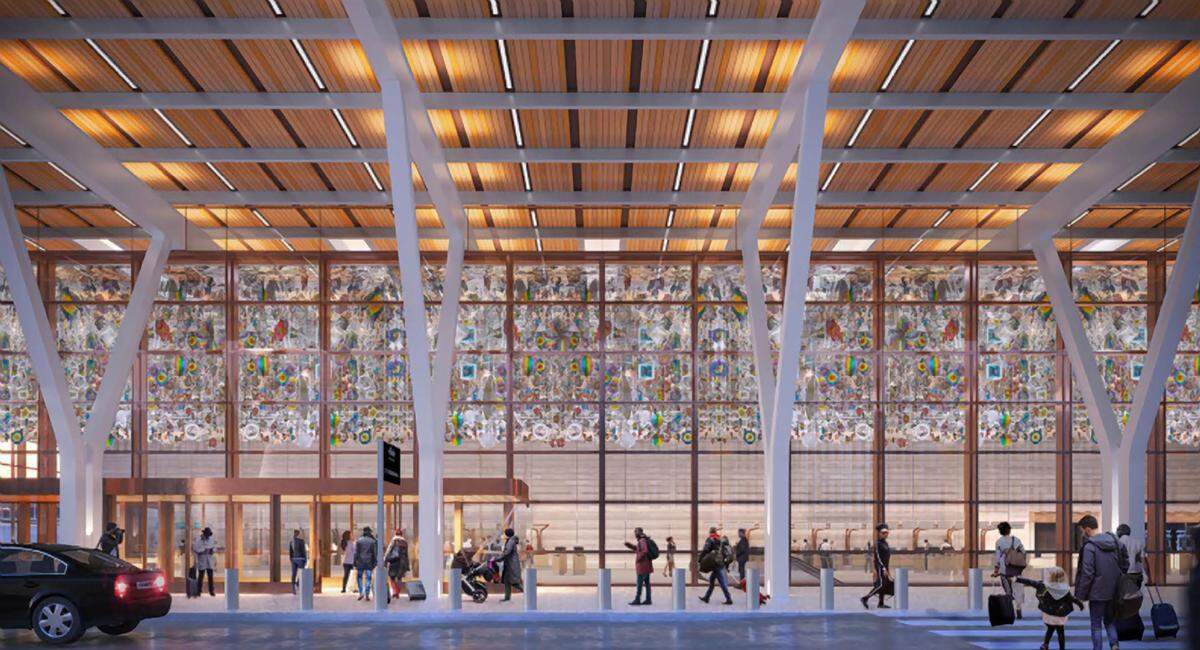
On the ceiling of the terminal’s massive check-in hall, Midwest artist Nick Cave’s kinetic sculpture made from thousands of wind spinners will be one of the first works many travelers notice.
The effect will be that of a forest of wind spinners moving in air currents in the space high above the floor.
“I hope the traveler passing beneath my work has a feeling or a reaction akin to what they might feel when looking up at a sky filled with stars,” Cave said. “The idea of great potential, new experiences and the possibilities that dreams ignite.”
Many of the spinners will represent themes of Missouri — specifically Kansas City. As a graduate of the Kansas City Art Institute, Cave, who was born and raised in Fulton, Missouri, said Kansas City continues to hold a significant place in his heart. He added that being selected for this permanent work is not only an honor, but a way to continue his residency in Kansas City.
“This premiere location makes me feel proud but also humbled,” he said. “I look very forward to standing under the work and sharing it with the city’s travelers.”
Jill Anholt, “Sky Prairie”
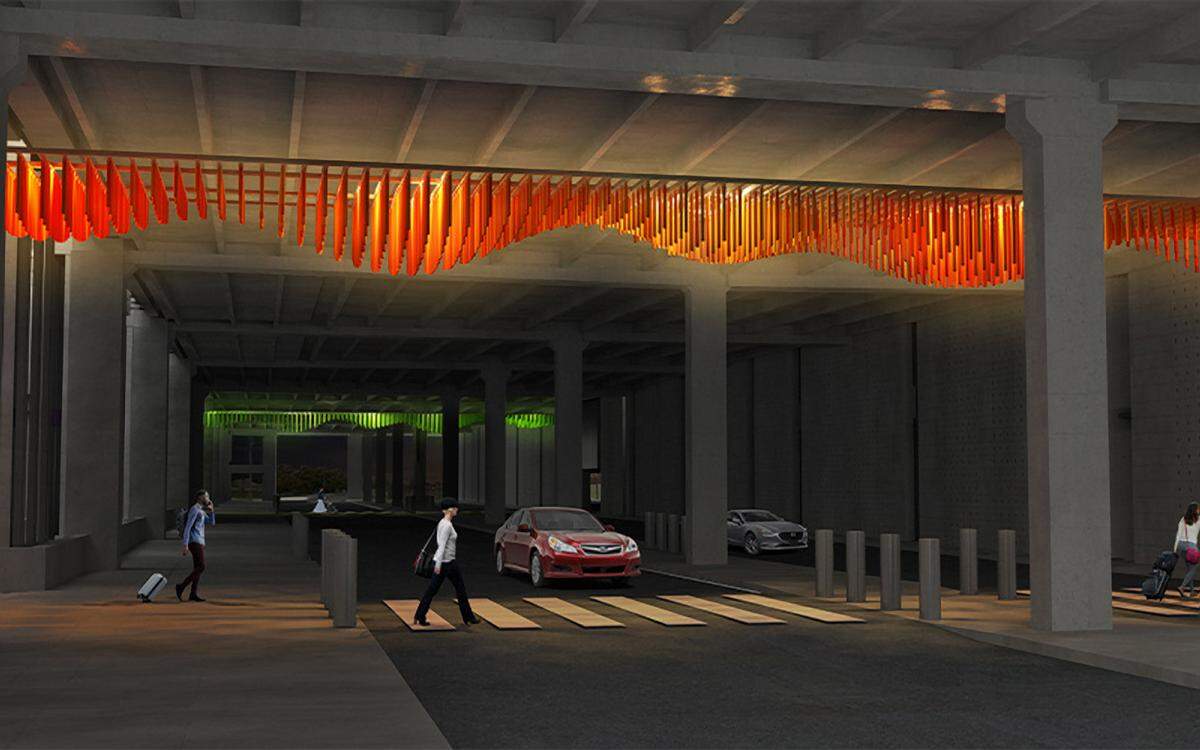
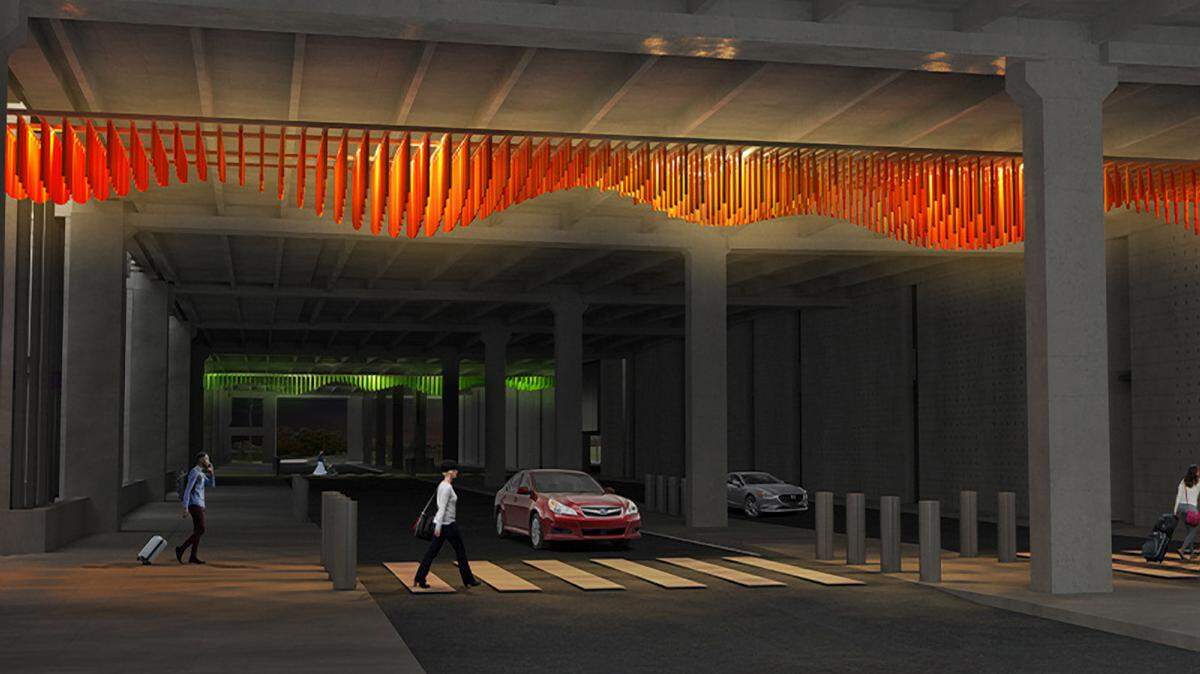
Exiting the terminal into the underpass for arrivals, travelers will see Jill Anholt’s “Sky Prairie” overhead.
Inspired by the rolling hills and grasses, and the gold and orange hues, of the region’s landscape, the work also speaks to the community of Kansas City, a place where many unique and diverse people have found their home, Anholt said.
She hopes her installation surprises travelers.
“As the work is both kinetic and contains a dynamic sequenced lighting program, it will be different every time it is encountered,” she said. “My hope is that both new travelers and returning travelers to Kansas City, find delight and intrigue when they experience the work.”
Leo Villareal, “Fountain (KCI)”
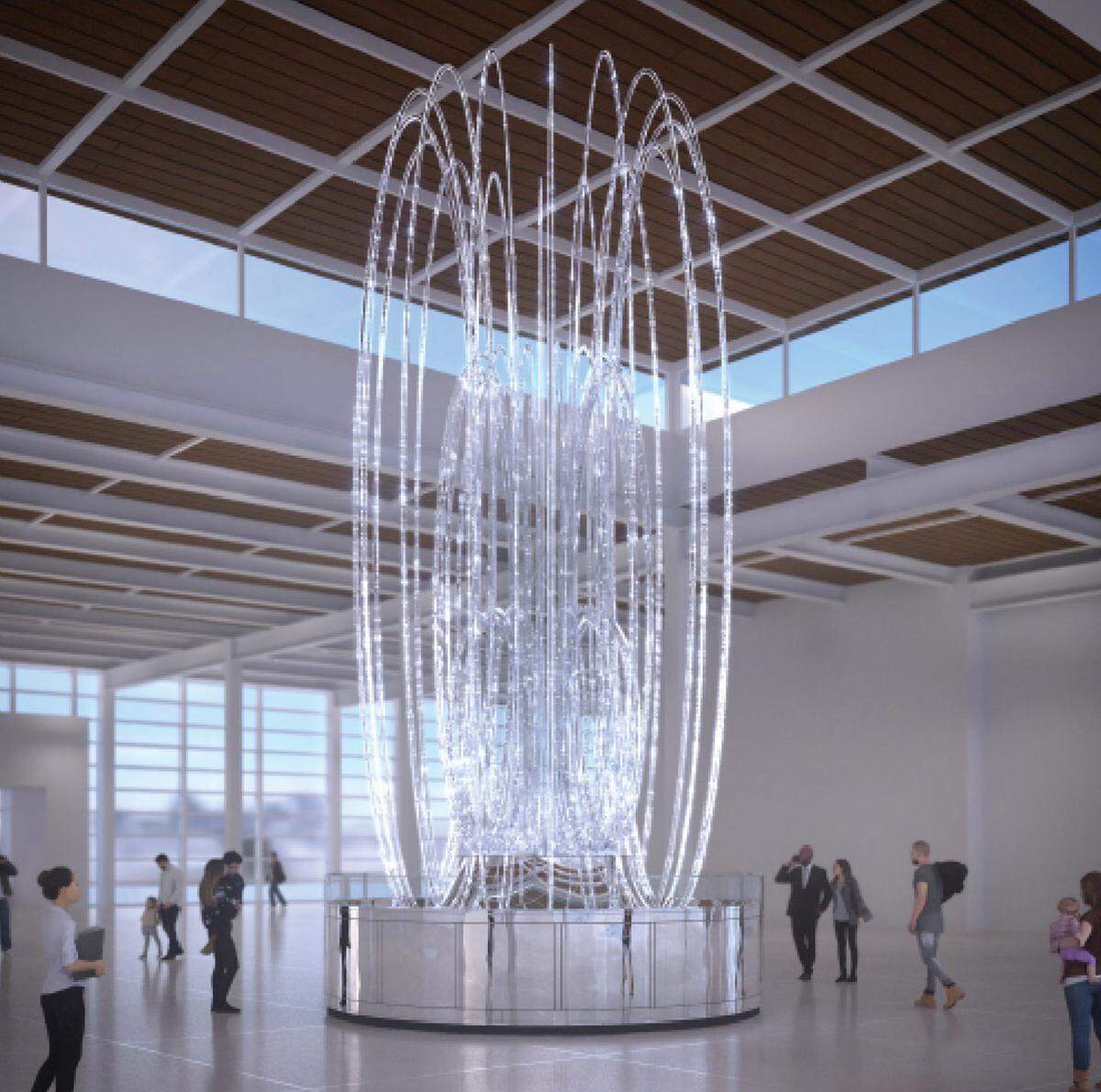
Leo Villareal hopes the immersive light sculpture he’s creating inspires contemplation and connection. It resembles a fountain but rather than water, it uses light.
The work is an homage to Kansas City’s legacy as The City of Fountains. While rooted in tradition, it employs cutting edge LED lighting technology driven by custom software.
“Fountain (KCI)“ will be in a central location in the retail area of Concourse A, and he hopes the artwork will become a key part of the experience that both local and visiting travelers enjoy and associate with the terminal.
“My installation seeks to connect people together through a shared sense of wonder and awe by harnessing the universal power of light,” he said.
He hopes travelers find a moment of tranquility when they view it, allowing them to approach their surroundings with a renewed sense of mindfulness and appreciation for the beauty that’s around them.
Those sensations often are lost in busy, transient spaces like airports, he said.
Michael Szivos, “Cloud Gazing”
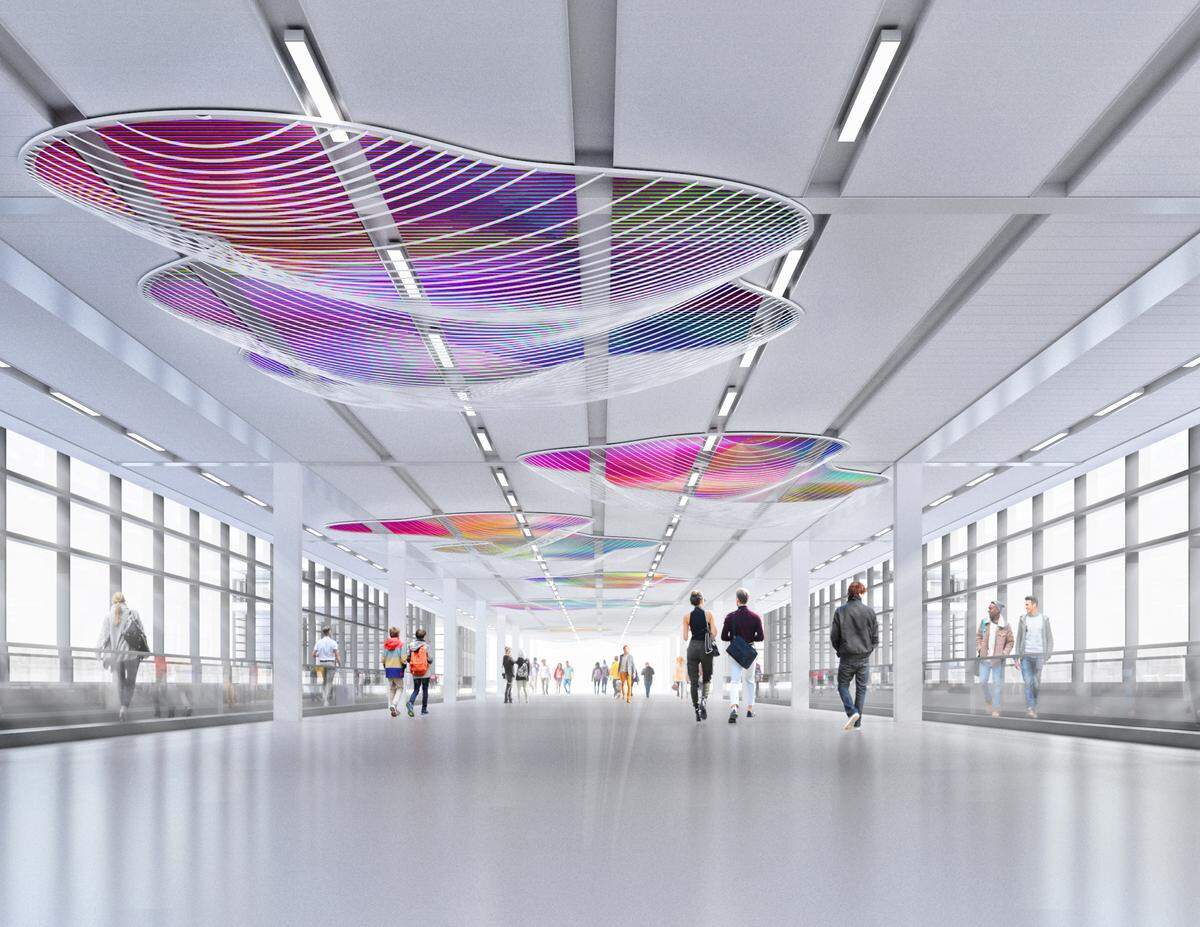
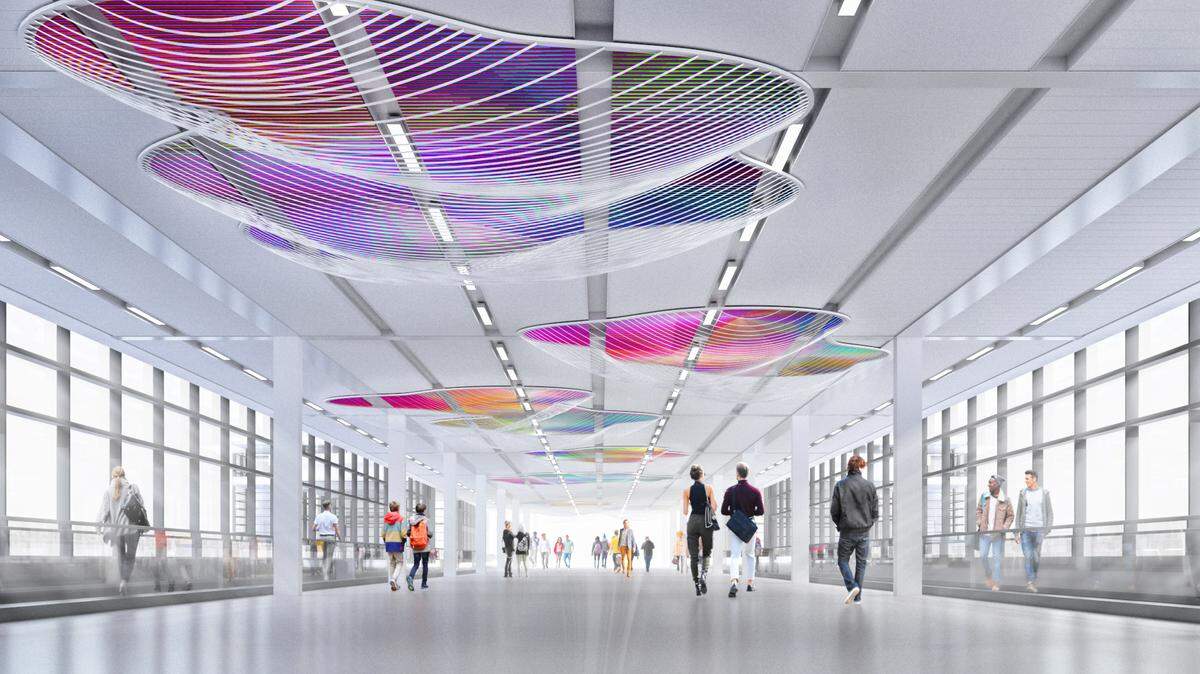
Michael Szivos thinks everyone might see something slightly different in his work as they make their way along the nearly 630-foot-long concourse connector.
The work is made of two parts: an interlaced set of prismatic patterns printed onto the acoustical tile and a three-dimensional cloud made of hanging white straps below each of the interlaced patterns. The straps in each of the 10 clouds filter patterns so you see one of the interlaced images at a time, he said.
“This effect will create the sense that the image is animating when you are walking towards a particular cloud,” he said. “Some visitors will simply pass through the connector and see the clouds as sculptural forms, others will discover the interplay between the hanging straps that make up the three dimensional form and the vibrant patterns on the ceiling.”
The moving walkways on both sides of the connector will move people at a constant speed, which will make the animated effect more precise, he said.
The artwork was inspired by the expansive Midwest plains and the past time of watching clouds as they pass overhead. The artist is interested in pareidolia, the tendency for people to see images and patterns where there aren’t any, such as animals in clouds.
Nancy Hou and Josh de Sousa, “Riff/LIft”
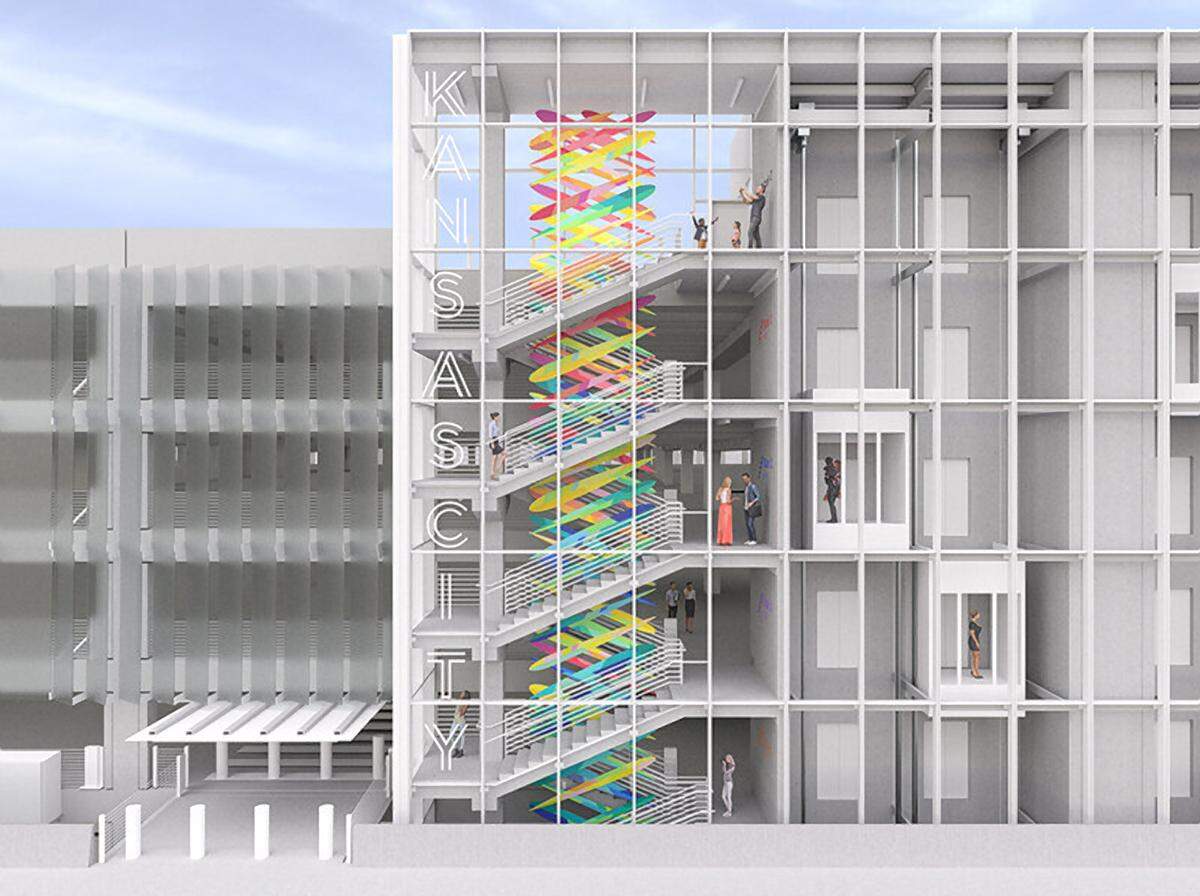
In the stairwell of the parking garage, “Riff/Lift” by artists Nancy Hou and Josh de Sousa celebrates the improvisational character of Kansas City’s jazz as well as the city’s role in the history of aviation.
The artwork was designed specifically for its location and the artists say they can’t wait to install it. They were drawn to the project in part because of the challenge of designing an exceptionally lightweight sculpture within the narrow space between flights of stairs.
The project weaves together a collection of streamlined fins reminiscent of feathers and airfoils into a syncopated composition that shifts in color, spacing and form, de Sousa said. It will run parallel to the trajectory of the switchback stairways in the parking garage’s stairwells.
“Just as a melody consist of multiple notes, and a community is defined by its many individuals, ‘Riff/Lift’ is a collection of unique parts that gain meaning and strength when joined together into a greater whole,” he said.
“We also wanted to transform the not-so-exciting experience of walking up and down a stairwell into a journey full of discovery, one which folks explore unique compositions, apertures, and views along the way.”
Mona Cliff
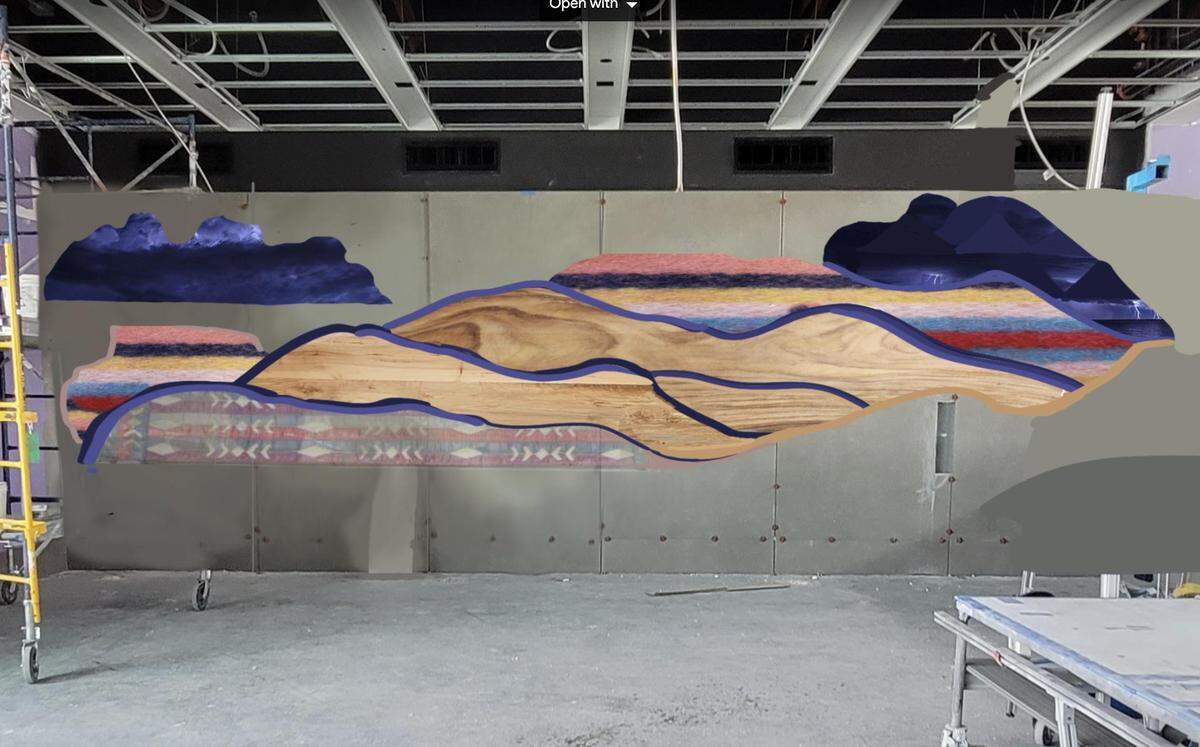
Artist Mona Cliff is hoping travelers will walk away with a feeling of connection to the surroundings — the land they just flew over or are getting ready to leave — or with an invitation to view the simple beauty of the landscape and rolling hills of the plains.
She also seeks to share part of the native culture of Osage ribbonwork, made with trade cloth and seed beads, which is used extensively in traditional and contemporary Osage regalia.
“The eastern north Kansas region was once The Osage (Wazhazhe) tribe’s homelands and by including details of their culture I hope to welcome travelers to the original Osage territory so travelers may experience the beauty of Native American craftwork and artwork and that the materials we use in our culture.”
She hopes the piece elicits a sense of wonderment from non-native Americans and serves as a learning experience. She feels her artwork represents the many aspects of Native American culture, such as beadwork, ribbonwork, trade cloth, that they use to wear, to trade and to honor their relatives.
“As an artist I hope to raise the visibility of Native Americans through the arts and if one person walks away with a feeling of wonderment I would be happy with that, but if a native walks away with a sense of pride that will make me feel like I’ve really accomplished something,” Cliff said.
Israel Alejandro Garcia Garcia, “Diaspora No. 1”
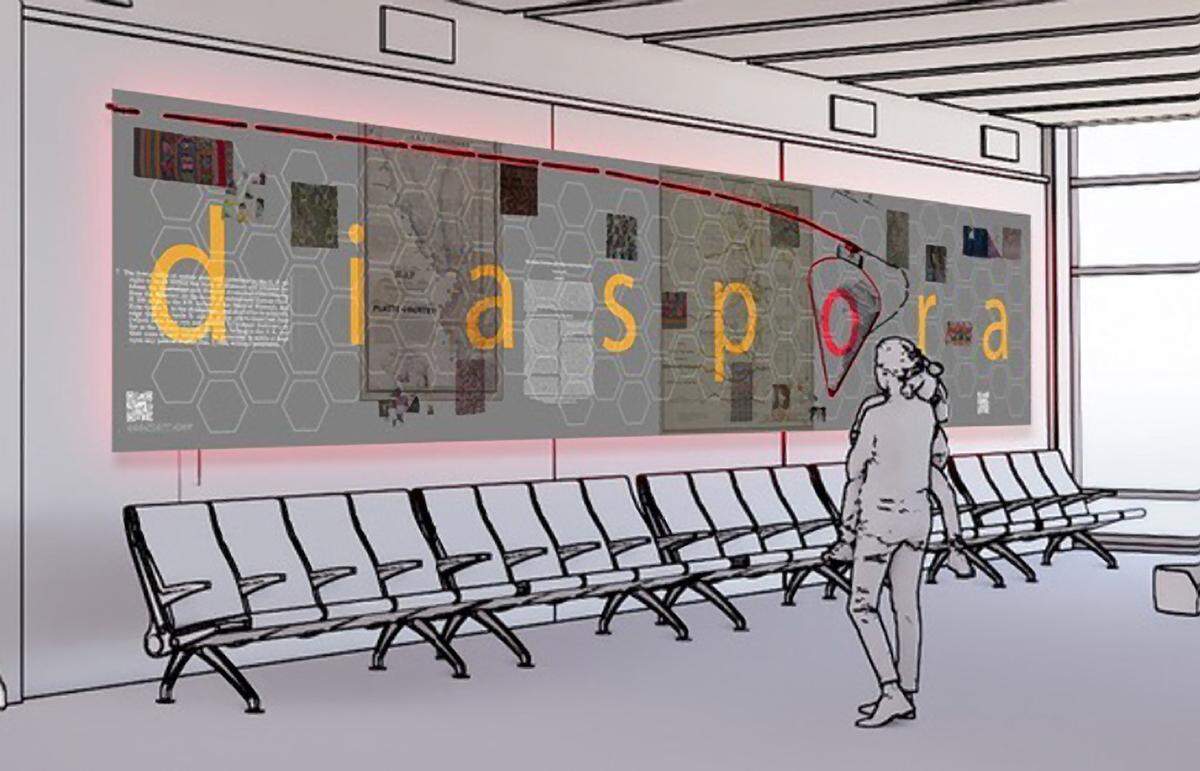
Israel Alejandro Garcia Garcia said his installation, which includes a multimedia component, stands unique from most of the other artists’ works because his is heavy on research.
The artwork itself is really a conversation about the displacement of people of color within the region, specifically the counties that surround the airport, he said. It begins with the 1836 Platte Purchase that displaced Native Americans from their lands by the U.S. government.
The goal is to inform viewers about the land they are stepping on — the history that doesn’t make it into history books. He will specifically focus on the tribal leaders of the Iowa, who resided on that land.
He plans to add an accompanying website that gives the visually impaired accessibility to the work and the conversation that he’s trying to create. He sees the website as a way to provide those sitting in the terminal additional history of the Iowa.
“My body of work has always been reflective of the community and I think as a Mexican, as a person of color, I wanted to ensure that we were represented as well in this new terminal,” Garcia said.
Kwanza Humphrey
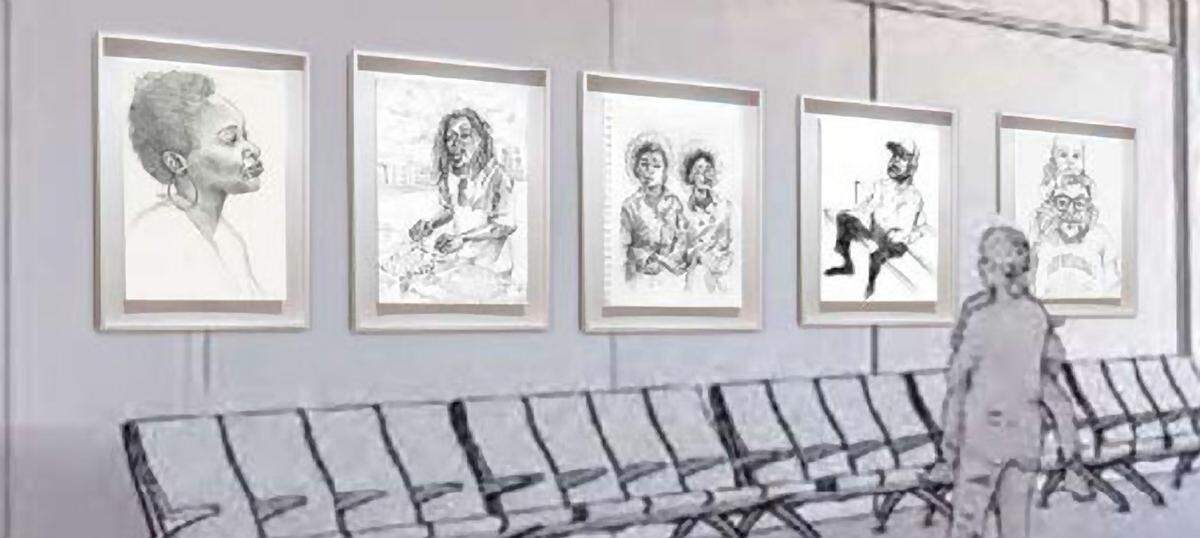
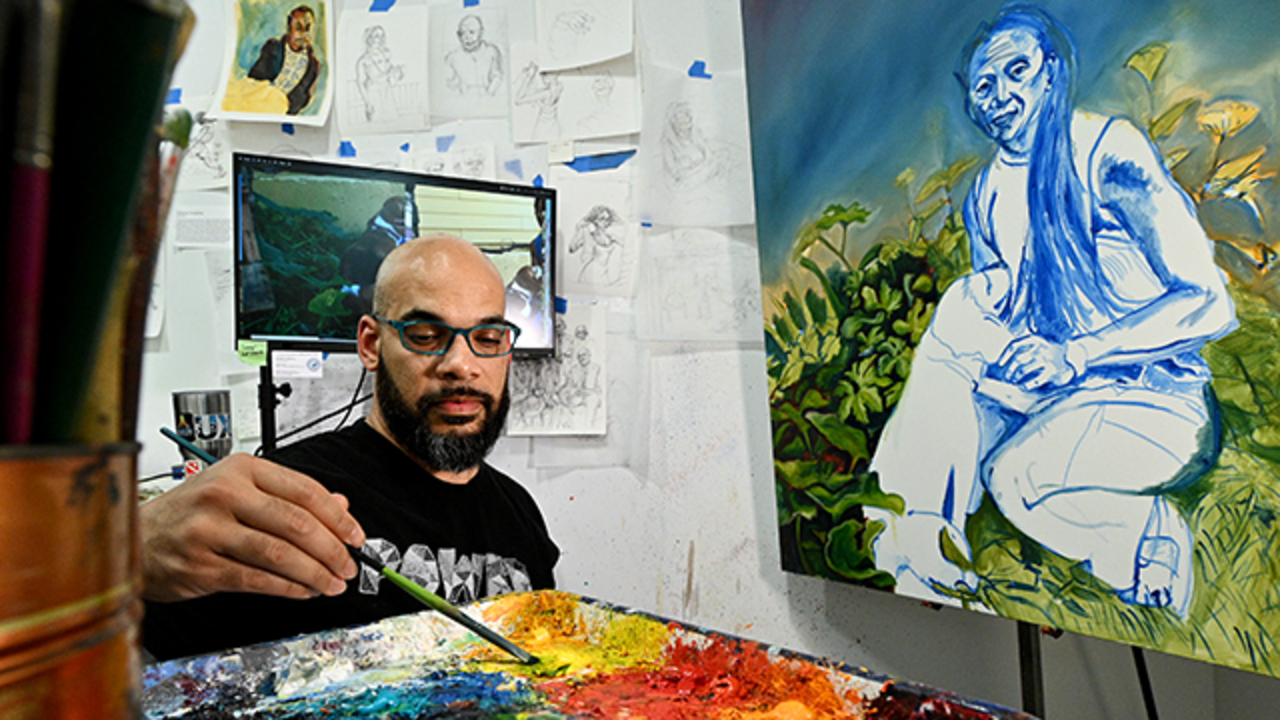
Kwanza Humphrey didn’t want his artwork to just show travelers Kansas City landmarks. Rather he wants to capture the diverse people who represent what it means to live here captured through five oil on canvas paintings.
He sees painting as a participatory experience and he strives to engage in what people see, think and feel.
“I paint regular people in everyday situations living their lives,” Humphrey said. “I paint diverse people that represent the many facets of living in the Midwest.
“What makes a great place are the people who live in it.”
The first goal of artwork is to open viewers’ minds to the collective commonality of the community through the emotions expressed by each subject, he said. The second is to provide his interpretation of that feeling through subtle use of posture, look and other supporting elements such as fabric, the sky, or elements from nature.
“Ambiguity can spark curiosity and allow the viewer to bring their own life experience to bear on a piece, creating a more enriched viewing,” he said. “Those elements add to the commentary and narrative to encourage you to connect to a deeper understanding of what it means to live in Kansas City.”
Rachelle Gardner-Roe, “Flyover Country: The Wild Side”
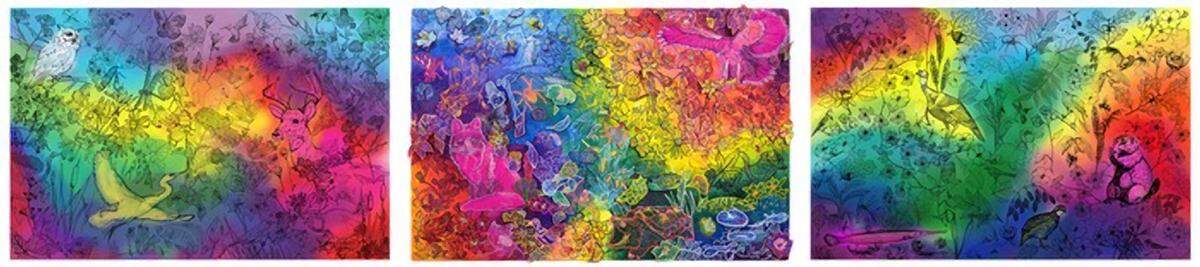
It’s the bold sweeps of color that Rachelle Gardner-Roe hopes will draw travelers closer to her artwork “Flyover Country: The Wild Side.”
“Then, from what I have observed, viewing the work becomes a sort of ‘Where’s Waldo’ of the natural world in that you start discovering all sorts of things,” she said.
Things like it’s not a painting. Rather it’s wool and thread.
“I have seen viewers get excited when they find something they hadn’t noticed before or that it wasn’t what they expected,” she said. “I love witnessing that as I find joy when the viewer finds joy.”
Gardner-Roe was interested in representing the region beyond the typical genres that Kansas City is known for. Leaning a bit tongue-in-cheek to the view on both coasts that the Kansas City area is “fly-over country,” she set out to define that.
“The work is chock-full of imagery of wildlife that can all be found in our region, from the urban dwellers we see daily to more mysterious critters such as bobcats, hawks or snapping turtles, among many others,” she said. “Native plants are also equally represented.”
Hasna Sal, “Nostalgia”
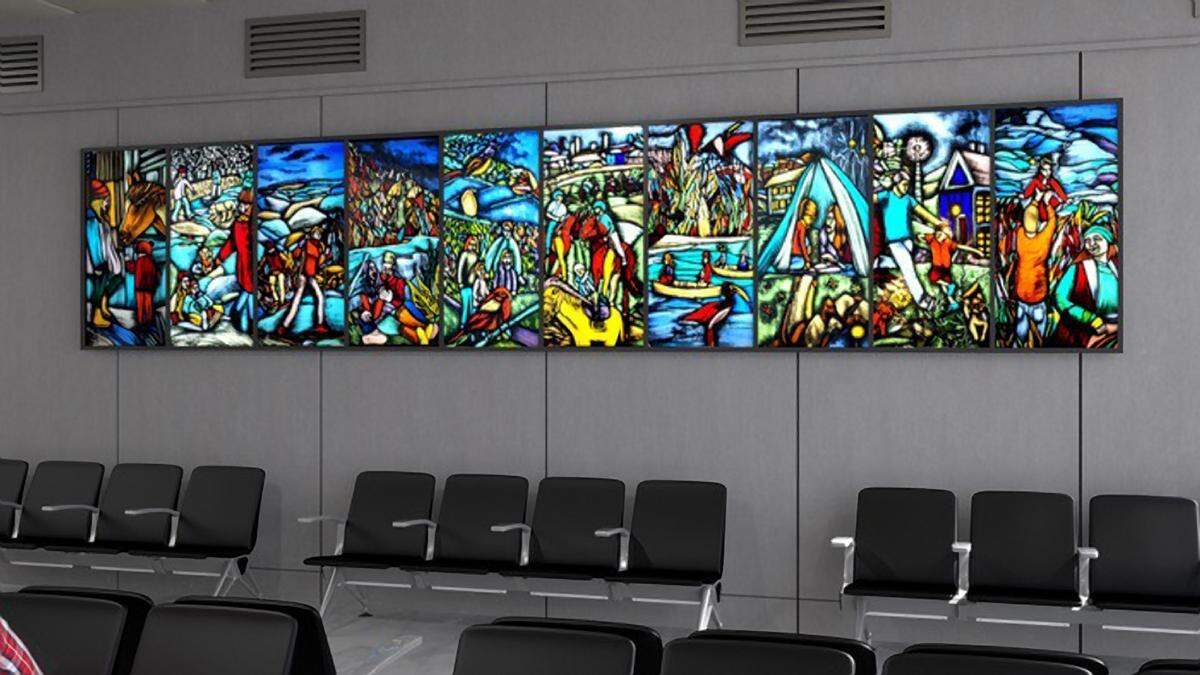
Hasna Sal hopes the colors of her artwork will give travelers pause and then energize them, alleviating their fatigue and lifting their spirits.
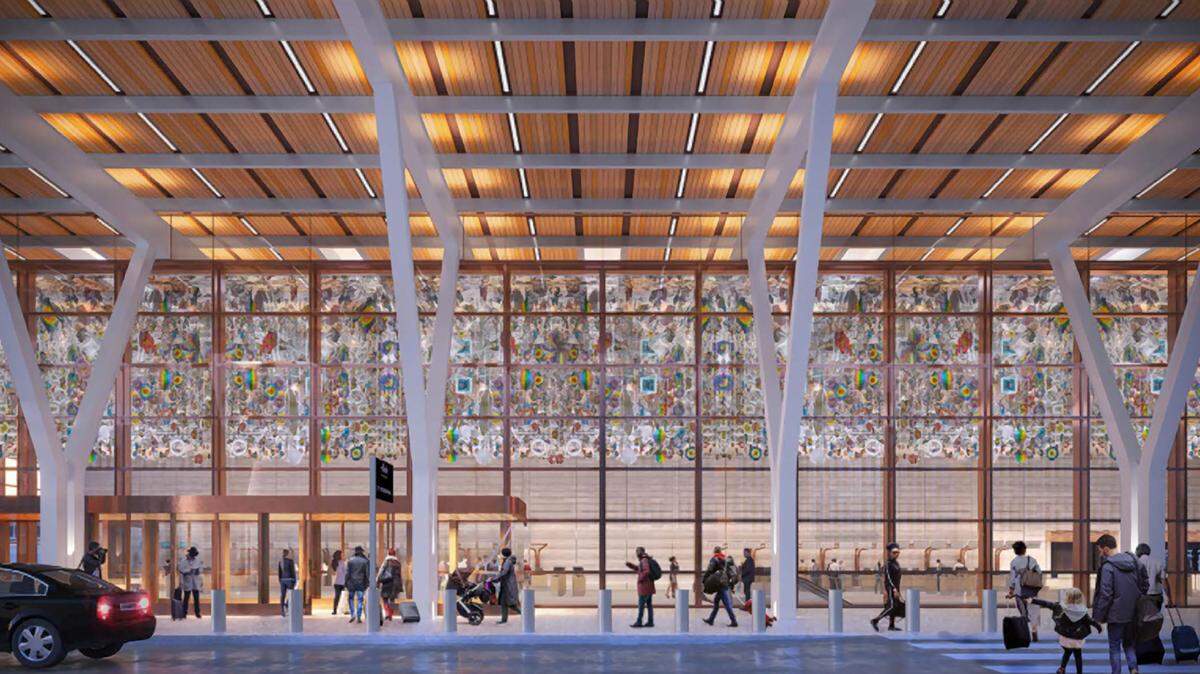
“Then as they begin to read the narratives embedded in the layers of glass and filtered light, they understand and appreciate the extraordinary moments of our ordinary lives as a community,” she said.
Much like Sheherzade of the Arabian Nights, Sal said she has woven stories of our everyday lives, transporting the viewer through layers upon layers of powdered glass into the clear canvas of her glass so that what is revealed are the simplicities of life and the most momentous experiences and memories that make us human.
“Many times we take it for granted when we have it, but when we don’t, as the pandemic has taught us or when travels take us away from those we love, is when we cherish the power of hope that we have something profound to return to,” she said.
This story was originally published April 27, 2022 at 5:00 AM.