‘A place worth living:’ Kansas City’s One Percent for Art program explained
READ MORE
New KCI terminal will have city’s largest public art project
The pieces, selected from among more than 1,900 submissions, are meant to represent Kansas City and its history. The goal: to make the airport feel like the living room of Kansas City.
Expand All
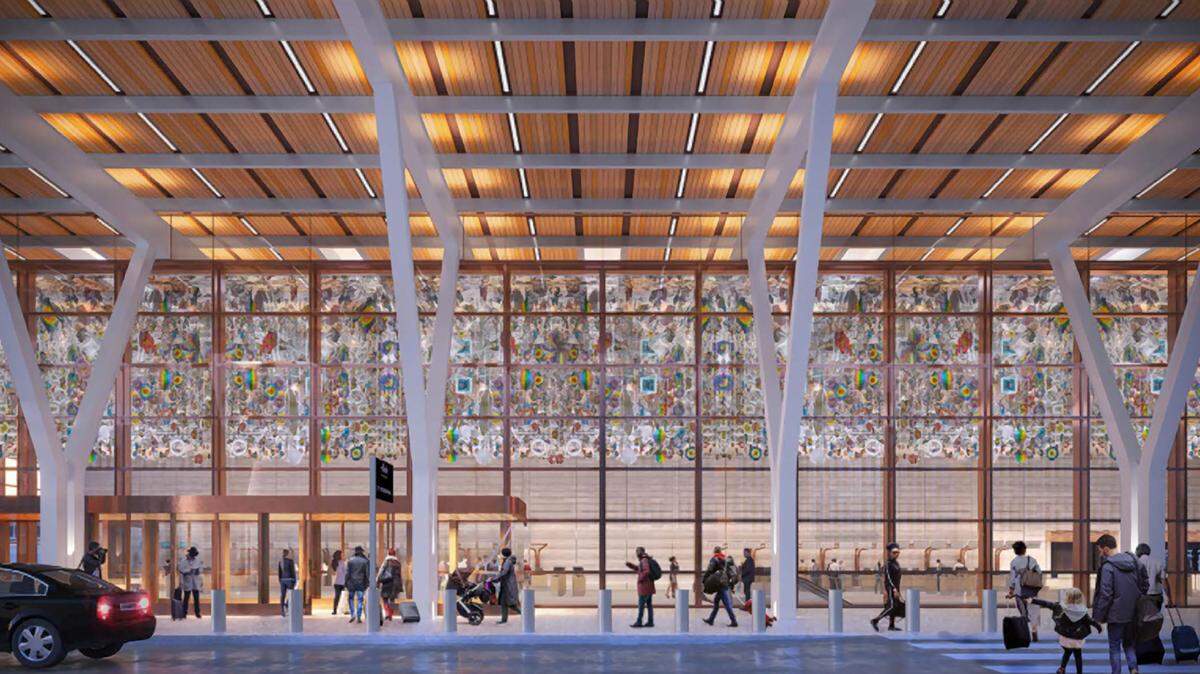
Here’s an inside look at 10 artworks you’ll find at the new KCI airport terminal
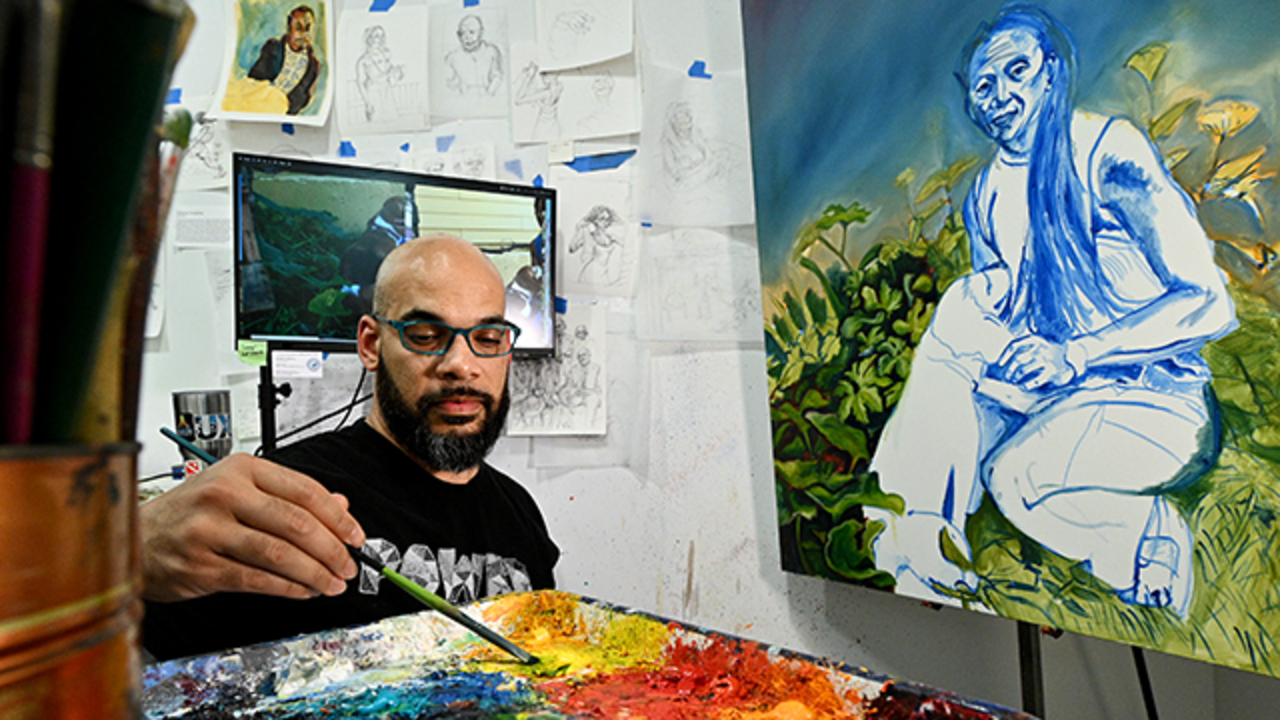
Artist paints portraits of diverse Kansas Citians for airport’s new terminal
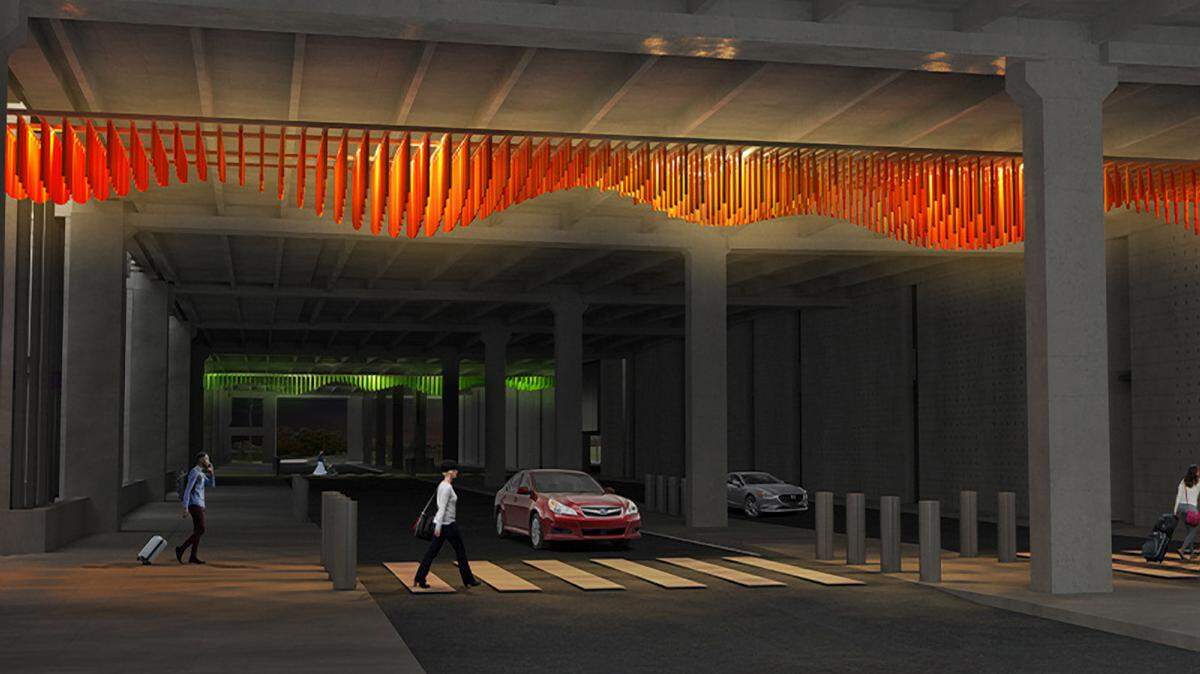
Interactive: See where these artworks will be located in the new KCI airport terminal
‘A place worth living:’ Kansas City’s One Percent for Art program explained
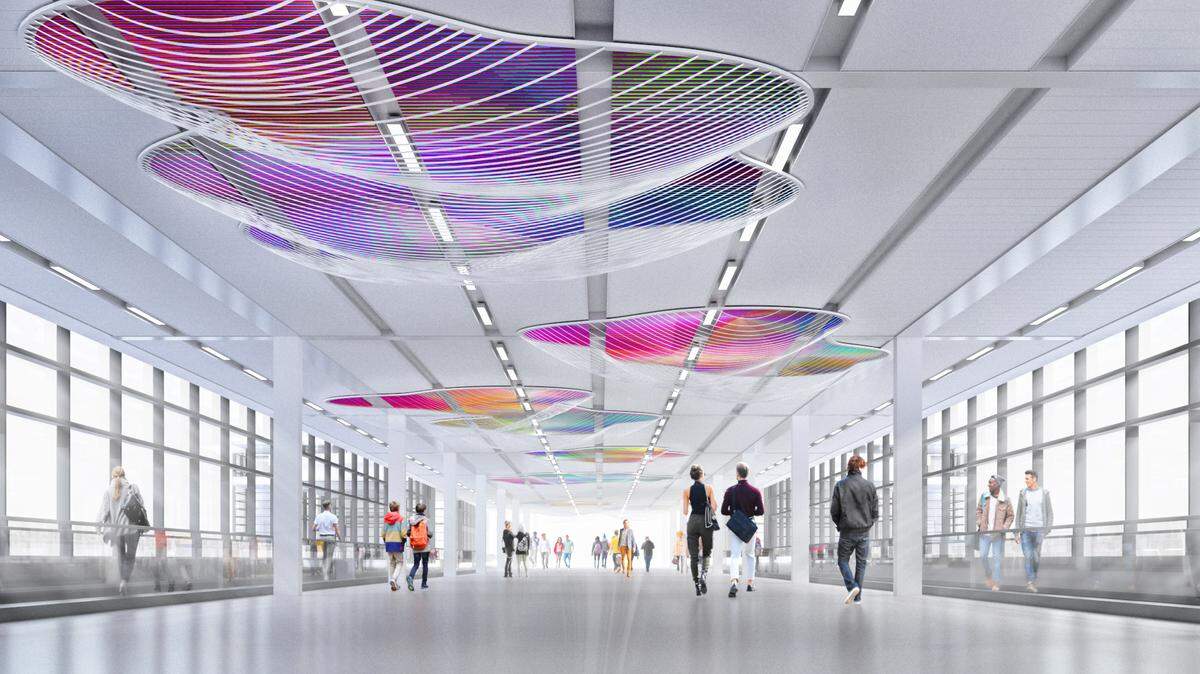
Vote in our poll: Which of these 10 artworks for the new KCI terminal do you like best?
James Martin gestured to the ceiling of the massive check-in hall where Nick Cave’s “The Air Up There” will be displayed in the new terminal that is being built at Kansas City International Airport.
“His work will be a forest of wind spinners that will move with the air currents in the space,” Martin, who is Kansas City’s public art administrator, said during a recent tour of the ongoing terminal construction.
On the north end of the hall will be “Wings,” a large scale ceramic work of four large wing forms by artist John Balistreri, Martin said. And on the south end will be another large scale ceramic work, “Let the Music Take You” by George Rodriguez, which shows a group of traveling jazz musicians.
The three works are part of the largest public art project in Kansas City’s history. The $5.65 million budget for art at the new terminal is being funded through the city’s One Percent for Art Program. The city has commissioned 28 artists to create new art that will be displayed throughout the new terminal and parking garage.
After the tour, The Star asked Martin about the art program and what it means for KCI’s new terminal.
Can you give us a brief overview of what the One Percent for Art Program is?
Kansas City has two One Percent for Art programs — that is the way that I think of it. The first one started in 1986, with the passage of an ordinance sponsored by Councilwoman Katheryn Shields, who’s currently a councilwoman again, and that ordinance says that 1% of the above ground vertical costs of a public building, a building built by the city for the public, will be set aside for adornment by art.
So that’s one branch of the One Percent for Art program. The other one is very new. It only started in 2017 with the passage of the GO KC bonds. That allows us to place public art on streets, sidewalks and bridges, also in flood control projects and also buildings.
In terms of the new terminal, what is the budget for public art and how does that compare to other projects that have been funded?
The budget for the One Percent for Art projects at the new terminal and parking garage is $5.65 million. It is the largest One Percent for Art project in the history of the city. We are commissioning 28 artists throughout the terminal and the arrivals roadway and garage.
How were the artists selected?
We’re very proud of the selection process, actually. First of all, we worked with a consulting firm and five project advisory artists, artists who are based in Kansas City, to help us decide where to put art and how much budget to dedicate to each one of those spots.
Then we also made the critical decision to have a different selection panel at each of the locations. That’s a highly unusual approach. I believe the idea came from my partner, consulting artist Holly Hayden. I recognize it as a great idea that it would help us get great diversity and inclusion and so we went with that.
So what that means is that we worked with over 50 selection panelists. Normally, you’d want to have a low number of selection panelists, traditionally, because the field has developed in such a way that in a project of this size, the goal is to have the artwork be cohesive to coordinate well with the other works of art. Well, we didn’t go that direction. We went toward the direction of diversity and inclusion and we were able to accomplish that with having so many different selection panels and selection panelists.
How uncommon is it to have so many selection panels?
To be a nerd for a moment, the thing about the multiple selection panels is highly unusual. I attended a video conference with other public art administrators from around the country about a year ago and when I told them that we had a different selection panel for each location, their jaws literally dropped. They couldn’t believe it because it’s labor intensive. But that’s how important the role of diversity and inclusion was to us. We were willing to do the work necessary.
If we look at the project as a whole, 75% of the artists are either artists of color or women and that is also quite remarkable in a large project like this. There have been studies in recent years about the demographics of art collections and they have tended to not be quite as diverse and inclusive. So we’re very proud of how we were able to do that.
A large percent of the artists have ties to the local area, why was that important?
The number of artists who are either based in Kansas City or have significant ties to Kansas City is actually 75%. There are 19 artists who have art that will be displayed in the concourses, in the hold rooms as folks are waiting for their flights to depart.
But some of the artists out in the terminal also have local connections. Nick Cave, who’s producing a work called “The Air Up There” for the check-in hall was born in Missouri, raised in Missouri and went to the Kansas City Art Institute.
And John Balistreri is producing a four part, large scale ceramic work called “Wings.” He also went to the Kansas City Art Institute.
All along, the project as a whole has really tried to focus on the inclusion of the local culture, the local workers, the local history. When we worked with the consultant and the five project advisory artists, they also felt very strongly that we needed to include a very significant local presence in the art that would be selected and displayed.
We felt like this was a perfect place to introduce people to Kansas City and Kansas City’s incredible art community for those who are coming to Kansas City for the first time. And it’s also a great way for people to leave in comfort, you know, surrounded by perhaps people and things that they know.
What is the importance of public art?
Public art in a community, I think, makes it a place worth living and a place worth exploring; a place worth raving about to others — to bragging about. It has the potential to play a significant role in community relationships. Art is open to a wide variety of perspectives. And for me, it’s sort of an opportunity or a training ground for people to learn how to communicate about things that they might feel very differently about. They might have very different opinions about things and art has the potential to, I think, build bridges between people with such widely varying perspectives.
This story was originally published April 27, 2022 at 5:00 AM.