What kind of police chief does Kansas City need? Here’s what leaders and residents say
With the departure of Police Chief Rick Smith next spring, Kansas City will need to find a new police chief.
And although Kansas Citians and their elected city officials don’t get to choose the next chief, they do have opinions about what kind of leader the Kansas City Police Department needs.
In interviews with The Star, and in responses to a survey, more than 30 local leaders, officials and residents said they want a chief who will be prepared to take police accountability and the city’s violent crime problem seriously. Many said they want a chief with innovative ideas who can change a police culture that some say has tarnished the force’s relationship with the community.
Some said they want the next top cop to be a person of color or a woman. The department has never had a female police chief outside of those who held the position on an interim basis.
The search for a new chief will happen under heightened scrutiny. Smith is leaving the department in April after he was pushed to retire early following the historic conviction last month of a white police detective for killing a Black man.
Many of the respondents to The Star’s online survey, as well as most of more than a dozen people interviewed separately, said they want a chief who will listen to resident concerns. They generally want someone who won’t blindly support officers. The vast majority said the next chief should come from outside of the department.
Above all else, most of the respondents and those interviewed by The Star asked for change.
Randy Fikki, senior pastor of Unity Southeast, said the next chief should have a “fresh set of eyes and ears” focused on making Kansas City safer but who will also speak out against injustice.
“We must find a police chief that is fixated on improving the lives of all,” said Fikki, who has called for Smith’s firing. “We must also find a chief that truly understands that our diversity is a tremendous asset, not a liability.”
Justice Horn, an activist and a candidate for the Jackson County legislature, said the next chief should preferably be a woman of color.
“From building community trust, listening, and understanding the value of being vulnerable, I believe a woman leading a department that has continuously put up walls would be one of many steps needed to bring this community together,” Horn wrote.
As the Board of Police Commissioners looks to make the hire, Mayor Quinton Lucas, who sits on the board, said that person must be committed to getting the city below 100 homicides a year, which was one of his campaign promises, and to greatly decreasing the number of shootings.
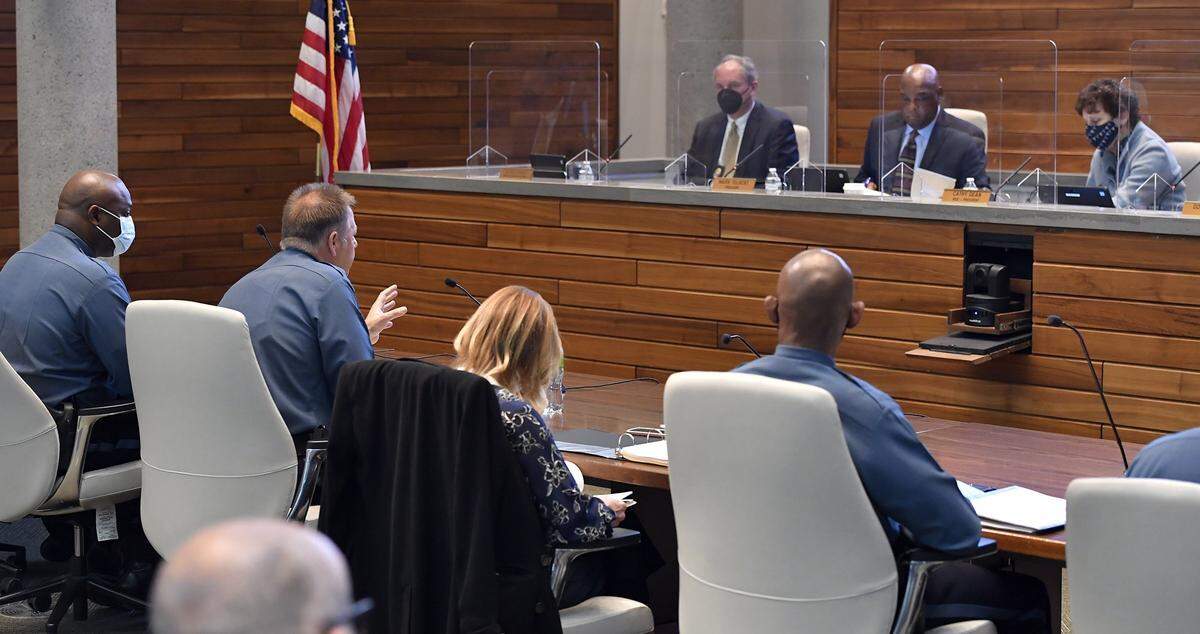
He declined to comment when asked whether the next chief should come from within or outside the department.
“I’m looking for a good person who cares about making this community a heck of a lot safer than it’s ever been in my entire life,” Lucas said, “and I’m gonna listen to different people and their views on how we get there.”
Outside of a phone call with the mayor, no member of the police board responded to a five-question survey sent by The Star to city and community leaders. Neither did most City Council members, several of whom also did not return calls.
Lacking local control
Councilwoman Melissa Robinson, who represents the Third District on the city’s East Side, said residents should be asked what they want in the next chief to build a profile.
The finalists, she said, should have a chance to interact with the public.
Residents in her district want a chief who will see policing as a collaborative effort with community members and who can work in spaces that are not only law enforcement, Robinson said. The chief also needs to be “squarely focused” on supporting rank-and-file officers, including emotionally, and should have demonstrated the ability to work in challenging dynamics.
“This is an opportunity for us to have a refreshing start as it relates to policing in Kansas City,” Robinson said.
Sgt. Leslie Foreman, a police spokeswoman, said the board will decide what the hiring process will look like. Since that is not in place yet, she said she could not “speak to any specifics at this time.”
The department operates under the control of the five-member board of commissioners, four of whom are appointed by Missouri’s governor. The city’s mayor gets the fifth seat, but the board alone hires and can fire the chief. City officials have little say in how the department operates.
The arrangement is highly unusual, if not unique, among other major U.S. cities and periodically becomes a point of public debate. City taxpayers provide millions in police funding but have little say in how those dollars are spent.
In response to The Star’s survey, the Rev. Emanuel Cleaver III, senior pastor of St. James United Methodist Church, said the issue at hand in the entire selection process is the department’s current structure.
If Kansas City can regain city government control of the police department, as in it is overseen by city council members, “we can establish a process that will be much more representative of the community,” Cleaver said.
During the process to hire Smith after Police Chief Darryl Forté retired in 2017, the police board tapped an outside firm to conduct a national search for a new chief. The months-long process included interviews with board members and a series of public meetings to receive input from residents.
When Forté was hired in 2011, the commissioners wanted a chief who believed in de-escalation and new policing techniques that would create a less combative climate, said Lisa Pelofsky, who served on the board from 2010 to 2014.
They also wanted someone who had managerial experience and had worked in various units within the department.
Earlier this month, Councilwoman Katheryn Shields said she planned to introduce an ordinance that would allocate $200,000 to help the board hire a search firm that will identify candidates.
Officer accountability
The majority of respondents to The Star’s survey said the new chief should come from outside of the department. The department has struggled with its reputation at large within the community in part because of culture that does not hold officers accountable for misconduct.
Laurie Bey has called for police accountability since her son, Cameron Lamb, was shot and killed in 2019 by KCPD detective Eric DeValkenaere, who is awaiting sentencing after being convicted of involuntary manslaughter.
Last month The Star obtained audio of Smith at the scene of Lamb’s shooting death. “Everyone is good, house is clear. Bad guy’s dead,” Smith was heard saying. The audio outraged Bey.
While police supporters viewed the comment as one that any cop might make, Bey and activists said it demonstrated that police are too willing to immediately accept as fact the word of other officers in shootings.
Bey doesn’t want the next chief to come from within the department, nor does she want them to be recommended by Smith.
She wants the next chief to implement a policy that officers withhold comments that could form opinions about an investigation before it is completed. After an incident, she said, officers should be separated and made to give statements right away. She called for the elimination of a rule that allows officers to wait 48 hours before giving statements.
Lauren Bonds, legal director for the National Police Accountability Project, said it’s important that the next chief has a deep commitment to transparency. She said “many of the more egregious and alarming things” to come out of the force in recent years have only been exacerbated by information being withheld from the public.
“The exposure of things later down the line, I think, has really undermined trust in the department,” she said.
Some members of the community believe Smith has protected officers, including those facing criminal charges, at all costs. Under his leadership, the department publicly took the position that if an officer fired his or her weapon, it must be justified.
Jackson County prosecutors have in the past criticized the department under Smith for refusing to hand over documents that would have allowed them to charge the officers without taking the case to a grand jury.
As one respondent from the Northland put it, the next chief needs to have a “we” mentality, not “us vs. them.”
After killing Lamb, DeValkenaere was assigned to the executive services bureau and continued to receive a paycheck. Now that DeValkenaere’s case has been adjudicated, four other KCPD officers face criminal charges in Jackson County for accusations of various excessive force, including the slamming of a transgender woman’s face into the pavement. All of the victims were Black.
KCPD has paid out more than $9.5 million in legal settlements in the last seven years solely for excessive force.
The Rev. Darron Edwards, lead pastor of the United Believers Community Church, said each internal candidate’s resume should be thrown out in order to rebuild community trust. He went even further, saying the next chief should come from outside of Missouri or Kansas and that they should bring in a handful of deputy chiefs from other agencies who have experience in community engagement.
Foreman, the police spokesperson, said the department remains focused on “building relationships in our community.” She said KCPD has many outreach efforts in its patrol divisions, including its social services program and its community interaction officers.
“No matter who the chief of police is, community outreach is key to our service to the citizens of Kansas City,” Foreman said.
Some community members, including a pastor who has been critical of the department, said they would not want to exclude strong internal candidates, including ones who may have been looked over in previous years.
However, the selection process should be rigorous for internal candidates, Cleaver said.
Rosilyn Temple, founder and executive director of KC Mothers in Charge, an outreach and anti-violence group, said the next chief should be someone whose face Kansas Citians are already familiar with.
“Who knows our community better than someone that’s been here?” said Temple, whose son was fatally shot in 2011.
Many of those contacted by The Star said to have officer accountability, the department needs leadership that will change the culture.
Smith, who had been a favorite of the police union when he was hired, has been seen as resistant to change and not equally in touch with all parts of the community.
In a series of interviews across the city in 2020, many residents told The Star that Smith was frequently seen at business and neighborhood events in the predominantly white Northland, while south of the river in predominantly Black sections, several community groups said they had not been able to get his attention.
Residents who responded to The Star’s survey in recent days said en mass that they don’t want the next chief to be a “good ol’ boy.”
“We want a fresh start with a much younger forward thinking police chief than we had before,” wrote a woman who listed her ZIP code as south Kansas City.
The department needs a cultural shift, said Gwen Grant, president of the Urban League of Greater Kansas City. She said the force has a high rate of officer indictments, out-of-court settlements and “blatant disrespect for the letter of the law.”
“The next chief should immediately get to work on changing KCPD’s current systems, policies, practices, and operating procedures and organizational culture,” Grant wrote in response to The Star’s survey.
Reducing homicides
One of the biggest concerns across the city remains violent crime. Some city officials have been critical of what they see as a lack of solutions to curb homicides.
Earlier this month, Lucas decried a week that left eight people dead in shootings. He called it difficult to see the “staggering amount of crime ... and to hear folks merely say we need more of the status quo that has us flirting with murder records for years.”
Under Smith, the department abandoned an anti-violence strategy called the Kansas City No Violence Alliance, or KC NoVA, which garnered national attention after killings dropped to a historic low of 86 in 2014.
Lora McDonald, executive director of the Metro Organization for Racial and Economic Equity, a local social justice organization, said the next chief should have a broad idea of what has worked in other cities to reduce homicides as well as incidents of police brutality.
“I want somebody who knows Milwaukee is doing this innovative thing, or let me try what they’re doing in Tempe because that worked well around their homicide rate,” said McDonald, who has lost multiple friends to killings in Kansas City.

Deb Hermann, executive director of Northland Neighborhoods Inc., a community development corporation that serves Clay and Platte counties, said she, too, has been concerned recently about crime in the Northland, where neighborhoods have largely supported the department.
Kansas City has one of the highest homicide rates in the U.S., and a majority of the homicide victims in the city are Black. Gun violence across the city has disproportionately harmed residents on the East Side.
The city suffered a record number of homicides in 2020 with 182. And though homicides have slowed this year, they remain on pace to potentially make 2021 the second deadliest year on record.
As of Tuesday, the department’s homicide clearance rate, which includes killings considered solved but not prosecuted, for this year is 61%. That number, which is about on par with the national solve rate, includes homicides that occurred in previous years, but were solved this year. Of the 148 homicides in 2021 the department has cleared 66 of them, or 45%.
Under Smith, the department doubled the size of its assault squad, which investigates nonfatal shootings, and increased the number of its homicide detectives to 39 as of earlier this year.
The force last year also started conducting weekly shooting reviews, a multi-agency process that has been credited with reducing gunshot injuries and deadly retaliation in other cities.
Increase diversity
It would be ideal if the next chief were a person of color, said McDonald from MORE2.
Other community leaders, as well as two respondents to The Star’s survey, said a woman should be strongly considered.
The police board has never appointed a woman to permanently serve as the force’s top cop, though two women separately led the department on an interim basis for about a month in 2004 and again in 2011.
Either way, McDonald said, the chief needs to be sensitive to the needs of people of color and over-policed communities.
Jackson County Sheriff Darryl Forté, who led the police department before Smith from 2011 to 2017, was the city’s first and only Black police chief. That means that since KCPD was created in 1874, all of the city’s 46 other police chiefs have been white.
Like other community leaders, Cleaver said the next chief should prioritize the recruitment and hiring of minority officers. The person should examine why there are so few on the payroll now, he wrote in The Star’s survey.
“This should be a priority because, in talking with minority officers, I’ve been told that KCPD is a good old boy department,” Cleaver wrote. “In other words, there are unofficial discriminatory practices in place.”
Of the department’s 1,233 sworn officers, 145 are Black, according to recent police data. That’s 11.7% — nearly the same as in 1998. That’s in a city whose residents are nearly 30% Black.
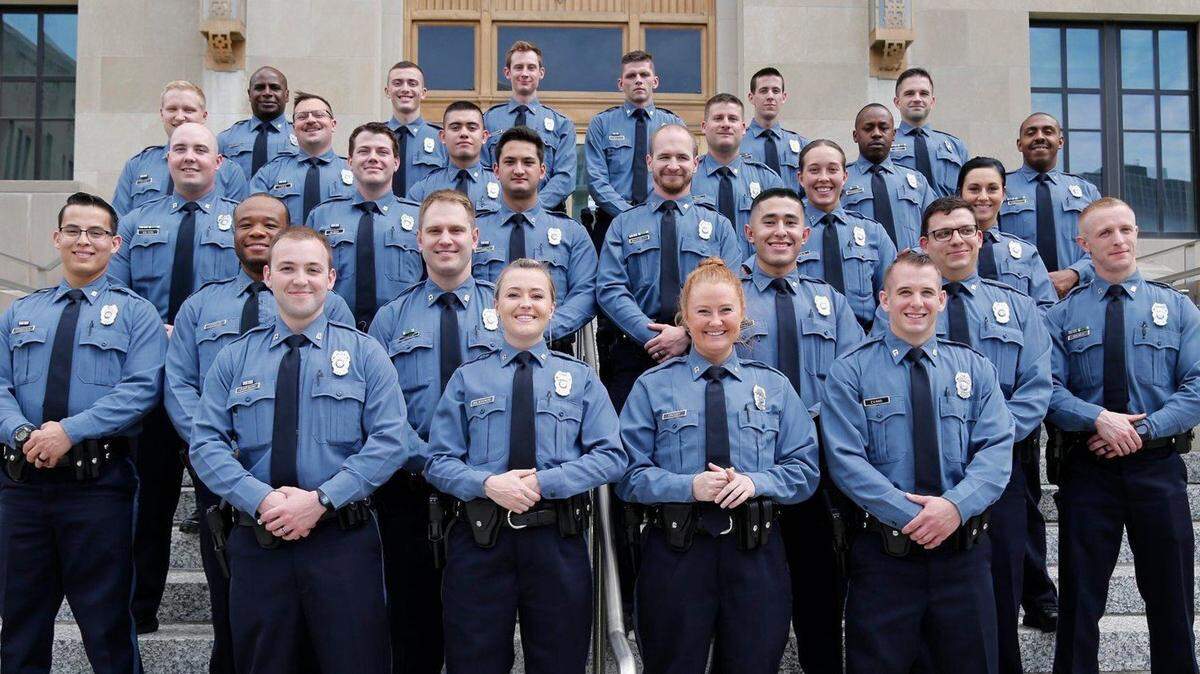
Statistics among the investigative ranks are just as bad. Four of the force’s 39 homicide detectives — about 10% — are Black. So are three of the 22 detectives who investigate assaults. That’s 13%. None of their supervising sergeants are Black.
Last year, as part of a report on gun violence, The Star interviewed dozens of city residents, many of whom said police create an environment of fear in Black neighborhoods that erodes public safety. Other U.S. police departments, such as Atlanta’s, have diversified their ranks in an effort to create stronger ties with the community.
Henry Service, a community activist and attorney who works in the 18th & Vine District, also said the next chief should encourage more minority hiring and focus on getting officers out on the street to “re-establish community ties.” He said the board should choose a bold chief who will acknowledge the troubled relationship between the department and the community.
“Try something radical, try something new,” said Service, who is suing several KCPD officers, alleging that in 2019 they pulled him over as he drove his Maserati sedan and pointed guns at him.
“The system’s not working for me or for any vulnerable population.”
The Star’s Katie Moore contributed to this report.
This story was originally published December 15, 2021 at 5:00 AM.