From shock to talk: Here’s what conversion therapy used to be and what it is today
READ MORE
Conversion therapy in Kansas City
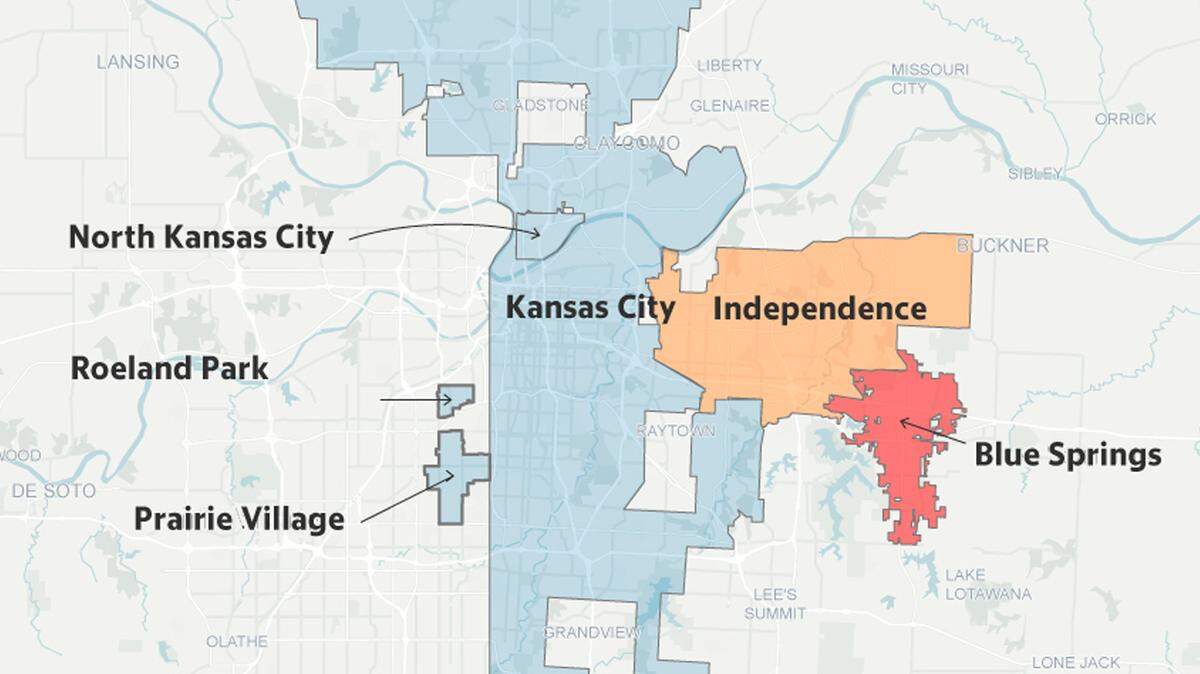
Twenty states and more than 100 U.S. cities have banned conversion therapy. LGBTQ advocates in Missouri and Kansas are campaigning to get it banned across the Kansas City area.
Expand All
The Rev. Brandan Robertson has traveled the world for five years speaking to LGBTQ communities of faith.
“And in every community, from Ireland to Amsterdam, I’ve come up against people who have gone through conversion therapy in some form, have been told that their sexuality or identity is a psychological issue, it’s a mental health issue and God can heal them of that,” said Robertson, a Christian minister in Washington, D.C., working to get conversion therapy banned around the world.
Until not that long ago, America’s therapists viewed homosexuality as a psychiatric disorder, something to be fixed.
And that fix sometimes took the form of what watchdog groups call torture: electric shock therapy. Aversion therapy and induced vomiting. Isolation from loved ones, sometimes for years.
“Though it’s dismissed by the medical establishment today, conversion therapy was widely practiced throughout the 20th century, leaving shame, pain and self-hatred in its wake,” notes History.com, which traces the birth of the practice to 1899, when a German psychiatrist claimed he could turn a gay man straight with hypnosis.
In 1973, the American Psychiatric Association removed homosexuality from its official manual of psychiatric disorders, but that didn’t stop efforts in the U.S. to turn gay people straight.
During the latter part of the 20th century, faith-based groups and “experts” began practicing conversion, or reparative, therapy, which continues today.
Nearly 60,000 LGBTQ youths ages 13 to 17 will receive conversion therapy from a religious or spiritual adviser before they turn 18, estimates the Williams Institute at UCLA School of Law, which does independent research on sexual orientation and gender identity law and public policy.
But defining what it is exactly is tough “because it has so many different forms,” said Robertson, who went through conversion therapy at Bible college. He was told that gay men had mental disorders caused by abusive fathers and overly attached mothers.
“It was done under the guise of pastoral care and it was primarily a ‘prayer practice,’ where there was psychology and spirituality kind of interwoven together in a way that was intended to heal my sexuality,” Robertson said.
“We very rarely to almost never hear of electric shock therapy today,” said Mathew Shurka, co-founder of the Born Perfect campaign to end conversion therapy. “You really only get that with older folks who did experience conversion therapy.”
Today, “it happens in settings that are like talk therapy,” said Shurka. “So these conversion therapists across the country, when they network together, they all basically come up with a model and they all use that model, but it’s not an accredited model.”
The model is based on the premise that no one is gay or homosexual but that “everyone is innately heterosexual and that anyone who is not heterosexual, that person suffered some kind of trauma that created them to have a different type of reaction. So they think it’s all trauma-based,” said Shurka.
“So as a young man, I experienced some traumas — I use myself as an example — that made me feel insecure as a man and I psychologically seek out gay sex — this is what they told me.”
Shurka said he was told that if his trauma were to be healed by therapy, he would “naturally fall in love or be attracted to the opposite sex, because that’s innately who you are.”
Shurka underwent “a lot of gender training. How to act like a boy, be like a boy. I had to spend a lot of time with young men to learn how to be like them and make sure I was friends with them and not have sexual desire, which obviously didn’t work.”
He was cut off from the women of his family, his mom and two sisters, for three years and told, “You need to stop spending time with them,” he said. “And they took it very seriously.”
“And then you hear other things, even if it’s not physical abuse. We do see things like learning how to use pornography or masturbation in a way to train your mind what you’re attracted to.”
Sometimes, drugs are used inappropriately.
“In my case, it was pretty bad. I was encouraged to have romantic relationships and sex with women,” Shurka said. “There was a moment I was having anxiety attacks. I went to the hospital.
“They told me ‘Well, you’re just not confident with women. How about we give you Viagra?’ And they gave me Viagra not because I have erectile dysfunction, it’s because I’m gay.”
Conversion therapy suffered a major blow eight years ago when Exodus International, one of the most controversial Christian practitioners of this therapy in the United States, shut down after apologizing to the gay community for “years of undue judgment by the organization and the Christian Church as a whole.”
It had spent nearly 40 years on a mission to turn gay people straight.
This story was originally published November 7, 2021 at 5:00 AM.
.jpg)