How accessible is Kansas City? Not enough, many residents with disabilities say
READ MORE
How accessible is KC?
Growing numbers of Kansas Citians with disabilities give the city poor marks on accessibility. Here’s why
Expand All
Over the past six years, Tony Waterhouse-Leal has found ways to navigate his small apartment — and the Kansas City neighborhoods surrounding it.
It’s been trial and error.
Cooking, cleaning and getting to the pharmacy near his Northland home all present challenges for the 42-year-old with cerebral palsy who relies on a motorized wheelchair to get around.
He sometimes has to dodge traffic in the street when he runs out of sidewalk. At home, his upper cabinets are uselessly out of reach, the walls marked up and dented where he struggles to get through narrow passages.
“Definitely not the most accessible space,” Waterhouse-Leal said. “I’ve tried to make it work as best I could. Because sometimes with accessibility, that’s what you got to do.”
The apartment, like most in Kansas City, was never built to accommodate a wheelchair. But when he first moved here, Waterhouse-Leal found few affordable housing options that offered basic accessibility.
His experience is just one among 216,000 people in the Kansas City metropolitan area who live with some form of disability, census data shows, including many people over the age of 65.
For those in Kansas City, dissatisfaction is growing when it comes to accessibility of streets, sidewalks and buildings. A 2020-2021 survey showed 30% were dissatisfied, compared with 21% eight years earlier.
While the metropolitan area offers many opportunities for carving out an independent life compared with many rural areas, challenges remain. City Hall itself is still two years from being fully accessible, and it’s been estimated the city’s sidewalks alone would take $1 billion to fully repair and connect.
City spokeswoman Maggie Green said Kansas City, like many cities, is still struggling to make municipal facilities and sidewalks fully compliant with the 30-year-old Americans with Disabilities Act. But funding through general obligation bonds and other sources have gone toward fixing deficiencies, and “the most pressing problems have been fixed,” she said.
Public transit, especially important to people living with disabilities in a car-centric town like Kansas City, has been less reliable during the pandemic. A lack of on-time transportation can be one of many barriers for people with disabilities seeking work and an independent lifestyle. Fortunately, the metro area benefits from employment agencies that help thousands of people with disabilities each year.
For Waterhouse-Leal, independent living has been a long journey.
After growing up in south Texas, his first home away from home was a 30-foot RV he shared with a roommate. Later, at their first apartment, he had to crawl up the stairs to get to the third floor.
When he moved to Kansas City, he knew there would be cheaper places for rent. But it still hasn’t been easy. Demand for affordable and accessible homes far outpaces supply.
In a city where much of the housing stock is older and geared toward single-family living, about 1% of Kansas City’s residential properties are wheelchair accessible, said Travis Rash, a housing specialist with The Whole Person, a social services organization that assists people with disabilities.
“A lot of the new construction is accessible. But it can be kind of put out of the price range in a lot of ways,” Rash said.
Waterhouse-Leal isn’t a youth anymore, ready to pull himself up flights of stairs. He’s getting older, and as his living situation became increasingly untenable, he was starting to consider looking for a nursing home.
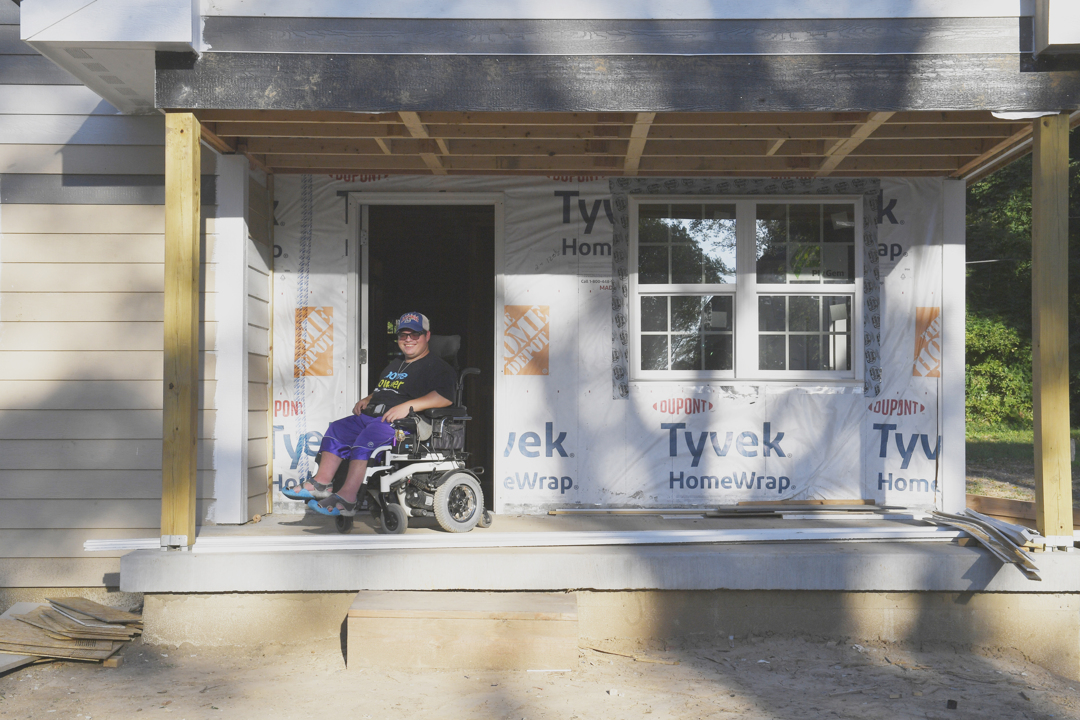
But he caught a break. With help from a housing award from The Whole Person and Habitat for Humanity, he will soon have a home built just for him.
The new home, now being finished in the Wendell Phillips neighborhood on the East Side, will be customized for Waterhouse-Leal. It will mean a new lease on life.
But he knows there are many others like him still struggling. And they deserve attention, he said.
“If you’re not out there and visible, and nobody sees you, then nobody knows there’s a problem,” Waterhouse-Leal said.
“So for me, that’s what that’s all about is being out there, being present, being visible to create those opportunities to show people that, hey, maybe we need a little bit more access over here.”
‘They need to fix this’
Being blind has not stopped Daniel Garcia from leading a successful life. But getting around town, especially to unfamiliar destinations, presents challenges.
For one, the bus that stops near his apartment complex doesn’t always arrive on time. And if he doesn’t know a certain destination well enough, he worries about whether the sidewalk will be intact — or exist at all — when he steps off.
That’s one reason Garcia, who leads Kansas City’s chapter of the National Federation of the Blind, frequently relies on the special paratransit service offered by the Kansas City Area Transportation Authority. It picks up riders within a certain distance of the routes and takes them to a specific destination. But the service is often spotty, he said, sometimes arriving well outside the arranged time frame.
When a member of the Federation for the Blind moved from Iowa to Kansas City for work, Garcia recalled, she tried using the paratransit service on her first day. She was more than an hour late.
“That’s mostly the biggest issue that I have: being picked up late,” Garcia said. “They need to fix this, because people need to get to work, people need to get to school, people need to go shopping (and) to recreation. They just need to fix this.”
The KCATA has acknowledged recent problems with paratransit service and larger problems on its fixed routes. In March, the authority said sharp increases in the demand for paratransit trips paired with a shortage of drivers caused in part by the pandemic had resulted in long wait times, especially during peak travel hours. And in August, the driver shortage led to larger service interruptions similar to those felt across the country.
The agency’s president and CEO, Robbie Makinen, is also blind, and he uses the service himself.
He said the KCATA has worked on services to help those with disabilities specifically, including a new transit application for the visually impaired and KC Freedom on Demand, a door-to-door service partnership fulfilled by area taxicab companies.
“What I want to do is make Kansas City a national model for folks with disabilities,” Makinen said. “These are all innovative approaches that nobody else is actually doing (and) that we’re very proud of. And once we can get out of this pandemic and get folks back to work, I think everybody will be very happy with RideKC Next and everything that we’re actually doing.”
A long way to go
For new construction of public projects, accessibility is built in from the planning phase to comply with federal law.
But there are still publicly-owned spaces that are not in line with the ADA, which was passed in 1990.
The work is ongoing at Kansas City’s City Hall. In the next two years, once the south entry is completed along with the restoration of the parking garage, the building will be considered fully accessible, said Green, the city spokeswoman.
Bringing all the city’s buildings into full compliance is expected to take about five years and cost about $35 million.
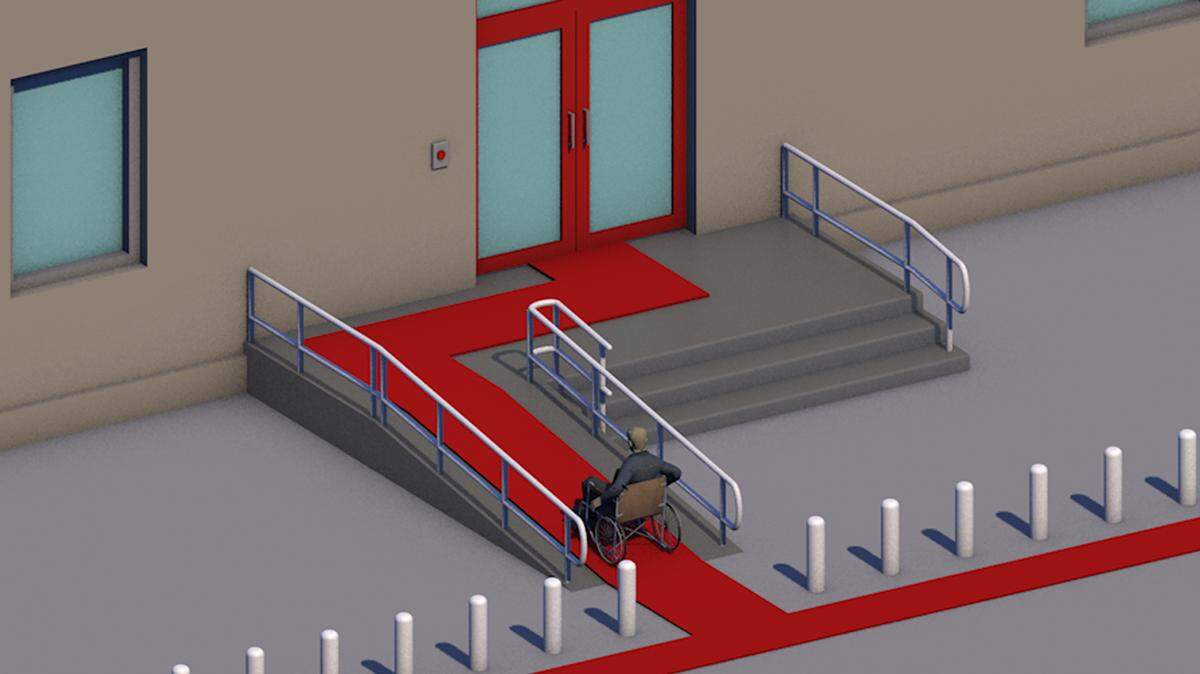
In 2017, the city began a new wave of infrastructure projects paid for through an $800 million bond initiative approved by voters. Money from that program has gone toward repairing nearly 500 curb ramps at street corners around the city and other projects in publicly-owned buildings, including the Starlight Theatre and several city parks facilities.
One of the major barriers advocates and people with disabilities point to is sidewalks.
Many neighborhoods around the metro area don’t have them, having been built on the assumption everyone would use cars to get around. And many that do exist have fallen into disrepair, lacking maintenance during winter snowfall and ice storms.
A report commissioned in 2017 through partnerships of several area organizations said it will cost $1 billion to repair all of the city’s crumbling sidewalks and build them where none exist. The city has so far set aside $150 million for sidewalk work planned over the next 20 years.
Kansas City is making progress toward improving its walkability but still has a long way to go, said Eric Rogers of BikeWalkKC, a nonprofit that promotes accessible and sustainable transportation. And it’s not just for people with disabilities.
“Accessible design benefits everybody, not just the people who need it today,” Rogers said. “If we are fortunate enough to live into old age, all of us are going to experience some type of disability at some point in our lives.”
‘Healthy thing for everybody’
When Ava Anderson started her job at Children’s Mercy hospital’s distribution center, she was too afraid to speak to anyone.
The 21-year-old Gladstone resident, who lives with autism, found the job with the help of Ability KC, a social service organization offering employment assistance to people with physical, developmental, cognitive and sensory disabilities.
Part of what Ability KC does is help employers accommodate the needs of a person with a disability. Service recipients receive training and soft skills needed to obtain and maintain a good job.
In Anderson’s case, that meant accommodations such as listening to music during her shift, which helps her cope with the sometimes overwhelming anxiety that comes with her disability. Patience and understanding from superiors helped Anderson learn the job at her own pace.
“That really helped because then I didn’t feel like I was in a rush and I was able to take my time,” Anderson said. “And I didn’t have to stress out or anything. That was really good for me.”
People with disabilities “have a lot of skills, they have a lot of value, and they’re basically an untapped workforce,” said Amy Ditty, Ability KC’s employment services manager.
“I think there’s a lot of individuals in the population that are working, that are struggling to maintain employment, that really would benefit a lot from our services, but they just are not aware and have not been identified as needing those supports.”
The organization also works to educate prospective workers who fear their pay could mean losing part of their income from federal benefits.
Some form of work, either part-time or full-time, is ultimately to their advantage financially, Ditty said. And it offers meaningful activity, social and community engagement and a sense of freedom that help to alleviate some of the risks of depression, said Dr. Terrie Price, a psychologist and director of Ability KC’s developmental and behavioral health.
“There is a big, big push for employment. And even if somebody is on disability, we encourage them to get some part-time employment, because it’s just so meaningful to their life,” Price said.
“It’s just a very healthy thing for everybody.”
A new home
Waterhouse-Leal’s future house will be the first one the local arm of Habitat for Humanity has built with wheelchair accessibility in mind.
Everything is being built to his specific needs: The main hallway is about 50% larger than usual. One of the two bedrooms is designed to lead straight into a bathroom with an accessible shower.
The kitchen will be fitted with lower countertops reachable from a wheelchair. An oven will be mounted in the wall to make baking — a hobby of Waterhouse-Leal’s — a little easier. And there will be an electric ramp for entry to the basement.
Waterhouse-Leal envisions a movie room there.
Taking a solutions-based approach, the builders consulted Waterhouse-Leal about his current living situation before starting construction.
The single-story house, one of four being built by Habitat for Humanity in the 2500 block of Olive Street in Kansas City, should be finished in December. Habitat for Humanity hopes to use the layout as a model for others, said Kelsey Schwaller, construction administrator for the group.
Waterhouse-Leal has already started packing his things to move in. His new home will offer a chance to move past worries about accessibility and focus on other things: trying new recipes and hosting friends.
He’s glad he didn’t have to give up his independence to live in a nursing home, as he had been considering. But he says other people need help now.
“I was ready to give up,” Waterhouse-Leal said. “But fortunately I had a friend who said, ‘Nope, you need to keep going.’
“We need to focus more on those issues for accessibility, not only for myself but for other people with disabilities as well.”
This story was originally published October 6, 2021 at 5:00 AM.