
What is the Americans with Disabilities Act? How does it affect life in Kansas City?
A generation of disabled Americans have grown up with civil rights protections under the Americans with Disabilities Act.
Here’s what you need to know about the law, how it benefits individuals and what it means for Kansas City.
What is the Americans with Disabilities Act?
The Americans with Disabilities Act is a landmark piece of civil rights legislation that prohibits discrimination against and people with disabilities and guarantees that disabled people have the same opportunities for employment, purchase goods an services, and participate in government programs and services.
Modeled after the Civil Rights Act of 1964 and Section 504 of the Rehabilitation Act of 1973, the ADA serves as an “equal opportunity” law for people with disabilities. Kansas Senator Bob Dole, who suffered lasting injuries during combat in Italy in World War II, championed the ADA in Congress and called its passage one of the most rewarding days of his life.
Who is covered under the ADA?
The law protects the civil rights of wide swaths of Americans: people who are born with a disability, experience temporary disability like a broken leg, those experiencing pregnancy, and Americans who are recovering from alcohol abuse or illness are all covered by the ADA.
The ADA does not specifically name all of the disabilities that are covered by the law, but rather broadly defines disability as a physical or mental impairment that substantially limits one or more major life activities.
How does it benefit me?
The law ushered in a new era in design that focused not only on improving accessibility for people with disability, but improving mobility and comfort for all people in the community. The accommodations secured by the ADA benefit all people in the U.S., not just those with disabilities.
If you’ve pushed a stroller or pulled a suitcase up a ramp, you’ve benefited from an accommodation required by the ADA for wheelchair users. Read the captions on an airplane safety video or LED signs on the Kansas City streetcar or bus? You’ve benefited from the ADA too. Ever wonder why some Kansas City crosswalks make a machine gun sound and announce which side can cross the street? It is an ADA accommodation for the Blind.
ADA standards for accessible design apply to places of public accommodation, commercial facilities and state and local government facilities (generally religious entities are exempt).
How do I request an accommodation?
Employers must provide “reasonable accommodations” to qualified job applicants or employees. A reasonable accommodation is any modification to a job or the work environment that will allow the person to participate in the application process or perform the essential job functions.
However, it is up to the disabled person to request workplace accommodations.
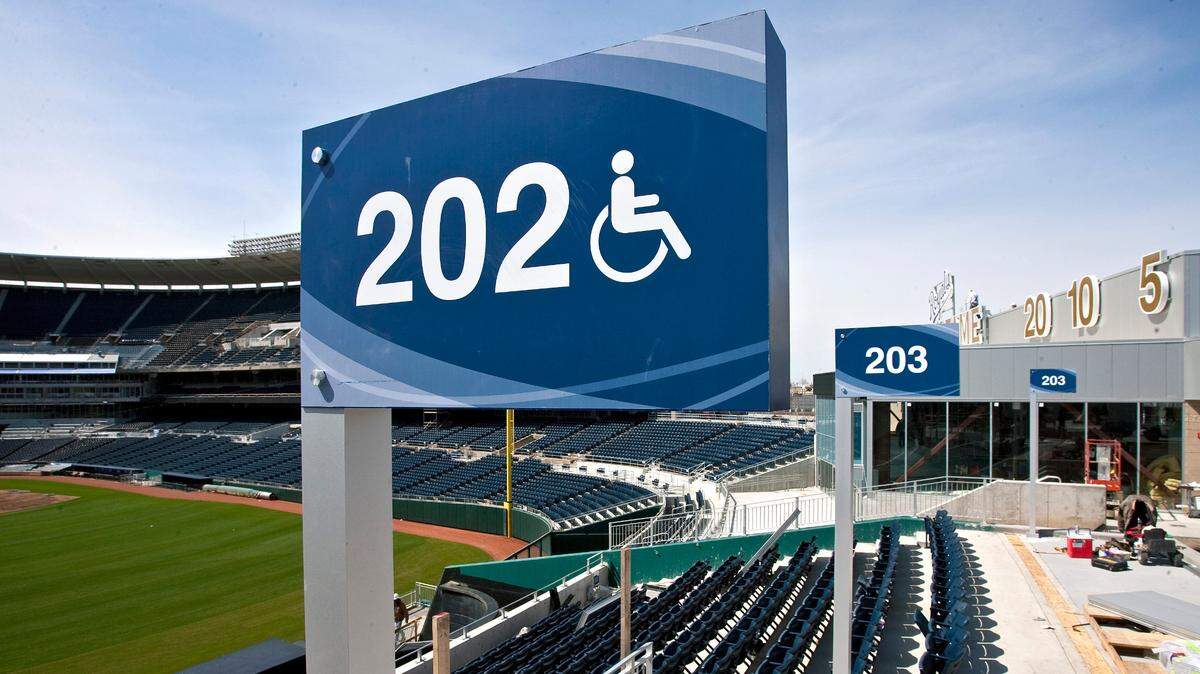
In terms of physical infrastructure, the ADA sets minimum accessibility standards for newly constructed public accommodations and commercial facilities such as hotels, restaurants, stores, doctor’s offices, golf courses, private schools, sports stadiums and daycares. The law also requires the owners of existing public accommodations to remove barriers where it is easy to do so and without much difficulty or expense.
Businesses are directed to make modifications to their usual way of doing business to better serve people with disabilities, including taking steps necessary to effectively communicate with customers who have vision, hearing and speech disabilities.
How is the ADA enforced?
There is no federal office like the Drug Enforcement Administration or Immigration and Customs Enforcement that monitors and enforces the ADA. The law works on an “after-the-facts” system that puts the onus on disabled people to file complaints through the Department of Justice or pursue legal action.
The ADA was written in a way that limits plaintiffs’ ability to collect monetary damages, which means a successful lawsuit results in the court forcing the violation to be fixed and the plaintiff’s legal fees being paid by the defendant.