Kansas City hospitals turn away record numbers of patient transfers as COVID surges
READ MORE
Kansas City COVID-19 news
As the delta variant of the COVID-19 virus surges across the Kansas City region, officials, hospitals and communities have had to react. Here is our latest coverage.
Expand All
Hospitals in the Kansas City area are refusing to accept patients from other hospitals on a daily basis as they are being overwhelmed with the surge of the delta variant of the coronavirus.
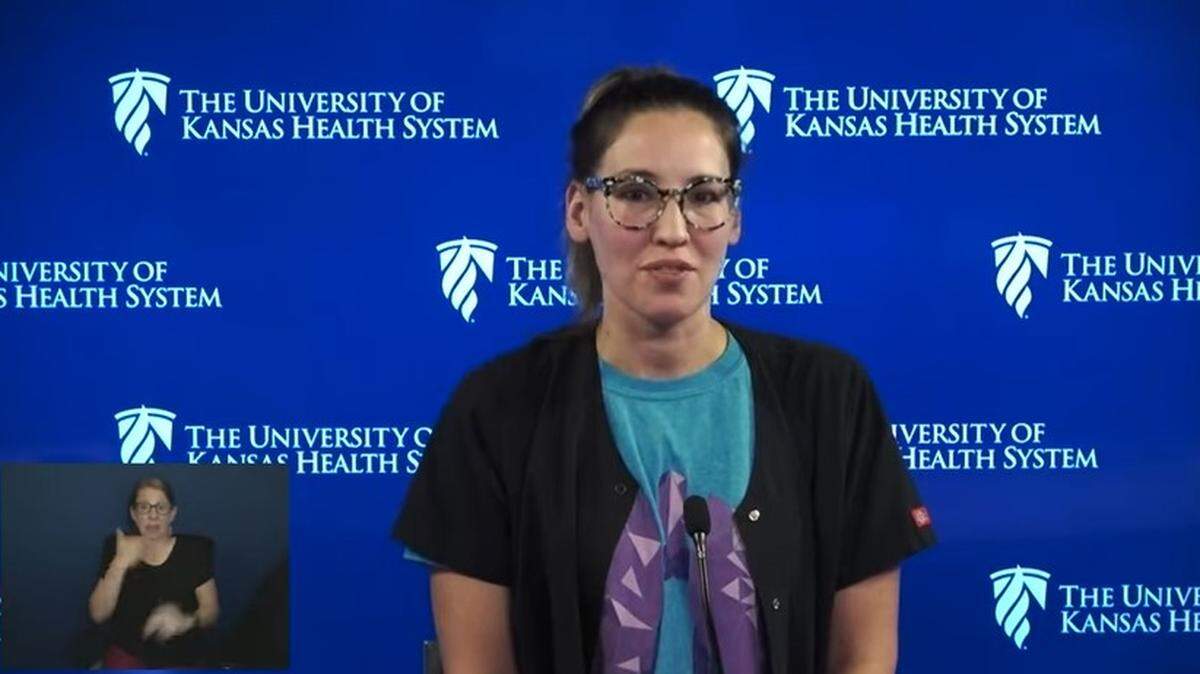
“The past few weeks have been like nothing I’ve ever seen,” Dr. Tim Williamson, vice president of quality and safety with the University of Kansas Health System, said during a medical update Friday morning. “We actually are currently on pace to be over 2,000 requests for the month which is just the highest number that we’ve ever seen.”
Because of the large number of requests, the health system is only able to accept about 30% of them, he said. The other 70% are turned away because the volume doesn’t match up with the hospital’s capacity.
Historically, the health system’s in-house transfer center averages 800 or 900 transfer requests a month from other facilities seeking to move patients for advanced care.
But since the beginning of the pandemic, the number of patient transfer requests have skyrocket during surges in the number of cases and hospitalizations.
On Thursday the area encompassing Kansas City and Jackson, Clay and Platte counties in Missouri and Johnson and Wyandotte counties in Kansas gained 931 new COVID-19 cases for a total of 174,055, according to data tracked by The Star.
A total of 2,452 people from the Kansas City metro area have died from the virus since the pandemic began.
Record high requests
During such a surge in November, the health system had what was then a record high of 1,200 requests. In July, however, there were 1,500 requests, Williamson said.
“What has changed in July, because of the volume, because of constraints on capacity, we ended up not being able to take about a third of those,” Williamson said.
Healthcare providers are making decisions in real-time about whether to accept a patient transfer. Some of the considerations are whether the health system has the capacity to meet that patient’s needs and whether the hospital where patient is currently being treated has the capacity to meet the needs.
“It weighs really heavy when we have to say no because we know that patient will likely remain at that facility because everyone in the metro area, everyone across Kansas and Missouri and really across a good part of the U.S. are in the same place,” Williamson said.
The ability to accept patient transfers is a very fluid situation, Williamson said.
“What things look like at 8 in the morning may be different at 4 in the afternoon, which may be different at midnight,” he said. “It changes very rapidly.”
The transfer requests involve not only COVID-19 patients, but others who have other medical needs, he said.
Regional COVID-19 levels
All the hospitals in the metropolitan area are constrained right now by capacity. But patient transfer requests are not coming only from facilities in Kansas and Missouri.
Requests are coming from New Mexico, Oklahoma, Texas, Louisiana, Mississippi, Georgia and Iowa.
“We’ve gotten requests from all over the country,” said Williamson, who has been in healthcare about 30 years.
The health system has been able to meet the staffing demands for patient care, but the recent surge has been hard on staff. They’re tired and stretched, he said.
William said he’s not someone overly prone to worry, but he said he is concerned. Although there’s been some slowing in the number of cases in Kansas and Missouri, it’s not known what the impact of some of the recent large gatherings and schools opening will be.
“I’m worried about what is yet to come,” he said. “And knowing that hospitals are already stretched, I’m worried that we could see what we’ve seen in Texas and Florida and Mississippi that hospitals are just totally overwhelmed.”
Patients in 20s, 30s and 40s
There’s not any more give in the healthcare system right now and any additional strain will come at the expense of having to go into mass casualty modes with tents being set up in garages.
“And having to make choices of who gets care and who doesn’t,” Williamson said. “The message there is simple: It’s please, please, please get vaccinated.”
The U.S. and the Kansas City metro region are currently seeing a healthcare system in crisis as well as preventable hospitalization and deaths, he said.
“When we talk deaths — I’m not meaning to be morbid — but these are not quick deaths,” he said. “These are in younger people and they’re protracted weeks in the ICU without your loved ones.”
In addition to getting vaccinated, people also should wear masks and for the next few weeks avoid large indoor gatherings, he said.
Compared to a year ago, patients are sicker and younger, Williamson said. There also are more requests for extracorporeal membrane oxygenation, which he said is a total heart and lung bypass used as the very last resort in terms of supporting someone’s life.
In addition to seeing more 20, 30 and 40-year-olds needing such treatment treatment, he’s known of at least three pregnant or recently pregnant patients in their 20s that have needed it as well.
“I don’t remember seeing this degree of critically ill pregnant and immediately postpartum patients in the last really big surge we had,” he said. “So it’s incredibly concerning.”
This story was originally published August 20, 2021 at 12:20 PM.

.jpg)