
Frustrated lawmakers confront DCF leader in hearing on bill regarding child deaths
The subject of Tuesday's legislative hearing: a bill that would require Kansas' child welfare agency to release more information after a child's death.
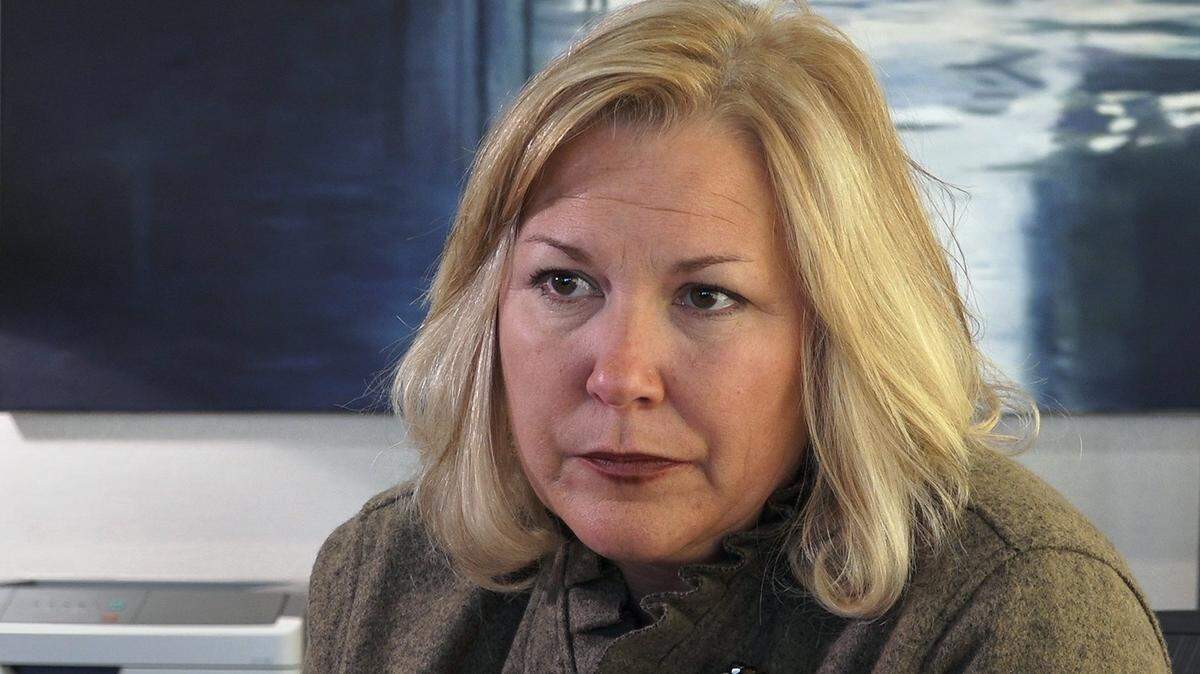
But it was clear from the beginning that frustrated lawmakers on the House Judiciary Committee were more interested in what could be done to keep Kansas children from dying of abuse and neglect. Specifically, they wanted to know, what could be done by the new secretary of the Kansas Department for Children and Families and her administration.
Rep. Les Osterman, a Wichita Republican, was one of the first to question Gina Meier-Hummel, the DCF acting secretary.
“Is this going to start helping (stop) what’s going on? The deaths of children?" said Osterman, who has been flooded with emails in his district where several horrific child abuse cases have occurred. "When I get nailed by pastors and everything, I mean, I’m really getting zinged and asked, ‘When are you going to do something about it?’ And that’s been one of my big complaints since I’ve been up here. And I’ve been up here eight years.”
Meier-Hummel took question after question from lawmakers concerned about the child abuse fatalities that continue to make headlines. Evan Brewer, a Wichita 3-year-old whose body was found encased in concrete in September. Adrian Jones, a boy from Kansas City, Kan., who was tortured and starved in late 2015 and his body fed to pigs. And Caleb Blansett, whose mother stabbed him to death in 2014 while he slept.
She said providing more information to the public and families was the first step toward accountability.
"The agency understands the importance of sharing details, if any, when a child death has occurred," she said. "Right now the agency can’t share information, that’s why we think this bill is so important."
In a months-long investigation into the secrecy that permeates Kansas government and how it harms residents, The Star found a pervasive effort inside DCF to hide behind privacy laws and internal procedures to keep the public from knowing how it operates. Those practices are particularly acute in cases where children are seriously injured or killed by parents and guardians who were known to the agency.
The acting secretary and Gov. Jeff Colyer, who have vowed in recent months to promote transparency, are behind HB 2728. The measure says that after a child dies from abuse or neglect the DCF secretary shall release the age and sex of the child, date of the fatality, a summary of previous reports to the agency and findings, as well as any department recommendations of services provided.
But some are skeptical, insisting that the measure doesn't go far enough. In the end, they say, DCF would decide what information goes in the summary that is released.
"I think that this bill is an attempt to do nothing while saying that we are doing something," said Rep. John Carmichael, a Wichita Democrat and the ranking minority member on the House Judiciary Committee. "This is a non-transparent attempt to be transparent and it's nice window dressing, but it's not a solution for what's gone on at DCF for many, many years."
Plus, others say, federal law already requires the agency to provide some information after deaths.
The family of Evan Brewer, a Wichita boy whose body was found encased in concrete in September, does not support the proposal. In written testimony to the Judiciary Committee, attorney Shayla Johnston said the state already is obligated by federal law to provide information about child abuse fatalities and near fatalities.
"On behalf of Evan Brewer's family, I advise that this proposal is a smoke-and-mirror attempt by Governor Colyer and (unconfirmed) DCF Secretary Meier-Hummel to show their commitment to transparency in light of the continuation of our state's failure to prevent known abuse-related deaths," Johnston wrote. "With this 'new' law, you are allowing them to escape accountability for their current legal obligation."
Before Meier-Hummel took over, DCF had refused for more than a year to answer questions on topics ranging from open records and the deaths of specific children to runaways in foster care.
Since she inherited the troubled child welfare system on Dec. 1, the acting secretary has vowed to be open. She has said she will review all cases where a child died, and already has analyzed what happened with Evan and Adrian. Without elaborating, she told The Star last month that changes were made after that review.
On Tuesday, some lawmakers questioned why the agency currently doesn't release some basic information after a child fatality. Law gives the agency discretion to do so.
“What I heard was that you feel this bill is necessary to compel the agency to do something that if it chose to do today, it could do," Rep. Russell Jennings, a Lakin Republican, said. "Is that true?”
Meier-Hummel said the bill would make the release a requirement not a choice.
“This mandates that we would share certain pieces of information that go broader than what the law currently allows," she said. "So it does give information that currently sits with the discretion of the secretary as it reads. ... If we pass this bill out, I’ve been practicing social work for 25 years, and it’s certainly more information than any secretary I know of has ever disclosed right after a tragedy has happened.”
The current Kansas law says that information shall become public record after a child's death or near death.
The goal of the 2004 law was to allow for full disclosure after a death or serious injury. But child welfare officials pushed back and compromises had to be made.
In the end, the law included a provision that says any "affected individual" should be notified when a request for records is received. Within days, those individuals can ask the court to keep the records sealed.
A judge then rules on the motion. In most cases, records can be sealed for months if not years at a time.
Meier-Hummel said Tuesday that needs to change.
“We did look at every state and how they handle this," she told lawmakers. "And we really feel like this is the best, because it doesn’t give too much information but it gives enough information to know whether we were involved and how we were involved.”
Rep. Blaine Finch, an Ottawa Republican and chairman of the Judiciary Committee, told Meier-Hummel legislators appreciated her willingness to be open.
“As you know, there is a long way to go to restore public faith and confidence in the agency," Finch said. "But steps like this one are a step in the right direction, and we appreciate the time that you and your staff have put in on this measure and for coming today to face these questions.”
This story was originally published March 6, 2018 at 7:35 PM with the headline "Frustrated lawmakers confront DCF leader in hearing on bill regarding child deaths."